
Thailand Proposes ‘Calibrated Engagement’ With Myanmar’s Next Government
A cautious diplomatic shift as Southeast Asia seeks a way forward amid Myanmar’s turmoil

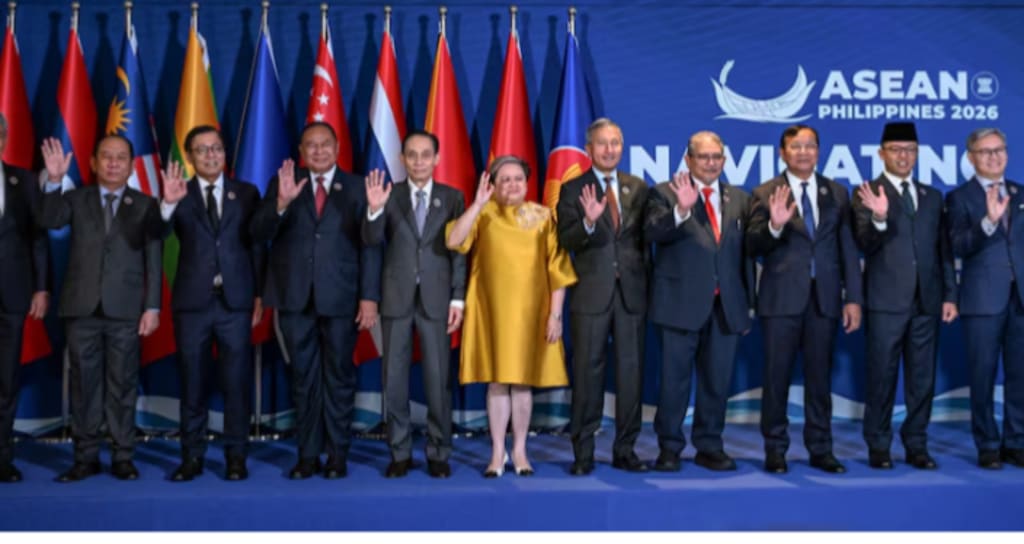
In the heart of Southeast Asia, a delicate diplomatic debate is taking shape. Thailand, one of Myanmar’s closest neighbors, has proposed a strategy called “calibrated engagement” with Myanmar’s next government — a measured approach that balances pragmatism with principle. The move comes amid growing concern over Myanmar’s ongoing political and humanitarian crisis, and it highlights the challenges ASEAN faces in dealing with a country in turmoil.
What Is ‘Calibrated Engagement’?
Calibrated engagement is essentially a middle path. It’s not full recognition, nor is it unconditional support for Myanmar’s military-backed leadership. Instead, it’s a careful, measured interaction: communicating, negotiating, and cooperating where necessary, while keeping pressure for reforms and humanitarian access intact.
Thailand’s proposal acknowledges the political reality: Myanmar’s next government, dominated by the military-backed Union Solidarity and Development Party, is set to take power soon. But rather than isolating the country completely — a strategy that has historically failed to change behavior — Thailand is advocating dialogue that can manage risk, support stability, and help the people on the ground.
Why Thailand Is Taking This Approach
Thailand shares a long, porous border with Myanmar, more than 2,400 kilometers of intertwined rivers, communities, and trade routes. Violence in Myanmar doesn’t stay contained; it spills across the border in the form of refugees, disrupted trade, and security concerns. Migrant workers from Myanmar are also a vital part of Thailand’s workforce, while bilateral trade keeps local economies running.
With so much at stake, isolation isn’t practical. Thailand recognizes that engagement, even cautious engagement, is a way to protect its borders, economy, and communities. The Thai foreign minister, Sihasak Phuangketkeow, emphasized that this approach is not about granting legitimacy, but about keeping dialogue open and ensuring benchmarks for progress are met.
ASEAN’s Dilemma
Thailand’s idea comes at a time when ASEAN struggles to respond coherently to Myanmar’s crisis. After the 2021 military coup that deposed Aung San Suu Kyi, ASEAN suspended Myanmar’s leadership role and adopted a Five-Point Consensus calling for a cessation of violence, dialogue among parties, humanitarian access, and more.
Yet, implementation has stalled. Violence persists, and the political deadlock continues. Member states are split: some push for stronger sanctions and pressure, while Thailand advocates a pragmatic approach — keeping channels open but setting clear expectations.
This balance is tricky. ASEAN wants to promote peace without legitimizing military control. Thailand’s calibrated engagement attempts to thread that needle: pressure without abandonment, dialogue without blind endorsement.
How It Could Work in Practice
Thailand’s approach includes:
Selective dialogue with Myanmar’s new leadership, based on benchmarks and conditional engagement
Humanitarian coordination to ensure aid reaches civilians in need
Border security cooperation to manage refugee flows and prevent spillover violence
Measured economic and diplomatic interaction to maintain influence without granting legitimacy
The goal is to reduce violence, improve humanitarian access, and encourage gradual progress, while keeping pressure on the Myanmar military to respect human rights and political reforms.
Challenges Ahead
Not everyone agrees with Thailand’s strategy. Critics argue that engagement risks normalizing a military government that took power through flawed elections and continues to suppress dissent. Human rights organizations and international observers have denounced Myanmar’s elections as illegitimate.
Calibrated engagement requires careful monitoring to avoid being perceived as acceptance of repression. Thailand and ASEAN must balance realpolitik with ethics, ensuring that dialogue doesn’t unintentionally validate continued abuses.
Why This Matters Beyond Myanmar
Myanmar’s turmoil isn’t just a domestic problem — it has regional implications. Refugees fleeing violence strain neighboring countries. Trade disruptions affect Southeast Asian markets. Cross-border insurgencies can destabilize border regions.
For Thailand and ASEAN, calibrated engagement is a tool for regional stability. It recognizes that isolation hasn’t worked, and that measured diplomacy may help prevent further chaos. By keeping communication lines open, the region can influence Myanmar’s trajectory, even in small ways, while protecting its own interests.
A Path Forward
Thailand’s proposal reflects a realistic understanding of the current political landscape: solutions won’t be perfect, but action is necessary. The strategy focuses on mitigating harm, encouraging reform, and maintaining stability, rather than waiting for an ideal outcome that may never arrive.
Whether calibrated engagement will lead to meaningful change or simply maintain the status quo remains uncertain. Success depends on careful oversight, regional coordination, and adherence to clear benchmarks for progress.
Conclusion: Diplomacy in a Complex Region
Myanmar’s crisis underscores the complexity of Southeast Asian geopolitics. Thailand’s calibrated engagement strategy is not about rewarding the military government — it’s about managing risk, protecting borders, supporting civilians, and keeping diplomatic channels alive.
In a region where conflict and humanitarian crises are deeply intertwined, Thailand’s proposal may represent the most pragmatic path forward, balancing principle with practicality. For ASEAN, the coming months will test whether diplomacy, even in measured doses, can make a real difference — or whether Myanmar remains mired in chaos.
Thailand’s approach reminds the world that sometimes cautious dialogue, paired with firm benchmarks, is the only way to navigate conflict without abandoning those most affected.
About the Creator
Sajida Sikandar
Hi, I’m Sajida Sikandar, a passionate blogger with 3 years of experience in crafting engaging and insightful content. Join me as I share my thoughts, stories, and ideas on a variety of topics that matter to you.
Keep reading
More stories from Sajida Sikandar and writers in The Swamp and other communities.
Al‑Maliki Is Defiant After Trump Threatens to Withdraw U.S. Support for Iraq
This week, Iraq’s political scene erupted into tension and controversy after former U.S. President Donald Trump publicly threatened to withdraw American support if Nouri al‑Maliki were to return as prime minister. Al‑Maliki, a veteran Iraqi politician, responded defiantly, rejecting the warning as “blatant interference” in Iraq’s internal affairs. The standoff highlights the fragile balance between foreign influence and Iraq’s sovereignty — and underscores how external pressures can shape, but not always dictate, domestic politics.
By Sajida Sikandar2 days ago in The Swamp
Amazon Reveals Fresh Round of Global Job Cuts in Email Sent in Error to Workers
Amazon has revealed a fresh round of global job cuts after an internal email was accidentally sent to some employees, highlighting ongoing restructuring efforts and prompting widespread concern. The email, which was reportedly sent in error, indicated that the company would be reducing staff in multiple regions, although precise numbers and affected departments have not yet been confirmed.
By Aarif Lashari3 days ago in The Swamp
Gold Stands Strong at $5,000 as Silver Faces Bubble Fears – Inside Saxo Bank’s Commodity Call
In the fast‑moving world of precious metals, bold forecasts and market warnings make headlines daily. But few have been as striking as the recent commentary from Ole Hansen, Head of Commodity Strategy at Saxo Bank, asserting that gold’s rally is fundamentally supported, while silver risks being caught up in bubble‑like behavior. This stark contrast between two historically correlated metals has sparked intense debate among investors, economists, and traders alike.
By Salaar Jamali2 days ago in The Swamp




Comments
There are no comments for this story
Be the first to respond and start the conversation.