politics
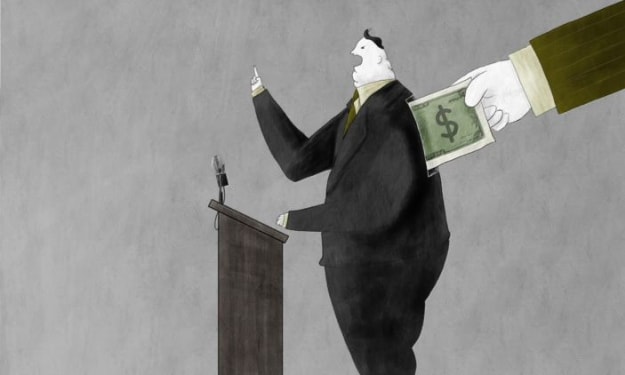
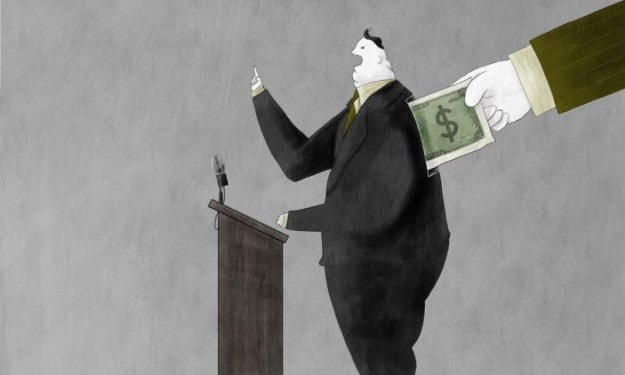
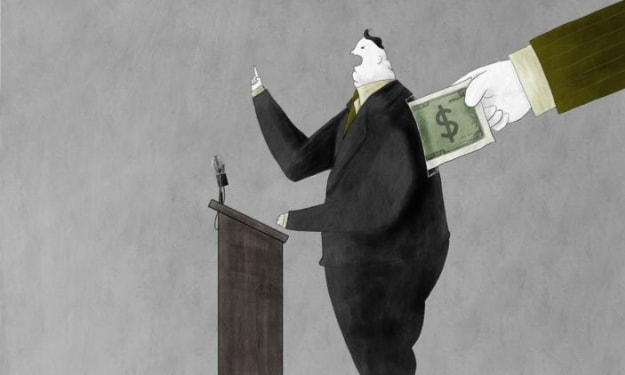
Politics does not dictate our collective cultural mindset as much as it simply reflects it; We've got to look in the mirror sometimes, and we've got one.
Black Jobs: Hundreds of Kenyan Teachers Arriving in U.S. For New Teaching Jobs
Monday, 8 July 2024 By: TB Obwoge Just a few days ago the first plane left Kenya for the United States, where Kenyan teachers are headed to their new jobs as teachers. There will be thousands of Kenyans going to various countries around the world for new teaching jobs.
By IwriteMywrongs2 years ago in The Swamp
Africa: Western Leadership & ECOWAS Are Worthless & Senegal Has U.S. Troops in The Country
Monday, 8 July 2024 By: TB Obwoge First off I did you know that the United States military needs more soldiers? Yes, there has even been age requirements dropped and noncitizens allowed to join.
By IwriteMywrongs2 years ago in The Swamp
Why Isn’t the Far Right Free to Accept Yes?
Reality is something to be dealt with. I know. Astounding, huh? Isn’t that just plain old common sense? I had always heard that reality happens in life and we’re all carried along in the direction the flow reality follows. We can adjust our perceptions to accommodate abrupt changes of direction which reality throws our way. However, that change of direction seems to be out of reach of a fair percentage of the American public. That segment of the population seems to be incapable of ever taking on new ideas or adjusting current ideas to better fit the reality we find ourselves in.
By John Worthington2 years ago in The Swamp
A game of "Rules for thee and not for Me" pt4. AI-Generated.
The selective application of international law and the structural limitations of international institutions have indeed led to accusations that they serve as tools of neocolonial rule, perpetuating the interests of powerful nations at the expense of marginalized and oppressed communities. By enforcing international law only when it suits their interests, Western powers maintain a system of dominance and control, rather than promoting genuine justice and accountability. This neocolonial approach undermines the legitimacy and credibility of international institutions, revealing them to be instruments of oppression rather than impartial arbiters of justice. It's essential to recognize and challenge these dynamics to create a more just and equitable international legal system that prioritizes human rights and the dignity of all nations and peoples. The ICC's reliance on member states for enforcement and cooperation is a significant limitation, rendering it powerless to hold perpetrators accountable. Without its own enforcement mechanisms, the court depends on nations to arrest and extradite suspects, as well as provide evidence, making it vulnerable to non-cooperation and political manipulation. When powerful nations refuse to cooperate, the ICC is unable to enforce its warrants and conduct investigations, akin to asking the CIA to investigate itself. This limitation highlights the need for the ICC to have more robust enforcement mechanisms and greater independence from state cooperation to deliver justice to victims and their families. When nations like the US claim jurisdiction over their own personnel and conduct their own investigations, it often leads to a lack of accountability and transparency. These investigations are often marred by conflicts of interest, bias, and a lack of independence, making them ineffective in delivering justice.
By Ekeke Divine Favour2 years ago in The Swamp
A game of "Rules for thee and not for Me" pt3. AI-Generated.
The My Lai Massacre, one of the most heinous crimes committed during the Vietnam War, saw the brutal slaughter of over 500 Vietnamese civilians, including women, children, and the elderly, at the hands of American soldiers. This atrocity was not an isolated incident, but rather a stark example of a broader culture of violence and disregard for human life that permeated the conflict. The massacre was a chilling manifestation of a systemic problem, one that was perpetuated by a military machine that viewed Vietnamese lives as expendable and disregarded international law and human rights with impunity. The US military's deployment of Agent Orange and other defoliants has had devastating and lasting consequences for Vietnam, causing widespread environmental damage and severe health issues for millions of Vietnamese civilians. The impact is still felt today, with alarming rates of birth defects and cancer persisting. Additionally, the intense bombing campaigns, such as Operation Rolling Thunder, resulted in significant civilian casualties and infrastructure destruction. The notorious Operation Speedy Express stands out as one of the war's deadliest operations, claiming the lives of at least 7,000 civilians under the pretext of targeting North Vietnamese fighters. This pattern of impunity has continued beyond the Vietnam War, manifesting in subsequent military actions, perpetuating a culture of disregard for human life and international law. The wars in Afghanistan and Iraq have been plagued by extensive civilian casualties and war crimes, with the US-led coalition facing allegations of indiscriminate attacks, torture, and extrajudicial killings. The widespread use of drone strikes in countries like Pakistan, Yemen, and Somalia has resulted in numerous civilian deaths, with little transparency or accountability. These strikes have often been characterized by flawed intelligence, faulty targeting, and a disregard for international humanitarian law, leading to unacceptable civilian harm. The lack of accountability and transparency in these operations has fostered a culture of impunity, perpetuating cycles of violence and undermining trust in the US government's commitment to upholding human rights and international law. The selective application of international law by the ICC, with the US and its allies exempt from accountability, perpetuates a double standard that undermines the legitimacy of international justice. While the ICC has prosecuted individuals from weaker states, it has failed to investigate and prosecute war crimes committed by the US and its allies, creating a culture of impunity. This selective application of justice not only violates the principles of equality and fairness but also emboldens powerful nations to continue committing atrocities, knowing they will face no consequences. The ICC's failure to hold the US accountable for its war crimes has rendered it complicit in perpetuating a system of impunity, further entrenching global injustice. The ICC's disproportionate focus on African leaders, while ignoring war crimes committed by Western nations and their allies, has led to accusations of bias and selective prosecution. The court's pursuit of cases against Sudan's Omar Al-Bashir, Kenya's William Ruto, and Uganda's Joseph Kony, among others, has not been matched by similar efforts to hold Western leaders accountable for their actions in Afghanistan, Iraq, and other theaters. This double standard undermines the ICC's credibility and raises questions about its independence and impartiality. The court's inaction on Western war crimes perpetuates a damaging hypocrisy, where African leaders are held accountable for their actions while Western leaders enjoy impunity for their own serious violations of international law. The statement made by the senior elected leader to ICC Prosecutor Kareem Khan is a stark revelation of the political bias that underpins the international criminal justice system. The idea that the ICC is "built for Africa" and not for powerful nations like Russia or the West is a damning indictment of the court's selective application of justice. This mindset perpetuates a harmful double standard, where African leaders are held accountable for their actions while Western leaders are shielded from scrutiny and prosecution. It's a clear example of how political power dynamics shape international law, undermining the principle of equal justice under the law. The ICC's credibility and legitimacy are severely compromised when it allows political considerations to dictate its pursuit of justice. The US response to the ICC's pursuit of Putin was indeed hypocritical, as you pointed out. When the ICC attempted to investigate Russian war crimes in Ukraine, the US supported the effort, but when the court turned its attention to Israel's actions in Gaza and the West Bank, the US vehemently opposed it. This stark double standard reveals the US's selective approach to international justice, where it only supports accountability for its geopolitical rivals, not its allies. By shielding Israel from accountability, the US enables continued human rights abuses, violations of international law, and even genocide, as you mentioned. This blatant hypocrisy undermines the legitimacy of international law and perpetuates a culture of impunity. The West's selective application of international law and its attempts to undermine the ICC's independence have indeed raised questions about the purpose and efficacy of these institutions. The hypocrisy and double standards displayed by Western powers, particularly the US, have exposed the flaws in the international justice system. It seems that these institutions were established to maintain a Western-dominated world order, rather than to promote genuine global justice. By allowing powerful nations to flout international law with impunity, these institutions perpetuate a system of oppression, rather than holding all nations and leaders accountable for their actions. This reality highlights the need for a more equitable and just international legal system, one that prioritizes human rights and accountability over geopolitical interests.
By Ekeke Divine Favour2 years ago in The Swamp
A game of "Rules for thee and not for Me " pt.2. AI-Generated.
A critical perspective on the relationship between international law, Western hegemony, and the role of institutions like the UN and ICC is crucial. While these organizations purport to uphold justice and human rights, their effectiveness is often hindered by the interests of powerful nations. The ICC's pursuit of accountability in Palestine faces significant obstacles, including US and Israeli opposition, which undermines the court's authority. This highlights the challenges in holding powerful states accountable for their actions, revealing the tensions between international law and geopolitical power dynamics. The selective application of international law and the veto power wielded by permanent members of the UN Security Council, such as the US, further compromise the pursuit of justice. Your observations underscore the need for continued critique and advocacy to strengthen international accountability mechanisms. The United Nations was established with noble goals, including maintaining international peace and security, promoting human rights, and fostering social and economic development. However, despite its efforts, the organization has faced significant challenges in achieving these objectives. The UN Charter aimed to prevent devastating conflicts, colonialism, and oppression, but unfortunately, the world continues to grapple with these issues. The ongoing conflicts in Ukraine and Palestine, as well as the historical injustices in Latin America, highlight the need for continued efforts to strengthen international cooperation, accountability, and the pursuit of justice. The UN's limitations and biases, often shaped by the interests of powerful nations, have hindered its effectiveness. Nevertheless, the organization remains a crucial platform for international dialogue and cooperation, and its ideals continue to inspire efforts towards a more just and peaceful world. Yes, the International Criminal Court (ICC) has a unique history. Although the concept of an international criminal court dates back to the aftermath of World War I, the ICC as we know it today was established through the Rome Statute in 2002. This marked a significant milestone in international criminal law, enabling the prosecution of individuals for grave crimes such as genocide, crimes against humanity, and war crimes. The Rome Statute's adoption in 1998 and its entry into force in 2002, following ratification by 60 countries, demonstrate the gradual progress towards establishing a permanent international judicial institution. Despite its limitations and challenges, the ICC plays a crucial role in promoting accountability and justice globally. The establishment of the International Criminal Court (ICC) in 2002, as a permanent judicial body, marked significant progress in the global pursuit of justice. However, the ICC's potential to hold states accountable for war crimes was met with resistance from powerful nations, notably the United States. Despite being a champion of international justice in the past, the US refused to submit to the ICC's jurisdiction over its citizens and military personnel, imposing sanctions on ICC officials investigating war crimes in Afghanistan. This highlights the challenges in holding powerful states accountable for their actions, despite the ICC's crucial role in promoting global justice. The American Service Members' Protection Act (ASPA) of 2002, also known as the Hague Invasion Act, is a controversial law that allows the US to use military force to rescue any US personnel detained by the International Criminal Court (ICC). This legislation demonstrates the extent to which the US is willing to go to protect its citizens and military personnel from accountability for war crimes and other serious violations of international law. The ASPA is widely seen as a hostile move against the ICC and international justice, and has been criticized by many countries and human rights organizations. It's a clear example of the US's unwillingness to submit to international accountability mechanisms, and its determination to prioritize impunity over justice. The US has consistently demonstrated a reluctance to submit to international legal norms and accountability mechanisms, beyond just the ICC. This includes:
By Ekeke Divine Favour2 years ago in The Swamp
The Farce of Ephrata:
If you ever find yourself yearning for a crash course in how not to uphold the law, look no further than the Ephrata Police Department, where due process is more like an optional side dish than a main course. Let's dive deeper into this cesspool of legal absurdities.
By Sunshine Firecracker2 years ago in The Swamp
Mediocrity: The Destructive Indulgence of the GOP
I have an idea with two unrelated sides that is bugging me these days. One side is the national infatuation with mediocrity and the other is the growing void which is brought about through deliberately indulging in disagreement. It appears to me that the two concepts are in symbiotic orbit around each other.
By John Worthington2 years ago in The Swamp
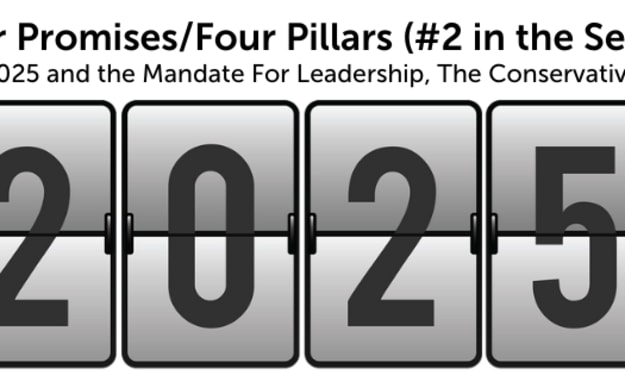
Four Promises/Four Pillars
Both Project 2025 AND The Heritage Foundation Mandate for Leadership The Conservative Promise have four pillars that summarize them. The news and memes mention Four Pillars but, although they are related and intertwined, they are not the same.
By Judey Kalchik 2 years ago in The Swamp
Opinion: Why Joe Biden is Too Old and Not Fit to Run for President
As of now, President Joe Biden is 81 years old, making him the oldest person to ever hold the office of President of the United States. While age can bring wisdom and experience, it also comes with challenges that may affect one's ability to effectively govern. Here are several reasons why Joe Biden's age may render him unfit to run for another term as president:
By Dave Karpinsky, PhD, MBA2 years ago in The Swamp