politics
Politics does not dictate our collective cultural mindset as much as it simply reflects it; We've got to look in the mirror sometimes, and we've got one.
Satellite Shows Tanker Seized by US Near Venezuela Is Now Off Texas Coast. AI-Generated.
Satellite imagery revealing that a tanker seized by the United States near Venezuela has now appeared off the coast of Texas has renewed global attention on Washington’s enforcement of sanctions, maritime law, and energy geopolitics. The movement of the vessel, once at the center of a tense standoff in the Caribbean, highlights how sanctions enforcement increasingly plays out not only through diplomacy and courts, but also on the open seas. From Caribbean Waters to the Gulf of Mexico The tanker was originally intercepted by US authorities near Venezuelan waters amid allegations that it was carrying oil linked to sanctioned entities. According to officials familiar with the case, the vessel was suspected of transporting crude in violation of US sanctions imposed on Venezuela’s energy sector. These sanctions aim to restrict the flow of oil revenues that Washington argues have supported authoritarian governance rather than the Venezuelan population. Recent satellite images now show the tanker anchored or maneuvering near the Texas coastline, a clear sign that US authorities have taken physical control of the ship and its cargo. The journey from the Caribbean to the Gulf of Mexico underscores the operational reach of US maritime enforcement and its ability to bring seized assets directly under American jurisdiction. Why the Seizure Matters The seizure is more than a single enforcement action; it is part of a broader strategy to curb sanctions evasion. Over the past few years, the US has accused networks of ship owners, traders, and intermediaries of using complex tactics to move Venezuelan oil despite restrictions. These tactics often include turning off tracking systems, changing ship names, transferring cargo at sea, or routing oil through third countries. By physically seizing a tanker and relocating it to US waters, authorities send a powerful message to global energy traders: sanctions violations carry real and costly consequences. The move also demonstrates that satellite tracking and maritime intelligence have become critical tools in modern economic enforcement. Legal and Diplomatic Dimensions Once a seized tanker reaches US-controlled waters, the case typically moves into the legal system. Courts may determine the fate of the vessel and its cargo, including whether the oil is confiscated, sold, or used to compensate for penalties. In previous cases, proceeds from seized cargoes have sometimes been redirected toward humanitarian or legal settlements, though such outcomes often spark political debate. Diplomatically, the seizure adds strain to already fragile US–Venezuela relations. Caracas has repeatedly condemned sanctions as illegal and harmful, arguing they exacerbate economic hardship for ordinary citizens. Venezuelan officials often portray tanker seizures as acts of piracy, while Washington frames them as lawful enforcement under international and domestic law. Energy Markets Watching Closely Global energy markets are also paying attention. While one tanker does not significantly alter global oil supply, such actions contribute to uncertainty around sanctioned crude flows. Traders, insurers, and shipping companies become more cautious when enforcement appears aggressive and visible. This caution can have ripple effects, including higher transportation costs, reduced willingness to handle high-risk cargoes, and increased scrutiny of vessels operating near sanctioned regions. In a world already grappling with geopolitical tensions, energy security concerns, and price volatility, even symbolic actions can influence market behavior. The Role of Satellite Technology The public availability of satellite imagery has transformed how such घटन events are monitored and reported. Analysts, journalists, and even private citizens can track vessels almost in real time, making maritime enforcement more transparent than ever before. This visibility reduces the ability of sanctioned actors to operate quietly and increases public accountability for governments enforcing or violating international rules. In this case, satellite images showing the tanker’s presence off Texas effectively confirm US claims of control, leaving little room for ambiguity about the outcome of the seizure. A Signal of Future Enforcement The tanker’s relocation to US waters suggests that Washington intends to maintain, if not intensify, its sanctions enforcement posture. As long as sanctions on Venezuela remain in place, similar actions are likely, especially against vessels suspected of repeated or large-scale violations. For ship owners and energy traders, the lesson is clear: sanctions compliance is no longer just a paperwork exercise. Physical enforcement, backed by technology and legal authority, is very much on the table. Conclusion The appearance of a US-seized tanker off the Texas coast, confirmed by satellite imagery, is a vivid reminder of how geopolitics, energy, and maritime law intersect. While the legal process will determine the vessel’s ultimate fate, the broader message has already been delivered. In an era of heightened scrutiny and advanced surveillance, sanctions enforcement is becoming more visible, more assertive, and harder to ignore—on the high seas and beyond.
By Fiaz Ahmed Brohiabout a month ago in The Swamp
Germany Deports Criminal to Syria After Years-Long Halt: A Legal, Moral, and Political Turning Point. AI-Generated.
After years of suspending deportations to Syria due to security and humanitarian concerns, Germany has carried out the removal of a convicted criminal to the war-torn country. The move marks a significant shift in Berlin’s migration and security policy, reigniting debate over human rights, public safety, and the limits of asylum protections in Europe’s largest economy. A Policy Frozen by War Germany halted deportations to Syria more than a decade ago as the Syrian civil war escalated into one of the world’s worst humanitarian crises. Widespread violence, political persecution, and the collapse of basic state institutions made forced returns legally and morally untenable under both German law and international conventions. For years, even Syrians convicted of serious crimes remained protected from deportation, instead serving prison sentences inside Germany. This approach was rooted in the principle of non-refoulement, which prohibits sending individuals back to countries where they face a real risk of torture, inhuman treatment, or death. Syria, governed by President Bashar al-Assad, has long been cited by human rights groups for arbitrary detention, enforced disappearances, and abuse of returnees. Why This Deportation Happened The recent deportation signals that German authorities believe circumstances have changed—at least for a narrow category of cases. Officials have emphasized that the individual deported was convicted of serious criminal offenses and posed an ongoing threat to public safety. According to government statements, the decision followed extensive legal review and assurances, often referred to as “diplomatic guarantees,” that the deportee would not be mistreated upon return. German courts have increasingly allowed deportations of serious offenders to countries previously deemed unsafe, provided authorities can demonstrate that the individual risk is limited and that state actors offer written commitments regarding humane treatment. Critics argue such guarantees are unreliable when dealing with regimes accused of systematic abuses. A Divided Political Landscape The deportation comes amid growing domestic pressure on Germany’s governing coalition to adopt a tougher stance on migration and crime. Rising support for right-wing parties, particularly the Alternative for Germany (AfD), has pushed migration to the center of national politics. Public anxiety following high-profile crimes involving asylum seekers has further intensified calls for stricter enforcement. Interior ministry officials argue that the move demonstrates the state’s ability to protect its citizens without dismantling asylum protections entirely. “Those who commit the gravest crimes cannot expect indefinite protection,” has become a common refrain among centrist and conservative politicians. However, left-leaning parties and civil society groups warn that such actions risk eroding the moral foundations of Germany’s asylum system. They fear a slippery slope in which security concerns gradually override human rights obligations. Human Rights Concerns Persist Human rights organizations remain deeply skeptical. Groups such as Amnesty International and Human Rights Watch have repeatedly documented cases of Syrians who were detained, tortured, or forcibly conscripted after returning from Europe. They argue that no part of Syria can be considered genuinely safe and that diplomatic assurances from Damascus lack credibility. Legal experts also point out that monitoring the fate of deportees once they arrive in Syria is nearly impossible. Germany has limited diplomatic presence on the ground, raising serious questions about accountability if assurances are violated. Implications for Europe Germany’s decision could set a precedent for other European Union states grappling with similar dilemmas. Several countries, including Austria and Denmark, have explored or implemented tougher return policies for criminal offenders, even when destination countries remain unstable. At the EU level, migration reform discussions increasingly emphasize faster deportations and stricter asylum rules. Germany’s action may strengthen arguments that individualized risk assessments can justify returns to countries still facing conflict, potentially reshaping European asylum jurisprudence. A Narrow Exception—or a New Direction? German authorities insist the deportation is an exception, not a reversal of the broader ban on returns to Syria. Officials stress that most Syrians in Germany—many of whom have integrated successfully—remain protected and should not fear collective punishment. Yet symbolism matters. For supporters, the move restores faith in the rule of law and reassures the public that criminal behavior has consequences regardless of immigration status. For critics, it represents a dangerous normalization of returns to a country still marked by repression and instability. Conclusion: Balancing Safety and Values The deportation of a criminal to Syria after years of restraint underscores the tension at the heart of modern migration policy: how to balance public safety with unwavering commitment to human rights. Germany’s decision reflects shifting political winds and legal interpretations, but it also raises profound ethical questions that extend beyond national borders. Whether this case remains a rare exception or becomes the foundation for a broader policy change will shape Germany’s moral standing—and Europe’s asylum system—for years to come.
By Fiaz Ahmed Brohiabout a month ago in The Swamp
Chris Minns Announces New Protest and Gun Laws as Albanese Unveils Special Honours for Bondi First Responders. AI-Generated.
Australia is entering a moment of legal change and national reflection as New South Wales Premier Chris Minns confirms that new protest regulations and selected gun laws come into effect today, while Prime Minister Anthony Albanese announces a special honours list to recognise the bravery of first responders involved in the tragic Bondi attack. Together, these developments highlight a country grappling with public safety, civil liberties, and the need to honour courage in the face of violence. New Laws Take Effect Amid Heightened Public Debate Premier Chris Minns confirmed that a set of updated protest-related regulations and gun control measures are now officially in force across New South Wales. The reforms come after months of political discussion following several high-profile demonstrations and growing concerns about public safety in densely populated areas. Under the new framework, police have expanded powers to manage protests deemed to pose serious safety risks, particularly those that disrupt critical infrastructure such as transport networks, hospitals, or emergency routes. Supporters of the changes argue that the laws are designed to strike a balance between the right to protest and the need to protect the wider community from harm or chaos. However, civil liberties groups and protest organisers have voiced concern that the legislation may discourage lawful demonstrations. Critics fear that vague definitions around “serious disruption” could be used to suppress dissent, especially during politically sensitive moments. Minns has responded by emphasising that peaceful protest remains protected under Australian law and that the changes target only extreme or dangerous actions. Gun Law Adjustments Following National Shock Alongside protest laws, targeted gun law amendments are also taking effect. These include stricter enforcement measures, enhanced background checks, and clearer police authority in situations involving suspected firearm threats. While Australia is often cited globally for its strong gun control framework, the Bondi incident reopened difficult conversations about enforcement gaps and public preparedness. The NSW government insists these updates are not a reversal of long-standing policy but rather an effort to close loopholes and modernise responses to evolving threats. Law enforcement agencies have welcomed the clarity the changes provide, stating that quicker intervention powers could save lives in critical moments. Honouring Heroism After the Bondi Tragedy As legal changes unfold, the federal government is also focusing on recognition and remembrance. Prime Minister Anthony Albanese announced a special honours list dedicated to first responders who acted during the Bondi attack, an event that deeply shocked the nation and left lasting emotional scars. The honours list will recognise police officers, paramedics, medical staff, and civilians who placed themselves in harm’s way to protect others. Albanese described their actions as “a reminder of the courage and compassion that define Australia at its best,” noting that many responders ran toward danger without hesitation. For families affected by the tragedy, the announcement offers a measure of comfort, acknowledging that the bravery shown that day will not be forgotten. Public reaction has been largely supportive, with many Australians expressing gratitude for the recognition of frontline workers who often operate under immense pressure. A Nation Balancing Safety and Freedom The timing of these announcements underscores a broader national challenge: how to strengthen public safety without eroding democratic freedoms. Australia’s identity is closely tied to both community trust and the right to peaceful expression. Any shift in protest laws inevitably sparks debate about where lines should be drawn. Political analysts note that the Minns government faces the task of ensuring transparency in how the new laws are enforced. Clear guidelines and accountability will be critical in maintaining public confidence. Meanwhile, Albanese’s decision to highlight heroism rather than policy at the federal level reflects a desire to unify the nation through shared values rather than deepen divisions. Looking Ahead As the new laws take effect, their real-world impact will be closely watched by activists, legal experts, and ordinary citizens alike. Whether they succeed in enhancing safety without chilling free expression remains to be seen. What is already clear, however, is that the courage displayed by Bondi’s first responders has left an indelible mark on the nation’s conscience. By pairing legislative change with recognition of heroism, Australia is attempting to move forward — cautiously, thoughtfully, and with respect for both security and humanity. In moments of crisis, laws may change, but the values revealed under pressure often define a nation far more enduringly.
By Fiaz Ahmed Brohiabout a month ago in The Swamp
Young People Are Getting REALLY Conservative. Here's Why.
In the early months of 2025, The New York Times published a headline that would have felt almost surreal just a few years earlier: When Your Son Goes MAGA. Not long ago, a story like that would have been treated as a curiosity, a fringe cultural anomaly, or at most an amusing reversal of expectations rather than a serious political trend worthy of sustained attention.
By Lawrence Leaseabout a month ago in The Swamp
Trump’s Vanity Fleet: Power, Image, and the Politics of Personal Aircraft. AI-Generated.
In modern American politics, image often travels faster than policy. Few political figures understand this better than Donald J. Trump. Among the many symbols that have shaped his public persona—luxury towers, gold-plated interiors, and aggressive branding—one stands out both literally and figuratively: Trump’s Vanity Fleet. More than a collection of aircraft, it represents a carefully curated image of power, success, and dominance in the skies.
By Salaar Jamaliabout a month ago in The Swamp
New Class of Warship to Be Named After Trump. AI-Generated.
The announcement that a proposed new class of U.S. Navy warships could be named after former President Donald Trump has ignited widespread debate across political, military, and public circles. While the idea has not been formally approved by the Department of Defense, the discussion itself highlights deeper questions about military tradition, presidential legacy, and the role of symbolism in national defense.
By Salaar Jamaliabout a month ago in The Swamp
Trump Announces Plans for New Navy Warships to Be Known as ‘Trump-Class’ . AI-Generated.
Former U.S. President Donald Trump has once again captured national attention by announcing plans for a new generation of U.S. Navy warships that he says would be known as the “Trump-class.” The proposal, revealed during a public appearance and later amplified through media coverage, has sparked widespread discussion about military modernization, presidential legacy, and the traditions governing America’s armed forces.
By Salaar Jamaliabout a month ago in The Swamp
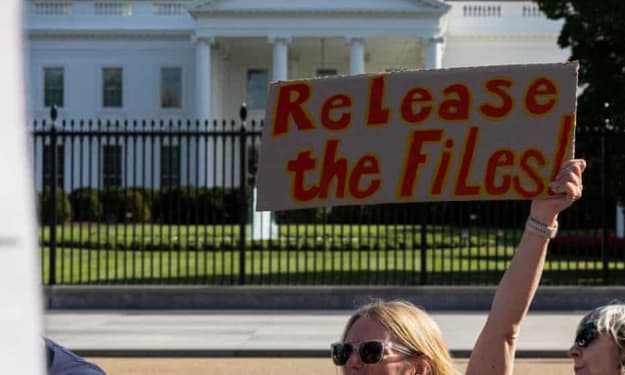
Trump Complains Epstein Files Are Damaging People Who ‘Innocently Met’ Him . AI-Generated.
Former U.S. President Donald Trump has reignited controversy by criticizing the continued release and discussion of files connected to the late financier Jeffrey Epstein, arguing that the disclosures are unfairly damaging people who merely “innocently met” Epstein and had no involvement in his crimes. The remarks have added a new layer to the long-running public debate surrounding Epstein’s network, accountability, and the broader consequences of releasing sensitive information tied to high-profile figures.
By Salaar Jamaliabout a month ago in The Swamp
Trump Unveils New Class of Warship Named After Himself. AI-Generated.
In a move that has instantly sparked debate across political, military, and public circles, former U.S. President Donald Trump has unveiled what he describes as a new class of American warship bearing his own name. The announcement, dramatic in both symbolism and ambition, has reignited discussions about military tradition, presidential legacy, and the intersection of politics with national defense.
By Salaar Jamaliabout a month ago in The Swamp
British Woman Detained in Iran Shares Pain Through a Poem. AI-Generated.
In situations where voices are silenced and freedom is stripped away, creativity often becomes a lifeline. Such is the case with a British woman detained in Iran, who has managed to share her pain, fear, and resilience through a deeply moving poem. Her words, written under conditions of confinement and uncertainty, have resonated far beyond prison walls, offering a rare glimpse into the emotional toll of arbitrary detention.
By Fiaz Ahmed Brohiabout a month ago in The Swamp
Russia Escalates Attacks on Key Ukrainian Region of Odesa. AI-Generated.
Russia has intensified its military campaign against Ukraine by sharply escalating attacks on the southern port city of Odesa, a region critical to Ukraine’s economy, security, and global trade routes. The renewed assault marks a dangerous phase in the ongoing war, signaling Moscow’s determination to cripple Ukraine’s access to the Black Sea and weaken its international connections.
By Fiaz Ahmed about a month ago in The Swamp
For Fallen Syrian Dictator Assad and Family, an Exile of Luxury and Impunity. AI-Generated.
When long-ruling leaders fall, history often promises justice, accountability, and reckoning. Yet, for many deposed autocrats, exile does not mean hardship or remorse—it means comfort, protection, and silence. The story surrounding Syria’s fallen strongman Bashar al-Assad and his family fits neatly into this troubling pattern, raising profound questions about global accountability, political morality, and the cost of unchecked power. After years of civil war that devastated Syria, displaced millions, and claimed countless lives, Assad’s grip on power ultimately collapsed under a combination of internal pressure and shifting international dynamics. While ordinary Syrians faced destruction, poverty, and exile under desperate conditions, Assad and his inner circle reportedly transitioned into a life far removed from the ruins they left behind. A Soft Landing After a Brutal Rule Exile, in theory, is meant to remove dangerous leaders from power. In practice, it often becomes a golden parachute. Assad and his family are believed to have secured refuge in a friendly nation willing to trade political loyalty for silence. Instead of courtrooms or international tribunals, the former ruling elite reportedly found safety behind fortified walls, enjoying elite security and lavish living arrangements. This contrast is stark. Syria’s infrastructure was reduced to rubble, hospitals and schools destroyed, and entire cities emptied. Meanwhile, the former president—once accused of overseeing widespread repression—appears insulated from consequence. The disparity highlights a recurring flaw in the global political system: power can purchase impunity long after legitimacy is lost. Wealth Built on a Nation’s Suffering Assad’s exile has also reignited debate over the massive wealth accumulated by Syria’s ruling family. For decades, the Assad dynasty controlled key sectors of the economy through loyalists and relatives. Sanctions exposed only fragments of this network, but reports have long suggested offshore accounts, luxury properties, and hidden investments scattered across multiple countries. In exile, this wealth ensures not just comfort, but influence. Financial independence allows fallen leaders to avoid accountability, fund loyal networks, and maintain relevance from afar. For Syrians struggling to rebuild their lives, this reality feels like a second betrayal—first by their government, and then by a world that allows stolen wealth to remain untouched. International Law and Its Limits The case of Assad exposes the limitations of international justice. While global institutions emphasize human rights and accountability, enforcement remains selective and slow. War crimes investigations often stall due to political vetoes, jurisdictional barriers, or diplomatic bargaining. As a result, leaders accused of grave abuses can evade justice simply by aligning with powerful allies. This sends a dangerous message: brutality may be punished rhetorically, but rarely materially. For emerging autocrats around the world, Assad’s comfortable exile may appear less like a cautionary tale and more like a survival strategy—hold power as long as possible, then retreat with wealth and protection intact. Life in Exile: Silence, Strategy, and Legacy Unlike revolutionaries forced into obscurity, Assad’s exile does not mean irrelevance. Former leaders often retain symbolic power, especially among loyal supporters. Carefully managed silence can preserve mystique, while occasional statements or leaks remind the world they are still watching. For Assad’s family, exile also becomes a project of legacy management. The goal shifts from governing to rewriting history—portraying their rule as misunderstood, their downfall as foreign interference, and their actions as necessary measures in turbulent times. This battle over narrative can be as influential as any court ruling, especially in regions where truth is shaped by politics. The Human Cost That Follows Lost in discussions of luxury exile is the enduring trauma of the Syrian people. Millions remain refugees, unable to return home. Families search for missing relatives. Entire generations have grown up amid violence and displacement. For them, seeing the former ruling family live comfortably abroad deepens wounds that may never fully heal. Justice, to victims, is not abstract. It is tangible recognition of wrongdoing, accountability for perpetrators, and restoration of dignity. When those responsible escape consequence, it reinforces a sense of abandonment by the international community. A Familiar Ending, an Unfinished Story Assad’s exile is not unique. History is filled with fallen rulers who traded power for protection—living out their days in villas rather than prison cells. What makes this case particularly haunting is its timing, in an era that claims to value transparency, human rights, and global justice. Whether Assad and his family will ever face formal accountability remains uncertain. What is clear, however, is that their exile represents more than personal survival—it is a mirror reflecting the failures of international enforcement and the enduring imbalance between power and justice. For Vocal Media readers, this story is a reminder that the end of a regime does not always mean the end of suffering. Sometimes, it merely shifts where comfort and consequence fall—and who is forced to live with each.
By Fiaz Ahmed Brohiabout a month ago in The Swamp