humanity
Humanity topics include pieces on the real lives of politicians, legislators, activists, women in politics and the everyday voter.
Berlin Blackout Sparks Alarm After Left-Wing Group Claims Responsibility for Sabotage. AI-Generated.
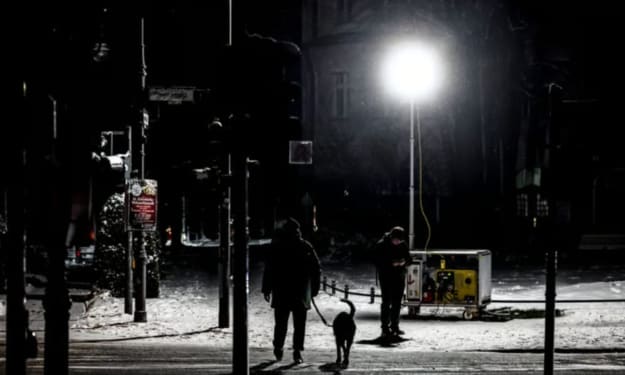
Start wrBerlin is no stranger to political protest, but a recent citywide blackout has pushed Germany into uneasy territory. After tens of thousands of residents were left without power, a left-wing activist group came forward claiming responsibility, framing the incident as an act of political sabotage aimed at forcing attention on climate policy and technological governance. The claim has intensified public concern, not only about the blackout itself, but about the growing willingness of activist groups to target critical infrastructure. What began as a disruption has now become a national debate over the limits of protest, the definition of extremism, and how democracies should respond when political activism crosses into sabotage. The Blackout That Shook the Capital The outage affected multiple districts across Berlin, disrupting homes, businesses, and public transport systems. Traffic lights failed, trains were delayed, and residents reported hours without heating, internet access, or reliable communication. While hospitals and emergency facilities relied on backup generators, authorities acknowledged that the incident placed significant strain on public services. Initial reports described the blackout as a technical failure. That explanation changed dramatically when a left-wing group issued a statement online claiming responsibility, describing the outage as a deliberate act designed to expose what it called the “fragility of systems that sustain an unjust and destructive status quo.” The group framed the sabotage as non-violent, arguing that disruption — not harm — was the goal. The Group’s Message and Motivation In its statement, the group linked the blackout to broader grievances over climate change, artificial intelligence, and what it described as government inaction. According to the group, modern societies continue to rely on fossil fuels, centralized energy grids, and rapidly advancing technologies without sufficient democratic oversight. By targeting infrastructure, the activists said they hoped to demonstrate how vulnerable modern life is — and how urgently political priorities need to shift. This rhetoric reflects a growing strand within radical activism that views disruption of everyday life as a legitimate tool. Supporters argue that traditional protests no longer generate meaningful political change. Critics see a dangerous escalation that risks normalizing tactics once associated with extremist movements. Government and Security Response German authorities reacted swiftly. Interior Ministry officials condemned the sabotage, stressing that interference with critical infrastructure is a serious criminal offense regardless of political motivation. Investigators are now working to verify the group’s claim and determine how the outage was carried out. Security agencies have also launched a broader review of infrastructure protection, particularly energy systems that are increasingly decentralized and digitized. Officials warned that while the blackout did not result in fatalities, similar incidents could have far more serious consequences in the future. Several political leaders called for tougher penalties for those who sabotage essential services, arguing that democratic societies cannot tolerate actions that endanger public safety. Public Reaction: Sympathy Meets Anger Public opinion in Berlin and across Germany has been sharply divided. Some residents expressed sympathy with the underlying causes highlighted by the group, particularly concerns over climate change and unchecked technological power. However, frustration and anger dominated many responses. Small business owners reported financial losses. Families with elderly or medically vulnerable members described fear and anxiety during the outage. Commuters voiced outrage at being used, in their words, as “collateral damage” in a political statement. For many, the group’s justification rang hollow. While climate anxiety is widespread, the idea of sabotaging infrastructure crossed a line. Protest or Extremism? The central question now facing Germany is how to define actions like the Berlin blackout. Is this civil disobedience, or does it constitute political extremism? Legal experts point out that intent matters. Civil disobedience traditionally involves breaking laws openly and accepting consequences to highlight injustice. Sabotage, by contrast, is covert and risks unintended harm. The blackout’s scale and impact complicate claims that the action was harmless. German history adds another layer of sensitivity. The country remains acutely aware of how political extremism — from both the far right and far left — has threatened democratic stability in the past. As a result, there is little tolerance for actions that undermine public trust or safety. Infrastructure as a New Protest Target The Berlin blackout underscores a worrying trend: infrastructure has become a new battleground for political activism. Energy grids, transport networks, and data systems are increasingly seen as pressure points capable of generating maximum attention with minimal effort. Experts warn that this approach carries serious risks. Even well-intentioned activists cannot fully control the consequences of infrastructure disruption. Power outages can affect hospitals, emergency communications, and vulnerable populations in unpredictable ways. There is also concern that such tactics could inspire copycat actions — not only by activists, but by criminal or hostile actors exploiting similar vulnerabilities. Political Fallout and Policy Implications The incident is already shaping political discussions in Germany. Lawmakers are debating whether existing laws adequately address sabotage motivated by ideology. Some have proposed expanding surveillance powers or tightening restrictions on protest activities near critical infrastructure. Civil liberties groups caution against overreaction, warning that broad crackdowns could erode democratic freedoms and push activism further underground. They argue that the solution lies not only in security measures, but in addressing the grievances that fuel radicalization. The challenge for policymakers is finding a balance: protecting infrastructure without criminalizing dissent. A Warning for Europe Berlin’s blackout is being closely watched across Europe. As cities become smarter, greener, and more interconnected, they also become more vulnerable. Energy transitions, while essential for climate goals, introduce new complexities into grid management and security. The incident serves as a reminder that resilience is not just about technology, but governance. Transparent decision-making, public trust, and credible political pathways for change are crucial in preventing radical escalation. Conclusion: A Line Has Been Crossed The claim of responsibility by a left-wing group has transformed the Berlin blackout from a technical incident into a political reckoning. While the urgency of climate change and concerns about technology are widely shared, the method chosen has sparked fear rather than consensus. Democracies depend on protest, but they also depend on trust and safety. When activism turns to sabotage, it risks undermining the very values it claims to defend. Berlin’s blackout is more than a disruption of power — it is a warning about how fragile the line between protest and extremism can become in an age of crisis, urgency, and political frustration.iting...
By Muhammad Hassan19 days ago in The Swamp
Maduro’s Capture in Venezuela Sends a Warning Signal to Iran. AI-Generated.
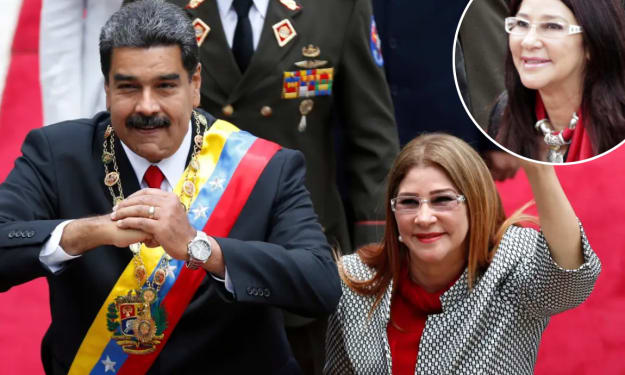
When news broke that Venezuelan President Nicolás Maduro had been captured and removed from power, the shockwaves traveled far beyond Caracas. Streets in Venezuela filled with uncertainty, global markets reacted cautiously, and foreign ministries across the world scrambled to issue statements. Yet one capital watched the events with particular intensity: Tehran. Maduro’s capture was not just a dramatic turning point in Venezuela’s long-running political crisis. It was a message — deliberate, loud, and impossible to ignore. And for Iran, a country that has long positioned itself in defiance of U.S. power while cultivating alliances with sanctioned states, that message landed close to home. A Stunning Break With the Status Quo For years, Nicolás Maduro survived international isolation, economic collapse, and waves of domestic unrest. Sanctions failed to dislodge him. Diplomatic pressure hardened his resolve. Even recognition of an alternative president did little to weaken his grip on power. His capture marked a stark departure from that pattern. What made the moment so significant was not only the fall of a deeply entrenched leader, but how it happened. The operation signaled that Washington was willing to move beyond economic and diplomatic tools and employ direct action against a sitting head of state it considers a criminal actor. This shift alone has altered how governments across the world are reassessing U.S. red lines. For allies, the move was controversial. For adversaries, it was alarming. Why Iran Is Paying Close Attention Iran and Venezuela have shared a relationship built on mutual resistance to U.S. pressure. Both governments have faced sweeping sanctions, accusations of criminal activity, and diplomatic isolation. Over the years, Tehran and Caracas cooperated on energy, finance, and symbolic political solidarity, presenting themselves as part of a broader front against American dominance. Maduro’s capture punctures a long-held assumption in Tehran: that geographic distance and diplomatic defiance provide a layer of protection. If Washington could orchestrate the removal of a leader in Latin America, Iranian strategists must now ask uncomfortable questions about their own security. The message to Iran is not subtle. The era when sanctioned leaders could assume they were untouchable may be ending. A Warning Shot, Not a One-Off From Washington’s perspective, the operation appears designed to send a broader signal. Maduro was not simply removed; he was treated as a criminal actor rather than a legitimate head of state. That framing matters. It suggests that the United States is willing to redefine sovereignty when it believes international norms have been violated. For Iran, this raises fears of precedent. Tehran’s leadership has long worried about regime-change strategies, especially as tensions over nuclear development, regional proxies, and maritime security continue to simmer. Maduro’s fate reinforces the idea that confrontation with the U.S. can escalate rapidly — and unpredictably. Even if Iran itself is not an immediate target, the psychological impact is real. Deterrence is no longer just about missiles and militias; it is about credibility. Maduro’s capture demonstrated that Washington wants adversaries to believe it means what it says. The Risk of Escalation Ironically, this warning signal could produce the opposite of its intended effect. Rather than moderating Iran’s behavior, it may harden it. History suggests that regimes feeling cornered tend to double down. Iranian hardliners can point to Venezuela as evidence that compromise invites vulnerability. In that context, Tehran may accelerate efforts to strengthen its deterrence capabilities, deepen ties with non-Western powers, and rely more heavily on regional allies and proxy networks. At the same time, Iranian leaders may use external threats to justify tighter control at home. Foreign pressure has often been used as a rallying cry to suppress dissent and frame domestic opposition as foreign-backed. Maduro’s downfall, rather than frightening Tehran into submission, could reinforce its siege mentality. Global Reactions and Unease Maduro’s capture has also triggered wider debate about international law and global norms. Several countries — including major powers that are skeptical of U.S. influence — expressed concern that the operation undermines state sovereignty. Even some U.S. allies privately worry about the long-term implications of such actions. For Iran, this international unease is an opportunity. Tehran can position itself as a victim-in-waiting, appealing to countries that fear a world where powerful states unilaterally remove weaker governments. This narrative may help Iran strengthen diplomatic ties with states that oppose what they see as American overreach. Yet there is a paradox here. While the backlash offers Iran rhetorical ammunition, it does little to erase the core lesson of Venezuela: alliances and distance do not guarantee safety. A Shift in the Global Power Equation Maduro’s capture may come to be seen as a turning point in global geopolitics. It suggests a world moving away from predictable rules and toward sharper, riskier forms of power projection. For the United States, it reflects frustration with years of stalled diplomacy and sanctions that failed to deliver political change. For Iran, it introduces a new layer of uncertainty. The country now faces a strategic environment where the consequences of confrontation appear more immediate and more personal. Tehran must balance its desire to project strength with the reality that escalation carries higher risks than before. Conclusion: A Message That Will Echo Maduro’s fall is not just Venezuela’s story. It is a warning written in bold letters for governments that have built their legitimacy on defying Washington. Iran, in particular, cannot afford to dismiss it as a regional anomaly. Whether this moment leads to greater restraint or greater confrontation remains unclear. What is certain is that the capture of Venezuela’s long-time leader has altered perceptions of power, vulnerability, and consequence. For Tehran, the signal is unmistakable: the rules are changing — and ignoring that reality could come at a very high cost.
By Muhammad Hassan19 days ago in The Swamp
Miniature Mind Musings #11:
Are there infinite levels to this lowness, or is there a sale on somewhere? Blink for one minute… Sheesh! I don’t think words like “politics” or “leadership” are gonna be definitions that leave the masses feeling all warm and fuzzy inside anymore for a long time.
By The Dani Writer20 days ago in The Swamp
Gunmen Raid Village in Northern Nigeria, Killing at Least 30 People and Abducting Others. AI-Generated.
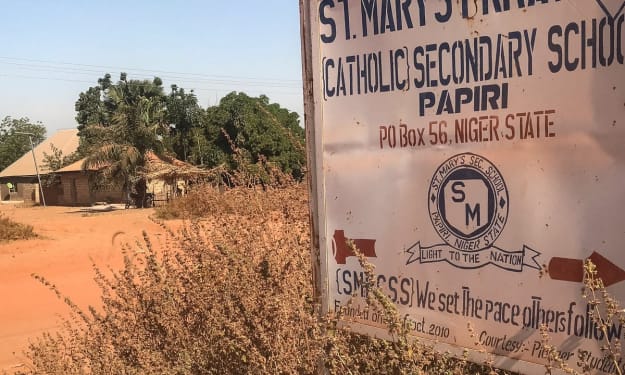
StartNorthern Nigeria has once again been shaken by violence after gunmen raided a rural village, killing at least 30 people and abducting several others in a late-night attack that has left survivors traumatized and communities fearful of what may come next. The assault, carried out by heavily armed attackers on motorcycles, highlights the worsening insecurity gripping large parts of the country’s north and the persistent vulnerability of rural populations.
By Ayesha Lashari22 days ago in The Swamp
It Is Over. Content Warning.
For the people who are still in power, the truth is hard but simple: young people are no longer listening. This is not because they are lazy, careless, or disrespectful. It is because they are tired, disappointed, and emotionally disconnected. Something has broken between the leaders and the young generation, and pretending everything is normal will not fix it.
By John Smith22 days ago in The Swamp
Maduro’s Wife at the Center of Venezuela Chaos: What Really Happened During the U.S. Strike
In the early hours of a tense and uncertain day, the world woke up to shocking headlines out of Venezuela. Explosions were reported. Statements flew across social media. And suddenly, one unexpected phrase dominated global search trends: “Maduro’s wife.”
By Bevy Osuos23 days ago in The Swamp
The Night a Song Brought Me Back to Myself
I didn’t watch the special for the spectacle. I watched because I needed to hear the song again. Not the version from the movie trailer or the TikTok clip. The one that lived in my bones—the one I’d hummed under my breath during chemo, during layoffs, during the long winter after my divorce. The song that said: It’s okay to be different. It’s okay to fall. It’s okay to rise anyway.
By KAMRAN AHMAD24 days ago in The Swamp
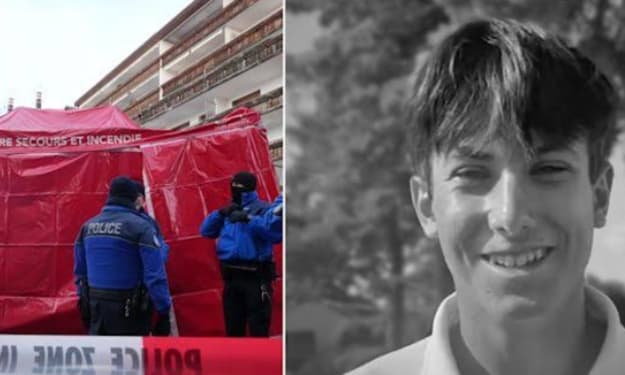
First Victim of Swiss Ski Resort Fire Named, as New Video Shows Bar Ceiling Alight. AI-Generated.
A devastating fire has struck a popular Swiss ski resort, leaving one confirmed victim dead and several others injured. The fire, which broke out on the evening of December 31st at a renowned mountain resort in Zermatt, has left both locals and tourists reeling. Authorities have now identified the first victim of the blaze, while chilling new video footage reveals the terrifying moments leading up to the eruption of flames within a ski resort bar.
By Aqib Hussain24 days ago in The Swamp