
Maduro’s Capture in Venezuela Sends a Warning Signal to Iran
Why the dramatic arrest of Caracas’ strongman is reshaping global power calculations far beyond Latin America

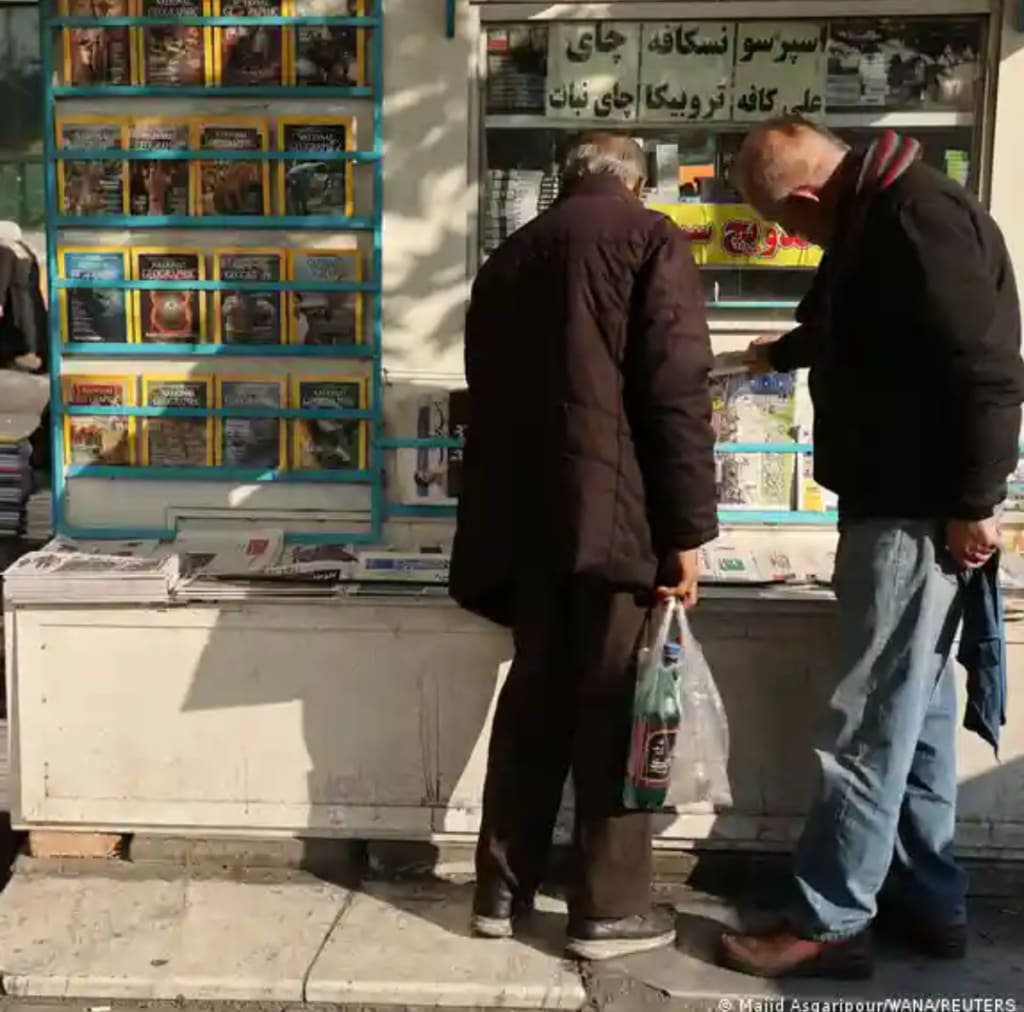
When news broke that Venezuelan President Nicolás Maduro had been captured and removed from power, the shockwaves traveled far beyond Caracas. Streets in Venezuela filled with uncertainty, global markets reacted cautiously, and foreign ministries across the world scrambled to issue statements. Yet one capital watched the events with particular intensity: Tehran.
Maduro’s capture was not just a dramatic turning point in Venezuela’s long-running political crisis. It was a message — deliberate, loud, and impossible to ignore. And for Iran, a country that has long positioned itself in defiance of U.S. power while cultivating alliances with sanctioned states, that message landed close to home.
A Stunning Break With the Status Quo
For years, Nicolás Maduro survived international isolation, economic collapse, and waves of domestic unrest. Sanctions failed to dislodge him. Diplomatic pressure hardened his resolve. Even recognition of an alternative president did little to weaken his grip on power. His capture marked a stark departure from that pattern.
What made the moment so significant was not only the fall of a deeply entrenched leader, but how it happened. The operation signaled that Washington was willing to move beyond economic and diplomatic tools and employ direct action against a sitting head of state it considers a criminal actor. This shift alone has altered how governments across the world are reassessing U.S. red lines.
For allies, the move was controversial. For adversaries, it was alarming.
Why Iran Is Paying Close Attention
Iran and Venezuela have shared a relationship built on mutual resistance to U.S. pressure. Both governments have faced sweeping sanctions, accusations of criminal activity, and diplomatic isolation. Over the years, Tehran and Caracas cooperated on energy, finance, and symbolic political solidarity, presenting themselves as part of a broader front against American dominance.
Maduro’s capture punctures a long-held assumption in Tehran: that geographic distance and diplomatic defiance provide a layer of protection. If Washington could orchestrate the removal of a leader in Latin America, Iranian strategists must now ask uncomfortable questions about their own security.
The message to Iran is not subtle. The era when sanctioned leaders could assume they were untouchable may be ending.
A Warning Shot, Not a One-Off
From Washington’s perspective, the operation appears designed to send a broader signal. Maduro was not simply removed; he was treated as a criminal actor rather than a legitimate head of state. That framing matters. It suggests that the United States is willing to redefine sovereignty when it believes international norms have been violated.
For Iran, this raises fears of precedent. Tehran’s leadership has long worried about regime-change strategies, especially as tensions over nuclear development, regional proxies, and maritime security continue to simmer. Maduro’s fate reinforces the idea that confrontation with the U.S. can escalate rapidly — and unpredictably.
Even if Iran itself is not an immediate target, the psychological impact is real. Deterrence is no longer just about missiles and militias; it is about credibility. Maduro’s capture demonstrated that Washington wants adversaries to believe it means what it says.
The Risk of Escalation
Ironically, this warning signal could produce the opposite of its intended effect. Rather than moderating Iran’s behavior, it may harden it.
History suggests that regimes feeling cornered tend to double down. Iranian hardliners can point to Venezuela as evidence that compromise invites vulnerability. In that context, Tehran may accelerate efforts to strengthen its deterrence capabilities, deepen ties with non-Western powers, and rely more heavily on regional allies and proxy networks.
At the same time, Iranian leaders may use external threats to justify tighter control at home. Foreign pressure has often been used as a rallying cry to suppress dissent and frame domestic opposition as foreign-backed. Maduro’s downfall, rather than frightening Tehran into submission, could reinforce its siege mentality.
Global Reactions and Unease
Maduro’s capture has also triggered wider debate about international law and global norms. Several countries — including major powers that are skeptical of U.S. influence — expressed concern that the operation undermines state sovereignty. Even some U.S. allies privately worry about the long-term implications of such actions.
For Iran, this international unease is an opportunity. Tehran can position itself as a victim-in-waiting, appealing to countries that fear a world where powerful states unilaterally remove weaker governments. This narrative may help Iran strengthen diplomatic ties with states that oppose what they see as American overreach.
Yet there is a paradox here. While the backlash offers Iran rhetorical ammunition, it does little to erase the core lesson of Venezuela: alliances and distance do not guarantee safety.
A Shift in the Global Power Equation
Maduro’s capture may come to be seen as a turning point in global geopolitics. It suggests a world moving away from predictable rules and toward sharper, riskier forms of power projection. For the United States, it reflects frustration with years of stalled diplomacy and sanctions that failed to deliver political change.
For Iran, it introduces a new layer of uncertainty. The country now faces a strategic environment where the consequences of confrontation appear more immediate and more personal. Tehran must balance its desire to project strength with the reality that escalation carries higher risks than before.
Conclusion: A Message That Will Echo
Maduro’s fall is not just Venezuela’s story. It is a warning written in bold letters for governments that have built their legitimacy on defying Washington. Iran, in particular, cannot afford to dismiss it as a regional anomaly.
Whether this moment leads to greater restraint or greater confrontation remains unclear. What is certain is that the capture of Venezuela’s long-time leader has altered perceptions of power, vulnerability, and consequence. For Tehran, the signal is unmistakable: the rules are changing — and ignoring that reality could come at a very high cost.
About the Creator
Muhammad Hassan
Muhammad Hassan | Content writer with 2 years of experience crafting engaging articles on world news, current affairs, and trending topics. I simplify complex stories to keep readers informed and connected.
Keep reading
More stories from Muhammad Hassan and writers in The Swamp and other communities.
Trump’s Greenland Threats Put the Transatlantic Alliance on Death Watch
The transatlantic alliance has survived wars, diplomatic crises, and ideological rifts for more than seven decades. Yet today, it finds itself under renewed strain from an unlikely source: former U.S. President Donald Trump’s revived threats and rhetoric surrounding Greenland. What once seemed like an eccentric geopolitical idea has returned as a serious fault line, forcing European leaders to question Washington’s long-term reliability and pushing the U.S.–Europe relationship into what some analysts describe as a “death watch” phase. At the heart of the issue is Greenland’s strategic value. The massive Arctic island, an autonomous territory within the Kingdom of Denmark, has gained increasing importance as climate change opens new shipping routes, exposes untapped mineral resources, and heightens military competition in the High North. For the United States, Greenland represents a critical piece of Arctic security, hosting the U.S. Pituffik Space Base (formerly Thule Air Base), which plays a vital role in missile warning and space surveillance. Trump’s interest in Greenland first made headlines in 2019 when he openly suggested buying the island, a proposal swiftly rejected by Denmark and Greenland’s government. While the idea was widely mocked at the time, the underlying message was unmistakable: the U.S. was willing to challenge long-standing diplomatic norms to secure strategic advantage. Now, with Trump once again dominating American political discourse and openly revisiting coercive foreign policy ideas, European capitals are bracing for a more confrontational transatlantic era. A Threat Beyond Diplomacy What alarms European leaders is not merely the suggestion of acquiring Greenland, but the implied willingness to apply pressure—even threats—against a NATO ally. Denmark is a founding member of NATO, and any overt U.S. intimidation undermines the alliance’s core principle of mutual trust. If Washington is prepared to strong-arm Copenhagen over Greenland, critics ask, what prevents similar tactics against other allies when U.S. interests are at stake? This concern cuts deeper than Denmark alone. Greenland’s status is closely tied to issues of sovereignty, self-determination, and international law. Trump’s rhetoric is widely perceived in Europe as dismissive of these principles, reinforcing fears that a transactional U.S. foreign policy could override shared democratic values. For smaller European states in particular, this signals a dangerous shift away from rules-based cooperation toward raw power politics. NATO Unity Under Pressure The timing of these threats could not be worse. NATO already faces internal divisions over defense spending, Ukraine, China, and the future scope of the alliance. Trump’s past criticism of NATO—labeling it “obsolete” and questioning the U.S. commitment to collective defense—still lingers in European memory. Greenland has become a symbol of those anxieties: a reminder that U.S. security guarantees may come with strings attached. European officials worry that such rhetoric emboldens rival powers. Russia, which has rapidly expanded its Arctic military presence, is closely watching the strain between Washington and European allies. China, meanwhile, has invested heavily in Arctic research and infrastructure, framing itself as a “near-Arctic state.” Any visible fracture within the transatlantic alliance risks weakening the West’s ability to coordinate a coherent Arctic strategy. Europe’s Growing Skepticism Trump’s Greenland threats have accelerated an already growing European debate about strategic autonomy. France has long advocated for a stronger, more independent European defense posture, and recent events have given that argument fresh momentum. Germany and other EU states, traditionally cautious about distancing themselves from the U.S., are increasingly open to discussions about reducing dependence on Washington for security guarantees. This does not mean Europe is ready to abandon NATO or the United States. Public opinion across much of Europe still favors close ties with Washington. However, trust—once taken for granted—is now conditional. European leaders are quietly planning for scenarios in which U.S. policy becomes unpredictable, or even openly hostile to allied interests. Greenland’s Own Voice Lost in much of the geopolitical debate is Greenland itself. The island’s leaders have repeatedly emphasized that Greenland is not for sale and that its future should be determined by its people. Many Greenlanders see Trump’s rhetoric as a reminder of colonial-era attitudes, fueling support for greater autonomy or eventual independence from Denmark. Ironically, U.S. pressure could push Greenland further away from Washington’s orbit rather than closer to it. Respectful engagement, economic cooperation, and acknowledgment of Greenlandic self-determination are far more likely to secure long-term U.S. interests than threats or transactional bargaining. A Death Watch or a Wake-Up Call? Describing the transatlantic alliance as being on “death watch” may sound dramatic, but it reflects genuine anxiety within diplomatic circles. Alliances are sustained not only by shared interests, but by shared expectations of behavior. Trump’s Greenland threats challenge those expectations at a fundamental level. Yet crises often serve as catalysts for change. Europe may emerge from this period more unified and strategically mature, while the U.S. may eventually rediscover the value of alliances built on trust rather than coercion. Whether the transatlantic relationship weakens or adapts will depend on choices made in Washington, Copenhagen, Nuuk, and beyond. For now, Greenland stands as a stark reminder that even long-standing alliances are fragile. When rhetoric turns into threats, and allies are treated as obstacles rather than partners, the very foundations of the Western order begin to crack. The question facing both sides of the Atlantic is whether this moment marks the beginning of the end—or a long-overdue reckoning that ultimately strengthens the alliance for a more uncertain world.
By Muhammad Hassan2 months ago in The Swamp
The Forsyth House Fire
Since 1851, Forsyth House has stood on the corner of Union Street and Gordon Street in the heart of Glasgow. Its iconic, or was... because on Sunday 8th of March, 2026, a fire broke out in a small, seemingly un-named shop in the building and tore all that history down. As I write, the rubble is still unsettled and the street is still blocked off. Central Station is quiet on the upper level, and around 30 small businesses have quite literally gone up in smoke.
By S. A. Crawford3 days ago in The Swamp
Cuban Protesters Ransack Communist Office as Energy Crisis Deepens
Frustration over worsening power shortages erupted into violence in parts of Cuba this week after demonstrators stormed and ransacked a local office belonging to the ruling Communist Party of Cuba. The incident reflects rising anger among ordinary Cubans struggling with long electricity outages, dwindling fuel supplies, and an economy under intense strain. According to witnesses and local reports, a group of protesters gathered outside the party building in a provincial town late in the evening after yet another day of prolonged blackouts. What began as a demonstration demanding reliable electricity and government accountability quickly escalated as some participants forced their way into the building, overturning furniture, smashing windows, and damaging official equipment. Authorities later deployed police to restore order and secure the building. While officials did not immediately release details about arrests or injuries, government sources confirmed that an investigation into the incident was underway. The unrest comes amid one of the most severe energy shortages the island has faced in years. Cuba’s fragile power grid has been struggling with aging infrastructure, limited fuel imports, and mounting economic pressure. In recent months, blackouts lasting several hours at a time have become a daily reality for many communities. Residents say the outages are disrupting every aspect of life. Food spoils quickly in homes without refrigeration, businesses are forced to close early, and hospitals and essential services must rely on backup generators. For families already coping with shortages of food and medicine, the lack of electricity has become another source of anxiety. “The lights go out for half the day,” said one resident who witnessed the protest. “We can’t cook properly, we can’t store food, and it’s extremely hot at night. People are exhausted and angry.” The government of Cuba has acknowledged the severity of the energy crisis, attributing it to multiple factors including mechanical failures at several major power plants and difficulties importing fuel. Officials have also pointed to the long-standing economic embargo imposed by the United States, which they say complicates efforts to purchase equipment and energy supplies. However, critics argue that years of underinvestment and poor management have left the country’s energy infrastructure vulnerable. Several power stations date back decades and require extensive maintenance or replacement, but financial constraints have slowed modernization efforts. The ransacking of the Communist Party of Cuba office represents a rare public challenge to the island’s one-party political system. Although small demonstrations have occurred periodically, direct attacks on government facilities remain unusual and are often quickly suppressed by security forces. Observers say the incident illustrates how economic hardship is fueling deeper dissatisfaction with the government. Since the economic downturn that intensified during the global pandemic, Cuba has experienced rising inflation, shortages of basic goods, and increasing migration as citizens seek opportunities abroad. In response to the growing unrest, officials urged calm and promised that measures are being taken to stabilize the power supply. Government representatives said repair crews are working around the clock to restore several malfunctioning power plants and that emergency fuel shipments are expected in the coming weeks. Authorities also warned against vandalism and disorder, stressing that damaging public property would only complicate recovery efforts. State media described the ransacking incident as an isolated act carried out by a small group of individuals exploiting public frustration. Despite those assurances, many residents remain skeptical about how quickly the situation will improve. The energy crisis has persisted for months, and previous government promises to reduce blackouts have brought only temporary relief. Energy experts say Cuba’s electricity sector faces structural challenges that cannot be solved quickly. The island relies heavily on aging thermal power plants and imported fuel, leaving it vulnerable to supply disruptions and price fluctuations. Renewable energy projects, including solar and wind facilities, have been proposed as part of long-term solutions but remain limited in scale. Meanwhile, the daily realities of the crisis continue to weigh heavily on ordinary citizens. During extended outages, neighborhoods often fall into darkness with little warning, forcing residents to rely on candles or battery-powered lamps. In densely populated areas, the lack of air conditioning and ventilation during hot evenings has become particularly difficult. Community leaders and local activists say people are not necessarily looking for confrontation but for practical improvements that would make daily life more manageable. Reliable electricity, stable food supplies, and economic opportunities remain among the most urgent demands voiced by residents. Whether the latest unrest signals a broader wave of protests remains unclear. In the past, demonstrations over economic conditions in Cuba have sometimes spread rapidly through social media and word of mouth before being contained by authorities. For now, the ransacked party office stands as a visible symbol of the growing frustration simmering across the island. As the energy crisis continues and blackouts persist, the government faces increasing pressure to deliver solutions that restore stability and confidence among a population grappling with daily hardship.
By Fiaz Ahmed 2 days ago in The Swamp



Comments
There are no comments for this story
Be the first to respond and start the conversation.