history
Past politicians, legislation and political movements have changed the course of history in ways both big and small. Welcome to our blast to the past.
The Electoral College
The Electoral College, this discussion only becomes a hot topic every four years, when we all should be putting our heads together to get rid of it. This lesson may become a little boring, but it is something I felt needed to be discussed. Why have we kept this practice for so long, the nation is large enough today to allow the popular vote to speak for itself.
By Toni Cunningham5 years ago in The Swamp
How the Kennedy Curse Ruined a Family
The Kennedys are the closest thing the United States has gotten to a royal family. They have been prominent figures in American politics, business, public service and entertainment over the last 60 years. They even have their own coat of arms that was granted to President John F. Kennedy in 1961 by the Chief Herald of Ireland.
By Shandi Pace5 years ago in The Swamp
Jackson-The American Hero
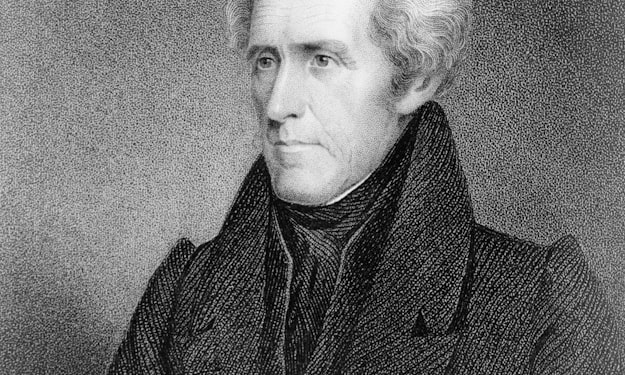
Andrew Jackson, born into poverty, knew how it drew the life out of Americans. Determined at a young age and filled with ambitions that could not be contained by poverty. With the death of his father at an early age, he had to drop out of education, which would have further his ambitions. To help his younger brother and beloved mother, he served at an early age for the country he so loved. A faithful soldier that rose in the ranks and never cowering to defeat as he was wounded in the head by an enemy and beaten in jailed. He refused to give up his loyalty to his country and strong-willed for the union. He met obstacle after obstacle in the middle of his career, his beloved mother passed. Stricken with grief he sought love from a lovely woman who reminded him of his beloved mother. As a military man, he survived poverty and gain a reputation and wealth.
By Distinguished Honorary Alumni Dr. Matthew Primous5 years ago in The Swamp
How Colonies Affected Civilizations In The Past
The British colony was established in Hong-Kong, in 1841, right after the end of the first opium-war. That was the resistance of China to accept the opium trade of the English, East-India Company, as it was attempting to bring drugs from Bengal, the then well-established and advanced part of India that the company was operating from. Exporting commodities from Hong-Kong, like tea and silk was of great importance to Europe, yet there were few things that were allowed to be imported to Asia to counter-balance the sheet. The only commodity accepted by China was Silver, but it was rare to find and unprofitable for the whole trading endeavor. So they decided to induce opium, distributing it to the whole Country through smugglers, to cover for this deficit, creating a drug pandemic that would take the whole country by the swarm.
By Philip Baker5 years ago in The Swamp
Why did London become the Capital of England?
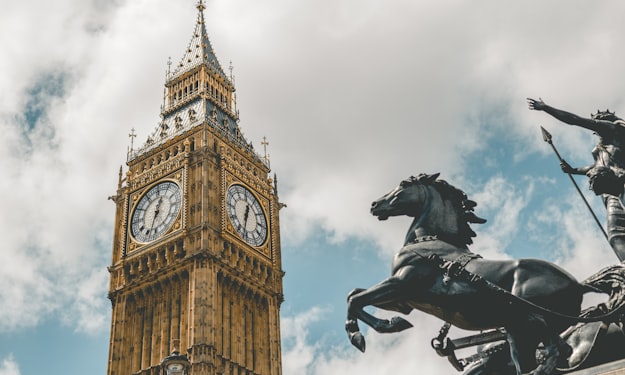
Technically, "London" didn't become the capital until after the 16th century. What we now call "the City of London" was an entity of its own, the ancient square mile Rome founded. And it still is in many ways. It was a power and money centre, even before the Norman Conquest.
By Anton Black5 years ago in The Swamp
A Review of The Star-Spangled Banner
Let me preface: I am, whether I like it or not, one of over three-hundred million Americans. I have no choice in the matter. Over the past four-hundred or so years, bits and pieces of my ancestry sailed over from miscellaneous European countries to start a new life, avoid famine and war, make a quick buck. The usual. That being said, as an American, I find a lot of the American ethos and aesthetic to be tacky and, generally, awful. At the center of that disdain is The Star-Spangled Banner, a piece of American culture that the people up top blast at every sporting event and ceremony of interest. They played it at my high school graduation, and I was homeschooled, so I’m not sure how Uncle Sam pulled that off. But he did, and I’m just a little bit more indoctrinated because of it.
By Steven Christopher McKnight5 years ago in The Swamp
Economic Unity
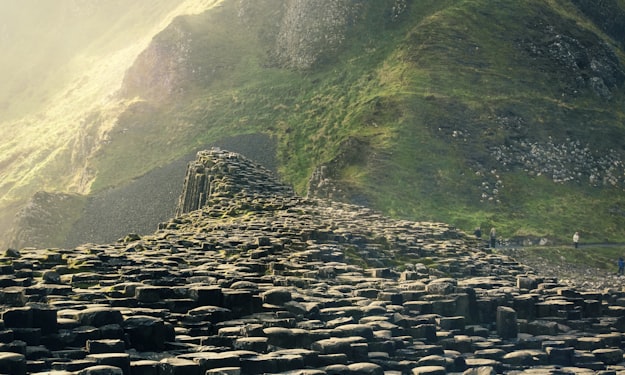
On the third May 1921 under the Government of Ireland Act (1920) Ireland was separated by law into two distinct jurisdictions. This was the partition of Ireland or críochdheighilt na hÉireann in Gaelic. From that day forward there was the Republic of Ireland or more commonly known as Southern Ireland which is made up of twenty six counties, and Northern Ireland which is made up of a more modest six counties.
By Clara Elizabeth Hamilton Orr Burns5 years ago in The Swamp
Singer Ashley McBryde on her first time hosting the CMT Music Awards ...& I Got to Sing with Her At The Local in Nashville!
🪕BANJO THIS : A short while I got to share the stage with the authentic Amazing Ashley Mcbryde at one of her shows in Nashville at a place called The Local.
By TheMichaelRicks🇺🇸™ *5 years ago in The Swamp
The Biggest Missteps in Military History
War is – more often than that – a numbers game. Unless something unlikely happens, it’s usually the side with the numerical advantage that goes home with the victory, which has been especially true in history. Many modern weapons – like nukes – can easily make brute force obsolete, though that wasn’t the case for most of our history. If you took a bigger and more intimidating army to a battle, you were almost-always more likely to return victorious.
By Pradeep Poudel5 years ago in The Swamp
Dear Black People: Let’s Talk About Our Indigenous Accompliceship And Participation In Their Oppression.
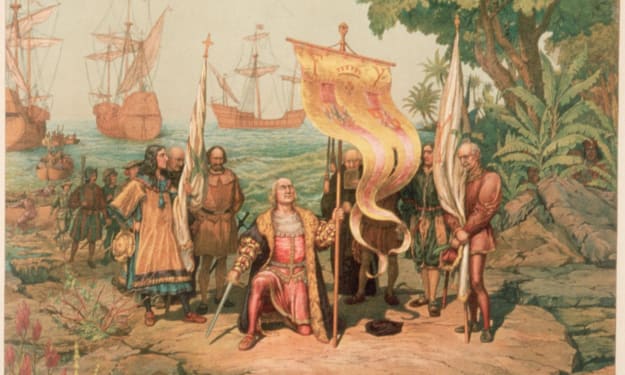
Yesterday was the day some people recognize and celebrate as Columbus Day in the United States. In Canada, it was the federally recognized holiday of Thanksgiving. In both countries however, there are others (myself included) who recognize and celebrate Indigenous People’s Day. For us, this is a day of reconciliation, education, acknowledgement, celebration and accompliceship.
By Whitney Smart5 years ago in The Swamp