history
Past politicians, legislation and political movements have changed the course of history in ways both big and small. Welcome to our blast to the past.
How the Arabs Made the Slave Trade Worse
Over the years, the worldwide discourse on slavery was solely focused on the trans-Atlantic slave trade and the wrongdoings of American and European slave merchants. One alternative slavery tradition remains mostly unnoticed and is even treated as a taboo although it absolutely was a key part of African history and had a large impact on the continent.
By ElMehdi ElAzhary5 years ago in The Swamp
Is it beneficial to read the history?
History is the brief description of all the things happens in the past. So, this is very beneficial to read the history of past. Many of the circumstances and happenings are described briefly in the history books and also in some novels. Some of the people are very curious about reading the history and want to know that what happens in the next and how they overcome that situation. What make them courageous to do that thing and who gave them the idea of doing that. So, all these things are present in the history books and everyone can readout that and get inspiration of doing things and handle that also. By reading history we will be able to know about the facts. We know about the past; the history is full of incidents and realities and also different situations.
By maryam nisar5 years ago in The Swamp
Violence as a political tool
Violence as a political tool Terrorism is a political weapon Despite the religious claims of some terrorist groups, what all terrorists seek is to force a political change on the nations they try to terrorise. Terrorism is another political tool, one used mostly (but not exclusively) by non democratic governments and non democratic groups, wishing to overthrow a democracy. If the advocates of direct action and physical violence could engage in the democratic process and gain a majority they would not need to destroy life and property. They know they can never peacefully persuade a majority and so they seek to force change by violence. Violence is the tool of those who have lost the argument. Violence has the short term aim of providing localised dominance and the longer term aim of provoking fear. Fear of violence is more effective, politically, than the localised short term physical effects of actual violence. Fear can affect huge numbers of people spread over large areas, fear can influence attitudes as well as actions.
By Peter Rose5 years ago in The Swamp
Who was Vlad Țepeș?
Vlad Țepeș- Did you know that in modern day Romanian Dracul means “The Devil?” Vlad Țepeș had many nicknames some being “Dracula, and Vlad Dracula.” There are many others and I may refer to Vlad as those other nicknames throughout the story. Vlad was Viovode of Wallachia three times from the year 1448 until his death. Vlad is often referenced as a very important leader of Wallachian history. He is also referenced as a national hero of Romania. Vlad Țepeș became the ruler of Wallachia in the year 1436. Vlad Dracul was the father of Dracula and his younger brother Radu.
By Drake Waggoner5 years ago in The Swamp
The Victorian Era
“A Golden Age” “A Golden Calm” “An Indian Summer” “A Long Afternoon” “When she came to the throne coaches still ran; men wore stocks, shaved their upper lips and ate oysters out of barrels. Women said ‘La!’ and owned no property. Well-nigh two generations had slipped by --- of steamboats, railways, telegraphs, telephones, bicycles, electric light and now these motor cars. Morals had changed, manners had changed. The middle class (had been) buttressed, chiselled, polished, till it was almost indistinguishable from the nobility. (It was) an era that had canonised hypocrisy, so that to seem respectable was to be.” (Soames Forsyte reflects on Victoria’s reign, he was a character in “The Forsyte Saga” by John Galsworthy)
By Ruth Elizabeth Stiff5 years ago in The Swamp
Powers of the Modern Monarchies of Europe
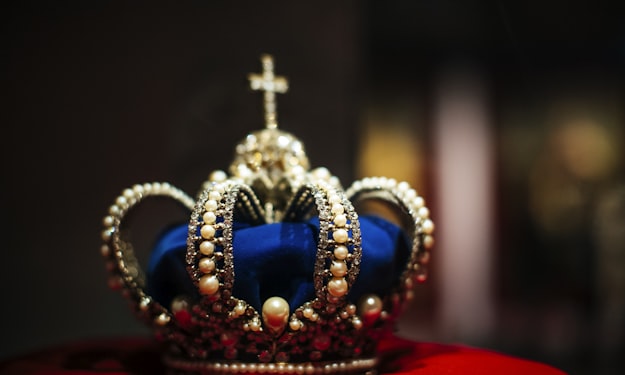
The Monarchies of Europe Western Civilization and culture is connected in its belief of liberal democracy. Human rights and democratic processes are central tenants of many European institutions. European history can be characterized by the rule of divine right monarchs; yet, in present day Europe ten democratic nations still have monarchs claiming divine rule. John Locke on the founding fathers of liberal democracy said in his Two Treatises on Civil Government that the Divine Right of Kings was an illiberal idea. Only 19% of Swedish people are religious making it one of the least religious nations in the world ("Religion In Sweden"), yet they still retain a King anointed by the church. While the monarchies present today are constrained by constitutions they are still unelected leaders holding large amounts of legal power.
By Gus Krider5 years ago in The Swamp
WOMEN IN HISTORY
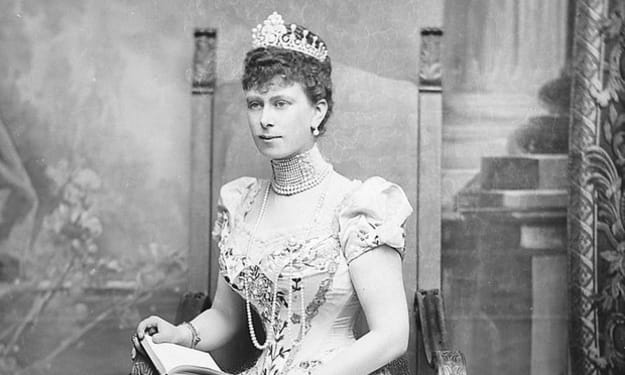
Queen Mary, consort to King George V, was the grandmother of our dear Queen, Elizabeth II. During the Great War, wishing to do her bit for the war effort, this Queen instituted an austerity drive at the Palace, where she rationed food, and visited the wounded and dying servicemen in the hospitals. Queen Mary was tireless in supporting her husband, the King, and later her son, King George VI.
By Ruth Elizabeth Stiff5 years ago in The Swamp
The Reputation of a Wolf
Introduction Title and reputation are very important. This is as true today as it was during the 14th century. Alexander Stewart, who is also referred to as the ‘Wolf of Badenoch’, was responsible for a great many actions, some of them classed as truly horrific and had a huge impact on Highland culture and society. But does Alexander Stewart of Buchan deserve his epithet as the ‘Wolf of Badenoch’? Or was he following the orders that he was given to uphold peace in the Highlands to the best of his ability? It is believed that the findings within this essay will show that Alexander Stewart did deserve his epithet due to a combination of factors and not just one.
By David Harrison5 years ago in The Swamp
George V
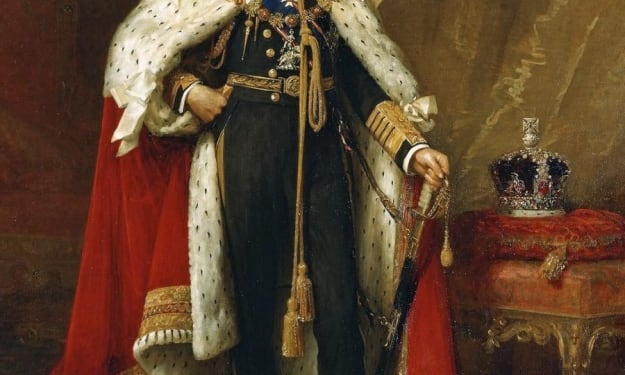
Throughout his father’s reign, George showed his support for his father and King by carrying out public duties. As the Duke of York, George opened the first session of the Australian Parliament upon the creation of the Commonwealth of Australia. As Prince and Princess of Wales, the young couple toured British India, and it is interesting to note that George was ‘disgusted by the racial discrimination’ and he actually campaigned for the greater involvement of Indians in the government of the country. George and Mary proved faultless in supporting King Edward VII and England.
By Ruth Elizabeth Stiff5 years ago in The Swamp
The History Behind the White House
As we all know the White House houses the president and is also the workplace of the United States president. The White House is located at 1600 Pennsylvania Avenue NW in Washington, D.C. Did you know that John Adams was the very first President to reside in the White House in 1800? The term “White House” is often used as a metonym for the president and their advisers. The residence was created by Irish-born architect James Hoban in the neoclassical style. The building was on Leinster House in Dublin. The Leinster House is used today for the Oireachtas or the Irish legislature.
By Drake Waggoner5 years ago in The Swamp
Racial Segregation in Los Angeles
Los Angeles life underwent major changes after the Second World War, it was pretty much the same for most citizens, races mingled very seldom on equal footing. Still the method of separating race, and the geography changed in a prominent manner. Racist laws that allowed for legal segregation were phased out. So now economic segregation ruled supreme, with detrimental effects to communities as identities were shaped, and minorities began to seek better lives. While white Los Angeles residents sought to maintain their status, and profit from it.
By Gus Krider5 years ago in The Swamp
Your Suburb has a Racist History
Coming out of the Second World War and the Zoot Suit Riots, whites in Southern California decided they were not going to share space with minorities anymore. Mexicans, Latinos, and Los Angeles’ new black population were all excluded from the visions of suburbia planned in the postwar period. Still the minorities exist in Southern California, so whites sought to find the space for their homogeneity that had declined during the prewar period and defend it with laws, distance, physical barriers, and culture.
By Gus Krider5 years ago in The Swamp