history
Past politicians, legislation and political movements have changed the course of history in ways both big and small. Welcome to our blast to the past.
1968: The Assassination of Martin Luther King Jr.
There is no figure more celebrated in the work he did for civil rights than Martin Luther King Jr. His death on April 4, 1968, due to an assassin’s bullet, left the nation and especially the black community hopeless.
By Shandi Pace7 years ago in The Swamp
What If Part II: America
The African holocaust began during the 17th century when Europeans decided to enslave Africans for the transatlantic slave trade in the Americas. The Africans never saw themselves as slaves, but prisoners of war. After 400 years in bondage, the Africans became free, but faced new challenges from discriminatory racist practices and laws.
By Darryl C. Richie7 years ago in The Swamp
Shaping the Minds of Americans: The Media and the Iran Hostage Crisis
"The days after September 11th." This phrase has emerged nationally as its own political shorthand for a positive moment of comity in the United States that occurred after the devastating terrorist attacks on American soil. The days after 9/11 are generally described as days of unity, when Americans came together and supported each other and their nation. This unity can be tracked through the approval ratings of President George W. Bush which were the highest Gallup’s approval ratings in history with nearly nine in ten Democrats and independents approving of the Republican president. It was not until one year later when significant changes had occurred in approval ratings and when the nation returned to its former habit of division; so, the question remains, how did the nation persist in unity for such a period? Simply put, it was the power of American media. The coverage of the events on September 11, 2001 is just one example of how the media gravitates towards harmony and peace within the nation when faced with true terror.
By quinn riley7 years ago in The Swamp
Presentation at White Plains Library Documents Germany’s Official Remembrance Policy of the Holocaust
The genocide of Jews in Germany is certainly not unique in world history. The Rape of Nanking, Rwanda, and Manifest Destiny tally a short list that the perpetrating nations would officially like to forget. But in that aspect, Germany stands alone. So the Holocaust and Human Rights Education Center in Purchase offered a presentation last Thursday at the White Plains Library to acknowledge the manner in which the atrocity is remembered as policy by a nation.
By Rich Monetti7 years ago in The Swamp
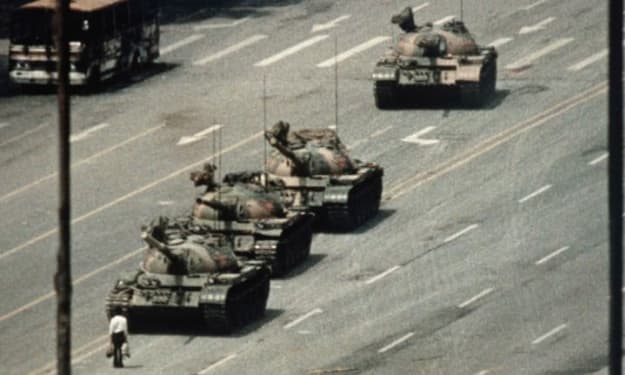
Tiananmen Square Massacre
Before we enter the nitty gritty aspects of what occurred on the fourth of June, there is some important background. Following the death of Mao Zedong in 1976, the Cultural Revolution also came to an end. It was a socio-political movement led by Zedong between 1966 and 1976 and its stated goal was to preserve "true" Communist ideology in the country by purging remnants of capitalist and traditional elements from Chinese society. This movement led to severe damage to China’s economy and the country was mired in poverty as economic production slowed down to such an extent it effectively was at a halt. At a Communist election meeting, Deng Xiaoping emerged as China’s de facto leader. To repair China’s broken economy, Deng implemented a comprehensive program, which refers to the reforms termed "Socialism with Chinese characteristics."
By Rushat Chandra7 years ago in The Swamp
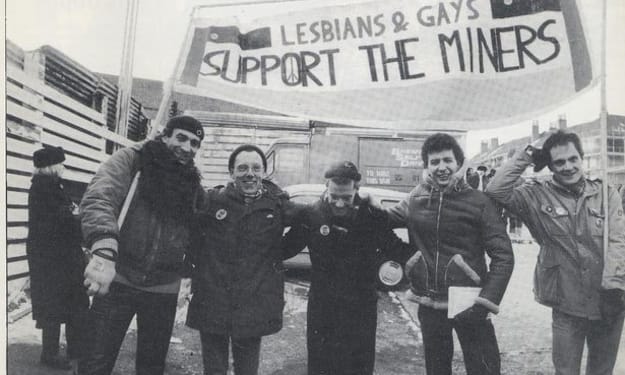
Pride: The 1984 Miners' Strike
Since the initial criminalisation of homosexual relations between two males during the Roman Empire, the LGBTQ+ community has faced much discrimination and oppression, despite the many famous and powerful figures throughout history who have been openly or privately involved in homosexuality. Such figures have seen varying levels of acceptance or discrimination; for example, King James had three serious male lovers whom he placed as his favourites in politics. It was well known that he favoured these men and some were brought before the King with the intent to change the "favourite" dynamic within the King’s Court. In comparison, Alan Turing was condemned for his homosexuality and was made to take hormonal altering drugs. When he was convicted of "gross indecency," he was given the option of jail or chemical castration. Ultimately, he chose the latter but it caused him to suffer much horrendous physical and mental distress; including impotency, breast development, and depression. He committed suicide two years later, at the age of 41 (Tatchell 2014). Although typically one may not think that the 1980s were a particularly progressive or welcoming time for the LGBTQ+ community, there were many advances made that increased awareness and acceptance of the LGBTQ+ community and their struggles. One factor that contributed to the change in social and political attitudes to homosexuality was the Miners’ Strike of 1984.The relationship built between London LGSM and the mining communities of Neath, DuLais, and Swansea and beyond led to both major political advancement in the rights of the LGBTQ+ community but also a change in attitude from society as a whole. Whether or not the Miners’ Strike and LGSM had a majorly significant impact on changing social and political attitudes is somewhat contentious as the 1980s were a major time of change already for the LGBTQ+ community prior to the Strike, in part due to the AIDS/HIV hysteria which created much stigma surrounding gay relationships. This essay will assess the significance of the 1984 Miners’ Strike in comparison to other factors that occurred prior to and in the same time period as the strike to evaluate the strike’s overall impact.
By bethan ✌️️7 years ago in The Swamp
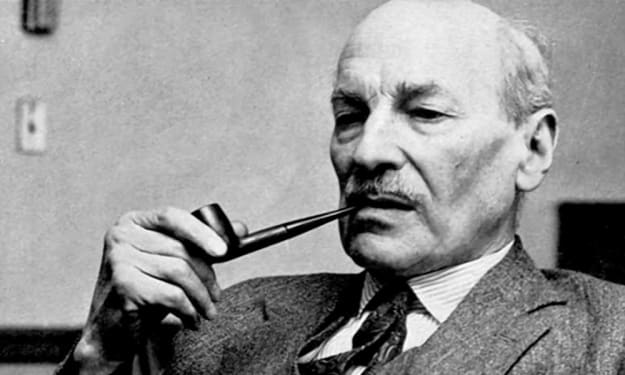
Clement Attlee's Brave New World
The end of the Second World War brought about huge social and political change in the United Kingdom. The election of July 1945 was proof that the war-weary country wanted a new leader to take them forward. The second half of the decade was swelled with acts and legislation's which would change the lives of a nation's people forever.
By Patrick Hollis7 years ago in The Swamp
Hitler Holocaust Hell
The Holocaust was one of the worst moments in world history. Millions of people suffered and were sent to concentration camps. Adolf Hitler the leader of the Germans and the Nazi’s was the main reason all of these people groups suffered. He believed that people with disabilities, mental disorders, and certain people groups like the jews or Jehovah’s witnesses should be annihilated. Not only is this savage and evil but it is also something that should never happen again. The purpose of this paper is to prove that many people groups suffered during the Holocaust, especially the Jewish people.
By Aaron Cline7 years ago in The Swamp
Treachery and Treason
History is full of treacherous and deceitful acts committed by ruthless men and women. In desperate times there have always been those who conspire to alter the course of history. Some have succeed while others have failed. The Gunpowder Plot is one such effort by a few would-be conspirators that would have changed the course of history in England some 400 years ago. History books though many omit certain facts, skirt so many details, and even stretch the truth a bit. But, when we hear about shrewd and calculating measures taken by some of histories most infamous characters, people that could have played a pivotal role in altering the course of history the Gunpowder Plot is one such instance. This coming November 5th is the anniversary of a plot so astonishing the history of England would have been rewritten had it succeeded. Yet, there is little mention of it here in the United States about what happened on the 5th of November over 400 years ago in merry old England.
By Dr. Williams7 years ago in The Swamp
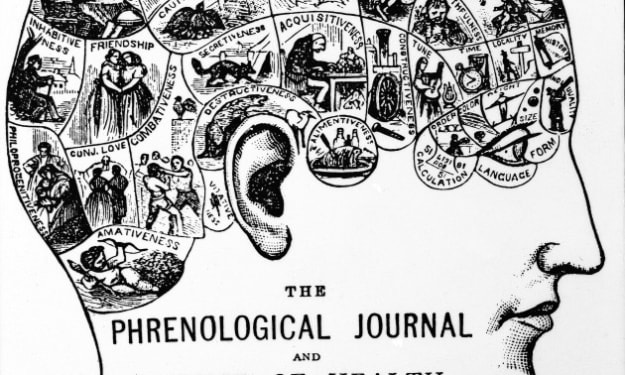
The Horrors of Scientific Racism
From the White Man’s Burden to the “culture wars,” justifications of prejudice have been used for as long as people have been prejudiced—in other words, forever. Racism is one of the most horrifying prejudices based on the atrocities committed because of it, and has had plenty of justifications in its own right. One such justification, and probably the most resilient, is scientific racism. Scientific racism uses misinterpretations of science and pseudoscience as proof that racism is not only okay, but good for humankind. It evolves alongside society in order to remain socially acceptable, reflecting the changing societal standards and the scientific interest of the time.
By History Roundtable7 years ago in The Swamp
The United Empire of America
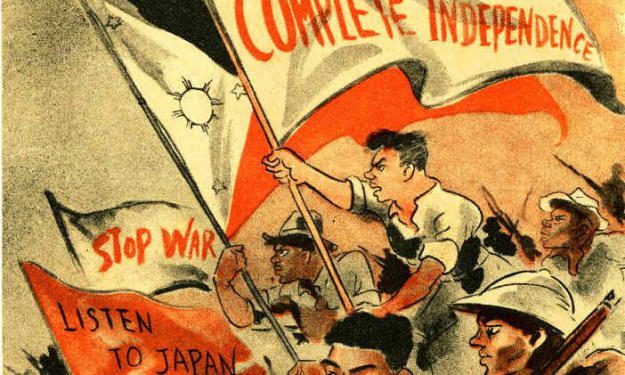
The United States likes to think of itself as an alternative to the empires of old, but in the Philippine-American War, America proved itself to just be a new version of that same imperial structure. Additionally, this unnecessary war of conquest was a clear show of the same imperial attitude that pervaded America’s westward expansion. These expansions, both the Philippine-American War and the conquest of the American West, exhibit imperialism in three main ways. One, through the expansion of land owned by the United States, as a key aspect of imperialism is expanding the territory controlled by the nation. Two, through the subjugation of the native people of the land the US took, the subjugation of conquered people being another key aspect. And three, through the attitudes of Americans before and during the conquest, as while the attitudes were different from traditional European thought in some ways, there was virtually no difference in other ways. This American imperialism in the West created a culture of expansion, one that couldn’t simply fade away once the US hit the Pacific coastline, forcing it to set its eyes on the Philippines.
By History Roundtable7 years ago in The Swamp