
Clement Attlee's Brave New World
The Man Who Introduced Social Change to Post War Britain

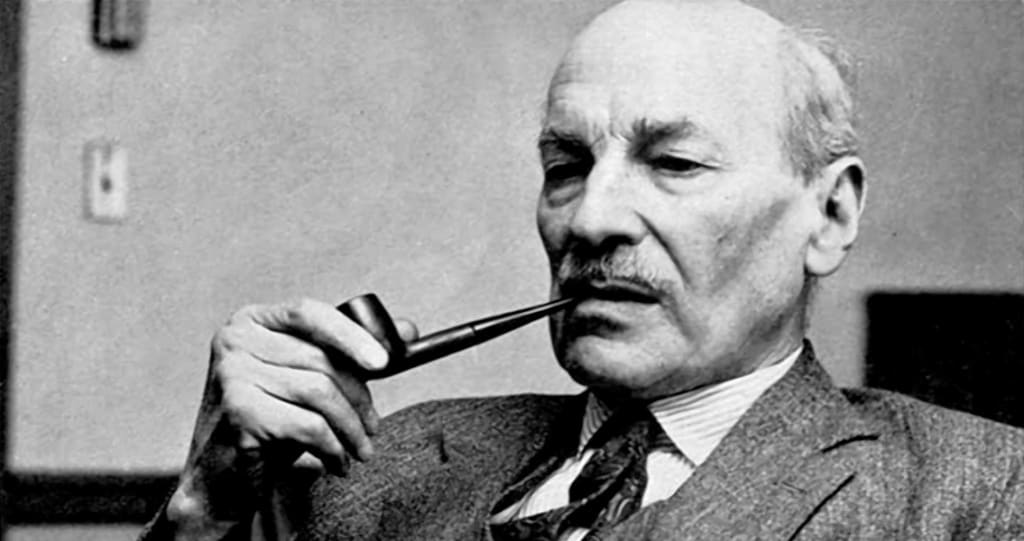
The end of the Second World War brought about huge social and political change in the United Kingdom. The election of July 1945 was proof that the war-weary country wanted a new leader to take them forward. The second half of the decade was swelled with acts and legislation's which would change the lives of a nation's people forever.
Just weeks after he’d confirmed an end to the Second World War, Winston Churchill called an early election under the pretense that the British people would remain loyal to their war heroes. This was a grave misjudgement from the Conservative leader. The people wanted change, they didn’t want a return to the days of pre-war depression. This brought the Labour Party to power for only the third time since its creation in 1900.
Clement Attlee
Clement Attlee was voted into power with a landslide result of 393 seats to the Conservative’s 210. The public did not trust Churchill to lead the country through the social reforms which had been promised after the war and were desperately needed. They put their faith in Attlee and the Labour Party to take Britain forward.
His political agenda had been constructed in the face of poverty; he experienced it up close in London throughout the early 20th century. Attlee joined the Independent Labour Party in 1908 and he fought in the trenches of the Great War as a captain and then later as a Major. These attributes as a leader followed him throughout his political career.
Britain was close to bankruptcy following the Second World War. Despite this, Attlee picked up the plans from the 1942 Beveridge Report on social reform to create ‘cradle to grave’ care for British citizens. Over the course of his five years as Prime Minister, he created a Britain which the had deserved after the hardships of the 20th century up until 1945.
Healthcare
Arguably the most significant act of Attlee’s government was the introduction of a free national health service. He believed that healthcare should be available to anyone of any social class free of charge should it be needed. No longer would people have to worry about being too poor for medical care. The people of Britain were deserving of a government which aimed to help everyone if in need; many had answered Churchills call to stop the spread of fascism and most had lost a family member in the fight against it.
The Healthcare Act was the first of several life-changing acts brought into existence by Attlee. The National Insurance Act of 1946 made it so everyone of working age was able to pay into social security and were given rewards when they were no longer able to work. This enabled Britons to build for their future in a way most would never have been able to before.
Attlee was and still is greatly admired by Coal, Electric and Railway employees. Through 1947 he re-nationalised all these industries and put them back into public ownership to be run through democratic committees. It gave back these industries to the people who made them; the working class. In fact, the evidence of what he meant to members of the coal industry is still plain to see. In the National Union of Mineworkers (NUM) Archive in Barnsley, South Yorkshire, there is a colliery banner with a portrait of Attlee on one side. a man of the working masses, if ever there was one.
Clement Attlee fronted arguably the most successful Labour government ever, putting an end to pre-war austerity and taking Britain into a brave new world. It is no wonder he is often mentioned as one of the greatest Prime Ministers in UK history. What he did in the late 1940s helped to secure essential rights for millions of working-class people, he shaped the modern world as Britons know it.
About the Creator
Keep reading
More stories from Patrick Hollis and writers in The Swamp and other communities.
Tory Infighting Continues to Plague Brexit Efforts
As it has been since the referendum result in 2016, Brexit is constantly in the peripheral vision for the UK. The end of year deadline to secure a deal is fast approaching, but the way in which the talks are going the possibility of the UK not agreeing a deal with the EU is becoming more likely. The clock is ticking on the UK’s future and our stance on the world stage is in need or resolution.
By Patrick Hollis7 years ago in The Swamp
Why Black History Matters in America?
The United States of America is celebrating their 250th anniversary in 2026. I'm proud to be an American and as someone who was born here, I wouldn't imagine myself living anywhere else. This is a country where opportunities are possible. Where anyone can be successful in anything they desire to do. Equality, community, and togetherness are the backbones of what America is and should be about. However, we have an administration who wants to erase and disregard those who have made positive, meaningful impacts in our country, specifically Black figures, such as Martin Luther King, Jr., Rosa Parks, and Maya Angelou. President Trump and his administration have been constantly complaining and fighting against what they call the "Woke agenda". They use this excuse as a distraction from other issues they refuse to address, such as the high cost of living, climate change, and inflation. That equality is dividing America, when in reality, it's bringing us together. Being woke is not tied to a specific political party. No matter where you stand on the political spectrum, you can still care about other people and their plights. Compassion and empathy for others isn't tied to a political party, either. We were taught as children to treat others the way we want to be treated and not judge others because they're different from us. Caring about others isn't a personal attack on your beliefs. It doesn't make you any less of a person. People who are easily offended over African American figures, past or present, or anything related to it, are grasping at straws. Current and future generations need to know who people like Harriet Tubman and Shirley Chisholm were, especially in the classroom. Black History is part of American History. It should be recognized, not hidden or forgotten. Besides, you can't shield children from everything, just because your feelings are easily hurt.
By Mark Wesley Pritchard 28 days ago in The Swamp




Comments
There are no comments for this story
Be the first to respond and start the conversation.