history
Past politicians, legislation and political movements have changed the course of history in ways both big and small. Welcome to our blast to the past.
Great Reformers That Don’t
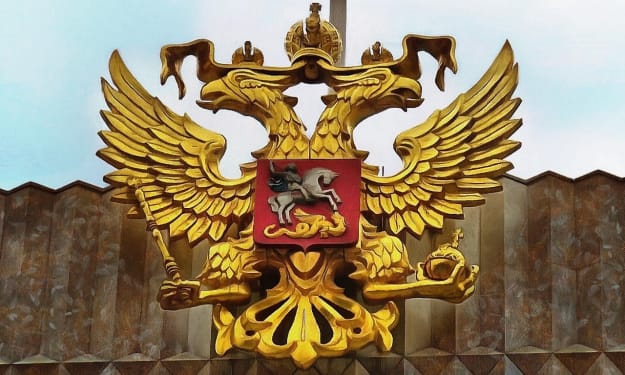
Introduction: the Tsars close their fist. Throughout its life, the Russian Empire found itself needing to liberalize to survive. It would find itself behind in technology, or otherwise at a disadvantage to Europeans, so the tsars began adopting European ideas. military reforms, education reforms, and power structure reforms, all used to keep the tsars in power in the face of the threat of dangerous neighbors. At the same time, the tsarist government was unwilling to liberalize the power structure of Russia, again, to keep the throne in power. Unfortunately, with each reform came ideas of freedom in the heads of the Russian population, noble and peasant alike. These ideas were like a virus spreading and developing, infecting the system with discontent. From the Great Reformers Peter and Catherine, to Alexander and Nicholas, to the architects of the Great Reforms, there was no shortage of Russian tsars enacting reforms that only served to increase their own power, and often this would lead to dissatisfaction with the government. The growing dissatisfaction would eventually boil over into the Decembrist Revolt after the death of Alexander, and then the revolutions of the early 1900s, the last of which finally brought an end to the tsars, and their government.
By History Roundtable7 years ago in The Swamp
Were Empires Good or Bad?
Were empires good or bad? Judging history with today's opinions achieves nothing. We are subjected to a lot of claims that Britain was wrong to have had an empire. Most of the criticism of Britain's empires seems to come from the middle class socialists living in Britain, the self-appointed elite who claim to be the arbiters of what is politically correct.
By Peter Rose7 years ago in The Swamp
The Reparations Debate Is More Than a Dollar Figure
The topic of reparations for African Americans isn’t a new concept. America as a country has touched on this issue, albeit briefly, quite a few times during the course of its history. Recent political jockeying for the 2020 election season has brought the topic back to the forefront for both African Americans, and the greater public. What are reparations? Why is the debate taking place now? Wasn’t slavery a long time ago? Those questions and others are typical of how the dialogue on this topic has gone during my experience exploring it. Those questions will continue to be asked until arguably the simplest question regarding this issue is answered:
By Herbert L. Seward III7 years ago in The Swamp
5 Things You Never Knew About the Civil War
We all know the history of the Civil War. The men and women who fought for our country have sacrificed their lives so that we can live peaceably on earth. In today's world, there is still war going on and it's just the beginning.
By Michael Reynoso7 years ago in The Swamp
Remember When
We all know the signs of growing old. That old tried and true phrase "I remember when" conjures up memories of a distant past. A past that was filled with a harmonious union of fellowship, camaraderie, and yes, that new medium of television. As Archie Bunker kept singing, "Those were the days, when men were men and girls were girls." I guess each generation has their own way of expressing the "good old days." Like my father before, I too have said countless times about the "good old days." When I was young so many of my hopes and dreams laid ahead. But as the years went by I always seemed to hit a road block or two, a few detours popped up now and again, and of course there were always those wrong turns that kept me and I bet many more from achieving what we originally set out to do.
By Dr. Williams7 years ago in The Swamp
The Two-Spirits of Montana
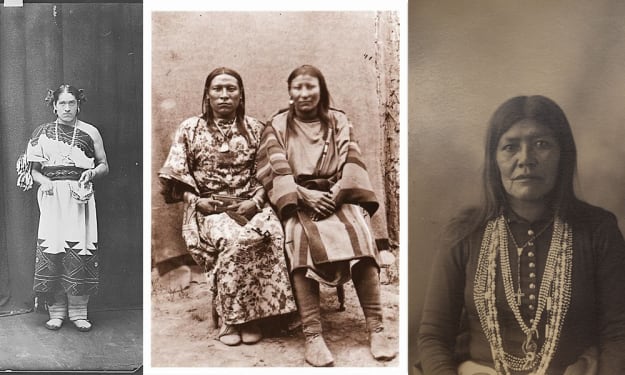
In Montana’s pre-Columbian history, there was a tradition of young boys and girls realizing that they were two-spirit and entering a new style of life which they felt better represented them. The two-spirit are a third gender with a variety of names, two-spirit being a modern pan-Indian term to replace the problematic previous anthropological term berdache, which derives from the Arabic word for eunuch slaves, which obviously carries an offensive connotation to the two-spirit. Two-spirit individuals would be born one gender, and once they realized their true nature, they would take up some or all of the responsibilities of the opposite gender. This meant that two-spirit would inhabit interesting and often important roles within their tribe. Unfortunately, as Western powers encroached on Native lands, they were disgusted by the two-spirit and repressed them, arresting them with little cause, writing poorly of them—often lying—and teaching the children of Native tribes that two-spirit were immoral. This repression caused a decline in two-spirit numbers, and many tribes lost their two-spirit community entirely. However, in the modern era there has been a resurgence of two-spirit individuals who are attempting to do activism in order to gain (or regain) acceptance, both in Native and non-Native communities.
By History Roundtable7 years ago in The Swamp
How Do You Solve a Problem like Public History?
What with all the recent controversies surrounding "white supremacists" statues, we, as the public, are beginning to participate in the public vs academic history debate: a debate which affects many sectors of life from GCSE education to politics to media to the heritage sector. The crux of it is: the public does not want to hear about the nastiness of the past.
By Elisabeth Millard7 years ago in The Swamp
No, We Don't Need White History Month. Top Story - February 2019.
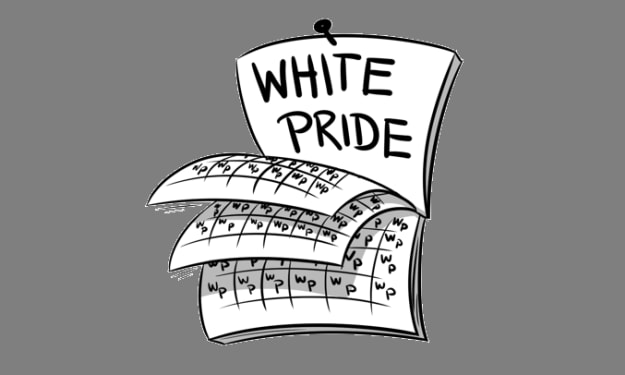
As February opens its door, it is once again the moment to celebrate Black History Month. Officially recognized as such since 1976, the second and literally shortest month of the year, if I might add, is the moment when we recognize the history and contribution of Black people in North America. Mostly celebrated in the United States, it, therefore, highlights the accomplishment of African Americans and their very unique culture. However, every year, I hear the same comment: "Why isn’t there a White History Month?’’ This article, as you can tell by the title, will explain just that. No, we don’t need White history month, and here’s why.
By Allie Pauld7 years ago in The Swamp
Equivalent Exchange
“Humankind cannot gain anything without first giving something in return. To obtain, something of equal value must be lost. That is alchemy’s first law of Equivalent Exchange. In those days, we really believed that to be the world’s one and only truth.” - Hiromu Arakawa, Fullmetal Alchemist, Vol. 1
By Alexander Martin7 years ago in The Swamp