corruption
A prime locale to talk bribery, suspect campaign funding, and all other instances of political corruption. The shadier, the better.
The Silence of the Brave
When Georgia State Senator Nancy Schaefer released her groundbreaking report, “The Corrupt Business of Child Protective Services,” she likely knew she was stepping into dangerous territory. But what she may not have known is how far-reaching—and deadly—that corruption could be. Just months after publicly declaring CPS a “criminal enterprise” incentivized to kidnap children, Schaefer was found dead in what authorities swiftly ruled a murder-suicide. Case closed—or so they said.
By Michael Phillips6 months ago in The Swamp
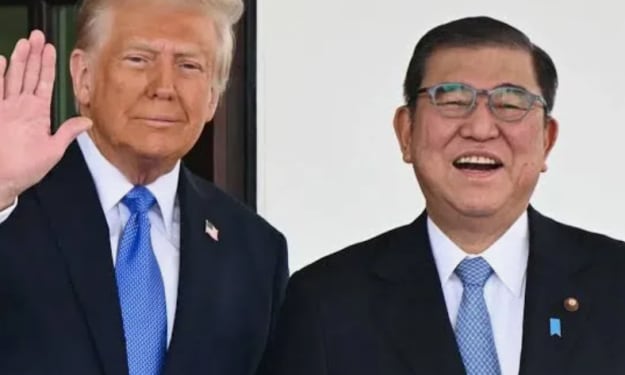
US-Japan trade deal gives Trump control over $550 billion in investments. It could be ‘vapor ware’ — and a model for other countries
**The US-Japan trade agreement grants Trump control over investments worth $550 billion. It Might Be "Vapor Ware" and Serve as an Example for Other Countries** Former President Donald Trump claimed in a high-profile announcement that a new US-Japan trade deal gave the United States leverage over 550 billion dollars in Japanese investment. The deal has been met with both enthusiasm and skepticism, with Trump hailing it as a landmark achievement for American manufacturing and job creation. Some have dubbed it potential "vapor ware" due to critics' claims that the numbers may be exaggerated, the agreements are non-binding, and the economic impact is speculative. Nonetheless, the way the deal is structured and presented may be used as a model for US trade negotiations in the future, especially if the administration is focused on optics and unilateral gain. At the heart of the agreement is a framework wherein Japan pledged to direct investment toward American industries — especially manufacturing, infrastructure, and emerging technologies. During his presidency, Trump put bilateral trade agreements ahead of multilateral ones and hailed the agreement as an example of nationalist economics. It is in line with his "America First" platform, which places an emphasis on bringing manufacturing jobs back to the United States and reducing reliance on supply chains from other countries. However, experts caution that the headline figure of \$550 billion is misleading. Before the agreement was signed, a significant portion of the pledged investment was already in the works. Financial analysts point out that Japanese companies like Toyota, SoftBank, and Mitsubishi have been present in the United States for a considerable amount of time. Trump can take credit for the trade deal because it simply brings together anticipated and existing investments under a new political banner. Furthermore, the agreement lacks specific enforcement mechanisms. It does not include tariff adjustments, guarantees of market access, or procedures for resolving disputes like traditional trade pacts do. Instead, it resembles a memorandum of understanding, which is advantageous from a political standpoint but has no legal force. Because of this, some economists have referred to it as "vapor ware," which refers to a policy that makes headlines but does not result in significant change. The deal's strategy reflects a larger trend in the way trade agreements are being used as political capital, despite the ambiguity. By framing the deal as a huge economic win — regardless of its actual substance — Trump leveraged it for domestic approval and international prestige. His administration argued that the mere announcement of the deal created a “confidence effect,” encouraging private-sector investment and lifting stock markets.
By GLOBAL NEWS6 months ago in The Swamp
The Worst-Kept Secret of the Israeli-Palestinian Conflict
One of the more poorly kept secrets of the Israeli-Palestinian conflict is that many of those involved would prefer to take all the land and have the other side disappear. A 2011 poll found that two-thirds of Palestinians believed that their real goal should not be a two-state solution, but rather using that arrangement as a prelude to establishing “one Palestinian state.” A 2016 survey found that nearly half of Israeli Jews agreed that “Arabs should be expelled or transferred from Israel.” A poll in 2000, conducted during negotiations toward a two-state solution, found that only 47 percent of Israelis and 10 percent of Palestinians supported a school curriculum that would educate students to “give up aspirations for parts of the ‘homeland’ which are in the other state.”
By Kristen Orkoshneli6 months ago in The Swamp
Unmasking the US Political Landscape and Trump’s Influence: 11 Powerful Truths
Over the last decade, few figures have reshaped the US political landscape as dramatically as Donald Trump. His presidency, persona, and policies have stirred deep divides, mobilized millions, and altered the trajectory of both major parties. As we stand in 2025, it’s impossible to ignore the lasting ripple effects of his time in office — and his continued influence.
By Kageno Hoshino6 months ago in The Swamp
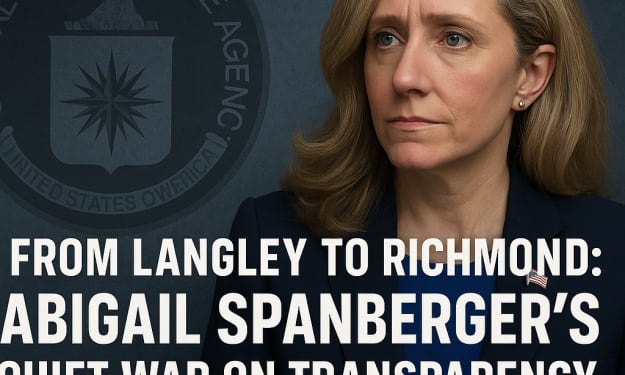
Abigail Spanberger’s Intelligence Resume
As Virginia’s former U.S. Representative Abigail Spanberger mounts her gubernatorial campaign in 2025, her résumé is getting the spotlight treatment — and one credential in particular deserves a closer look: her service on the U.S. House Intelligence Committee from 2023 to 2025.
By Michael Phillips6 months ago in The Swamp
FEMA’s Western Maryland Denial
When catastrophic floods slammed into Allegany and Garrett Counties this May, Western Marylanders didn’t ask for handouts—they asked for help. Roads were destroyed, homes ruined, schools inundated, and families left reeling. The damage? $15.8 million, a figure that clearly exceeds FEMA’s own threshold for disaster declarations.
By Michael Phillips6 months ago in The Swamp
Mike Tyson’s Knockout Case for Cannabis Reform
When most Americans think of Mike Tyson, they recall the heavyweight champ who dominated the boxing world with raw power and unfiltered honesty. But in 2025, Tyson’s biggest punches aren’t being thrown in the ring—they’re being delivered on the front lines of cannabis policy reform.
By Michael Phillips6 months ago in The Swamp
Maryland’s Family Courts Are Failing Families
In theory, Maryland’s family courts are supposed to be the guardians of justice for families in crisis—handling divorce, custody, support, and domestic violence with impartiality and compassion. But in reality, they’ve become a bureaucratic maze riddled with inefficiencies, financial hurdles, and questionable practices that harm the very families they claim to protect. And despite the glossy brochures and polished websites, Maryland’s Judiciary continues to ignore the warning signs.
By Michael Phillips6 months ago in The Swamp
Justice for Sale?
Family court was once seen as a sanctuary for the vulnerable—a place where children’s best interests reigned supreme and families could find resolution amidst conflict. But today, a growing chorus of parents, whistleblowers, and reform advocates are sounding the alarm: this system is broken. Worse, some say it's corrupt—not necessarily through envelopes stuffed with cash, but through something more insidious: institutionalized greed, judicial bias, and a profiteering machine hiding behind closed doors.
By Michael Phillips6 months ago in The Swamp