
Stephen Bannon's Salute at CPAC Sparks Controversy, Even Among French Right
Far-Right Gesture at CPAC Ignites Global Backlash
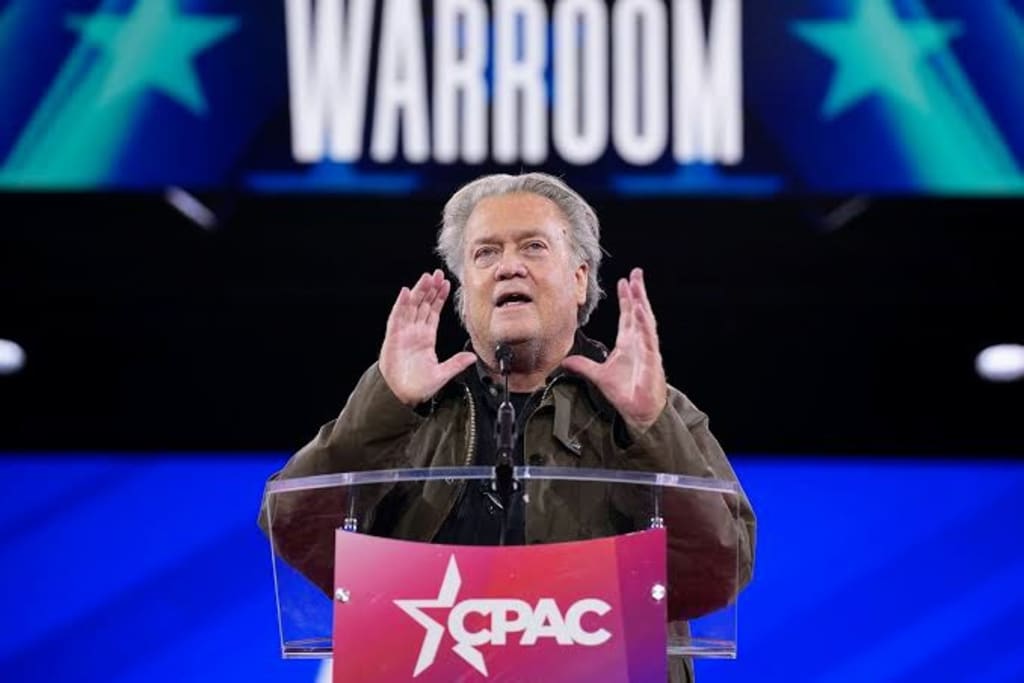
A gesture made by former White House strategist Stephen Bannon at the Conservative Political Action Conference (CPAC) has caused a major backlash, not only among liberal critics of Donald Trump but also within the European right-wing community. The controversy erupted after Bannon raised his right arm in a salute that many believe resembled a Nazi gesture. The act came just weeks after billionaire Elon Musk made a similar gesture, fueling further concerns about the growing association between Trump’s allies and far-right extremism.
Bannon, who was once a key figure in Trump’s White House and remains influential in the MAGA movement, has denied that his gesture was in any way related to Nazi symbolism. In a text message, he insisted that he was merely waving to supporters as he often does during his speeches. However, the explanation did little to calm the outrage, as his actions led to immediate and strong reactions from politicians and commentators alike.
One of the most notable responses came from Jordan Bardella, the president of France’s far-right National Rally party. Bardella swiftly announced that he was canceling his planned appearance at CPAC due to what he described as a provocative gesture referencing Nazi ideology. His decision to distance himself from the event signals the extent to which Bannon’s actions have unsettled even those on the right.
This controversy follows a similar uproar surrounding Elon Musk. On the day of Trump’s inauguration, Musk made a salute that bore a resemblance to the one Bannon used at CPAC. Musk, who has been actively involved in shaping Trump’s economic policies and cost-cutting measures, has been increasingly vocal about his support for far-right movements. He has publicly endorsed Alternative for Germany (AfD), a nationalist party that has been criticized for its links to Nazi-era rhetoric. Musk has even claimed that the AfD is the only party that can “save Germany.”
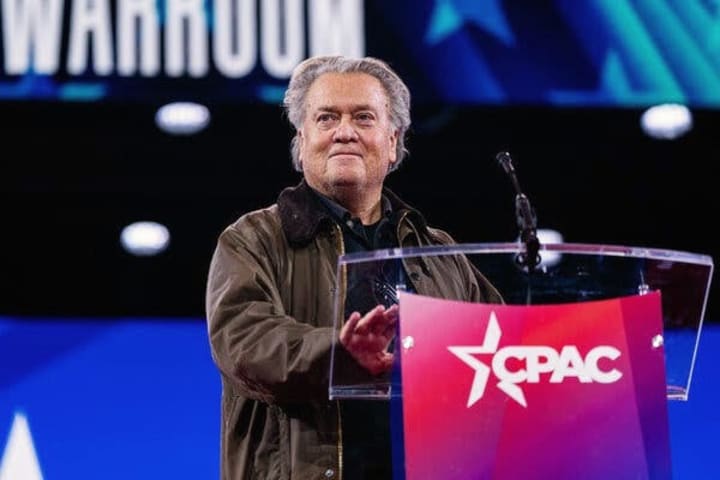
Trump himself has faced criticism for his failure to denounce white nationalists. Back in 2017, he was widely condemned for saying there were “very fine people on both sides” after a white nationalist rally in Charlottesville, Virginia, turned violent and resulted in the death of a counterprotester. Now, his administration appears to be forging stronger ties with far-right movements around the world. Just this month, Vice President JD Vance openly engaged with members of AfD, despite the party’s controversial reputation in Germany.
Bannon’s CPAC speech was already raising eyebrows before the salute. He encouraged Trump to push for a third term in office, even though the U.S. Constitution prohibits it. Towards the end of his speech, as he rallied the crowd with the phrase “Fight, fight, fight,” he made the now-infamous salute. While it lasted only a moment, its impact was immediate and widespread.
The fallout was swift. Bardella, in his statement explaining his withdrawal from CPAC, emphasized that such gestures have no place in his political movement. Bannon, however, dismissed Bardella’s concerns, attacking him in a vulgar manner. He belittled the French politician as a “pretty boy” who was “too weak to govern France,” making it clear that he had no respect for Bardella’s decision to step away from CPAC.
The controversy surrounding Bannon and Musk highlights the broader shift in Trump’s political circle. As he prepares for a potential return to the White House, Trump and his allies are deepening their relationships with nationalist movements across Europe and beyond. This includes policy moves like halting U.S. aid to South Africa while prioritizing the resettlement of white Afrikaners in the U.S. The move aligns with claims made by Musk about an alleged genocide of white people in South Africa—claims that many experts have dismissed as misleading or exaggerated.
CPAC has long been a gathering place for conservative leaders, but this year’s event underscored how Trump’s movement is becoming more intertwined with far-right ideologies worldwide. With figures like Bannon and Musk making controversial gestures and statements, the concerns about the direction of Trump’s political alliances are only growing.
While Bannon continues to insist his salute was innocent, the broader implications of such actions cannot be ignored. At a time when far-right movements are gaining momentum across the globe, symbols and gestures matter. Whether intentional or not, they send messages that can shape political discourse and influence public opinion.
As Trump and his allies push forward with their global nationalist agenda, one thing is clear—controversies like this will not be going away anytime soon.
About the Creator
UK Ready to 'Tighten Chokehold' on Russia's Shadow Fleet: What It Means for Global Shipping and Geopolitics
The United Kingdom has signaled its intent to tighten its grip on Russia’s so-called “shadow fleet”, a network of tankers and cargo ships that have continued operating despite sanctions imposed in response to the ongoing conflict in Ukraine. The move reflects the UK’s broader strategy to limit Moscow’s ability to profit from global trade while sending a strong signal to allies and adversaries alike: international maritime law and sanctions will be enforced. Understanding the shadow fleet The term “shadow fleet” refers to vessels that circumvent sanctions through tactics such as renaming ships, changing flags, or engaging in “ship-to-ship” transfers at sea. These vessels have become a lifeline for Russia, particularly in the energy sector, enabling Moscow to export oil and gas even as traditional buyers face restrictions. Analysts estimate that the shadow fleet is worth billions of dollars in annual revenue, making it a key component of Russia’s economic resilience in the face of Western sanctions. The UK’s tightening measures UK officials have made it clear that existing sanctions enforcement will be strengthened, with a focus on monitoring and intercepting shadow fleet operations. Measures may include: Enhanced surveillance of shipping lanes used by sanctioned vessels. Closer coordination with international partners, including NATO allies and EU members, to track ship movements and prevent sanctions evasion. Legal tools to seize ships or freeze assets connected to the shadow fleet. A senior UK minister commented, “We are determined to ensure that Russia cannot evade accountability. Our chokehold is set to tighten, and we will take action against any vessel attempting to flout international rules.” Implications for global shipping The UK’s move will inevitably have ripple effects across global trade. Major shipping hubs and ports are already under pressure to scrutinize incoming vessels, which could slow down maritime traffic. Shipping companies, particularly those operating in energy logistics, may need to reassess routes and compliance procedures to avoid inadvertently violating sanctions. Experts warn that while the shadow fleet represents a small fraction of global shipping tonnage, its strategic importance makes it a geopolitical flashpoint. The UK’s actions may push Russia to adopt more covert methods, increasing the risk of maritime disputes or confrontations in busy shipping lanes. Russia’s response and potential escalation Moscow has historically dismissed sanctions as illegitimate and may respond to tighter restrictions with countermeasures. This could include: Deploying naval escorts for its commercial vessels, particularly tankers transporting oil. Increasing the use of third-party intermediaries, such as non-Russian companies or neutral-flagged ships, to maintain exports. Engaging in cyber or hybrid tactics targeting tracking systems used by Western enforcement agencies. While a direct naval confrontation remains unlikely, analysts caution that the shadow fleet issue could spark localized tensions, especially in strategic waterways like the English Channel, the North Sea, and the Mediterranean. A message to the international community Beyond its immediate economic impact, the UK’s strategy sends a broader diplomatic message. It demonstrates that the enforcement of sanctions is not optional and underscores the importance of multilateral cooperation in holding states accountable for aggressive or unlawful actions. Other countries may be encouraged to adopt similar measures, creating a more unified front against sanction evasion. At the same time, critics argue that overzealous enforcement could disrupt legitimate trade, harm global energy markets, and increase shipping insurance costs. Balancing enforcement with economic stability will be key to avoiding unintended consequences. Looking ahead The UK’s efforts to tighten its chokehold on Russia’s shadow fleet mark the next phase of sanctions enforcement in the Ukraine conflict. By tracking, intercepting, and legally challenging these vessels, the UK aims to curtail Moscow’s financial lifelines and assert its influence in international maritime security. For global observers, the situation highlights a critical lesson: maritime law and global trade are inseparable from geopolitics. As nations leverage shipping regulations to enforce sanctions, the stakes for compliance, monitoring, and diplomacy are higher than ever. The shadow fleet saga is far from over, and its outcome will shape not only the economic future of Russia but also the operational landscape for international shipping. With the UK leading efforts to clamp down, the world is watching closely, aware that the oceans are no longer just trade routes—they are arenas of strategic power and political contestation.
By Fiaz Ahmed Brohi5 days ago in The Swamp




Comments
There are no comments for this story
Be the first to respond and start the conversation.