
Silver Slips on Profit Booking as Easing Geopolitical Risks Weigh on Market Sentiment
After a strong rally, silver prices retreat as investors lock in gains and improved global risk sentiment reduces demand for safe-haven assets.

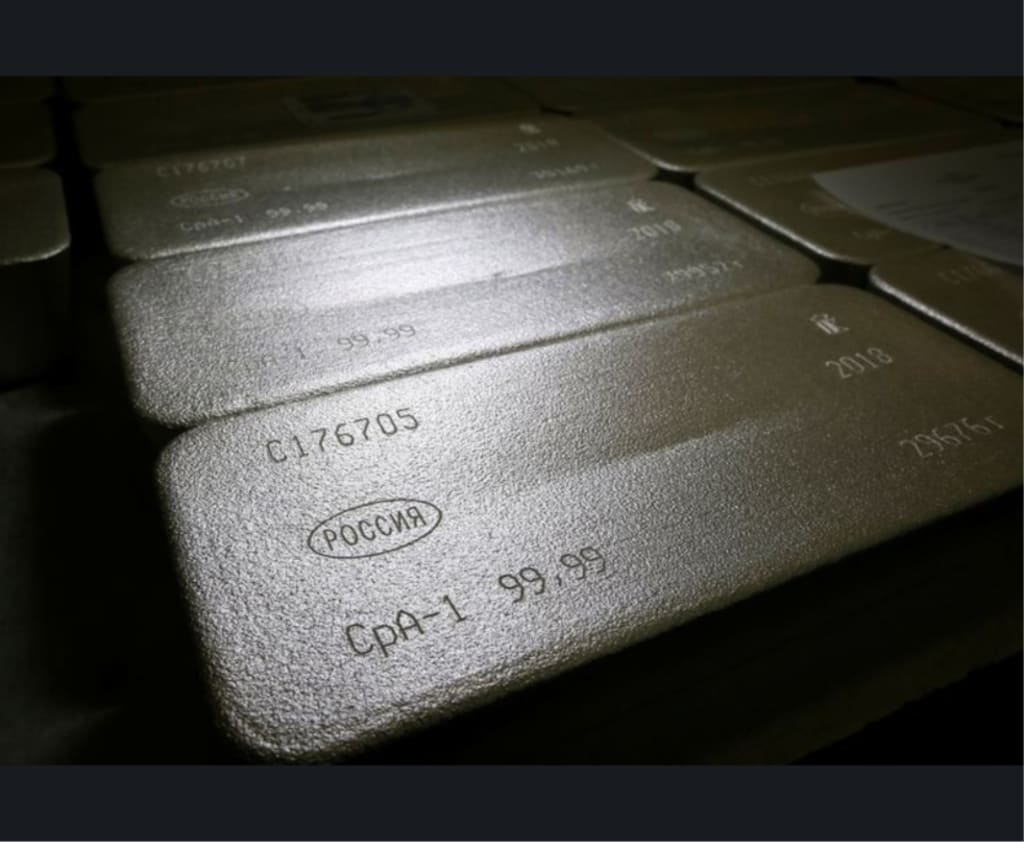
Silver prices retreated in recent trading sessions as investors opted for profit booking amid signs of easing geopolitical tensions and a shift in broader market sentiment. After enjoying a strong rally driven by safe-haven demand, the precious metal has come under pressure as traders reassess risk appetite, global macroeconomic signals, and the outlook for interest rates. The pullback highlights silver’s dual role as both a precious and industrial metal, making it particularly sensitive to changing global conditions.
Profit Booking After a Strong Rally
One of the main reasons behind silver’s recent dip is profit booking. Over the past several months, silver prices had surged on the back of heightened geopolitical risks, concerns over global economic stability, and expectations of looser monetary policy in major economies. As prices climbed to multi-month or near-record levels, many short-term investors chose to lock in gains, triggering a natural corrective move.
Profit booking is a common phenomenon in commodity markets, especially after extended rallies. In silver’s case, the metal had already priced in a significant amount of uncertainty, leaving it vulnerable to pullbacks once sentiment began to stabilize.
Easing Geopolitical Tensions Reduce Safe-Haven Demand
Silver, like gold, often benefits from geopolitical uncertainty as investors seek safe-haven assets. However, recent developments suggesting a cooling of global tensions have reduced the urgency to hold defensive positions. Signs of diplomatic engagement, reduced escalation risks in key regions, and a relatively calmer global political environment have all contributed to a decline in safe-haven buying.
As risk appetite improves, investors tend to rotate funds away from precious metals and into equities, higher-yielding assets, or growth-linked commodities. This shift has weighed on silver prices, which had previously been supported by fear-driven inflows.
Impact of the Stronger Dollar and Interest Rate Expectations
Another factor influencing silver’s decline is the movement in the US dollar and bond yields. Silver is priced in dollars, and a stronger greenback typically makes the metal more expensive for holders of other currencies, dampening demand. Recent resilience in the dollar, supported by relatively strong economic data, has added pressure to silver prices.
At the same time, expectations around interest rates continue to shape market behavior. While investors still anticipate eventual rate cuts, any delay or uncertainty around the timing tends to weigh on non-yielding assets like silver. Higher or stable interest rates increase the opportunity cost of holding precious metals, making them less attractive compared to interest-bearing instruments.
Industrial Demand Adds Complexity
Unlike gold, silver has a significant industrial component, with widespread use in electronics, solar panels, medical equipment, and electric vehicles. This dual nature makes silver particularly sensitive to changes in global growth expectations.
Recent data pointing to mixed economic performance in major economies has raised questions about the strength of industrial demand. Slower manufacturing activity or weaker growth prospects can limit silver’s upside, even if investment demand remains supportive. As geopolitical risks ease, the industrial demand narrative becomes more influential, contributing to near-term price volatility.
Market Sentiment Turns Cautious
The broader commodity market has also shown signs of caution. Investors are increasingly selective, responding to incoming economic data, central bank commentary, and corporate earnings. In such an environment, silver’s recent correction reflects a broader reassessment of risk rather than a fundamental shift in its long-term outlook.
Technical indicators have also played a role. After testing key resistance levels, silver prices faced selling pressure as momentum indicators signaled overbought conditions. This encouraged traders to pare positions, reinforcing the downward move.
Is the Pullback a Temporary Pause?
Despite the recent slip, many analysts view the decline as a healthy consolidation rather than the start of a prolonged downtrend. Structural factors supporting silver remain intact, including the global push toward renewable energy, electrification, and green technologies that rely heavily on silver.
Additionally, long-term concerns such as high government debt, inflation risks, and potential economic slowdowns could revive interest in precious metals if market conditions shift again. Any resurgence in geopolitical tensions or a clearer signal of monetary easing could quickly restore silver’s appeal as a hedge.
What Investors Should Watch Next
Looking ahead, silver’s direction will depend on a combination of macroeconomic and geopolitical factors. Key data releases related to inflation, employment, and manufacturing will influence expectations around interest rates and economic growth. Central bank guidance, particularly from the US Federal Reserve, will remain a crucial driver.
Geopolitical developments will also continue to shape sentiment. While risks may appear to be easing for now, global uncertainties can resurface quickly, potentially reigniting safe-haven demand.
Conclusion
Silver’s recent slide underscores how quickly market sentiment can change. Profit booking, easing geopolitical risks, a firmer US dollar, and cautious economic signals have combined to weigh on prices after a strong rally. However, the metal’s long-term fundamentals and its strategic role in both investment and industry suggest that volatility is likely to remain a defining feature.
For investors, the current pullback serves as a reminder that silver is influenced by a complex mix of factors. Whether this dip becomes an opportunity or signals further downside will depend on how global risks, economic data, and monetary policy evolve in the coming weeks.
About the Creator
Keep reading
More stories from Salaar Jamali and writers in The Swamp and other communities.
US Unveils Plans for ‘New Gaza’ With Skyscrapers: What It Means and Why It Matters
The United States has reportedly unveiled conceptual plans for a so-called “New Gaza,” a vision that imagines the war-scarred Palestinian enclave rebuilt as a modern urban center featuring skyscrapers, advanced infrastructure, and economic hubs. While details remain limited and the proposal is still at a preliminary stage, the idea has already sparked intense debate across diplomatic, humanitarian, and regional circles. Supporters see it as a bold reconstruction roadmap, while critics warn that development plans cannot be separated from political realities on the ground.
By Salaar Jamalia day ago in The Swamp
The Finest in the World: Why the US is Buying Icebreakers from Finland
In a world increasingly defined by shifting geopolitical landscapes and extreme climates, the United States is turning to Finland for a fleet of icebreakers, widely regarded as the finest in the world. This strategic move underscores both the rising importance of the Arctic region and the growing need for advanced maritime technology capable of navigating the icy waters at the top of the globe. Finland’s Icebreaking Legacy Finland has long been a global leader in icebreaker technology. With harsh winters and a northern coastline that stretches into the Arctic Circle, the country has mastered the art of building vessels that can navigate through thick sea ice efficiently and safely. Finnish icebreakers are renowned not just for their raw power, but also for their precision, durability, and technological sophistication. They can cut through ice up to several meters thick, maintain stability in freezing conditions, and even support supply missions in the most remote and hostile environments. This expertise has made Finnish icebreakers a gold standard, sought after by nations that require reliable access to icy waters. While the United States has historically relied on a small fleet of icebreakers, many of these vessels are aging, and the current fleet cannot meet the increasing demands of Arctic operations. By partnering with Finland, the US is gaining access to vessels designed with decades of experience, cutting-edge engineering, and proven operational performance. Strategic Importance of the Arctic The Arctic has emerged as a region of growing strategic importance. Climate change has led to melting ice, opening new maritime routes that were previously impassable for most of the year. This has not only created opportunities for trade but also heightened the need for territorial defense, environmental monitoring, and search-and-rescue operations. The US sees its icebreaker fleet as a key asset in maintaining influence in this rapidly changing region. Having Finnish-built icebreakers allows the United States to expand its operational capabilities. These vessels can escort commercial ships through icy waters, conduct scientific research, and respond to emergencies in the Arctic. The decision to procure icebreakers from Finland is therefore as much about strategic positioning as it is about maritime capability. Technological Edge Finnish icebreakers are equipped with some of the most advanced maritime technology in the world. From hull designs that minimize ice resistance to propulsion systems that combine efficiency with immense power, these vessels are built to perform in conditions that would ground most ships. Many of them also include sophisticated navigation and communication systems, enabling crews to operate safely in regions where conventional navigation is challenging due to ice coverage and limited satellite connectivity. The US will benefit from these technologies, particularly as Arctic operations require not only strength but also precision. Whether escorting supply ships, conducting military exercises, or supporting scientific missions, Finnish icebreakers offer reliability that aging US vessels cannot match. Economic and Diplomatic Considerations Beyond technical superiority, the procurement of icebreakers from Finland also reflects broader economic and diplomatic considerations. By engaging Finnish shipbuilders, the US strengthens its ties with a country that is strategically positioned between the North Atlantic and the Arctic. This cooperation could pave the way for future partnerships in maritime technology, Arctic research, and regional security initiatives. Moreover, the deal highlights the United States’ willingness to invest in specialized, high-quality vessels rather than attempting to build everything domestically. While domestic shipbuilding has its merits, Finland’s decades of expertise provide a shortcut to operational readiness, ensuring that the US maintains a competitive edge in Arctic waters without the delays and costs associated with developing such vessels from scratch. Looking Ahead As the Arctic continues to transform, the importance of icebreakers will only increase. With Finland’s cutting-edge technology at their disposal, the United States is positioning itself to navigate both the literal and geopolitical ice of the north. These vessels are more than ships; they are symbols of preparedness, technological prowess, and strategic foresight. In a region where every meter of ice matters and every decision has global ramifications, having the finest icebreakers in the world is no longer a luxury—it is a necessity. By looking to Finland, the US is ensuring that it remains capable, competitive, and ready for the challenges and opportunities of the Arctic.
By Fiaz Ahmed Brohi5 days ago in The Swamp
As Spain Mourns Train Crash Victims, Investigators Focus on Track
Spain is in shock. A high-speed train collision near Adamuz, Córdoba has claimed at least 40 lives and injured over 120 people, marking one of the deadliest rail disasters in recent European history. Families, communities, and an entire nation are grappling with grief, while investigators scramble to find answers.
By Aqib Hussain4 days ago in The Swamp
📢 Raise Your Voice Thread: 01/22/2026
Our “Raise Your Voice Threads” are hosted most alternating Thursdays at 12PM ET to offer creators more avenues to uncover exceptional stories on Vocal. As we are continuously searching for fresh creators and inspiring stories, this thread provides an opportunity to exchange and discuss the stories that have moved and motivated us on Vocal.
By Raise Your Voice by Vocal2 days ago in Resources




Comments
There are no comments for this story
Be the first to respond and start the conversation.