
Silver Plunges 30% in Worst Day Since 1980, Gold Tumbles as Warsh Pick Eases Fed Independence Fears
A sudden shift in monetary policy expectations sparks historic volatility across precious metals, shaking investors and reshaping market narratives

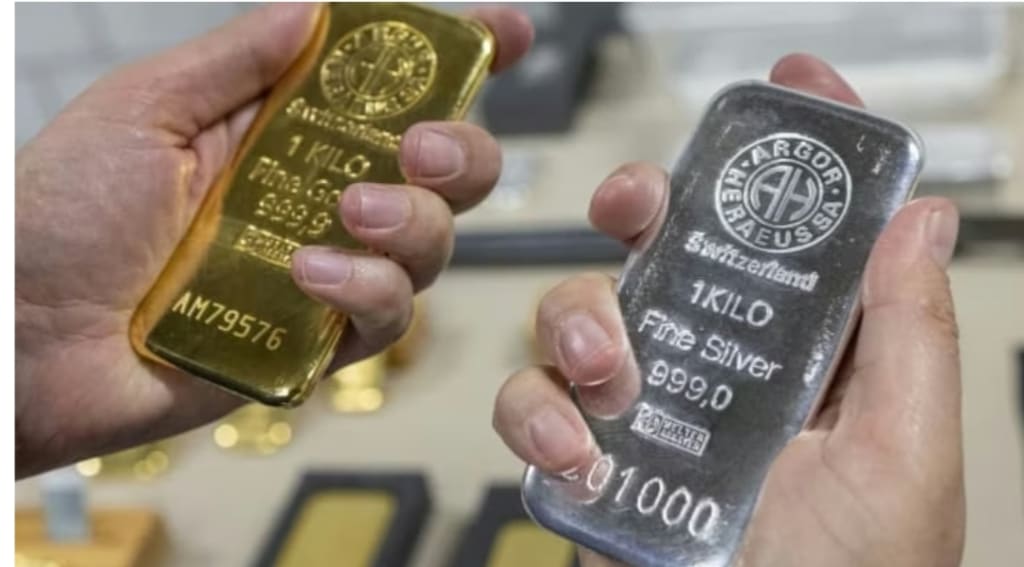
In a stunning reversal that rattled global commodity markets, silver prices plunged nearly 30% in a single trading session—marking their steepest one-day decline since 1980—while gold also tumbled sharply. The dramatic sell-off followed news that the potential appointment of former Federal Reserve official Kevin Warsh to a top policy role eased long-standing fears about the central bank’s independence. Together, these developments triggered a rapid unwinding of speculative positions and exposed how sensitive precious metals have become to shifts in monetary policy expectations.
For decades, gold and silver have been viewed as safe-haven assets, prized for their ability to preserve value during periods of inflation, political uncertainty, or financial stress. But the latest market rout underscores a crucial reality: these metals are not immune to sharp corrections, especially when investor sentiment pivots abruptly.
A Historic Collapse in Silver
Silver’s 30% plunge stunned even seasoned traders. Such a dramatic daily move has not been seen since the volatile era of the late 1970s and early 1980s, when rampant inflation, aggressive interest rate hikes, and speculative excesses culminated in historic price swings. In this latest episode, the collapse was driven by a combination of technical factors, leveraged positions, and a sudden reassessment of macroeconomic risks.
Over recent months, silver prices had surged on strong speculative buying, with many investors betting that persistent inflation and potential political interference in central banking would keep real interest rates low. These conditions traditionally support precious metals, which offer no yield but tend to shine when confidence in fiat currencies weakens. However, when expectations changed, the exit was swift and brutal.
Margin calls amplified the decline, forcing traders to liquidate positions at accelerating speed. As liquidity thinned, prices cascaded lower, leaving little room for orderly trading.
Gold Follows, but with a Softer Landing
Gold, often seen as a more stable counterpart to silver, also suffered a sharp decline, though less severe in percentage terms. The yellow metal fell as investors reassessed the outlook for U.S. monetary policy and the future path of interest rates. While gold’s drop lacked silver’s historic magnitude, it was significant enough to break key technical support levels, further pressuring sentiment.
Unlike silver, which has substantial industrial demand, gold’s price is more directly influenced by interest rates, currency movements, and central bank credibility. When confidence grows that policymakers will prioritize price stability and resist political pressure, gold’s appeal as a hedge tends to weaken.
The Warsh Factor and Fed Independence
At the heart of the market’s sudden mood swing was news surrounding Kevin Warsh, a former Federal Reserve governor known for his relatively orthodox views on monetary policy. Reports suggesting his potential selection for a key role were interpreted by markets as a sign that fears of political interference in the Federal Reserve might be overstated.
In recent months, investors had grown increasingly concerned that central bank independence could be compromised, leading to looser policy, higher inflation, and a weaker dollar. These fears fueled strong demand for gold and silver. The Warsh pick narrative challenged that assumption, prompting traders to recalibrate expectations toward a more disciplined policy stance.
As a result, U.S. bond yields rose and the dollar strengthened—both traditionally negative for precious metals. Higher yields increase the opportunity cost of holding non-yielding assets like gold and silver, while a stronger dollar makes them more expensive for non-U.S. buyers.
Speculation Versus Fundamentals
The sell-off also highlighted a growing disconnect between speculative positioning and underlying physical demand, particularly in the silver market. While industrial use for silver in sectors like solar energy and electronics remains robust, prices had run far ahead of near-term demand fundamentals. When sentiment turned, there was little fundamental support to cushion the fall.
Gold’s fundamentals are arguably stronger, supported by central bank purchases and long-term diversification trends. However, even gold is vulnerable to sharp corrections when speculative froth builds up too quickly.
What Comes Next for Precious Metals?
The big question now is whether this dramatic sell-off marks the end of the precious metals rally or merely a painful reset. Some analysts argue that the long-term case for gold and silver remains intact, citing persistent geopolitical risks, high global debt levels, and structural inflation pressures. From this perspective, the plunge could eventually present a buying opportunity for long-term investors.
Others caution that volatility may remain elevated. If markets continue to price in higher interest rates and a more credible, independent Federal Reserve, precious metals could face further headwinds in the near term.
A Wake-Up Call for Investors
The historic plunge in silver and the sharp drop in gold serve as a powerful reminder that even traditional safe havens carry risk. In an era dominated by rapid information flows and crowded trades, sentiment can shift with remarkable speed.
For investors, the episode reinforces the importance of risk management, diversification, and a clear understanding of what truly drives asset prices. Precious metals may still play a role as long-term hedges, but as this week’s turmoil shows, they are far from immune to the forces of modern financial markets.
About the Creator
Keep reading
More stories from Salaar Jamali and writers in The Swamp and other communities.
Everyone Is “Obsessed” with Gold and Silver — but an American “Giant Mine” Holds the Metal the Whole World Wants
Gold and silver have once again captured global attention. Investors are pouring money into bullion as inflation worries, geopolitical tensions, and market volatility fuel demand for traditional safe havens. Prices have surged, headlines are saturated with precious-metal forecasts, and retail buyers are scrambling to secure physical bars and coins. Yet while the world remains fixated on gold and silver, a far more consequential metal is quietly shaping the future of the global economy — and a massive American “giant mine” sits at the center of it all.
By Salaar Jamalia day ago in The Swamp
U.S. Allies Are Drawing Closer to China, but on Beijing’s Terms
In recent years, a noticeable shift has emerged in global diplomacy: several traditional allies of the United States are strengthening their economic and political ties with China. While these nations continue to value their long-standing partnerships with Washington, growing economic dependence on Beijing and changing geopolitical realities are pushing them closer to China’s sphere of influence. However, this growing relationship is not happening on equal footing. Instead, many of these partnerships are developing largely on Beijing’s terms, raising concerns about sovereignty, strategic autonomy, and the future balance of power. China’s rapid economic rise has transformed it into the world’s second-largest economy and a central player in global trade. For many U.S. allies, especially in Asia, Africa, and parts of Europe, China represents an essential market for exports and a critical source of investment. Through initiatives such as the Belt and Road Initiative (BRI), Beijing has financed major infrastructure projects including ports, highways, railways, and power plants. These projects have provided much-needed development for emerging economies, but they have also increased China’s leverage over partner countries. Economic necessity is one of the main reasons U.S. allies are drawing closer to China. Nations facing slow growth, debt challenges, or limited access to Western financing often turn to Beijing for support. Chinese loans are typically offered with fewer political conditions compared to those from Western institutions like the International Monetary Fund or World Bank. This makes China an attractive alternative, especially for governments seeking quick solutions to economic problems. However, closer ties often come with expectations. Beijing increasingly demands political loyalty or diplomatic support in return for economic cooperation. Countries that benefit from Chinese investment may feel pressure to align with China on sensitive issues such as Taiwan, Hong Kong, or human rights. In some cases, governments have avoided criticizing Beijing in international forums to protect their economic relationships. This trend has raised alarms in Washington, where officials worry that China is reshaping global norms and weakening U.S. influence. In Europe, several U.S. allies have expanded trade and technology partnerships with China despite security concerns. While the European Union remains committed to its alliance with the United States, individual countries often prioritize economic interests. Germany, for example, has deep trade links with China, particularly in the automotive and manufacturing sectors. France and Italy have also explored economic cooperation with Beijing, viewing China as a key market for their exports. These decisions highlight a growing divide between security policy and economic strategy. In the Asia-Pacific region, the situation is even more complex. Countries such as South Korea, Japan, and Australia remain strong U.S. security partners but rely heavily on China for trade. China is the largest trading partner for most Asian economies, creating a difficult balancing act. These nations seek to maintain U.S. military support while avoiding confrontation with Beijing. As a result, they often pursue neutral or cautious diplomatic positions, even as tensions rise in the South China Sea and around Taiwan. Africa and the Middle East also illustrate how China’s influence is expanding. Many U.S. partners in these regions have welcomed Chinese investment in energy, transportation, and telecommunications. Chinese companies have built ports, roads, and digital networks that are now critical to national infrastructure. While these projects support development, critics argue that they can lead to long-term dependency and give China strategic control over key assets. The United States has responded by urging its allies to reduce dependence on China and strengthen cooperation with democratic partners. Washington has launched initiatives focused on supply chain security, clean energy investment, and technology alliances. However, these efforts often compete with China’s faster and more flexible financial approach. For many countries, the choice is not between the U.S. and China, but between economic survival and political alignment. Another concern is that Beijing’s terms often emphasize non-interference and state-to-state cooperation, which can weaken international standards related to transparency, labor rights, and environmental protection. Unlike Western agreements that include regulatory and human rights conditions, Chinese partnerships focus primarily on economic results. This model appeals to governments seeking rapid growth but can undermine long-term governance reforms. Despite these challenges, most U.S. allies are not abandoning Washington. Instead, they are attempting to manage relationships with both powers. This strategy, sometimes called “strategic hedging,” allows countries to benefit from China’s economy while maintaining security ties with the United States. However, as rivalry between Washington and Beijing intensifies, maintaining this balance will become increasingly difficult. The growing closeness between U.S. allies and China reflects a changing global order. Power is becoming more multipolar, and nations are making pragmatic decisions based on their immediate needs. Yet, the reality remains that China often sets the rules in these relationships. Its economic strength enables it to shape agreements in ways that serve its strategic interests. In conclusion, while U.S. allies are drawing closer to China, the nature of these relationships reveals a shift in global influence toward Beijing. Economic dependence, political pressure, and strategic calculations are redefining alliances around the world. The challenge for these countries will be to protect their independence while navigating the competing demands of two superpowers. The outcome of this balancing act will play a crucial role in shaping international politics in the years ahead.
By Fiaz Ahmed about 23 hours ago in The Swamp


Comments
There are no comments for this story
Be the first to respond and start the conversation.