
Silver Is Paying for Its Excesses. Silver Miner Stocks May Be a Buy.
After a brutal correction exposes speculative froth in silver prices, beaten-down mining stocks could offer selective opportunities for long-term investors

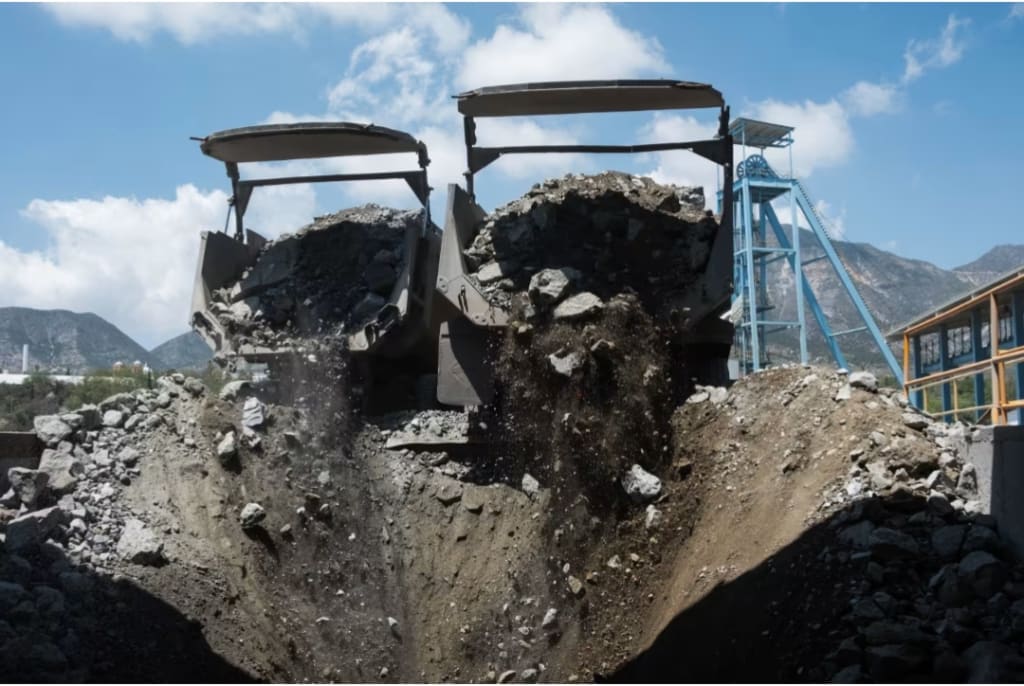
Silver’s recent collapse has been swift, painful, and deeply revealing. After months of speculative enthusiasm pushed prices to multi-year highs, the metal has entered a sharp correction that many analysts now describe as a necessary reckoning. In that sense, silver is “paying for its excesses.” Yet while the metal itself struggles to regain footing, a growing number of market watchers argue that silver miner stocks—punished alongside the commodity—may be quietly transforming into attractive long-term opportunities.
The divergence between silver prices and mining equities is not new, but the current environment highlights how extreme market sentiment can distort valuations. As fear replaces euphoria, investors are being forced to reassess what is driven by speculation and what is supported by fundamentals.
How Silver’s Excesses Built Up
Silver’s rally earlier this year was fueled by a powerful combination of factors: expectations of easier monetary policy, fears about inflation, geopolitical uncertainty, and aggressive speculative buying. Retail investors and hedge funds piled into silver futures and exchange-traded products, betting that the metal would outperform gold and act as both an inflation hedge and an industrial growth play.
However, speculative positioning surged far beyond what underlying demand could justify in the short term. Physical demand from industries such as solar energy, electronics, and electric vehicles remained solid, but it did not grow fast enough to support the pace of price gains. As a result, silver prices became increasingly vulnerable to any shift in macroeconomic sentiment.
That shift arrived abruptly. Changing expectations around interest rates and central bank credibility triggered a mass unwinding of leveraged positions. The speed of the sell-off revealed just how crowded the trade had become. In effect, silver’s excess optimism turned into excess pessimism almost overnight.
Why the Metal Fell Harder Than the Story Changed
One reason silver often experiences more violent moves than gold is its dual nature. Silver is both a precious metal and an industrial commodity. This makes it highly sensitive to shifts in economic growth expectations, interest rates, and investor risk appetite.
When traders began to price in a firmer monetary policy outlook and reduced inflation fears, silver lost support on both fronts. As a monetary hedge, it suffered from rising yields. As an industrial metal, it faced concerns about slowing global growth. The result was a disproportionate decline that punished the metal far more than long-term fundamentals might suggest.
Silver Miners: Hit Twice Over
Silver mining stocks have been caught in the crossfire. Historically, miners tend to amplify the movements of the underlying metal—rising faster in bull markets and falling harder in corrections. This time has been no different.
As silver prices plunged, mining equities were sold aggressively, often regardless of individual balance sheets or production costs. For some companies, share prices fell to levels that imply silver prices far below current market levels, raising questions about whether pessimism has gone too far.
This is where opportunity may begin to emerge.
Why Silver Miner Stocks May Be a Buy
Despite the near-term volatility, several structural factors support a more constructive view on select silver miners. First, many companies have spent recent years strengthening their balance sheets. High-cost producers were weeded out during past downturns, leaving a group of more disciplined operators with lower all-in sustaining costs and improved capital efficiency.
Second, while silver prices have corrected sharply, they remain well above the lows of previous cycles. For efficient miners, current price levels can still support profitability, even if margins are compressed. This provides a cushion that did not exist in earlier bear markets.
Third, demand for silver’s industrial applications continues to grow over the long term. The expansion of renewable energy, particularly solar power, requires significant amounts of silver. Electrification, digitalization, and emerging technologies also rely heavily on the metal. These trends are unlikely to reverse, even if economic growth slows temporarily.
Valuations Are Starting to Matter Again
One of the strongest arguments in favor of silver miners is valuation. After the recent sell-off, many mining stocks are trading at discounts to their historical averages on metrics such as price-to-cash-flow and net asset value. In some cases, the market appears to be pricing in a prolonged collapse in silver prices that may never materialize.
For long-term investors, this disconnect between market price and underlying asset value can present an opportunity—provided they are selective. Not all miners are created equal, and companies with strong management, stable jurisdictions, and manageable debt are far better positioned to weather ongoing volatility.
Risks Remain, and Timing Is Crucial
None of this suggests that the worst is definitively over. Precious metals remain highly sensitive to macroeconomic data, central bank policy, and currency movements. If interest rates stay higher for longer or global growth weakens significantly, silver could face additional pressure.
Moreover, mining stocks are inherently risky. Operational challenges, regulatory changes, and geopolitical risks can quickly derail even well-run companies. Investors should approach the sector with patience and a clear understanding of their risk tolerance.
A Reset, Not the End
Silver’s recent plunge looks less like the end of a long-term story and more like a painful but necessary reset. The excesses of speculative enthusiasm have been flushed out, forcing prices and expectations back toward reality.
In that environment, silver miner stocks—now trading at depressed levels—may offer compelling opportunities for investors willing to look beyond short-term turbulence. While volatility is likely to persist, history suggests that periods of extreme pessimism often lay the groundwork for the next sustainable recovery.
About the Creator
Keep reading
More stories from Salaar Jamali and writers in The Swamp and other communities.
Silver Plunges 30% in Worst Day Since 1980, Gold Tumbles as Warsh Pick Eases Fed Independence Fears
In a stunning reversal that rattled global commodity markets, silver prices plunged nearly 30% in a single trading session—marking their steepest one-day decline since 1980—while gold also tumbled sharply. The dramatic sell-off followed news that the potential appointment of former Federal Reserve official Kevin Warsh to a top policy role eased long-standing fears about the central bank’s independence. Together, these developments triggered a rapid unwinding of speculative positions and exposed how sensitive precious metals have become to shifts in monetary policy expectations.
By Salaar Jamalia day ago in The Swamp
California Governor Gavin Newsom Accuses TikTok of Suppressing Content Critical of Trump
Newsom Raises Concerns About TikTok California Governor Gavin Newsom has publicly accused TikTok, the popular video-sharing platform, of restricting or suppressing content critical of Donald Trump. According to Newsom, users posting videos highlighting Trump’s policies or actions may be experiencing reduced reach or visibility, while content favoring Trump allegedly receives preferential treatment. The claim comes amid increasing scrutiny of social media platforms and their role in shaping public opinion, particularly in the context of political content. TikTok’s Role in Political Discourse TikTok has grown into one of the most influential social media platforms worldwide, with millions of users sharing videos daily. While initially focused on entertainment, TikTok has become a hub for political discussion, activism, and news dissemination, particularly among younger audiences. Experts note that the platform’s algorithm-driven feed can significantly impact which content gains traction, leading to debates about bias, censorship, and transparency. Newsom’s allegations amplify concerns over whether social media companies unfairly influence public discourse. What Newsom Has Alleged Governor Newsom’s statements suggest that TikTok’s algorithm may be manipulating visibility of political content. Key points from his remarks include: Suppression of content critical of Trump, limiting reach and engagement Alleged preferential promotion of pro-Trump content Calls for greater transparency in how TikTok moderates and prioritizes content While Newsom did not provide direct evidence at the press conference, his claims have sparked discussions among politicians, media analysts, and social media users. TikTok’s Response In response to the accusations, TikTok has maintained that its content moderation policies are politically neutral. The company emphasized that: The platform uses automated algorithms to recommend content based on user engagement Decisions to remove or restrict content are made according to community guidelines, not political affiliation TikTok is committed to transparency and fairness in content moderation Despite these assurances, critics argue that algorithmic opacity makes it difficult to verify claims of bias, leaving the public reliant on anecdotal reports. Broader Context: Social Media and Political Bias Newsom’s accusation is part of a larger conversation about social media’s role in politics. Platforms like TikTok, Twitter (X), Facebook, and Instagram face ongoing criticism for: Allegedly suppressing dissenting voices Promoting content that aligns with advertiser or political interests Influencing voter opinions, civic engagement, and public debate Studies suggest that algorithmic feeds can reinforce confirmation bias, meaning users are more likely to see content that aligns with their preexisting beliefs. This raises questions about democracy, free speech, and information equity. Reactions from Politicians and the Public Newsom’s remarks have prompted mixed reactions: Supporters argue that social media companies need to be held accountable for potential political manipulation Critics claim that Newsom’s accusations are politically motivated, aimed at framing TikTok as biased against Democrats Social media users have taken to TikTok and Twitter to share their experiences with content visibility, fueling further debate This discussion highlights the complex relationship between government, social media, and public perception in today’s digital landscape. Legal and Regulatory Implications Newsom’s accusations may have legal and regulatory consequences. Potential actions include: Calls for investigations into algorithmic bias Pressure on social media companies to disclose moderation practices Consideration of state or federal regulations addressing transparency and political fairness Policymakers in the US and abroad are increasingly exploring ways to balance free expression with accountability on digital platforms. Implications for Communities and Young Users TikTok’s influence extends particularly to younger audiences, who rely on the platform for information, entertainment, and political engagement. Suppression of critical content could: Limit exposure to diverse viewpoints Shape perceptions of political figures among impressionable users Affect the democratic engagement of the next generation Community organizations and digital literacy advocates emphasize the need for education on media bias, content moderation, and critical thinking. The Debate Over Algorithmic Transparency At the heart of the controversy is the opacity of social media algorithms. Unlike traditional media, where editorial decisions are public, platforms like TikTok rely on complex machine learning systems. Critics argue that: Users have little understanding of why content is promoted or suppressed Algorithms can unintentionally amplify certain political perspectives Transparency is necessary for public accountability and trust Proponents of algorithmic transparency call for government oversight, independent audits, and public reporting, particularly for politically relevant content. Conclusion Governor Gavin Newsom’s claims that TikTok is suppressing content critical of Donald Trump highlight the intersections of politics, technology, and public discourse. While TikTok denies political bias, the incident raises important questions about algorithmic transparency, content moderation, and the role of social media in shaping political perception. As debates continue, communities, policymakers, and social media users alike must grapple with how to ensure fairness, accountability, and informed civic participation in an increasingly digital world.
By Aarif Lashari6 days ago in The Swamp
Musk says steps to stop Russia from using Starlink seem to have worked
Elon Musk has stated that recent measures taken to prevent Russia from using Starlink satellite internet services in the war against Ukraine appear to be effective. His comments come amid growing scrutiny of the role private technology companies play in modern conflicts and the challenges of controlling dual-use technologies that can serve both civilian and military purposes. Speaking in an online exchange, Musk said that safeguards were implemented to restrict access in areas where Starlink terminals could be exploited for military operations by Russian forces. “We took steps to prevent misuse, and it seems to have worked,” he noted, without revealing specific technical details. Starlink and the Ukraine War Starlink, operated by Musk’s company SpaceX, has been a crucial communication tool in Ukraine since the early months of Russia’s invasion. When traditional infrastructure was damaged by missile strikes, Starlink terminals helped maintain internet connectivity for hospitals, emergency services, and government agencies. The system also proved vital for Ukraine’s military operations, allowing real-time coordination and battlefield communication. However, concerns emerged that Russian forces could also gain access to the network by capturing terminals or acquiring them through third-party markets. Reports surfaced that Starlink devices were appearing in Russian-controlled territories, raising questions about how widely the service could be controlled in a war zone. Musk has previously emphasized that Starlink was intended primarily for civilian and humanitarian use, not as a weapon of war. Still, the reality of modern conflict has made it difficult to separate civilian technology from military applications. Measures to Prevent Misuse According to Musk, SpaceX worked with governments and security experts to limit unauthorized access. While he did not specify the exact steps taken, analysts believe they may include geofencing, software updates, and monitoring of suspicious activity patterns. Geofencing allows service providers to restrict usage in certain geographic areas. If a terminal is detected in a prohibited zone, its connection can be disabled. Other measures may involve authentication systems that verify authorized users and prevent cloning or black-market distribution. “These systems were not originally designed for war,” said a satellite communications expert. “What we’re seeing now is the rapid adaptation of commercial technology for security purposes.” Political and Ethical Questions Musk’s statement has renewed debate over the responsibility of private companies in conflicts. Starlink is not owned by a government, yet its influence on the battlefield is significant. Some critics argue that SpaceX holds too much power in deciding who can communicate and who cannot. Others defend Musk’s position, saying that restricting Russian access is a necessary step to prevent the technology from being used to support aggression. “This highlights the uncomfortable reality that private firms now shape outcomes in international security,” said a foreign policy analyst. “Governments depend on them, but control over these systems remains limited.” The issue also raises concerns about transparency. Because SpaceX has not released detailed technical explanations, independent observers cannot easily verify how effective the restrictions truly are. Ukraine’s Reliance on Starlink Ukrainian officials have repeatedly praised Starlink for keeping the country connected during attacks on power grids and telecom infrastructure. The system has been described as a lifeline for both civilians and soldiers. At the same time, Ukraine and its allies have pushed for assurances that the service will not be exploited by Russian forces. Musk’s latest comments may provide some reassurance, though questions remain about long-term enforcement. Ukraine’s military has increasingly integrated Starlink into drone operations and command systems, making reliable access critical to its defense strategy. Risks of Escalation Some experts warn that as technology companies become more involved in conflict zones, they risk becoming targets themselves. Cyberattacks, sanctions, and political pressure could be used to influence corporate decisions. There are also fears that restricting access could set a precedent for future conflicts, where companies are expected to choose sides. “This is new territory,” said a security researcher. “We are moving into an era where corporations are not neutral actors. Their platforms can determine who has information and who does not.” International Response Western governments have largely supported efforts to limit Russian access to advanced communication tools. Several officials have said that preventing misuse of satellite internet aligns with broader sanctions and security objectives. However, humanitarian groups caution that any restrictions must avoid harming civilians. Starlink is also used by aid workers, journalists, and emergency responders in conflict areas. Balancing security concerns with humanitarian needs remains a delicate task. What Comes Next Musk’s statement suggests that SpaceX will continue refining its control systems as the war evolves. Analysts expect further collaboration between private tech firms and governments to manage the role of satellite networks in warfare. Future regulations may also emerge, defining clearer rules for how commercial satellite services can be used in conflict zones. For now, Musk’s claim that the measures “seem to have worked” signals a temporary success in limiting Russian use of Starlink. But the broader challenge remains: how to regulate powerful private technologies in an increasingly unstable global environment. As wars become more dependent on digital infrastructure, the line between civilian innovation and military utility continues to blur. The Starlink case illustrates how modern conflicts are no longer fought only with weapons, but with networks, software, and satellites orbiting far above the battlefield.
By Fiaz Ahmed about 12 hours ago in The Swamp
One Unchecked Box
"Republished" because it was the only way to add the embed for the newly recorded audio version of this story due to the Top Story badge. Plus it serves as a nice, informal announcement of the podcast's revival for another season (go subscribe!):
By Stephen A. Roddewig5 days ago in Fiction


Comments
There are no comments for this story
Be the first to respond and start the conversation.