
Russia vs Ukraine: What’s Really Happening in 2025 (A Brutally Honest Breakdown)
A human-centred look at the Russia–Ukraine war in 2025, beyond headlines, into what the world isn’t saying loud enough.

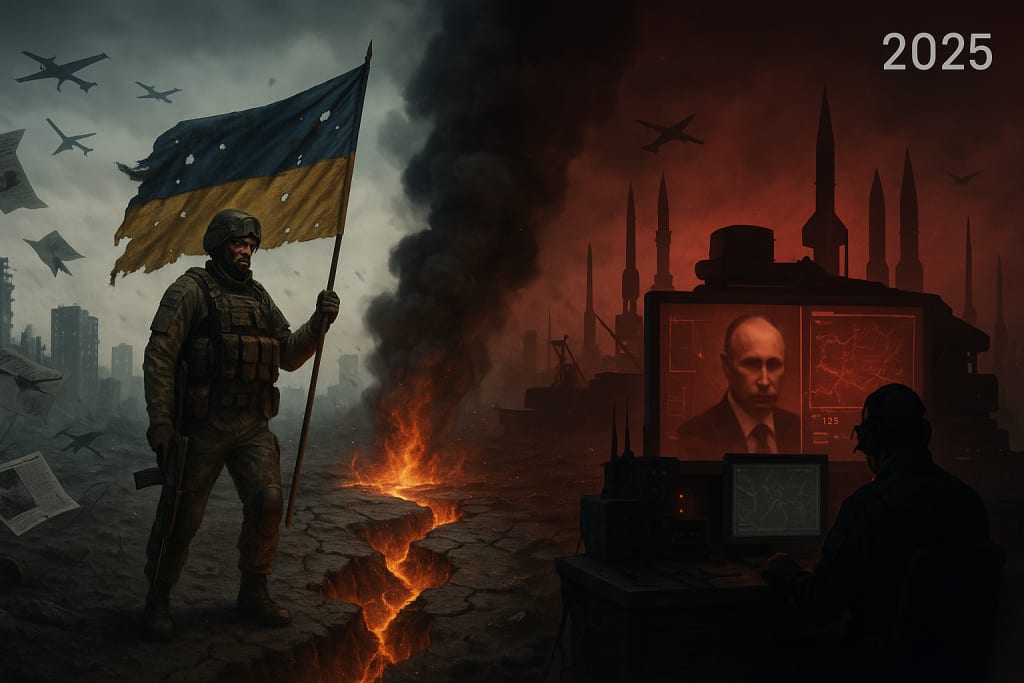
I’ve been following this war since the day it began. Not as a soldier, not as a politician, not even as a journalist. Just as a human being who cares deeply about truth, suffering, and the ripple effect of violence. And as I write this in mid-2025, I’m painfully aware of how numb we’ve all become to the phrase Russia vs Ukraine. It’s been over three years. Thousands of headlines. Millions of lives changed. And yet, how many of us really know what’s happening right now?
If you feel like you’ve lost track, you’re not alone. The noise is deafening, but the clarity is rare. So here it is. Not just a summary, but a brutally honest breakdown of what’s actually unfolding in 2025.
Ukraine Is Hitting Deeper Into Russia and It’s Changing the Game
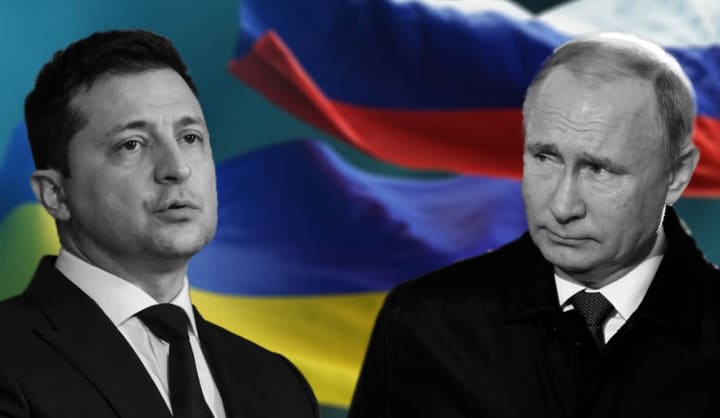
This isn't 2022 anymore. Ukraine isn’t just defending itself. It's taking the war inside Russian borders, and that’s no small detail. In June alone, Ukrainian drone strikes hit deep into Russian territory, destroying military aircraft at the Marinovka airbase and sparking chaos over 800 kilometres from the frontline.
Some of these strikes were part of Operation Spiderweb, an almost cinematic campaign involving over a hundred drones aimed at strategic Russian airbases. Russian bombers, once seen as untouchable, have now been grounded or destroyed. That’s not just bold. It’s a signal. We’re not just surviving. We’re counter-punching.
And yes, the line between defence and offense is officially blurred.
Russia’s Casualties Have Crossed the One Million Mark But It’s Not Slowing Them Down
According to independent analysis and military tracking, Russia’s total war casualties may now exceed one million, with estimates suggesting over 250,000 soldiers killed since the full-scale invasion began. To put that in perspective, that's more than the entire Soviet losses in Afghanistan over a decade.
And yet, the Kremlin pushes forward. The manpower pool may be thinning, but Russia has continued its slow, grinding advances in eastern Ukraine. Cities like Kostiantynivka in the Sumy region have been captured, and some territory continues to shift red. The cost? Astronomical. The gain? Minimal. But for Moscow, that’s not the point. This war has never just been about land. It’s about leverage, legacy, and raw political power.
Putin Says He Wants Peace But Nobody’s Buying It
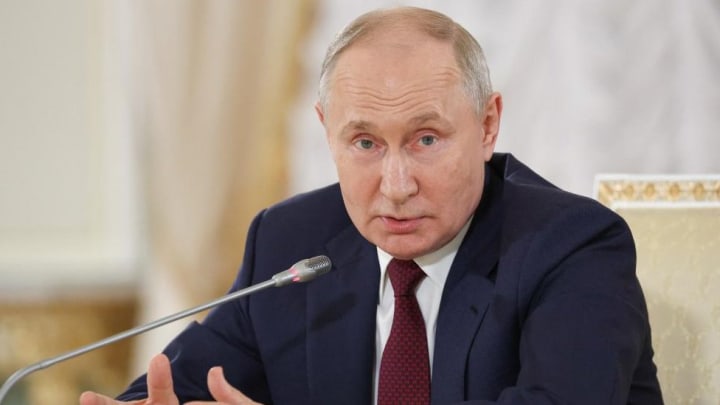
Here’s where the media gets fuzzy. Recently, President Putin publicly stated he’s “ready for peace talks.” Sounds good on paper, right?
Except Ukrainians don’t believe it. Most of the world doesn’t, either.
It’s not hard to see why. Every so-called peace offering from Moscow so far has been a smokescreen, a tactical pause, a propaganda win, or a way to buy time. And this one feels no different. The terms floated in Kremlin-controlled channels suggest Ukraine must cede territory, agree to “demilitarization,” and essentially abandon NATO ambitions.
That's not peace. That’s surrender with a diplomatic name tag.
The Tech War Is Quietly Evolving and It’s Getting Weird
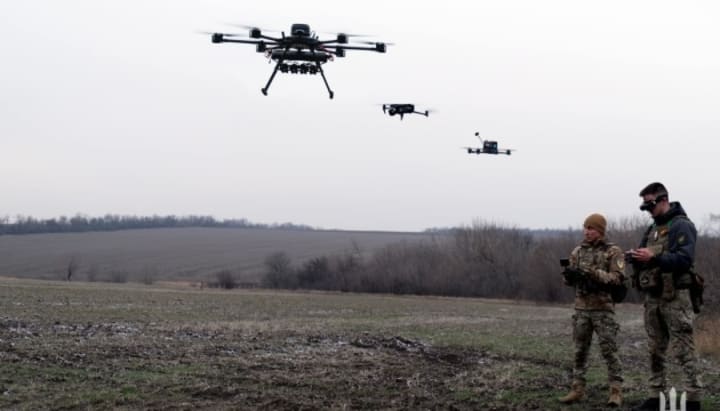
Here’s something almost nobody is talking about. The drone war has gone from sci-fi to spaghetti wiring.
In forested zones of Ukraine, drones are now controlled through fibre-optic tethers to avoid Russian jamming. Picture this. Soldiers moving through trees, dragging miles of thread-thin fibre behind them just to keep their surveillance drones aloft. It sounds absurd, even medieval. But it works.
Russia has its own innovations too, including the mass production of “Oreshnik,” a hypersonic missile system that’s supposedly impossible to intercept. Whether that’s fact or bluff is up for debate. But the psychological effect is very real.
This war isn’t just about bullets and tanks anymore. It’s about satellites, code, radar ghosts, and cables buried beneath mud.
The World Is Watching But Also Looking Away
Here’s what breaks my heart the most. Global fatigue.
The world came out swinging for Ukraine in 2022. Hashtags. Flags. Rallies. Aid. But now? It feels quieter. And that’s dangerous.
Because the war hasn’t ended. In many ways, it’s worse now. More destructive. More complex. And more deeply personal. Families still live in basements. Soldiers still write goodbye notes before sleeping. Children still flinch at thunder.
And yet, it's no longer "trending" on most timelines.
The Cost of Looking Away
Let’s get real. Wars don’t just stop when we get bored. They grow in silence. They harden under apathy.
And this war, Russia vs Ukraine, is no longer just about two countries. It’s about whether the world allows invasions to succeed, whether war crimes can be buried under ceasefire smoke, and whether democracies actually stand together when it’s no longer convenient.
If Ukraine falls, authoritarian powers everywhere will take notes.
So, What’s Next?
We’re in uncharted territory.
Peace talks are possible, but not likely.
Russia is bleeding, but stubborn.
Ukraine is fighting smarter, but stretched thin.
The West is supportive, but distracted.
In short, this isn’t over. Not even close. And what happens next depends on whether the world decides to watch with open eyes or pretend it’s all yesterday’s news.
Final Thought
The next time you scroll past a “Russia–Ukraine” headline, don’t just see it as another war story. See it as a test. Not just of those fighting, but of us watching.
If you believe in truth, sovereignty, and human dignity, then keep paying attention. Because the war isn’t over. It’s just moved into a more complicated chapter.
And history will remember how we responded.
About the Creator
Keep reading
More stories from Bevy Osuos and writers in The Swamp and other communities.
The Ceasefire Everyone’s Talking About, And Why No One Believes It
*I was scrolling through the news at 4:17 AM when I saw the headline. “Trump Declares Ceasefire Between Israel and Iran.” I blinked. Re-read it. Then laughed out loud. Not because peace isn’t welcome but because no one really believes it’s real.
By Bevy Osuos9 months ago in The Swamp
The Forsyth House Fire
Since 1851, Forsyth House has stood on the corner of Union Street and Gordon Street in the heart of Glasgow. Its iconic, or was... because on Sunday 8th of March, 2026, a fire broke out in a small, seemingly un-named shop in the building and tore all that history down. As I write, the rubble is still unsettled and the street is still blocked off. Central Station is quiet on the upper level, and around 30 small businesses have quite literally gone up in smoke.
By S. A. Crawford3 days ago in The Swamp
Failed nuclear projects leave households paying 40pc more for electricity
Across several countries pursuing nuclear energy expansion, troubled reactor projects have left an expensive legacy. Mounting construction delays, spiraling budgets, and abandoned plants have forced governments and utilities to recover losses through higher electricity prices, leaving households paying significantly more for power. Energy analysts say the impact is particularly visible in countries where nuclear projects were intended to provide long-term affordable electricity but instead became financial burdens. In some regions, electricity bills have risen by as much as 40 percent over the past decade as utilities attempt to recover billions of dollars invested in projects that never delivered the promised energy output. One of the most prominent examples involves the Toshiba Corporation-backed expansion of the V.C. Summer Nuclear Generating Station in South Carolina, United States. The project was abandoned in 2017 after costs ballooned to more than $9 billion without a single new reactor being completed. Despite the cancellation, electricity customers were still required to pay for the unfinished work through increased energy bills. Similarly, the troubled construction of reactors at the Plant Vogtle nuclear facility in Georgia has drawn widespread attention. Originally projected to cost around $14 billion, the project’s budget has climbed to more than $30 billion, making it the most expensive power plant ever built in the United States. Although the reactors are now nearing completion, years of delays and financing costs have pushed utilities to raise electricity rates for millions of customers. Experts say these cost overruns reflect deeper structural challenges within the nuclear power industry. Building modern reactors is an enormously complex process involving strict safety regulations, specialized engineering, and long construction timelines. Even small delays can translate into billions of dollars in additional costs. “These projects are financially risky because they require massive upfront investment,” said one energy economist studying global nuclear development. “When schedules slip or companies run into technical challenges, the costs escalate quickly—and ultimately consumers end up paying.” Outside the United States, similar issues have emerged in Europe. The construction of the Olkiluoto 3 Nuclear Power Plant in Finland became one of the most expensive reactor projects in history after its completion was delayed by more than a decade. Initially scheduled to start operating in 2009, the reactor only began commercial production in 2023 after years of legal disputes and engineering setbacks. In United Kingdom, the ongoing construction of the Hinkley Point C Nuclear Power Station has also sparked debate over the long-term cost of nuclear power. The project, backed by EDF Energy, has faced multiple delays and cost increases. Critics argue that the government’s guaranteed electricity price for the plant could leave consumers paying significantly higher power bills for decades. Supporters of nuclear energy, however, argue that focusing only on troubled projects overlooks the technology’s long-term benefits. Nuclear power plants produce large amounts of electricity with almost no carbon emissions, making them an important tool for combating climate change and reducing reliance on fossil fuels. Proponents say that once nuclear plants are operational, they can generate stable electricity for 60 years or more, providing energy security and helping stabilize power grids dominated by renewable sources such as wind and solar. Still, critics counter that the financial risks remain too high. Renewable energy technologies like wind and solar farms can be built much faster and at significantly lower cost. As a result, some governments are reconsidering whether investing in new nuclear projects is the best way to meet future energy demands. For households, the debate often feels less theoretical. Rising electricity bills have become a growing concern in many regions, especially during periods of economic pressure and inflation. Consumer advocates argue that families should not bear the financial consequences of poorly managed infrastructure projects. In response, several governments have introduced reforms aimed at limiting the financial risk of future nuclear developments. These measures include stricter oversight of construction budgets, new financing models, and greater transparency in how energy projects are funded. Despite these efforts, the legacy of failed or delayed nuclear plants continues to shape the energy landscape. Utilities still carry large debts associated with incomplete reactors, and those costs are often passed on to consumers through higher electricity prices. As countries around the world search for reliable and low-carbon energy solutions, the experience of these troubled nuclear projects offers a cautionary lesson. While nuclear power remains a potentially powerful tool in the global energy transition, the financial challenges of building new reactors highlight the importance of careful planning, realistic budgets, and strong oversight. For millions of households already facing rising electricity costs, the consequences of past mistakes are being felt every month when the power bill arrives.
By Fiaz Ahmed 8 days ago in The Swamp



Comments
There are no comments for this story
Be the first to respond and start the conversation.