
Failed nuclear projects leave households paying 40pc more for electricity
Cost overruns, delays, and cancelled reactors are driving up power bills for millions of consumers.

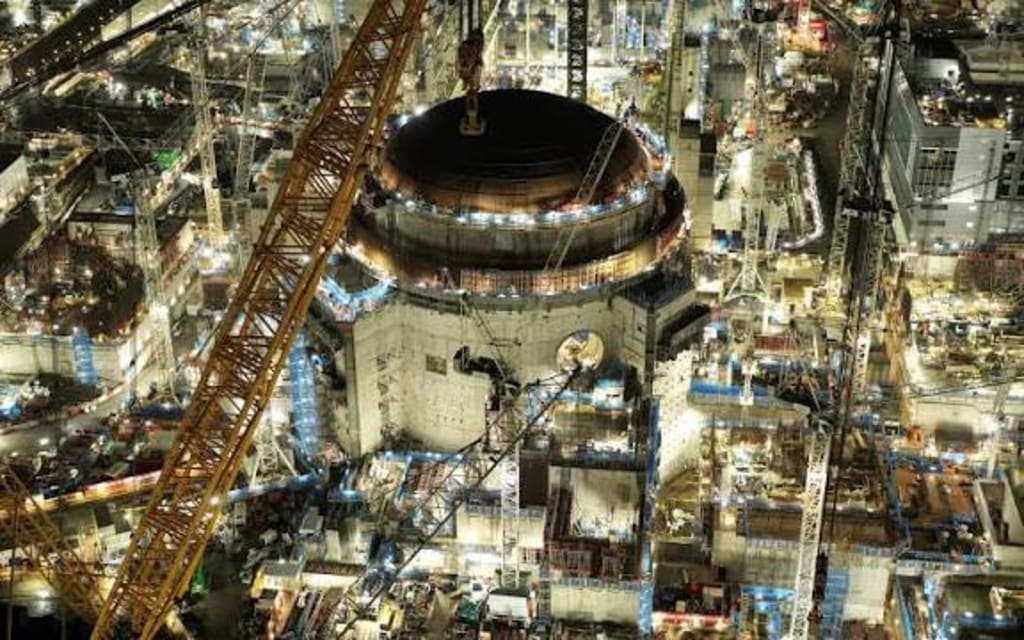
Across several countries pursuing nuclear energy expansion, troubled reactor projects have left an expensive legacy. Mounting construction delays, spiraling budgets, and abandoned plants have forced governments and utilities to recover losses through higher electricity prices, leaving households paying significantly more for power.
Energy analysts say the impact is particularly visible in countries where nuclear projects were intended to provide long-term affordable electricity but instead became financial burdens. In some regions, electricity bills have risen by as much as 40 percent over the past decade as utilities attempt to recover billions of dollars invested in projects that never delivered the promised energy output.
One of the most prominent examples involves the Toshiba Corporation-backed expansion of the V.C. Summer Nuclear Generating Station in South Carolina, United States. The project was abandoned in 2017 after costs ballooned to more than $9 billion without a single new reactor being completed. Despite the cancellation, electricity customers were still required to pay for the unfinished work through increased energy bills.
Similarly, the troubled construction of reactors at the Plant Vogtle nuclear facility in Georgia has drawn widespread attention. Originally projected to cost around $14 billion, the project’s budget has climbed to more than $30 billion, making it the most expensive power plant ever built in the United States. Although the reactors are now nearing completion, years of delays and financing costs have pushed utilities to raise electricity rates for millions of customers.
Experts say these cost overruns reflect deeper structural challenges within the nuclear power industry. Building modern reactors is an enormously complex process involving strict safety regulations, specialized engineering, and long construction timelines. Even small delays can translate into billions of dollars in additional costs.
“These projects are financially risky because they require massive upfront investment,” said one energy economist studying global nuclear development. “When schedules slip or companies run into technical challenges, the costs escalate quickly—and ultimately consumers end up paying.”
Outside the United States, similar issues have emerged in Europe. The construction of the Olkiluoto 3 Nuclear Power Plant in Finland became one of the most expensive reactor projects in history after its completion was delayed by more than a decade. Initially scheduled to start operating in 2009, the reactor only began commercial production in 2023 after years of legal disputes and engineering setbacks.
In United Kingdom, the ongoing construction of the Hinkley Point C Nuclear Power Station has also sparked debate over the long-term cost of nuclear power. The project, backed by EDF Energy, has faced multiple delays and cost increases. Critics argue that the government’s guaranteed electricity price for the plant could leave consumers paying significantly higher power bills for decades.
Supporters of nuclear energy, however, argue that focusing only on troubled projects overlooks the technology’s long-term benefits. Nuclear power plants produce large amounts of electricity with almost no carbon emissions, making them an important tool for combating climate change and reducing reliance on fossil fuels.
Proponents say that once nuclear plants are operational, they can generate stable electricity for 60 years or more, providing energy security and helping stabilize power grids dominated by renewable sources such as wind and solar.
Still, critics counter that the financial risks remain too high. Renewable energy technologies like wind and solar farms can be built much faster and at significantly lower cost. As a result, some governments are reconsidering whether investing in new nuclear projects is the best way to meet future energy demands.
For households, the debate often feels less theoretical. Rising electricity bills have become a growing concern in many regions, especially during periods of economic pressure and inflation. Consumer advocates argue that families should not bear the financial consequences of poorly managed infrastructure projects.
In response, several governments have introduced reforms aimed at limiting the financial risk of future nuclear developments. These measures include stricter oversight of construction budgets, new financing models, and greater transparency in how energy projects are funded.
Despite these efforts, the legacy of failed or delayed nuclear plants continues to shape the energy landscape. Utilities still carry large debts associated with incomplete reactors, and those costs are often passed on to consumers through higher electricity prices.
As countries around the world search for reliable and low-carbon energy solutions, the experience of these troubled nuclear projects offers a cautionary lesson. While nuclear power remains a potentially powerful tool in the global energy transition, the financial challenges of building new reactors highlight the importance of careful planning, realistic budgets, and strong oversight.
For millions of households already facing rising electricity costs, the consequences of past mistakes are being felt every month when the power bill arrives.
About the Creator
Fiaz Ahmed
I am Fiaz Ahmed. I am a passionate writer. I love covering trending topics and breaking news. With a sharp eye for what’s happening around the world, and crafts timely and engaging stories that keep readers informed and updated.
Keep reading
More stories from Fiaz Ahmed and writers in The Swamp and other communities.
Canadian Companies and Universities Join Hanwha Ocean’s Global Submarine Supply Chain
A group of Canadian companies and universities has joined the expanding global submarine supply chain led by Hanwha Ocean, marking a significant step in international collaboration in naval defense technology. The partnerships aim to combine advanced manufacturing expertise, academic research, and engineering innovation to support next-generation submarine development. The South Korean shipbuilder, headquartered in Geoje in South Korea, has been steadily expanding its international industrial network as it seeks to strengthen its position in the competitive global naval market. By bringing Canadian firms and research institutions into its supply chain, the company hopes to enhance technological capabilities while building long-term partnerships with allies. Officials from Hanwha Ocean said the cooperation will involve joint research, component manufacturing, and the sharing of engineering expertise related to submarine systems. The move also aligns with growing defense cooperation between Canada and South Korea, particularly as both nations seek to modernize naval capabilities in an increasingly complex security environment. Several Canadian technology companies specializing in marine engineering, advanced materials, and digital systems are expected to contribute key components for submarine construction. These include precision mechanical parts, underwater sensors, and advanced electronic systems designed to improve stealth, communication, and operational performance. Academic institutions are also playing an important role. Universities across Canada will participate in collaborative research programs focused on naval architecture, hydrodynamics, artificial intelligence, and underwater robotics. Through these partnerships, students and researchers will gain access to real-world defense engineering projects while helping develop technologies that could shape future naval platforms. Industry analysts say such collaborations are becoming increasingly common as modern submarines grow more complex and costly to develop. Instead of relying solely on domestic suppliers, shipbuilders are building multinational supply chains that bring together specialized expertise from around the world. For Hanwha Ocean, expanding its supply network is part of a broader strategy to strengthen its presence in international defense markets. The company has been actively promoting its submarine designs to countries seeking to modernize or expand their fleets. By working with foreign suppliers, it hopes to demonstrate both technological credibility and the ability to support global defense partnerships. Canadian officials view the partnership as an opportunity to showcase the country’s growing capabilities in marine technology and advanced manufacturing. Canada has a long history of shipbuilding and naval engineering, and its research institutions have developed strong expertise in ocean sciences and underwater technology. Experts say the collaboration could also create economic opportunities. Canadian companies involved in the program may benefit from increased exports, new contracts, and long-term participation in submarine production programs. Universities, meanwhile, will gain funding and research opportunities tied to cutting-edge defense technology. Beyond economic benefits, the partnership reflects broader geopolitical trends. As maritime security becomes more important worldwide, countries are investing heavily in naval capabilities, particularly submarines. These vessels play a critical role in deterrence, intelligence gathering, and the protection of sea lanes. By strengthening its global network, Hanwha Ocean hopes to position itself as a key player in this growing market. The company has already delivered submarines to the South Korean navy and continues to develop new designs with enhanced stealth features, longer operational endurance, and improved weapons integration. Analysts say partnerships with international partners like those in Canada could accelerate innovation. Access to diverse research capabilities and industrial expertise can help shipbuilders adapt quickly to new technological demands. While the project remains in its early stages, officials from both sides have expressed optimism about its potential impact. If successful, the collaboration could lead to further partnerships, joint research initiatives, and expanded participation by Canadian firms in global defense supply chains. For now, the agreement represents another sign of how modern defense manufacturing is evolving. In an era of complex technologies and global security challenges, cooperation between industry and academia across national borders is becoming an essential part of building the next generation of naval systems.
By Fiaz Ahmed about 9 hours ago in The Swamp
Parallel Protests
I haven't written for quite some time, but I have A LOT of thoughts about yesterday's protest rally against our government's involvement and complicity in America's war on Iran, on the harbourside of my home city Bristol, and I need to put them somewhere. My gorgeous girlfriend is always a loving and listening ear and sharing it all with her will always be a healthy and happy way of processing the mental and emotional weight, but getting it straight in my brain to share means writing it all down in straight lines, so, here we are and thanks for being here.
By Steph Cole6 days ago in The Swamp




Comments
There are no comments for this story
Be the first to respond and start the conversation.