
Putin Says Russia Will Achieve Its Ukraine Aims by Force if Kyiv Doesn’t Want Peace
Russian leader hardens tone on Ukraine war, warning that Moscow will pursue its objectives militarily as diplomatic efforts remain stalled
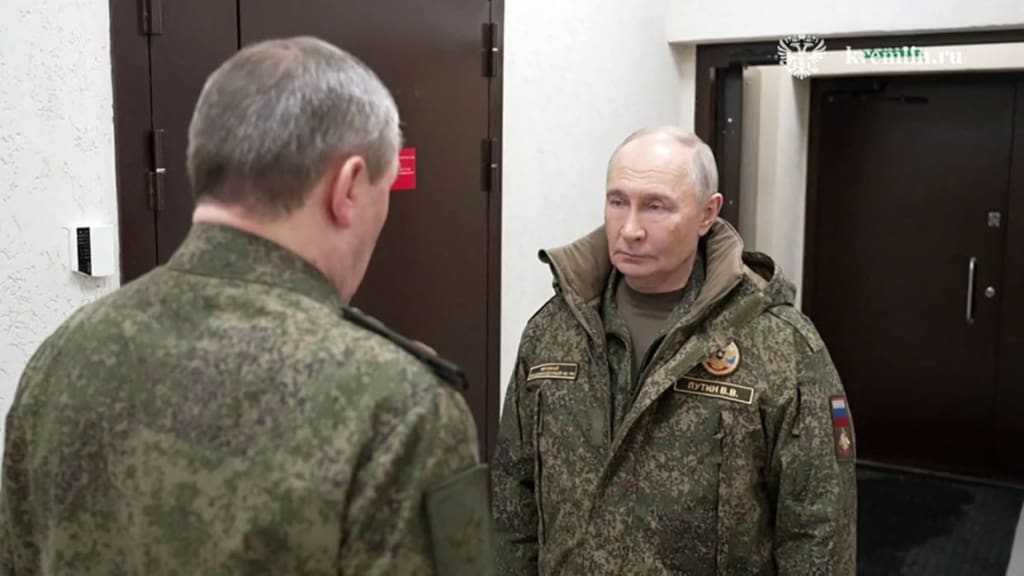
Russian President Vladimir Putin has once again hardened his rhetoric on the war in Ukraine, declaring that Moscow will achieve its objectives “by force” if Ukrainian authorities refuse what he describes as a negotiated peace. The statement, delivered during a public address and later echoed by senior Kremlin officials, underscores the deep impasse that continues to define one of the most consequential conflicts in Europe since World War II.
Putin’s comments come as the war grinds on into another year, with heavy fighting continuing along multiple fronts and diplomatic efforts showing little sign of breakthrough. While Moscow insists it remains open to talks, its latest message suggests that any negotiations would have to be conducted strictly on Russia’s terms — a position Kyiv has repeatedly rejected.
A Warning Framed as an Offer
In his remarks, Putin portrayed Russia as willing to pursue peace but warned that continued resistance from Ukraine would leave Moscow with no alternative but to rely on military means. According to the Kremlin, Russia’s goals remain unchanged: ensuring what it calls Ukraine’s “neutral status,” protecting Russian-speaking populations, and securing control over territories Moscow claims as its own.
“If they don’t want peace, we will achieve our aims by force,” Putin said, framing the statement as both a warning and an ultimatum. Russian officials later emphasized that the door to negotiations is “still open,” but insisted that Ukraine must accept the “new realities on the ground.”
For Ukraine and its Western allies, those “realities” amount to the occupation of Ukrainian territory — something Kyiv has made clear it will not legitimize through talks.
Ukraine’s Response: No Peace at Gunpoint
Ukrainian officials were quick to respond, rejecting Putin’s framing of peace and force as alternatives. President Volodymyr Zelensky and senior members of his government reiterated that peace cannot be imposed through threats or military pressure.
Ukraine maintains that any genuine peace process must include the full withdrawal of Russian troops from its internationally recognized territory, accountability for war crimes, and security guarantees to prevent future aggression. From Kyiv’s perspective, Putin’s statement confirms that Moscow is not seeking compromise but submission.
Ukrainian analysts also argue that Russia’s repeated references to peace are largely aimed at shaping international opinion, particularly among countries in the Global South that are increasingly influential in diplomatic forums.
Military Reality on the Ground
Putin’s remarks come at a time when the battlefield situation remains fluid but brutal. Russian forces have continued offensive operations in eastern Ukraine, particularly in the Donetsk and Luhansk regions, while Ukrainian troops focus on holding defensive lines, targeting supply routes, and striking military infrastructure behind Russian lines.
Both sides have suffered heavy casualties, though exact figures are difficult to verify independently. What is clear is that neither side currently holds a decisive advantage capable of quickly ending the war.
Military analysts note that Putin’s statement may be intended to signal resolve to domestic audiences as well as to Ukraine. By presenting force as an inevitable outcome if talks fail, the Kremlin reinforces its narrative that Russia is engaged in a long-term struggle that requires patience and sacrifice.
The Diplomatic Stalemate
International mediation efforts have so far failed to bridge the gap between Moscow and Kyiv. While countries such as China, Turkey, and several African states have proposed peace initiatives, none have gained traction with both parties.
Western governments remain firmly aligned with Ukraine, continuing to provide military aid, financial assistance, and political support. The United States and European Union have repeatedly stated that any peace negotiations must respect Ukraine’s sovereignty and territorial integrity.
Putin, however, has criticized Western involvement, accusing NATO countries of prolonging the conflict by arming Ukraine. In his view, Kyiv’s refusal to negotiate stems not from Ukrainian interests, but from pressure exerted by its allies.
Domestic and Strategic Messaging
Beyond its international implications, Putin’s statement also serves a domestic political purpose. By framing the conflict as a matter of choice imposed on Russia — peace if possible, force if necessary — the Kremlin seeks to justify continued military spending, mobilization efforts, and economic strain.
Russian state media has amplified the message, portraying Ukraine as unwilling to compromise and Russia as defending its national security and historical rights. This narrative plays a central role in maintaining public support for the war despite its high costs.
At the same time, the emphasis on force signals to Ukraine that Russia does not intend to freeze the conflict on unfavorable terms. Instead, Moscow appears prepared for a prolonged confrontation, betting that time, resources, and shifting global politics may eventually work in its favor.
What It Means for the Future
Putin’s declaration further dims hopes for a near-term diplomatic solution. While both sides continue to reference peace in principle, their definitions of peace remain fundamentally incompatible.
For Ukraine, peace means sovereignty restored and security ensured. For Russia, peace appears to mean recognition of its territorial claims and strategic dominance over Ukraine’s future orientation.
As winter approaches and fighting intensifies in key regions, the risk of escalation remains high. Putin’s warning suggests that Russia is prepared to increase military pressure if negotiations stall completely, raising concerns about further destruction and civilian suffering.
A Conflict With No Easy Exit
The latest statement from the Russian president highlights the grim reality of the war: peace remains distant, and force continues to dominate decision-making. As long as both sides view compromise as existential defeat, the conflict is likely to persist, with devastating consequences for Ukraine and profound implications for global security.
For now, Putin’s words reinforce a message the world has heard before — that Russia sees victory not as optional, but inevitable, whether achieved across a negotiating table or on the battlefield.
About the Creator
Keep reading
More stories from Salaar Jamali and writers in The Swamp and other communities.
Three Dead, Dozens Injured in Syria During Clashes Between Alawites and Counterdemonstrators
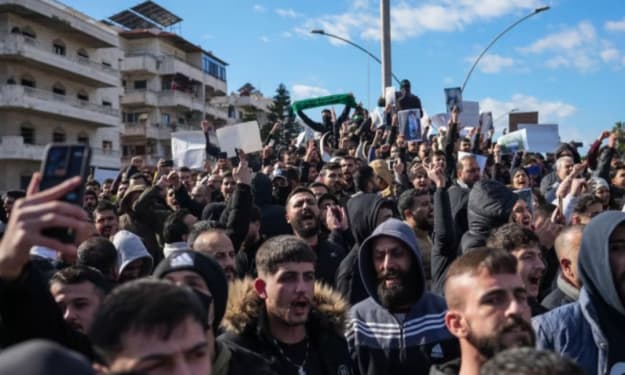
Latakia, Syria — December 28, 2025 — Violent clashes between members of Syria’s Alawite minority and counterdemonstrators erupted across several coastal cities on Sunday, leaving at least three people dead and dozens injured in some of the most intense unrest in the country since the fall of former president Bashar al-Assad nearly a year ago. �
By Salaar Jamali22 days ago in The Swamp
Title: Machado Cannot Transfer Peace Prize to Trump, Nobel Committee Says Subtitle: After a symbolic gesture sparked international debate, the Nobel Prize’s rules on non-transferability are now front and center
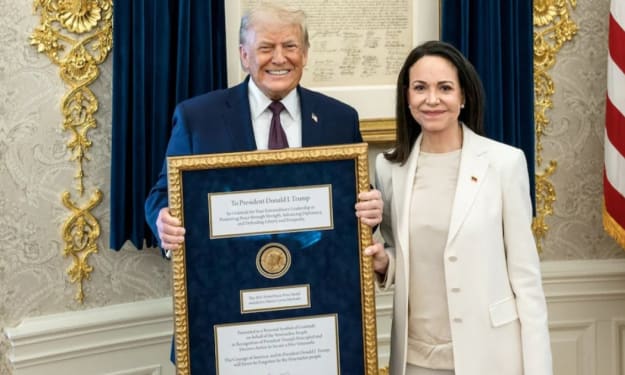
In the world of global politics, symbolism often carries as much weight as formal decisions. But when it comes to the Nobel Peace Prize, symbolism has clear limits. That reality came into sharp focus after reports emerged that Venezuelan opposition leader María Corina Machado had symbolically handed her Nobel Peace Prize medal to former U.S. President Donald Trump — a move that quickly triggered international debate and a firm response from the Nobel Committee.
By Aarif Lashariabout 2 hours ago in The Swamp


Comments
There are no comments for this story
Be the first to respond and start the conversation.