
love and power
Do not be surprised if I say that love is essential in the Islamic political thought's perception of the nature of the relationship with the Sultan.
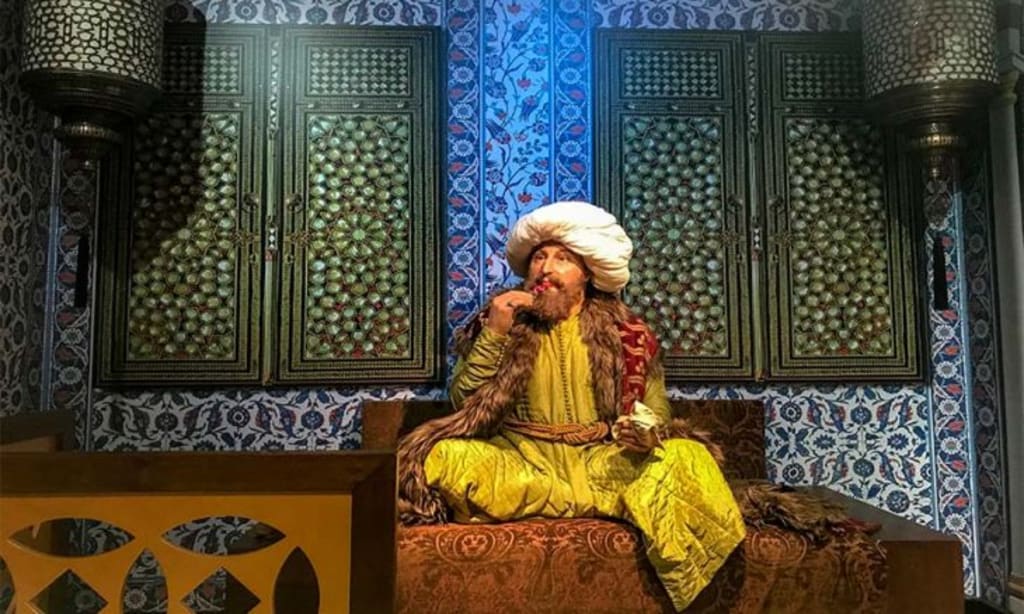
Do not be surprised if I say that love is essential in the Islamic political thought's perception of the nature of the relationship with the Sultan.
Love here is not just the feeling or feeling of the citizen towards the sultan, it is the politics itself. That is because the opposite of love, which is hate, is the undoing of urbanization itself and the demolition of politics. When we like it or not, we are really doing politics. When the homelands enter into periods of great crises, the love relationship does what wealth and armies do not.
Islamic meeting
The crying of a small child, the son of Sultan Nur al-Din Mahmoud Zangi in the city of Aleppo in front of the people and stirring their feelings, prevented a great sultan such as Salah al-Din al-Ayyubi from possessing it.
The feeling of the people towards the child of their Emir Nureddin, who died, was greater than the intrigues of the leaders of the soldiers and armies surrounding Aleppo, as they prevented and protected him when he was young. In Damascus in the days of the Arab revolutions, some people went out declaring their love for Bashar al-Assad, carrying the slogan “Menhebak” in the Syrian dialect, which was circulated by the media. In fact, those people did not find anything but the word love, true or false, to express the truth of their political and psychological position on what is going on around them, as well as people everywhere.
Also, do not be surprised if you claim that the presence of the issue of love in the Islamic meeting outweighs its presence in the Western political or social culture. Political relations in our consciousness are closely linked to the idea of love and affection, which becomes the title of a greater principle, which is loyalty. The nature of the answer will differ in our awareness to a normal question: Do you like the president or the head of government? As for the simple citizen, he will initiate a yes or no answer. Without waiting to reflect on the strangeness of this question, or the degree of its reasonableness. With all the different Arabic dialects, we will hear an answer with love or hate.
As for Western culture, the same previous questions seem strange and illogical, such as asking about the love of the general manager of an airline or train. The question of feeling towards the ruler has undergone changes throughout Western history. The least that can be said is that the Western citizen does not care about this feeling, as he sees things and relations in terms of rights and duties within the framework of respect.
At moments in the history of the West, love and politics meet, especially in moments of revolutionary establishment. And the search for freedom, justice and the values of beauty in society. Everyone imagines that the future lies in those moments. But we cannot prevent a politician from becoming a lover of power. However, the emergence of any possible love relationship between a politician and the idea of power in the Western political consciousness collides with legal and social systems that prevent this. The love becomes one-sided. The lover withdraws from that relationship by necessity at a certain moment.
Private and public domain
One of the achievements on the level of Western political consciousness is the ability to distinguish between the private sphere and the public sphere. But that did not happen until the West knew stories of political love relationships, which combined totalitarian regimes with the idea of power in its modern history.
In the novel 1984, published in 1949, George Orwell blended politics and love. Winston Smith, one of the fictional heroes of this novel, works for the Ministry of Truth. The mission of this ministry was to rewrite the past to fit the ideas and trends of the current authority. In a creative surreal way, Orwell imagined another ministry, the Ministry of Love, which was the Ministry of Intelligence and Investigation. Where there is Code 101, which is a torture room in the Rehabilitation Center of the Ministry of Love.
Smith fell in love with his co-worker Julia, who was a member of the League Against the Opposite Sex. The common denominator between her and Smith, was the hatred of the party, which prevents them from meeting or association. They met secretly, and when he found out about them, they were sent to the Ministry of Love. She is responsible for rehabilitating them to return to a life of loneliness without love. Smith separated from Julia, and was subjected to massive psychological torture. But under the cruelty of pressure, he cried out for the punishment of his mistress, Julia. The strange thing about the story is that Smith is interrogating the Ministry of Love, not the Ministry of Truth to which he belongs.
Smith's practice of love was in fact an exercise in politics in the eyes of power. Love pushes its owner towards the overwhelming feeling of the desire to possess, and this is what the authority fears as well. This explains why Smith was investigated in the Ministry of Love, not the Ministry of Truth. In that imagined totalitarian state, they knew that love was a path to truth. What interests us here is the ending emphasized by the novel, which is the crushing victory of power over love. So Smith said when torturing him: "Do it to Julia, not to me."
Should you love the Sultan?
The love of the Sultan is an issue discussed in Islamic political jurisprudence, where this love is embedded in the nature of understanding religion. Also, the authority historically has worked to teach the people the importance of the love of the Sultan. The establishment of this love in the hearts of the common people has always been a primary goal of the authority. Al-Mawardi mentioned in his book Facilitating consideration and hastening the victory in the morals of the king, that if the ruler’s authority is not pleased with his subjects, his rule is unjust.
The love or hatred of the Sultan or the lack of feelings towards him of any kind, all of this is considered from the inside of the soul. However, the Sunni political thought accepted the function of monitoring the insides of souls, and knowing the feelings of the subjects as one of the requirements for preserving the Sultan. We find in a letter written by Abdul Hamid the writer on behalf of Marwan bin Muhammad to his son Abdullah bin Marwan, when he directed him to fight the external laughter. Enthusiastic and their hearts Almstjn about you. And end with the people of arithmetic and consideration of advice to them, obtain the affection of everyone. But love was not the criterion that regulates political and social awareness in the model of the Rightly-Guided Caliphate, but rather charity. The concept of love was not an urgent and present requirement in the biography of the Caliphs. And they were not interested in the issue of love for the people, as a condition for the completion of the system.
Royal literature books were keen to put a composite picture of the royal building, as it is a mixture of discordant values, which require the presence of spiritual elements, to achieve the link and mediation between the Sultan and the subjects. There is forgiveness and oppression, mercy and punishment, love and hate.
Who among us does not love the rain that irrigates the plows? Just as Abu Bakr al-Tartushi said in his book Siraj al-Muluk, in his conception of the relationship between the subjects and the sultan. The harmful effects of the sultan are in addition to its benefits, according to al-Tartushi, such as the rain which is the watering of God Almighty, the blessings of heaven and the life of the earth and those on it.
The traveler may be harmed by it, the building collapses, and lightning strikes, and its torrents flow, and people, animals, and ammunition will perish. The sea ripples to him, and his affliction intensifies on his family. And that does not prevent the creation, if they look at the effects of God’s mercy on the land which He revived, the plants that were brought forth, the sustenance that was expanded, and the mercy that He spread, that they glorify the blessing of their Lord and give thanks for it. Al-Tartushi says that the love of the Sultan must be in all cases, in the stimulant and the repulsive.
No idea was made in history as much as the saying of the love of the family of the house made of tragedies and gladiators, whether that love was honesty or a ride to build the Sultan and the states. Love turned into a symbol of Shiite secession, and the property of possessing the Ahl al-Bayt developed and grew, mixing politics with faith and imagination.
The issue goes beyond love to a kind of adoration imposed by the nature of the conception of the infallible Imam, the Wali al-Faqih, or the religious authority that is imitated. Love is the title of the eligibility of the family of the caliphate. This love still constitutes the nature of contemporary Shiite consciousness. However, the greatest challenges faced by the Shiite political consciousness in history occurred when their opponents shared the love of the Ahl al-Bayt with them. The slogan of the call of the Abbasids and their fanaticism upon which their state was based, was the pledge of allegiance to the satisfaction of the family of Muhammad. So did the Fatimids, fierce opponents of the Abbasids. Love, in its historical reality, is a path to the state. Rather, it was the politics itself, not the passionate passion. And what moved these crowds, so they were fuel for revolutions and adversities, other than the claim of some to love Ahl al-Bayt and the sincerity of others in it?
The political applications and practical consequences of loving Ahl al-Bayt are very relative in history to Sunni consciousness. But the Shiite political consciousness at the same time employs love in a pragmatic and utilitarian manner according to organized rules. As a key determinant of the controversy with Sunni awareness. But I always wonder if this love could have been abstract and devoid of any desired political results?
Can Shiite love be on the level of mystical mystical love, which sees only itself in its beloved?
It seems that this love is only love in proportion to the political benefits it produces. In theory, however, the Shiite consciousness sees that love has no conditions. His tongue says that the Sunnis' love for the Ahl al-Bayt is conditional on the reality of history and the relativity of political action.
About the Creator
As Divisions Over Greenland Grow, Europe Examines Its Options
If you thought Greenland was just an icy, remote island, think again. This vast Arctic territory has suddenly become a hotbed of geopolitical tension, sparking debates across Europe about strategy, security, and sovereignty. What used to be a quiet corner of the world is now at the center of a storm involving the United States, Denmark, and the European Union.
By Aqib Hussaina day ago in The Swamp




Comments
There are no comments for this story
Be the first to respond and start the conversation.