
As Divisions Over Greenland Grow, Europe Examines Its Options
How a Remote Arctic Territory Has Become a Strategic Test for Europe, NATO, and Transatlantic Ties
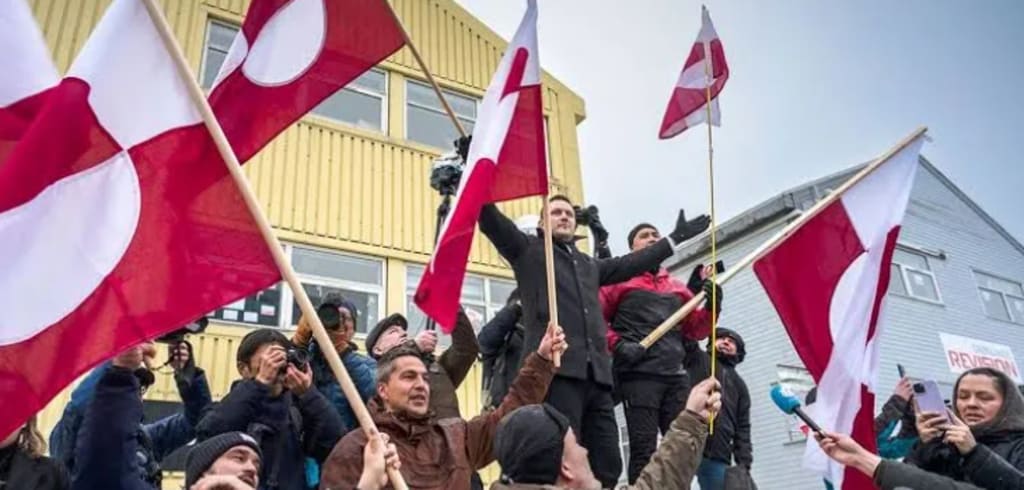
If you thought Greenland was just an icy, remote island, think again. This vast Arctic territory has suddenly become a hotbed of geopolitical tension, sparking debates across Europe about strategy, security, and sovereignty. What used to be a quiet corner of the world is now at the center of a storm involving the United States, Denmark, and the European Union.
Why Greenland Matters
Greenland isn’t just ice and snow. Its location makes it strategically crucial for military and trade purposes, and its untapped natural resources are highly attractive. Recently, U.S. interest in Greenland has surged. Statements from Washington suggesting Greenland might be “for sale” sent shockwaves across Europe, raising fears that the Arctic could become a new arena for global power struggles.
Europe sees this differently. European leaders insist that Greenland’s future should be decided by its people and by Denmark—not the United States. The controversy has sparked not only political discussions but also real concerns about transatlantic unity.
The Transatlantic Rift
The tension comes at a tricky time for NATO allies. U.S. threats of tariffs against several European countries—Denmark, Germany, France, and the UK—sparked outrage. European leaders condemned these threats as economic blackmail, highlighting that pressuring allies over territorial matters violates the spirit of partnership.
The European response hasn’t been uniform. Countries like France and the UK have been vocal in defending European autonomy, while others, like Italy, suggest dialogue over confrontation. Across the board, one point is clear: Europe wants to protect Greenland’s sovereignty while maintaining ties with the U.S.
Europe’s Strategic Options
So, what options does Europe have? Officials are exploring multiple approaches:
1. Economic Retaliation
The European Union has a tool called the Anti-Coercion Instrument (ACI), designed to counter economic pressure from outside powers. It could be used to impose targeted measures on the U.S. if tariffs are enacted. However, this is tricky. A trade war with the U.S. could backfire, affecting European economies and cooperation on critical global issues, including Ukraine and Arctic security.
2. Strengthening Security Presence
Several European nations have already deployed small reconnaissance and support units to Greenland. Germany, France, the UK, and others are exploring the idea of a more permanent Arctic security force, signaling Europe’s commitment to defending Greenland and the wider region. Think of it as Europe sending a message: “We’re serious about Arctic sovereignty.”
3. Diplomatic Coalition Building
Some European strategists suggest forming an Arctic coalition. This group would coordinate policy, security, and investments with Greenland and allies like Canada. The goal? Present a united European voice on Arctic affairs without directly confronting Washington. Cooperation, after all, is often more effective than conflict.
The Sovereignty Factor
Despite all the strategic discussions, Europe remains clear on one point: Greenland is not for sale. Denmark and Greenlandic leaders emphasize that any decisions about the island’s future must involve its people. For Europe, this is about more than politics—it’s about respecting sovereignty and international law.
A Test of European Autonomy
The Greenland issue is more than a territorial debate. It’s a test of European strategic independence. Can Europe defend its interests while managing a delicate alliance with the United States? Can it act collectively to uphold international norms without creating a major crisis?
As divisions over Greenland continue to grow, Europe is learning that its options—economic, diplomatic, and military—are not simple. But in this high-stakes Arctic game, they are essential for preserving stability and asserting European strength.
This version reads like a blog post: engaging, skimmable, with subheadings and short paragraphs for online readers.
About the Creator
Keep reading
More stories from Aqib Hussain and writers in The Swamp and other communities.
8 Police Officers Killed in Guatemala After Prison Crackdown on Gangs
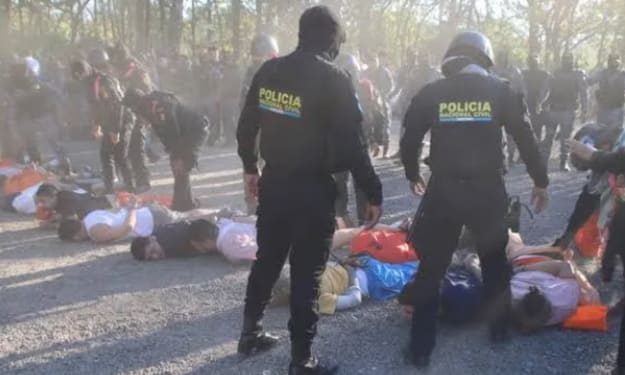
Guatemala is facing a wave of violence that has shocked the nation. Over the past weekend, eight police officers were killed in coordinated attacks following a major government crackdown on gangs in the country’s prison system. The events mark a disturbing escalation in a conflict that has plagued Guatemala for decades, with ordinary citizens and law enforcement alike caught in the crossfire.
By Aqib Hussainabout 14 hours ago in The Swamp
Verizon’s Response to Its Massive Outage Is What No Company Should Ever Do
When a company the size of Verizon experiences a massive outage, millions of customers notice. Text messages don’t go through, calls drop, mobile banking stalls, and businesses relying on cellular service grind to a halt. In these moments, customers are not just inconvenienced — they are frustrated, anxious, and looking for leadership.
By Aarif Lashariabout 12 hours ago in The Swamp
The Devil's Cut
“Comrade, finally you’re awake.” The voice was smooth, sensual. A flickering incandescent bar was all that lit the white, sterile room. All Vladimir remembered was everything going black. He tried to move his arms and found them strapped to the gurney.
By Matthew J. Fromm5 days ago in Fiction



Comments
There are no comments for this story
Be the first to respond and start the conversation.