
Judicial Defiance in the Trump Era: The Mayor Adams Legal Battle
Such a move would have left the door open for the Republican-led administration to resurrect charges at will, potentially using them as a bargaining chip on issues like immigration enforcement.
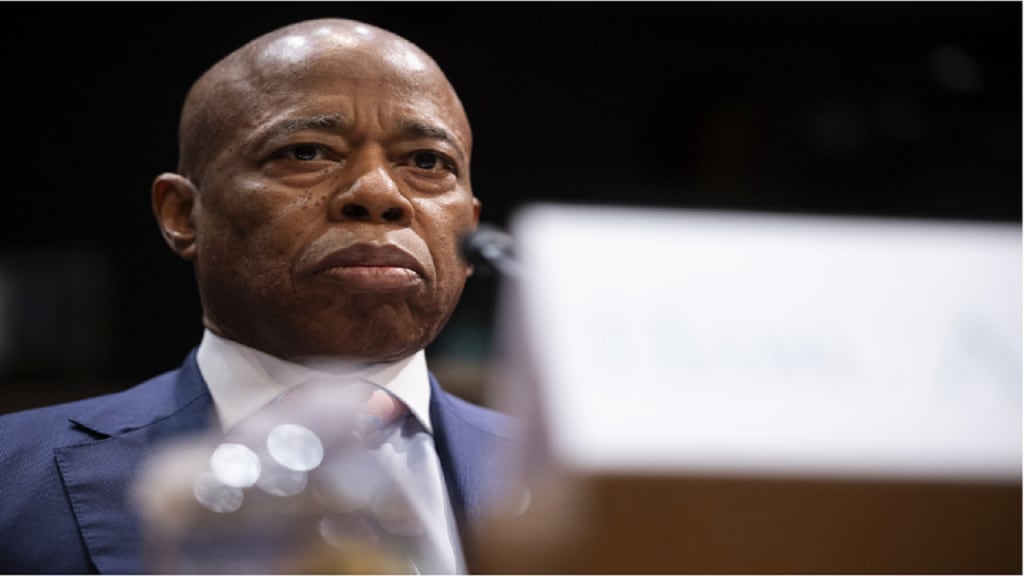
The dismissal of corruption charges against New York City Mayor Eric Adams encapsulates the political turbulence of Donald Trump’s second administration. It stands as a glaring example of the Justice Department—now helmed by lawyers who previously defended Trump in criminal and impeachment cases—leveraging federal power for political ends. Yet, amid this contentious legal saga, one crucial aspect emerges: the resilience of judicial independence under an administration that frequently tests its limits.
A High-Stakes Legal Battle
The Justice Department’s initial request to dismiss the case only temporarily, with Adams’ agreement, raised significant concerns. Such a move would have left the door open for the Republican-led administration to resurrect charges at will, potentially using them as a bargaining chip on issues like immigration enforcement. The very structure of the agreement hinted at a quid pro quo, even as both parties denied any such arrangement.
Had U.S. District Judge Dale Ho, a Biden appointee, approved this temporary dismissal without question, the consequences could have been severe. It would have effectively placed the Democratic mayor under constant political threat, allowing the administration to wield prosecutorial power as a tool of coercion. Instead, Ho took an unprecedented step, appointing a third party to assess the situation and provide additional legal arguments—ensuring the case received the rigorous adversarial scrutiny that defines the American legal system.
A Strategic Appointment and a Pivotal Decision
Judge Ho’s choice of Paul Clement for this role was nothing short of strategic brilliance. Clement, a respected conservative legal mind, brought undeniable credibility to the review process. His involvement eliminated any perception that the final ruling would be a partisan maneuver, reinforcing the judiciary’s commitment to fairness.
As the case progressed, Adams introduced another layer of complexity by filing for dismissal with prejudice, citing prosecutorial misconduct and the tarnishing of his presumption of innocence. His legal team pointed to damning letters from former prosecutors who had resigned rather than comply with the Justice Department’s directive to dismiss the case without prejudice.
Clement’s analysis, presented in a March 7 brief, strongly supported a permanent dismissal. He argued that allowing the Justice Department to drop the case while retaining the option to refile would create a dangerous precedent—leaving Adams under a perpetual legal cloud akin to the fabled Sword of Damocles. Judge Ho echoed this concern in his ruling, sharply rebuking the Justice Department’s rationale. He pointed out the inherent contradiction in the government’s stance: claiming the case was tainted, weak, and a national security risk, yet still wanting the option to reinstate charges later.
Judicial Integrity Amid Political Pressure
By dismissing the case with prejudice, Ho thwarted a blatant attempt to manipulate the legal system for political leverage. While he acknowledged that he could not compel the Justice Department to prosecute, he refused to facilitate its tactical maneuvering. This decision not only shielded Adams from indefinite legal jeopardy but also safeguarded the integrity of the justice system itself.
Had the judge capitulated to the Trump administration’s demands, the repercussions would have extended far beyond one politician’s fate. A precedent would have been set for using federal prosecutions as a tool of political coercion, further eroding public trust in the judiciary. Instead, Ho’s ruling reaffirmed that, even in an era of intense political pressure, the judiciary can still serve as a check against executive overreach.
The Eric Adams case underscores the precarious balance of power in the American legal system under the Trump administration. It highlights the ongoing struggle between an executive branch eager to bend legal institutions to its will and a judiciary striving to maintain its independence. While this ruling represents a victory for judicial integrity, it also serves as a stark reminder of the vigilance required to preserve the rule of law in an era where its very foundations are frequently challenged
About the Creator
arafat chowdhury
I am a web content writer and a freelancer i love to write and learn.
Keep reading
More stories from arafat chowdhury and writers in The Swamp and other communities.
Trump’s Tariff Gamble: Boosting U.S. Industry or Igniting a Trade War?
U.S President Donald Trump has announced sweeping new tariffs, escalating tensions between the United States and its key trading partners. The new measures, which impose a 34% tariff on imports from China and a 20% levy on goods from the European Union, signify a significant departure from long-standing global trade policies. These tariffs, alongside a 10% baseline tax on all imports, mark a dramatic restructuring of international commerce and could ignite a broader trade war with economic consequences worldwide.
By arafat chowdhury10 months ago in The Swamp
US Accuses EU of Seeking Cheese ‘Monopoly’ in South America
The latest twist in global trade? Cheese. Yes, cheese. The United States has accused the European Union of trying to monopolize the South American cheese market, and it’s causing waves in international trade circles. Let’s break it down.
By Aqib Hussain3 days ago in The Swamp
My New Book is Finally Here
My poetry collection Beautiful and Brutal Things is done. It's actually done and finally published over 270 pages. Over a year of my life went into this book. More than a year, really. Long days at my computer, sometimes seven days a week because I couldn't stop even when I probably should have. Then two months of editing that felt harder than the writing itself. But it's finished, and I'm still standing, and the book is real.
By Tim Carmichael3 days ago in BookClub




Comments
There are no comments for this story
Be the first to respond and start the conversation.