
Trump’s Tariff Gamble: Boosting U.S. Industry or Igniting a Trade War?
The administration has justified the move as a necessary step to rectify what Trump describes as a long history of unfair trade practices.

U.S President Donald Trump has announced sweeping new tariffs, escalating tensions between the United States and its key trading partners. The new measures, which impose a 34% tariff on imports from China and a 20% levy on goods from the European Union, signify a significant departure from long-standing global trade policies. These tariffs, alongside a 10% baseline tax on all imports, mark a dramatic restructuring of international commerce and could ignite a broader trade war with economic consequences worldwide.
Aiming for Economic Rebalancing
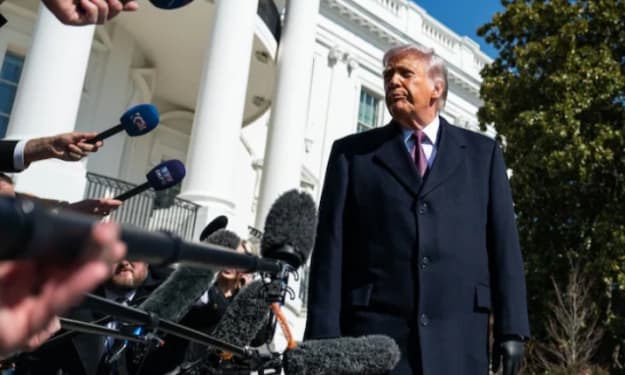
The administration has justified the move as a necessary step to rectify what Trump describes as a long history of unfair trade practices. Speaking from the Rose Garden, he stated that the United States has been subjected to economic exploitation by foreign nations for decades, vowing to reclaim financial losses through these heightened tariffs. By targeting countries that maintain substantial trade surpluses with the U.S., the White House intends to generate hundreds of billions in new revenue and incentivize domestic manufacturing.
Yet, the sweeping nature of these tariffs has sparked intense debate. The president’s rhetoric, characterizing past trade agreements as a systematic pillaging of the American economy, has alarmed economists and policymakers alike. Many fear that these protective measures could have the opposite effect, leading to increased costs for American consumers and businesses.
Economic and Political Ramifications
The immediate aftermath of Trump’s announcement saw sharp declines in U.S. stock market futures, reflecting investor anxiety over potential economic disruptions. With tariffs poised to increase the cost of essential goods—ranging from automobiles to clothing—middle-class Americans may bear the brunt of these changes. Economic analysts caution that while the administration aims to bolster U.S. industry, the risk of inflation and reduced consumer spending could offset any manufacturing gains.
Politically, Trump’s move presents a complex challenge. While fulfilling a key campaign promise, the decision has drawn criticism from within his own party, particularly from Republican senators representing states with significant agricultural and industrial exports. These lawmakers worry that retaliatory tariffs from affected nations could undermine U.S. exports, particularly in sectors like farming and manufacturing, which are already navigating economic uncertainties.
A Global Response to Protectionism
The international response to these tariffs has been swift and pointed. The European Union and China have both signaled their intent to retaliate, warning that these protectionist policies could destabilize the global economic framework. Canada, a longstanding ally of the U.S., has already implemented countermeasures in response to previous tariffs linked to fentanyl-related trade disputes. Meanwhile, the European Union has imposed tariffs on $28 billion worth of American goods, prompting threats of further U.S. retaliatory measures.
China, for its part, has taken a measured approach in its response, emphasizing that protectionism serves no winners and that escalating trade tensions will ultimately harm all parties involved. Nevertheless, Beijing is expected to impose its own retaliatory tariffs, further exacerbating economic volatility.
Historical Parallels and Economic Forecasts
Economic historians have drawn comparisons between Trump’s tariff strategy and the infamous Smoot-Hawley Tariff Act of 1930, which contributed to the Great Depression by triggering a global trade war. While modern economies are more resilient, analysts warn that maintaining these tariffs for an extended period could lead to stagnation, increased production costs, and job losses in key industries.
Fitch Ratings has projected that the average U.S. tariff rate will surge from 2.5% in 2024 to 22%, a level not seen in nearly a century. The implications of such a shift are profound, with some experts predicting widespread recessions among key trade partners. Others argue that businesses will be forced to pass increased costs onto consumers, dampening economic growth and reducing purchasing power.
The Future of Trade Policy
The White House has signaled its willingness to negotiate with trade partners but insists that meaningful policy changes from other nations must precede any tariff reductions.
As the world braces for the full impact of these tariffs, the next several months will be crucial in determining whether Trump’s gamble will achieve its intended goals or spiral into a protracted economic standoff. For now, businesses, consumers, and policymakers must navigate the uncertainty of an evolving global trade landscape, one that may be reshaped for years to come.
About the Creator
arafat chowdhury
I am a web content writer and a freelancer i love to write and learn.
Keep reading
More stories from arafat chowdhury and writers in The Swamp and other communities.
Cory Booker’s Filibuster-Style Protest: Taking a Stand Against Trump’s Policies
Senator Cory Booker took control of the Senate floor Monday night, holding it well into Tuesday as he delivered a passionate critique of former President Donald Trump’s Republican agenda. While his current stance is one of fierce opposition, Booker once found areas of agreement with Trump during his early years in office.
By arafat chowdhury12 months ago in The Swamp
The Forsyth House Fire
Since 1851, Forsyth House has stood on the corner of Union Street and Gordon Street in the heart of Glasgow. Its iconic, or was... because on Sunday 8th of March, 2026, a fire broke out in a small, seemingly un-named shop in the building and tore all that history down. As I write, the rubble is still unsettled and the street is still blocked off. Central Station is quiet on the upper level, and around 30 small businesses have quite literally gone up in smoke.
By S. A. Crawforda day ago in The Swamp



Comments
There are no comments for this story
Be the first to respond and start the conversation.