
Judge Orders Release of Five-Year-Old Child Detained by ICE in Minneapolis
A Shocking Immigration Arrest That Sparked Nationwide Outrage

The arrest of a five-year-old child by U.S. Immigration and Customs Enforcement (ICE) in Minneapolis has ignited a fierce national debate on immigration enforcement, child rights, and the treatment of asylum-seeking families in the United States. After days of public outrage, legal pressure, and protests, a federal judge has ordered the immediate release of the child and his father from detention.
This case has become a powerful symbol of the human cost of aggressive immigration policies.
What Happened in Minneapolis?
On January 20, 2026, ICE agents arrested five-year-old Liam Conejo Ramos and his father, Adrian Conejo Arias, outside their home in Columbia Heights, a suburb of Minneapolis. The child had just returned from preschool when immigration officers approached the family.
Photos of Liam standing outside his home, wearing a blue bunny hat and carrying a Spider-Man backpack while surrounded by ICE agents, quickly went viral on social media. The images triggered widespread anger and disbelief across the country.
Many questioned how a child so young could be detained during an immigration operation far from the U.S. border.
Allegations Against ICE Tactics
Local school officials and immigrant rights advocates accused ICE of using the child as leverage to locate other family members. According to the Columbia Heights school district, agents allegedly instructed the child to knock on his home’s door to check if anyone else was inside.
ICE denied these claims, stating that one officer remained with the child for safety reasons while others arrested the father. Despite these explanations, critics argue that the situation was deeply traumatic and unnecessary.
The incident has intensified concerns about enforcement methods used in immigrant communities, particularly when children are involved.
The Judge’s Strongly Worded Ruling
U.S. District Judge Fred Biery ordered the release of both the child and his father from a family detention facility in Dilley, Texas. His ruling was notable not only for its outcome but also for its sharp criticism of the government.
In his written opinion, Judge Biery described the arrest as part of an “ill-conceived and incompetently implemented” pursuit of deportation quotas. He emphasized that enforcing immigration laws should never come at the cost of traumatizing children.
The judge also cited biblical and historical references, underscoring the moral weight of the case and condemning the detention of a young child.
Family’s Immigration Status
Liam and his father reportedly entered the United States from Ecuador in December 2024 and applied for asylum through legal channels. Their asylum claim is still pending, and the judge clarified that the release order does not decide the final outcome of their immigration case.
However, the ruling ensures that the child will not remain in detention while legal proceedings continue — a decision widely praised by human rights advocates.
Life Inside Detention
During their time at the South Texas Family Residential Center, concerns were raised about the conditions faced by detainees. Reports from advocates and visiting lawmakers described limited medical care, emotional distress, and inadequate living conditions.
Members of Congress who visited the facility said the child appeared exhausted, anxious, and had difficulty eating — signs that detention had already taken a toll on his physical and emotional health.
For many critics, this reinforced long-standing arguments against family detention centers.
Public Reaction and Protests
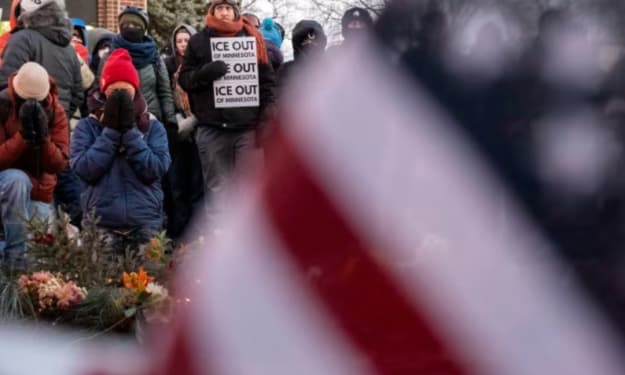
The case sparked protests across the United States, with demonstrators calling for an end to child detention and demanding humane immigration policies. Immigrant advocacy groups argue that fear has spread rapidly through communities, particularly in Minnesota, where parents now hesitate to send their children to school.
School officials have reported declining attendance, saying families fear ICE operations near homes and schools.
The arrest has become a rallying point for activists pushing for systemic immigration reform.
A Broader Immigration Debate
While immigrant rights groups celebrated the judge’s decision, supporters of strict immigration enforcement argue that laws must be applied consistently. Even some defenders of ICE actions, however, admitted that detaining a five-year-old child crossed ethical boundaries.
Legal experts note that the ruling could influence future cases involving family detention, especially those involving minors. It also places renewed scrutiny on ICE’s operational guidelines and oversight.
What Happens Next?
Following the court order, federal authorities are required to release the father and son and allow them to reunite with family in Minnesota. Their asylum case will continue through the immigration court system.
Advocates hope the child will receive emotional support to recover from the trauma of detention and that this case will prompt lasting policy changes.
Final Thoughts
The detention and subsequent release of a five-year-old child has highlighted the human consequences of immigration enforcement in the United States. While laws must be upheld, this case raises critical questions about compassion, proportionality, and the protection of children.
As the national conversation continues, one thing is clear: images of a small child in an ICE raid have left a lasting mark on America’s immigration debate — and may shape its future policies.
About the Creator
Keep reading
More stories from Ayesha Lashari and writers in The Swamp and other communities.
Mine Collapses in Eastern Congo, Leaving at Least 200 Dead
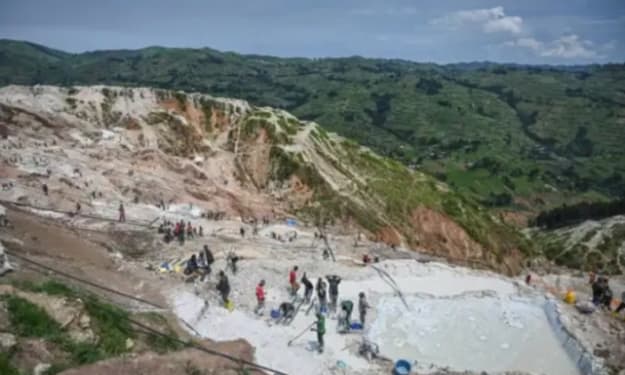
Introduction: A Deadly Tragedy in Eastern Congo In a catastrophic incident that has shocked the world, at least 200 people are feared dead after a mine collapsed in the volatile and resource-rich eastern region of the Democratic Republic of Congo (DRC). The disaster, which occurred in the town of Kibitanga, has further highlighted the dangers faced by miners in an industry that remains central to Congo’s economy. Despite the country being one of the richest in the world in terms of mineral resources, including cobalt, gold, and copper, the lack of oversight, poor safety standards, and the reliance on artisanal mining have led to such incidents becoming disturbingly frequent.
By Ayesha Lasharia day ago in The Swamp
Surging Gold and Silver Prices Expected to Spur More Mining Takeovers
Investors and miners eye consolidation as precious metals rally to multi-year highs The global gold and silver markets have been on a dramatic upswing in recent months, with prices reaching levels not seen in over a decade. Analysts suggest that this surge is likely to trigger a wave of mining industry consolidations, as stronger firms look to acquire smaller or financially distressed producers to capitalize on the rising demand and maximize profits.
By Salaar Jamali3 days ago in The Swamp
Another Minnesota Shooting Turns Immigration Crackdown into a National Reckoning
The latest fatal shooting of a U.S. citizen by federal immigration agents in Minneapolis has triggered a powerful national debate about the role of federal enforcement in local communities, civil liberties, and the limits of executive authority. What began as an immigration crackdown has rapidly evolved into a broader reckoning over policing, federal power, and democratic norms in the United States.
By Salaar Jamali7 days ago in The Swamp
Time to change your life.
Is it even possible for you to change your life? A lot of people, more than there should be, are unhappy with their lives. But what are they doing about it? Usually nothing. People talk about how shitty their lives are and want change, but are they not taking the actions to change?
By Jen Phillipsa day ago in Humans


Comments
There are no comments for this story
Be the first to respond and start the conversation.