
Japan Votes in Snap Election as Prime Minister Sanae Takaichi Takes a High-Stakes Gamble
Japan’s newly appointed Prime Minister Sanae Takaichi calls a snap election, testing public support amid economic challenges, security concerns, and political uncertainty
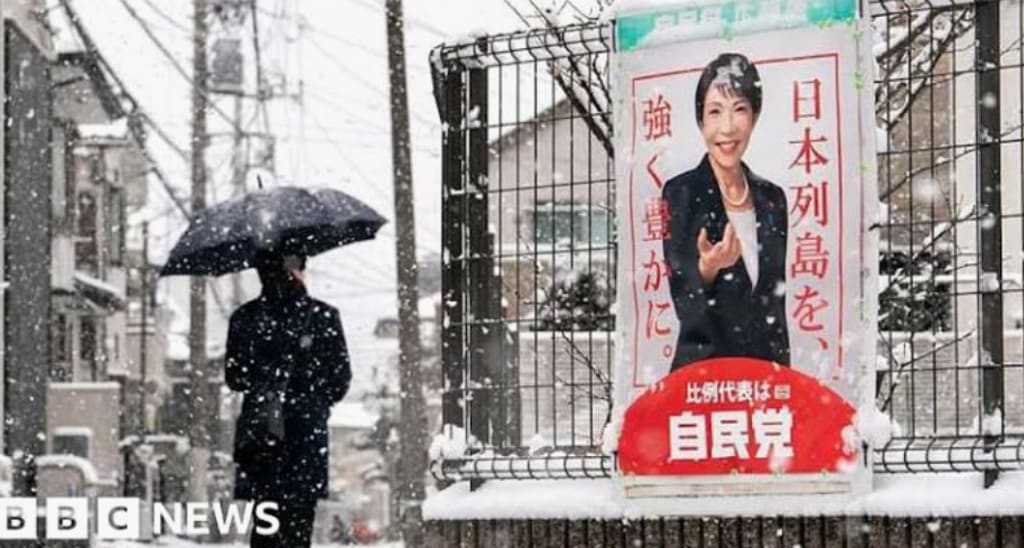
Japan Votes in Snap Election as Prime Minister Sanae Takaichi Takes a High-Stakes Gamble
Japan has entered a dramatic political moment as Prime Minister Sanae Takaichi calls a snap election, a bold move that could reshape the country’s political future. The decision comes amid rising economic pressures, shifting global alliances, and growing public debate over Japan’s domestic and foreign policies.
Takaichi, known for her conservative stance and strong views on national security and economic reform, is seeking a fresh mandate from voters. But calling an early election is a risky strategy—one that could either strengthen her leadership or weaken her political standing if voters respond negatively.
Why a Snap Election Now?
Snap elections are rare but powerful political tools. Leaders often call them when they believe public opinion is favorable or when they want to solidify power before challenges grow stronger.
For Takaichi, the timing reflects both opportunity and risk. Japan is facing inflation, demographic decline, and increasing security threats in the Asia-Pacific region. By going to the polls early, she aims to secure a stronger parliamentary majority to push through reforms.
Political analysts say the move suggests confidence—but also urgency. If her government fails to gain voter support, opposition parties could gain ground and complicate policymaking.
Economic Challenges at the Forefront
Japan’s economy remains one of the world’s largest, but it faces serious challenges. Inflation has risen, wages have struggled to keep pace, and the yen has experienced volatility. Many households are feeling pressure from higher living costs, while businesses are dealing with global supply chain disruptions.
Takaichi has promised economic revitalization through tax reforms, defense spending increases, and policies to boost innovation and manufacturing. However, critics argue that her plans may increase public debt and widen inequality.
The snap election will allow voters to decide whether they trust her economic vision or prefer alternative approaches from opposition parties.
Security and Foreign Policy Concerns
Security is another major issue influencing the election. Japan’s geopolitical environment has become increasingly tense, with China’s growing military presence, North Korea’s missile tests, and global uncertainties involving the United States and other allies.
Takaichi is known for her strong stance on defense and has advocated for expanding Japan’s military capabilities. She supports revising Japan’s pacifist constitution to allow a more active defense role.
Supporters see her as a strong leader who can protect Japan’s national interests. Opponents worry that her policies could escalate regional tensions and move Japan away from its post-war pacifist identity.
Domestic Politics and Party Dynamics
Within Japan’s ruling party, Takaichi’s leadership has sparked debate. While some members support her conservative agenda, others fear it could alienate moderate voters.
Opposition parties see the snap election as an opportunity to challenge the ruling coalition. They are focusing on social welfare, cost-of-living issues, and political transparency, hoping to attract voters frustrated with the government.
Political experts say the election could reveal shifting voter attitudes, especially among younger generations who are concerned about jobs, housing, and climate change.
Public Reaction and Voter Sentiment
Public opinion on the snap election is mixed. Some voters welcome the chance to express their views on the government’s direction, while others see it as a political gamble that could create instability.
Voter turnout will be a key factor. If turnout is high, it could signal strong public engagement and potentially benefit opposition parties. Low turnout might favor the ruling party, which traditionally has a more organized voter base.
Japanese media outlets are closely monitoring public sentiment, highlighting concerns about economic uncertainty and political polarization.
Global Implications of the Election
Japan’s political stability is crucial not only domestically but also globally. As a major economic power and key U.S. ally, Japan plays a significant role in regional security and global trade.
A strong mandate for Takaichi could lead to more assertive foreign policy and defense cooperation with allies. A weakened government could slow reforms and create uncertainty in Japan’s international commitments.
Global investors and foreign governments are watching the election closely, as Japan’s policies influence markets, security alliances, and regional diplomacy.
Risks and Rewards for Takaichi
Calling a snap election is a calculated gamble. If Takaichi wins decisively, she will gain political capital to push forward her agenda. She could strengthen her position within the ruling party and on the global stage.
However, if voters reject her leadership, the consequences could be severe. A poor result could weaken her authority, embolden rivals, and even lead to leadership challenges within her party.
History shows that snap elections can backfire, turning confidence into political vulnerability.
What This Election Means for Japan’s Future
The outcome of this election will shape Japan’s path for years to come. Key issues include economic reform, national security, social welfare, and demographic challenges such as an aging population and declining birthrate.
Japan’s next government will need to balance tradition with modernization, stability with reform, and domestic priorities with global responsibilities.
For voters, the election is a chance to decide what kind of Japan they want in the future—more conservative and security-focused, or more progressive and socially oriented.
Conclusion
Japan’s snap election marks a pivotal moment in the nation’s political history. Prime Minister Sanae Takaichi’s decision to go to the polls early is a bold move that could either secure her leadership or expose political weaknesses.
As voters prepare to cast their ballots, the stakes are high—not just for Takaichi, but for Japan’s economy, security, and global role. The election will reveal whether the Japanese public supports her vision or demands a new political direction.
In an era of global uncertainty, Japan’s political choices will have far-reaching consequences, making this snap election one of the most closely watched political events in the region.
About the Creator
Why Black History Matters in America?
The United States of America is celebrating their 250th anniversary in 2026. I'm proud to be an American and as someone who was born here, I wouldn't imagine myself living anywhere else. This is a country where opportunities are possible. Where anyone can be successful in anything they desire to do. Equality, community, and togetherness are the backbones of what America is and should be about. However, we have an administration who wants to erase and disregard those who have made positive, meaningful impacts in our country, specifically Black figures, such as Martin Luther King, Jr., Rosa Parks, and Maya Angelou. President Trump and his administration have been constantly complaining and fighting against what they call the "Woke agenda". They use this excuse as a distraction from other issues they refuse to address, such as the high cost of living, climate change, and inflation. That equality is dividing America, when in reality, it's bringing us together. Being woke is not tied to a specific political party. No matter where you stand on the political spectrum, you can still care about other people and their plights. Compassion and empathy for others isn't tied to a political party, either. We were taught as children to treat others the way we want to be treated and not judge others because they're different from us. Caring about others isn't a personal attack on your beliefs. It doesn't make you any less of a person. People who are easily offended over African American figures, past or present, or anything related to it, are grasping at straws. Current and future generations need to know who people like Harriet Tubman and Shirley Chisholm were, especially in the classroom. Black History is part of American History. It should be recognized, not hidden or forgotten. Besides, you can't shield children from everything, just because your feelings are easily hurt.
By Mark Wesley Pritchard 8 days ago in The Swamp
Epstein Survivors Call for Full Release of Files
Survivors of abuse linked to Jeffrey Epstein are once again raising their voices, calling for the full and unredacted release of all remaining files connected to the case. Their renewed demand follows the circulation of a video that has reignited public attention and reopened painful questions about accountability, power, and the protection of victims. For survivors, this is not about curiosity or sensationalism—it is about truth, justice, and the right to be heard.
By Ayesha Lashariabout 2 hours ago in The Swamp



Comments
There are no comments for this story
Be the first to respond and start the conversation.