
Iran’s Khamenei Says Rioters ‘Must Be Put in Their Place’ Amid Widening Protests
Iran's Supreme Leader Vows to Restore Order as Nationwide Protests Intensify

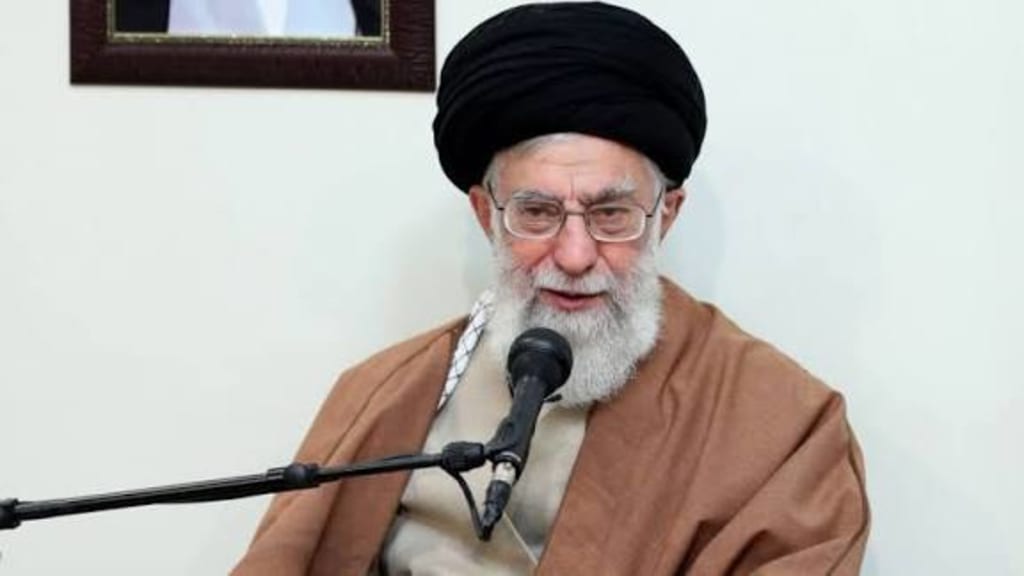
As Iran faces renewed waves of public unrest, Supreme Leader Ayatollah Ali Khamenei has delivered one of his strongest warnings yet, declaring that “rioters must be put in their place.” His remarks come at a time when protests, fueled by economic hardship, political frustration, and social restrictions, are spreading across multiple cities, placing the Iranian leadership under intense pressure both at home and abroad.
Protests Rekindle Old Grievances
Iran is no stranger to mass demonstrations. Over the past decade, repeated protest movements have erupted over rising living costs, fuel price hikes, unemployment, and perceived corruption. The latest protests appear to be a continuation of these unresolved grievances. Demonstrators have reportedly taken to the streets chanting slogans against economic mismanagement and demanding greater freedoms.
While Iranian authorities often frame such protests as isolated incidents instigated by “foreign enemies,” many analysts argue the unrest reflects deep-rooted domestic problems. Inflation remains stubbornly high, sanctions continue to strain the economy, and ordinary Iranians struggle with shrinking purchasing power.
Khamenei’s Hardline Message
In a public address, Supreme Leader Khamenei adopted a firm tone, differentiating between what he described as “legitimate criticism” and what he labeled “rioting.” According to him, acts of vandalism and disorder threaten national security and will not be tolerated. His statement signals that the state is prepared to respond forcefully if protests escalate.
This rhetoric aligns with the Iranian leadership’s long-standing approach to dissent: allowing limited expression under strict boundaries while swiftly cracking down on movements perceived as challenging the Islamic Republic’s authority.
Security Response Intensifies
Following Khamenei’s remarks, security forces reportedly increased their presence in protest-prone areas. Riot police, Basij militia units, and intelligence agencies have historically played a central role in suppressing demonstrations. Internet slowdowns and social media restrictions—common tactics during unrest—have also been reported by activists.
Human rights organizations frequently criticize Iran for using excessive force during protests, including mass arrests and harsh sentences. Tehran, however, maintains that its actions are necessary to maintain order and prevent chaos.
Economic Pressures at the Core
Despite official narratives focusing on security and foreign interference, economic distress remains a key driver of public anger. Sanctions related to Iran’s nuclear program have severely limited oil exports and access to global markets. Although the government claims to be pursuing a “resistance economy,” many Iranians feel little relief in their daily lives.
Youth unemployment is particularly alarming, with a growing generation feeling disconnected from opportunities and decision-making processes. For many protesters, economic justice is inseparable from political reform.
Political Stakes for the Regime
Khamenei’s comments also reflect broader anxieties within Iran’s ruling establishment. The government is navigating a complex landscape: internal dissent, regional tensions, and stalled negotiations with Western powers. Any sign of instability risks weakening Iran’s bargaining position on the international stage.
At the same time, the leadership appears determined to project strength. By emphasizing discipline and authority, Khamenei seeks to reassure supporters while warning opponents that the system remains firmly in control.
International Reaction and Scrutiny
Iran’s handling of protests continues to attract global attention. Western governments and international rights groups have repeatedly urged Tehran to respect freedom of expression and avoid violence against civilians. Iranian officials routinely dismiss such criticism as politically motivated and hypocritical.
The protests also complicate Iran’s diplomatic relations, particularly at a time when it seeks economic relief and regional influence. Images of unrest undermine Tehran’s efforts to portray stability and unity.
A Familiar Cycle With Uncertain Outcomes
Iran’s political history suggests a recurring cycle: protests erupt, authorities respond forcefully, calm returns—temporarily. However, each wave leaves behind unresolved frustrations. Many observers believe that unless structural economic and political reforms are introduced, future unrest is inevitable.
Khamenei’s declaration that rioters must be “put in their place” underscores the regime’s reliance on control rather than compromise. Whether this approach will succeed in restoring long-term stability remains an open question.
Conclusion: Authority Versus Accountability
The latest protests and the Supreme Leader’s uncompromising response highlight a fundamental tension within Iran: the struggle between authority and accountability. As economic pressures mount and public patience wears thin, the government faces a critical challenge—maintain order through force or address the underlying causes of dissent.
For now, Iran’s leadership has chosen firmness. But history suggests that silencing voices does not erase demands—it merely postpones them.
About the Creator
Fiaz Ahmed Brohi
I am a passionate writer with a love for exploring and creating content on trending topics. Always curious, always sharing stories that engage and inspire.
Keep reading
More stories from Fiaz Ahmed Brohi and writers in The Swamp and other communities.
Fresh Talks on Gaza Stabilisation Force Focus on Mandate as Pakistan Maintains Caution
Renewed diplomatic discussions surrounding a proposed international stabilisation force for Gaza have once again placed the spotlight on the region’s fragile security landscape. As conflict-weary Gaza remains trapped between humanitarian collapse and political deadlock, fresh talks are now focusing on a crucial question: what exactly would the mandate of such a force be? While several regional and global players explore possible frameworks, Pakistan has adopted a cautious and measured stance, emphasizing legality, neutrality, and humanitarian priorities. The Context Behind the Stabilisation Talks Gaza’s prolonged crisis has repeatedly drawn international concern, especially following cycles of intense violence that leave civilian infrastructure shattered. Hospitals, water systems, and housing have suffered extensive damage, prompting urgent calls for an international mechanism that could stabilize the territory while enabling humanitarian relief. In response, diplomats have revived discussions about deploying a stabilisation force—potentially under the United Nations or a multilateral coalition. However, past failures of similar initiatives in conflict zones have made many countries wary. As a result, current talks are heavily focused on defining a clear, limited, and lawful mandate to avoid mission creep or unintended escalation. Defining the Mandate: The Central Challenge At the heart of the negotiations lies the issue of mandate clarity. Proponents argue that any stabilisation force must prioritize civilian protection, ensure safe delivery of humanitarian aid, and support ceasefire monitoring. Others insist the force should have no role in policing, counterinsurgency, or governance, fearing such involvement would entangle peacekeepers in active hostilities. Legal experts warn that without a robust international mandate—ideally backed by the UN Security Council—any deployment could face legitimacy challenges. The question of consent from local stakeholders further complicates matters, as political divisions within Palestinian leadership and opposition from Israel add layers of complexity. Pakistan’s Careful Diplomatic Position Pakistan, a longstanding supporter of Palestinian rights, has approached the talks with visible caution. Officials have stressed that Islamabad will not support any stabilisation force that undermines Palestinian self-determination or legitimizes prolonged occupation. Pakistan’s stance reflects its broader foreign policy principles, which prioritize sovereignty, international law, and humanitarian protection. Pakistani diplomats have reportedly emphasized that a stabilisation force must not become a substitute for a political solution. From Islamabad’s perspective, military or security arrangements without parallel diplomatic progress risk freezing the conflict rather than resolving it. Humanitarian Imperatives Versus Political Realities Humanitarian agencies continue to warn that Gaza’s population cannot afford further delays. Food insecurity, displacement, and medical shortages have reached alarming levels. Advocates argue that even a limited stabilisation force could help create safe corridors for aid delivery and reduce civilian suffering. Yet political realities remain unforgiving. Israel has expressed skepticism about international forces operating near its borders, citing security concerns. Meanwhile, some Palestinian factions fear that an external presence could dilute their political leverage or entrench existing power imbalances. Lessons From Past Peacekeeping Missions International peacekeeping history offers sobering lessons. Missions in Lebanon, Afghanistan, and parts of Africa show that unclear mandates and insufficient resources often lead to operational paralysis. Analysts caution that Gaza’s dense population, contested authority, and history of armed resistance make it one of the most challenging environments for any stabilisation effort. Pakistan, with extensive experience in UN peacekeeping missions worldwide, has quietly highlighted these risks during discussions. Its diplomats have reportedly urged planners to avoid repeating mistakes where peacekeepers are deployed without the authority or capacity to fulfill their objectives. Regional and Global Implications The outcome of these talks carries broader regional implications. A poorly designed force could inflame tensions, while a well-calibrated mission might help de-escalate violence and open space for negotiations. For Pakistan, the issue also resonates domestically, where public opinion strongly favors Palestinian rights and opposes actions perceived as unjust or one-sided. Globally, the talks test the international community’s ability to move beyond rhetoric and deliver practical solutions rooted in law and consensus. The focus on mandate clarity reflects a growing recognition that symbolism alone cannot stabilize Gaza. Conclusion: Caution as a Diplomatic Signal As fresh talks continue, Pakistan’s cautious approach serves as a reminder that stabilisation cannot be imposed—it must be carefully constructed, legally grounded, and politically balanced. While the urgency of Gaza’s humanitarian crisis demands action, rushed decisions risk deepening instability rather than resolving it. Ultimately, any stabilisation force will succeed only if it complements, rather than replaces, a genuine political process. Until that balance is achieved, Pakistan’s measured stance underscores a broader truth: peace cannot be secured by force alone—it must be built on justice, legitimacy, and consent.
By Fiaz Ahmed Brohi16 days ago in The Swamp
Here’s a comprehensive article based on the latest developments
: --- EU Ambassadors Summoned for Emergency Talks After Trump Threatens Tariffs Over Greenland – Europe Live In an extraordinary escalation of transatlantic tensions, European Union ambassadors were summoned for emergency talks as leaders scramble to respond to U.S. President Donald Trump’s unprecedented threat to impose tariffs on multiple European countries over the issue of Greenland — a semi-autonomous Danish territory in the Arctic with huge geopolitical significance.
By Salaar Jamali2 days ago in The Swamp


Comments
There are no comments for this story
Be the first to respond and start the conversation.