
Fresh Talks on Gaza Stabilisation Force Focus on Mandate as Pakistan Maintains Caution
Pakistan’s Cautious Stance in Gaza Stabilisation Talks: Legal, Humanitarian, and Political Concerns

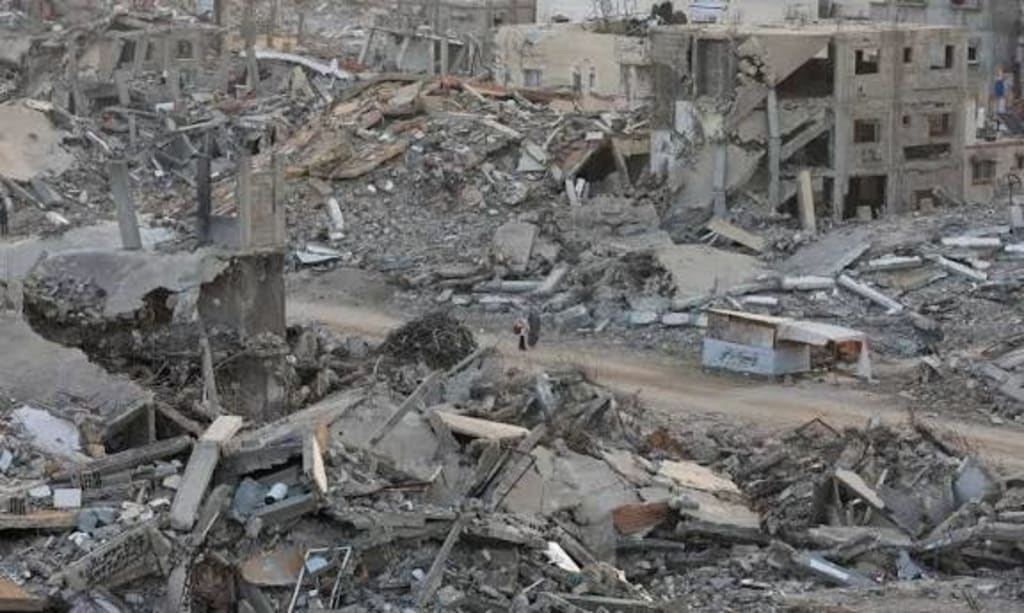
Renewed diplomatic discussions surrounding a proposed international stabilisation force for Gaza have once again placed the spotlight on the region’s fragile security landscape. As conflict-weary Gaza remains trapped between humanitarian collapse and political deadlock, fresh talks are now focusing on a crucial question: what exactly would the mandate of such a force be? While several regional and global players explore possible frameworks, Pakistan has adopted a cautious and measured stance, emphasizing legality, neutrality, and humanitarian priorities.
The Context Behind the Stabilisation Talks
Gaza’s prolonged crisis has repeatedly drawn international concern, especially following cycles of intense violence that leave civilian infrastructure shattered. Hospitals, water systems, and housing have suffered extensive damage, prompting urgent calls for an international mechanism that could stabilize the territory while enabling humanitarian relief.
In response, diplomats have revived discussions about deploying a stabilisation force—potentially under the United Nations or a multilateral coalition. However, past failures of similar initiatives in conflict zones have made many countries wary. As a result, current talks are heavily focused on defining a clear, limited, and lawful mandate to avoid mission creep or unintended escalation.
Defining the Mandate: The Central Challenge
At the heart of the negotiations lies the issue of mandate clarity. Proponents argue that any stabilisation force must prioritize civilian protection, ensure safe delivery of humanitarian aid, and support ceasefire monitoring. Others insist the force should have no role in policing, counterinsurgency, or governance, fearing such involvement would entangle peacekeepers in active hostilities.
Legal experts warn that without a robust international mandate—ideally backed by the UN Security Council—any deployment could face legitimacy challenges. The question of consent from local stakeholders further complicates matters, as political divisions within Palestinian leadership and opposition from Israel add layers of complexity.
Pakistan’s Careful Diplomatic Position
Pakistan, a longstanding supporter of Palestinian rights, has approached the talks with visible caution. Officials have stressed that Islamabad will not support any stabilisation force that undermines Palestinian self-determination or legitimizes prolonged occupation. Pakistan’s stance reflects its broader foreign policy principles, which prioritize sovereignty, international law, and humanitarian protection.
Pakistani diplomats have reportedly emphasized that a stabilisation force must not become a substitute for a political solution. From Islamabad’s perspective, military or security arrangements without parallel diplomatic progress risk freezing the conflict rather than resolving it.
Humanitarian Imperatives Versus Political Realities
Humanitarian agencies continue to warn that Gaza’s population cannot afford further delays. Food insecurity, displacement, and medical shortages have reached alarming levels. Advocates argue that even a limited stabilisation force could help create safe corridors for aid delivery and reduce civilian suffering.
Yet political realities remain unforgiving. Israel has expressed skepticism about international forces operating near its borders, citing security concerns. Meanwhile, some Palestinian factions fear that an external presence could dilute their political leverage or entrench existing power imbalances.
Lessons From Past Peacekeeping Missions
International peacekeeping history offers sobering lessons. Missions in Lebanon, Afghanistan, and parts of Africa show that unclear mandates and insufficient resources often lead to operational paralysis. Analysts caution that Gaza’s dense population, contested authority, and history of armed resistance make it one of the most challenging environments for any stabilisation effort.
Pakistan, with extensive experience in UN peacekeeping missions worldwide, has quietly highlighted these risks during discussions. Its diplomats have reportedly urged planners to avoid repeating mistakes where peacekeepers are deployed without the authority or capacity to fulfill their objectives.
Regional and Global Implications
The outcome of these talks carries broader regional implications. A poorly designed force could inflame tensions, while a well-calibrated mission might help de-escalate violence and open space for negotiations. For Pakistan, the issue also resonates domestically, where public opinion strongly favors Palestinian rights and opposes actions perceived as unjust or one-sided.
Globally, the talks test the international community’s ability to move beyond rhetoric and deliver practical solutions rooted in law and consensus. The focus on mandate clarity reflects a growing recognition that symbolism alone cannot stabilize Gaza.
Conclusion: Caution as a Diplomatic Signal
As fresh talks continue, Pakistan’s cautious approach serves as a reminder that stabilisation cannot be imposed—it must be carefully constructed, legally grounded, and politically balanced. While the urgency of Gaza’s humanitarian crisis demands action, rushed decisions risk deepening instability rather than resolving it.
Ultimately, any stabilisation force will succeed only if it complements, rather than replaces, a genuine political process. Until that balance is achieved, Pakistan’s measured stance underscores a broader truth: peace cannot be secured by force alone—it must be built on justice, legitimacy, and consent.
About the Creator
Fiaz Ahmed Brohi
I am a passionate writer with a love for exploring and creating content on trending topics. Always curious, always sharing stories that engage and inspire.
Keep reading
More stories from Fiaz Ahmed Brohi and writers in The Swamp and other communities.
Yemen’s Government Launches Operation Against Southern Separatists: A New Phase in the Ongoing Conflict
Yemen, long embroiled in a complex civil war, is witnessing a significant shift in its ongoing conflict as the Yemeni government launches a new operation aimed at countering southern separatist forces. The operation, which has drawn the attention of both local and international observers, marks a critical development in the broader struggle for control in Yemen. As tensions between various factions continue to rise, the conflict between the internationally recognized government of Yemen and the southern separatist groups threatens to further destabilize the region. The Escalating Crisis in Yemen Yemen's civil war began in 2014, when Houthi rebels, backed by Iran, seized control of the capital, Sanaa, and later declared themselves the legitimate government. This triggered a military intervention by a Saudi-led coalition in support of Yemen's internationally recognized government. Despite years of negotiations, countless ceasefire agreements, and peace talks, the conflict has remained unresolved, leading to one of the world’s most severe humanitarian crises. However, within this broader conflict, new tensions have emerged. While the government of President Abdrabbuh Mansur Hadi is backed by Saudi Arabia and the United Arab Emirates (UAE), the rise of separatist movements in the south has created a fractured political landscape. The Southern Transitional Council (STC), which advocates for an independent southern Yemen, has been a significant force in the southern regions, including the port city of Aden. While the STC initially aligned itself with the internationally recognized government, it has gradually shifted towards a more independent stance, further complicating Yemen’s political and military situation. The New Government Operation The Yemeni government’s new operation is intended to reclaim territories in southern Yemen that have been taken over by separatist forces. The government has accused the STC of attempting to seize control of strategic areas, including military bases, airports, and ports. The operation is being led by the Yemeni military, with the support of coalition forces, including Saudi and Emirati troops. The situation has been particularly tense in areas such as Abyan and Shabwa, where the government and separatists have clashed in recent months. The government has accused the separatists of trying to create a de facto independent state in the south, potentially undermining efforts to unify Yemen under a single government. The operation marks a decisive moment in Yemen’s ongoing conflict. The military action is aimed at neutralizing the separatist forces and restoring government control over key regions. However, the Yemeni government faces significant challenges, both in terms of military capabilities and political dynamics. The Southern Transitional Council’s Reaction The Southern Transitional Council, which has controlled large parts of southern Yemen, has condemned the government’s military operation, calling it an attempt to thwart the aspirations of the southern people. The STC has demanded the establishment of a separate southern state, arguing that the south was historically independent before unification with the north in 1990. The STC’s position has been supported by some southern Yemeni factions, further complicating efforts to reach a peaceful resolution. While the STC initially supported the internationally recognized government in its fight against the Houthi rebels, it has grown increasingly frustrated with the lack of political and military gains in the south. The separatists’ military capabilities have grown stronger over time, thanks in part to the support from the UAE, which has supported the STC’s push for greater autonomy. The escalation of violence in the south risks drawing in other regional actors, particularly the UAE, which has heavily invested in the southern cause. The UAE has supported the STC with military and logistical support, and its interests in the region are tied to controlling key ports and shipping lanes in the Gulf of Aden. The involvement of the UAE and Saudi Arabia in the conflict further complicates any attempts at peaceful negotiation, as both countries have competing interests in Yemen. The Humanitarian Impact The conflict between the Yemeni government and the southern separatists is not only a military struggle but also a deeply humanitarian crisis. Yemen remains one of the world’s poorest and most war-torn countries, with millions of people displaced, malnourished, and in dire need of aid. The war has caused widespread destruction, and the situation is further exacerbated by a collapsing economy, a failing healthcare system, and a broken infrastructure. The new operation in the south is likely to worsen the humanitarian situation, as fighting between government forces and separatists could lead to further displacement, injuries, and loss of life. Civilians in areas like Abyan and Shabwa have already borne the brunt of the violence, and many are caught in the crossfire between warring factions. The Path Forward As Yemen enters this new phase of conflict, the prospects for peace seem increasingly distant. The Yemeni government’s operation against the separatists is a high-risk move that could lead to further escalation and division. The situation on the ground remains fluid, and it is unclear how the international community will respond to the worsening violence. The role of the Saudi-led coalition, which has supported the Yemeni government since the beginning of the war, will be critical in determining the outcome of the operation. If the coalition escalates its military involvement, it could widen the conflict and draw in more regional powers, further complicating efforts for peace. For Yemen, the future remains uncertain. The aspirations of southern separatists, the continued threat of Houthi expansion, and the geopolitical interests of regional powers all contribute to a highly volatile situation. The Yemeni people, who have endured years of conflict, poverty, and instability, are left to hope for a resolution that will bring peace and stability to their war-torn nation. Until then, the battle for the future of Yemen will continue to unfold, with no end in sight.
By Fiaz Ahmed Brohi2 months ago in The Swamp
The Forsyth House Fire
Since 1851, Forsyth House has stood on the corner of Union Street and Gordon Street in the heart of Glasgow. Its iconic, or was... because on Sunday 8th of March, 2026, a fire broke out in a small, seemingly un-named shop in the building and tore all that history down. As I write, the rubble is still unsettled and the street is still blocked off. Central Station is quiet on the upper level, and around 30 small businesses have quite literally gone up in smoke.
By S. A. Crawford3 days ago in The Swamp
For Trump, a Promised Economic Boom Collides With the Costs of War
Rising military spending and geopolitical tensions challenge the vision of rapid economic growth During his political campaigns and public speeches, Donald Trump often promised that strong leadership and aggressive economic policies would deliver a historic boom for the United States. Lower taxes, expanded domestic production, and new trade strategies were central to his economic vision. However, analysts say that the realities of global conflict and rising military commitments have complicated that promise, as the economic costs of war increasingly weigh on government finances and long-term growth. The United States has long maintained one of the world’s largest defense budgets, funding operations across multiple regions while supporting allies facing security threats. Yet prolonged conflicts and new geopolitical tensions are placing additional pressure on federal spending. While defense spending can stimulate certain industries—such as aerospace, manufacturing, and technology—it also diverts resources away from infrastructure, social programs, and domestic economic investment. During Trump’s presidency, his administration emphasized rebuilding American military strength while pursuing an “America First” economic agenda. Military budgets grew significantly, with new investments in weapons systems, troop readiness, and emerging defense technologies. Supporters argued that this expansion strengthened national security and created jobs in the defense sector. Critics, however, warned that escalating spending could widen deficits and limit the government’s ability to finance long-term economic priorities. The challenge became especially clear as the United States remained involved in global security commitments, including operations connected to the long-running War in Afghanistan and tensions in the Middle East and Eastern Europe. Although Trump repeatedly pledged to reduce America’s overseas military footprint, strategic realities often forced the administration to balance political promises with security concerns. Defense contractors, including companies such as Lockheed Martin and Raytheon Technologies, benefited from the surge in military spending. Major weapons programs and defense modernization initiatives generated billions of dollars in contracts, supporting manufacturing jobs across several states. For many communities, the defense sector became a vital economic engine. But economists say the benefits of military-driven growth can be uneven. While defense spending boosts certain industries, it rarely produces the same widespread economic impact as investments in infrastructure, education, or public services. Large military commitments also add to the federal deficit, which can lead to higher borrowing costs and long-term fiscal pressure. Trump frequently argued that strong economic growth would offset the cost of expanded military capabilities. In the early years of his presidency, the U.S. economy did experience robust job creation and steady GDP growth, partly fueled by tax cuts and business-friendly regulations. However, the relationship between military spending and economic expansion remained complex. Geopolitical instability can also affect global markets in unpredictable ways. Rising tensions between major powers can disrupt trade routes, energy markets, and investor confidence. For example, conflicts in energy-producing regions can drive up oil prices, raising costs for consumers and businesses alike. These ripple effects can undermine the economic gains leaders hope to achieve. Another challenge lies in balancing defense priorities with domestic economic needs. Infrastructure projects, technological innovation, and workforce development require significant government investment. When military spending grows rapidly, policymakers must decide how to allocate limited resources without undermining long-term economic competitiveness. Supporters of Trump’s approach argue that strong defense capabilities ultimately support economic stability by deterring adversaries and protecting global trade routes. They say that military strength and economic growth are closely linked, particularly in a world where geopolitical competition is intensifying. Critics, however, counter that the United States risks entering a cycle where rising tensions justify ever-larger defense budgets. In that scenario, the economic gains promised by political leaders could be offset by the growing costs of maintaining global military dominance. As debates over defense spending continue in Washington, Trump’s vision of an economic boom remains closely tied to the broader question of America’s role in global security. Policymakers must weigh the benefits of military strength against the economic costs that come with it. For many economists and political analysts, the central dilemma is clear: achieving both sustained economic growth and extensive global military commitments may prove more difficult than campaign rhetoric suggests. The balance between prosperity and security, they say, will continue to shape the United States’ economic future for years to come.
By Fiaz Ahmed a day ago in The Swamp


Comments
There are no comments for this story
Be the first to respond and start the conversation.