
Iran Army Chief Warns US, Israel Against Attack; Says Forces on High Alert
Top Iranian general says any aggression would endanger regional and Israeli security

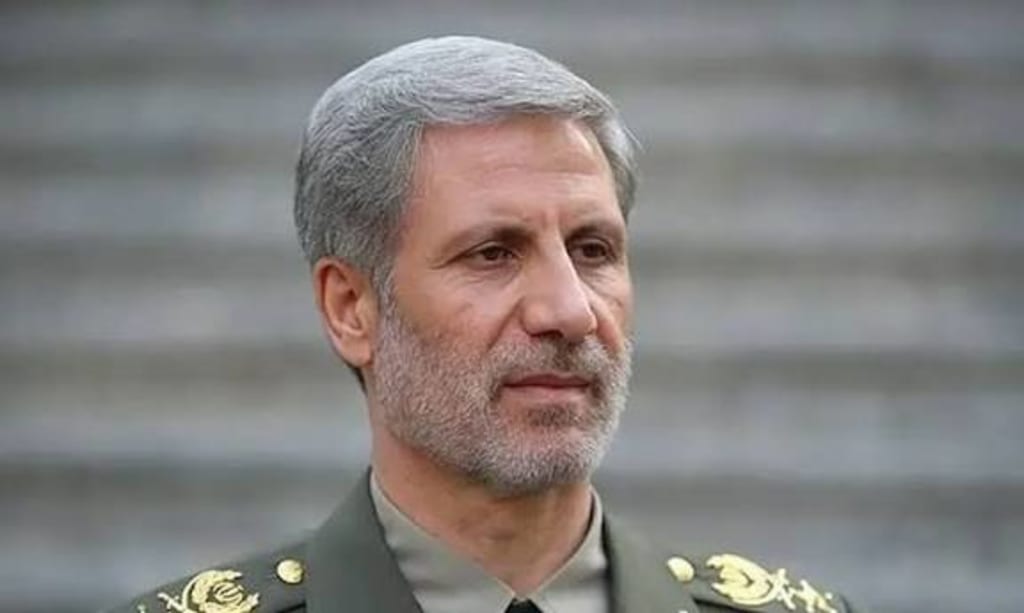
Iran’s top military leader has issued a stark warning to the United States and Israel, saying any aggressive action could trigger serious consequences and emphasizing that Tehran’s armed forces remain on high alert amid rising tensions in the Middle East. The statement underscores a growing standoff between Iran and Western powers, particularly as U.S. military deployments in the Gulf build up and diplomatic efforts lag.
english.aawsat.com +1
Warning to Washington and Jerusalem
On Saturday, Iranian Army Commander-in-Chief Major General Amir Hatami publicly warned the U.S. and Israel against launching any attack on Iranian territory. He stated that Iranian forces have been placed on “full defensive and military readiness” following increased U.S. military deployments in the Gulf region, aimed at pressuring Tehran over its nuclear program and regional security activities.
english.aawsat.com
“If the enemy makes a mistake, without a doubt it will endanger its own security, the security of the region, and the security of the Zionist regime,” Hatami said, according to the official IRNA news agency.
Iran has repeatedly expressed strong opposition to any military intervention by the U.S. or its allies, insisting that such actions would escalate conflict rather than resolve tensions. The warning from Hatami reflects Tehran’s firm stance that aggression against Iran would not only impact its own defense systems but could also jeopardize broader regional stability.
Military Readiness and Nuclear Technology
Hatami also stressed that Iran’s nuclear science and technology “cannot be eliminated,” even under attack. This was a direct response to U.S. President Donald Trump’s comments suggesting that Tehran might seek a diplomatic deal to avoid potential military action over its nuclear and missile programs.
Iran’s nuclar program has long been a source of tension with Western powers. While Tehran maintains that its nuclear activities are for peaceful purposes, the U.S., Israel, and other countries have voiced concerns about potential weaponization. Iran’s insistence that its nuclear expertise remains intact signals its refusal to yield to external pressure and highlights the deep mistrust between Tehran and Washington.
U.S. Military Presence in the Gulf
The warning comes amid significant U.S. military deployment in the Gulf region, including the presence of a naval strike group led by the USS Abraham Lincoln aircraft carrier. This deployment, part of broader U.S. strategic positioning, has raised fears of a possible direct confrontation with Iran. Tehran has not ruled out responding with missile strikes on U.S. bases, ships, and key allies—most notably Israel—if attacked.
News.az
The U.S. Central Command has also issued warnings to Iran’s Islamic Revolutionary Guard Corps (IRGC) about maintaining “professional behavior” around U.S. forces, highlighting mutual concerns about escalations and accidental incidents between the militaries.
Kuwait Times
Regional and Political Context
Iran’s warning must be understood against a backdrop of heightened regional tension. Anti-government protests broke out in Iran late last year over economic hardships and social grievances, evolving in some areas into broader unrest. Iranian authorities have blamed external forces, particularly the U.S. and Israel, for stoking unrest—a claim rejected by many analysts but indicative of Tehran’s broader geopolitical narrative.
News.az
At the same time, Iran’s Foreign Minister has acknowledged openness to negotiations with the U.S. under defined conditions. However, Tehran maintains that issues such as missiles and defense systems are non-negotiable, and currently no formal talks are scheduled, reflecting the ongoing diplomatic impasse.
AP News
Implications for Regional Security
Analysts suggest that Iran’s high alert status and stern warnings are aimed at deterrence rather than escalation. By signaling readiness and resolve, Tehran aims to discourage military action against it. Still, the presence of U.S. forces and ongoing rhetoric from political leaders on both sides increases the risk of miscalculation. Any military engagement in the Gulf could quickly spiral into a wider conflict with global repercussions.
The region’s strategic geography, especially around the Strait of Hormuz—a vital transit route for the world’s oil supplies—makes the stakes particularly high. Disruptions or conflict in this area could impact global energy markets and international trade, making stability a key concern for nations far beyond the Middle East.
Looking Ahead
As tensions persist, global attention remains focused on diplomatic channels and maneuvers to prevent armed conflict. Iran’s latest warnings, combined with continued military preparedness, highlight how fraught the situation has become. Observers stress that while deterrence remains the stated strategy, missteps or misunderstandings in such a volatile environment could still trigger larger confrontations.
In an era of complex geopolitical rivalries, the future of U.S.–Iran and Iran–Israel relations continues to shape strategic decisions worldwide. The coming weeks and months will likely determine whether tensions ease through diplomacy or risk tipping into a broader crisis.
About the Creator
Fiaz Ahmed
I am Fiaz Ahmed. I am a passionate writer. I love covering trending topics and breaking news. With a sharp eye for what’s happening around the world, and crafts timely and engaging stories that keep readers informed and updated.
Keep reading
More stories from Fiaz Ahmed and writers in The Swamp and other communities.
Why the Cold War Pact Known as NORAD Is Making Headlines
A Relic of the Cold War Returns to the Spotlight For decades, the North American Aerospace Defense Command (NORAD) existed mostly in the background of global politics—a quiet, technical military partnership between the United States and Canada. Born during the Cold War to watch the skies for Soviet bombers, NORAD rarely made headlines unless Santa Claus was being “tracked” on Christmas Eve. But that has changed. In recent years—and especially amid renewed global tensions—NORAD has re-emerged as a key player in international security, prompting questions about why this Cold War pact suddenly matters again. The answer lies in a rapidly changing threat landscape, evolving warfare technologies, and a world edging closer to great-power competition. What Is NORAD? A Brief Overview NORAD was established in 1958 at the height of Cold War paranoia. Its mission was simple but critical: Detect incoming airborne threats Defend North American airspace Provide early warning of missile attacks Unlike most military alliances, NORAD is bi-national, jointly operated by the United States and Canada. It represents one of the deepest military partnerships in the world, with shared command structures, intelligence, and responsibilities. For much of the post–Cold War era, NORAD’s role faded from public view as traditional state-on-state threats seemed to diminish. That era is over. Why NORAD Is Back in the News NORAD is making headlines again for several interconnected reasons, all tied to the return of strategic rivalry in global politics. 1. Rising Tensions with Russia Russia’s military posture has shifted dramatically in recent years. Long-range bombers, missile tests, and aggressive air patrols near North American airspace have reignited concerns that once defined the Cold War. NORAD has increasingly: Scrambled fighter jets to intercept Russian aircraft Monitored long-range missile activity Enhanced early-warning capabilities Each interception makes headlines, reminding the public that Cold War-style deterrence is no longer theoretical. 2. China Enters the Strategic Equation While NORAD was originally designed to counter the Soviet Union, China has now become a central concern. China’s development of: Hypersonic missiles Long-range bombers Advanced space-based systems has forced NORAD to rethink its mission. The threat is no longer limited to one direction or one adversary. For the first time, NORAD planners openly discuss multi-theater threats, including missiles that could approach North America from unexpected trajectories. 3. The Missile Defense Revolution Modern warfare has transformed how threats emerge and how quickly they can strike. New challenges include: Hypersonic weapons that evade traditional radar Cruise missiles that fly low and avoid detection Space-based and cyber threats NORAD’s traditional early-warning systems are being upgraded to keep pace with these technologies. This modernization effort has placed the command at the center of defense debates and budget discussions. The Arctic: NORAD’s New Front Line One of the most important reasons NORAD is back in the spotlight is the Arctic. As climate change melts ice and opens new routes, the Arctic has become: More accessible to military forces Strategically valuable for missile trajectories A zone of competition among major powers Russia has heavily militarized its Arctic territory, and China has declared itself a “near-Arctic state.” NORAD now views the region as the most likely avenue for future threats. This shift has made NORAD less about legacy defense and more about future deterrence. Why NORAD Is Different from NATO NORAD is often confused with NATO, but the two serve very different purposes. NATO is a multilateral political-military alliance NORAD is a permanent operational command NORAD’s decisions are not debated among dozens of countries. They are executed rapidly, jointly, and with a narrow focus: defending North America itself. This operational efficiency is precisely why NORAD matters more now than ever. Domestic Politics and NORAD NORAD’s resurgence also reflects domestic political shifts in both the United States and Canada. Increased defense spending Renewed focus on border and airspace security Growing concern over foreign surveillance and espionage In both countries, NORAD has become a symbol of preparedness, reassuring the public that North America is not complacent in a dangerous world. From Bombers to Bytes: Cyber and Space Domains Modern conflict does not begin with missiles—it begins with data. NORAD’s mission now includes: Monitoring space-based threats Integrating cyber defense into early warning Coordinating intelligence across multiple domains This expansion reflects a broader truth: the next conflict may begin invisibly, long before a physical attack occurs. Why Headlines Matter: Messaging and Deterrence When NORAD intercepts aircraft or announces system upgrades, those headlines are not accidental. They serve a strategic purpose. Public visibility: Signals readiness to adversaries Reassures allies and citizens Reinforces deterrence without escalation In this sense, NORAD’s presence in the news is part of its mission—not a byproduct of it. Is This a Return to the Cold War? While comparisons to the Cold War are tempting, today’s reality is more complex. Then: Two superpowers Predictable lines of confrontation Clear rules of deterrence Now: Multiple competitors Blurred boundaries between war and peace Rapid technological escalation NORAD is adapting to a world that is more fragmented and less predictable than the one it was created to defend against. Criticism and Concerns Not everyone welcomes NORAD’s revival without reservations. Critics argue: Increased militarization fuels arms races Heavy defense spending diverts resources from domestic needs Heightened alertness risks miscalculation Supporters counter that deterrence only works when it is credible—and credibility requires readiness. What the Future Holds for NORAD Looking ahead, NORAD is likely to: Expand its space surveillance capabilities Invest heavily in Arctic infrastructure Integrate artificial intelligence into threat detection Play a central role in missile defense strategy Far from fading into history, NORAD appears poised to define the next era of North American defense. Conclusion: An Old Pact for a New Age NORAD’s return to the headlines is not about nostalgia—it is about necessity. In a world marked by renewed rivalry, advanced weapons, and blurred battlefields, the Cold War pact once designed to detect bombers now stands at the forefront of modern defense strategy. The lesson is clear: history does not disappear—it evolves. And NORAD, once a quiet sentinel of the Cold War, has become a central actor in shaping how North America prepares for an uncertain future.
By Zahid Hussain2 days ago in The Swamp
Democrats rally behind Ilhan Omar, rebuke Trump’s insults after Minnesota town hall attack
US Representative Ilan Omar was attacked. This must not stand. No political violence against anyone involved in the body politic should stand. It is a significant and repugnant sign of the country’s dissolution into a lawless republic.
By Skyler Saunders4 days ago in The Swamp




Comments
There are no comments for this story
Be the first to respond and start the conversation.