
Why the Cold War Pact Known as NORAD Is Making Headlines
How a decades-old defense agreement suddenly became central to modern global security
A Relic of the Cold War Returns to the Spotlight
For decades, the North American Aerospace Defense Command (NORAD) existed mostly in the background of global politics—a quiet, technical military partnership between the United States and Canada. Born during the Cold War to watch the skies for Soviet bombers, NORAD rarely made headlines unless Santa Claus was being “tracked” on Christmas Eve.
But that has changed.
In recent years—and especially amid renewed global tensions—NORAD has re-emerged as a key player in international security, prompting questions about why this Cold War pact suddenly matters again. The answer lies in a rapidly changing threat landscape, evolving warfare technologies, and a world edging closer to great-power competition.
What Is NORAD? A Brief Overview
NORAD was established in 1958 at the height of Cold War paranoia. Its mission was simple but critical:
Detect incoming airborne threats
Defend North American airspace
Provide early warning of missile attacks
Unlike most military alliances, NORAD is bi-national, jointly operated by the United States and Canada. It represents one of the deepest military partnerships in the world, with shared command structures, intelligence, and responsibilities.
For much of the post–Cold War era, NORAD’s role faded from public view as traditional state-on-state threats seemed to diminish.
That era is over.
Why NORAD Is Back in the News
NORAD is making headlines again for several interconnected reasons, all tied to the return of strategic rivalry in global politics.
1. Rising Tensions with Russia
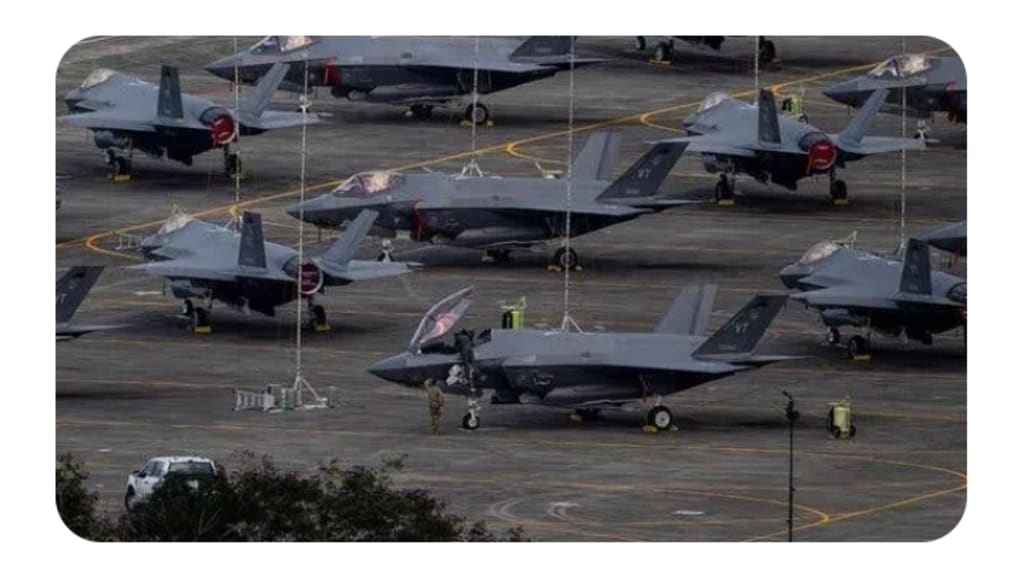
Russia’s military posture has shifted dramatically in recent years. Long-range bombers, missile tests, and aggressive air patrols near North American airspace have reignited concerns that once defined the Cold War.
NORAD has increasingly:
Scrambled fighter jets to intercept Russian aircraft
Monitored long-range missile activity
Enhanced early-warning capabilities
Each interception makes headlines, reminding the public that Cold War-style deterrence is no longer theoretical.
2. China Enters the Strategic Equation
While NORAD was originally designed to counter the Soviet Union, China has now become a central concern.
China’s development of:
Hypersonic missiles
Long-range bombers
Advanced space-based systems
has forced NORAD to rethink its mission. The threat is no longer limited to one direction or one adversary.
For the first time, NORAD planners openly discuss multi-theater threats, including missiles that could approach North America from unexpected trajectories.
3. The Missile Defense Revolution
Modern warfare has transformed how threats emerge and how quickly they can strike.
New challenges include:
Hypersonic weapons that evade traditional radar
Cruise missiles that fly low and avoid detection
Space-based and cyber threats
NORAD’s traditional early-warning systems are being upgraded to keep pace with these technologies. This modernization effort has placed the command at the center of defense debates and budget discussions.
The Arctic: NORAD’s New Front Line
One of the most important reasons NORAD is back in the spotlight is the Arctic.
As climate change melts ice and opens new routes, the Arctic has become:
More accessible to military forces
Strategically valuable for missile trajectories
A zone of competition among major powers
Russia has heavily militarized its Arctic territory, and China has declared itself a “near-Arctic state.” NORAD now views the region as the most likely avenue for future threats.
This shift has made NORAD less about legacy defense and more about future deterrence.
Why NORAD Is Different from NATO
NORAD is often confused with NATO, but the two serve very different purposes.
NATO is a multilateral political-military alliance
NORAD is a permanent operational command
NORAD’s decisions are not debated among dozens of countries. They are executed rapidly, jointly, and with a narrow focus: defending North America itself.
This operational efficiency is precisely why NORAD matters more now than ever.
Domestic Politics and NORAD
NORAD’s resurgence also reflects domestic political shifts in both the United States and Canada.
Increased defense spending
Renewed focus on border and airspace security
Growing concern over foreign surveillance and espionage
In both countries, NORAD has become a symbol of preparedness, reassuring the public that North America is not complacent in a dangerous world.
From Bombers to Bytes: Cyber and Space Domains
Modern conflict does not begin with missiles—it begins with data.
NORAD’s mission now includes:
Monitoring space-based threats
Integrating cyber defense into early warning
Coordinating intelligence across multiple domains
This expansion reflects a broader truth: the next conflict may begin invisibly, long before a physical attack occurs.
Why Headlines Matter: Messaging and Deterrence
When NORAD intercepts aircraft or announces system upgrades, those headlines are not accidental. They serve a strategic purpose.
Public visibility:
Signals readiness to adversaries
Reassures allies and citizens
Reinforces deterrence without escalation
In this sense, NORAD’s presence in the news is part of its mission—not a byproduct of it.
Is This a Return to the Cold War?
While comparisons to the Cold War are tempting, today’s reality is more complex.
Then:
Two superpowers
Predictable lines of confrontation
Clear rules of deterrence
Now:
Multiple competitors
Blurred boundaries between war and peace
Rapid technological escalation
NORAD is adapting to a world that is more fragmented and less predictable than the one it was created to defend against.
Criticism and Concerns
Not everyone welcomes NORAD’s revival without reservations.
Critics argue:
Increased militarization fuels arms races
Heavy defense spending diverts resources from domestic needs
Heightened alertness risks miscalculation
Supporters counter that deterrence only works when it is credible—and credibility requires readiness.
What the Future Holds for NORAD
Looking ahead, NORAD is likely to:
Expand its space surveillance capabilities
Invest heavily in Arctic infrastructure
Integrate artificial intelligence into threat detection
Play a central role in missile defense strategy
Far from fading into history, NORAD appears poised to define the next era of North American defense.
Conclusion: An Old Pact for a New Age
NORAD’s return to the headlines is not about nostalgia—it is about necessity.
In a world marked by renewed rivalry, advanced weapons, and blurred battlefields, the Cold War pact once designed to detect bombers now stands at the forefront of modern defense strategy.
The lesson is clear: history does not disappear—it evolves. And NORAD, once a quiet sentinel of the Cold War, has become a central actor in shaping how North America prepares for an uncertain future.
About the Creator
Keep reading
More stories from Zahid Hussain and writers in The Swamp and other communities.
Trump-Blessed Deal to Keep Government Funded Gets Snagged in the Senate
When Keeping the Lights On Becomes a Political Crisis In a functioning democracy, keeping the government funded should be one of the most basic responsibilities of elected officials. Yet in the United States, even this foundational task has become a recurring political drama. The latest example is a Trump-blessed deal designed to keep the federal government funded, which has unexpectedly run into serious resistance in the U.S. Senate. What was meant to be a short-term solution to avoid a shutdown has instead exposed deep fractures within Congress, questioned Donald Trump’s grip on Republican lawmakers, and highlighted a broader crisis of governance in Washington. This snag is not just about budgets—it is about power, loyalty, ideology, and a political system increasingly driven by brinkmanship rather than cooperation. Understanding the Deal: What Was on the Table The agreement in question was a stopgap funding measure, often referred to as a continuing resolution. Its purpose was straightforward: Prevent a partial or full government shutdown Extend federal funding temporarily Allow more time for negotiations on long-term budget priorities Avoid immediate economic and administrative disruption Such measures are common in Congress, especially when lawmakers fail to agree on full-year budgets. What made this deal notable was that it received explicit approval from Donald Trump, a figure whose endorsement once ensured swift Republican alignment. Yet despite that backing, the deal stalled—raising questions about whether Trump’s influence has limits, or whether the political environment has simply become too fractured for any consensus to hold. Why the Senate Became the Battleground The Senate’s resistance did not come from a single source. Instead, it emerged from a convergence of political pressures that reflect the current reality of American politics. 1. Republican Fractures Beneath the Surface Within the Republican Party, unity has become increasingly difficult to maintain. While Trump remains the party’s most influential figure, not all GOP senators are willing to follow his lead unquestioningly. Some Republicans argue that continuing resolutions represent: Fiscal irresponsibility A failure to enforce spending discipline A surrender to what they call “Washington complacency” For these lawmakers, approving short-term funding deals feels like postponing tough decisions rather than confronting them. Trump’s endorsement, rather than calming opposition, has in some cases hardened resistance among those eager to distinguish themselves as more ideologically pure. 2. Democratic Skepticism and Strategic Resistance Democrats, though generally opposed to government shutdowns, are not eager to rubber-stamp deals shaped by Trump’s influence. Their concerns include: Hidden policy riders that could reshape immigration or border enforcement Budget compromises that prioritize defense or enforcement over social spending Setting precedents that reward political pressure tactics Even when Democrats agree with the outcome—keeping the government open—they remain wary of how such deals are constructed and who ultimately benefits. 3. The Senate’s Structural Incentive to Stall Unlike the House of Representatives, the Senate is designed to slow legislation down. Its rules allow: Extended debate Procedural objections Filibuster threats This structure means that a relatively small number of senators can delay or derail legislation, even when leadership support exists. In this case, that institutional friction magnified political disagreements and turned a routine vote into a high-stakes standoff. Trump’s Endorsement: Powerful but No Longer Absolute Donald Trump’s support was expected to unify Republicans and pressure hesitant lawmakers. Instead, it revealed a more complicated reality. Trump remains a dominant force in Republican politics, but: His endorsement no longer guarantees legislative discipline Some lawmakers fear being seen as too closely aligned with him Others believe defying Trump strengthens their standing with specific voter blocs This shift suggests that Trump’s influence, while still formidable, is no longer uncontested—especially when policy details clash with ideological commitments. The Politics of Shutdowns: A Dangerous Normalization Government shutdown threats have become so common that they risk losing their shock value. Yet their consequences are far from harmless. Shutdowns can lead to: Furloughs for federal workers Delays in public services Market instability Reduced public confidence in government Despite these costs, shutdowns are increasingly used as political leverage, a tactic that prioritizes short-term positioning over long-term stability. Why This Snag Matters Beyond the Budget This stalled deal is not just a procedural hiccup—it is a window into deeper systemic problems. A Crisis of Governance When Congress struggles to pass temporary funding, it signals an inability to manage even the most basic responsibilities. The repeated reliance on crisis-driven decision-making undermines institutional credibility. The Decline of Compromise Compromise, once a cornerstone of legislative success, is now often framed as weakness. Lawmakers face pressure to stand firm rather than collaborate, even when cooperation serves the public interest. The Rise of Personality-Driven Politics Instead of institutions guiding policy, individuals increasingly dominate the process. Trump’s role in this deal highlights how personal influence can both shape and destabilize governance. Election-Year Pressure and Political Calculation With elections approaching, every legislative decision carries added weight. Lawmakers consider not only policy outcomes but also how votes will be perceived by: Primary voters Party donors Media audiences In this environment, avoiding compromise can sometimes feel politically safer than supporting pragmatic solutions. The Senate’s Dilemma: Responsibility vs. Resistance Many senators find themselves torn between two competing priorities: Responsibility: Keeping the government funded and functional Resistance: Signaling ideological commitment and political independence This tension lies at the heart of the funding snag. Senators know the public generally opposes shutdowns, but they also fear backlash from vocal political bases. Public Reaction: Cynicism and Fatigue For the American public, the reaction is increasingly one of resignation. Shutdown threats no longer shock—they reinforce a sense that dysfunction is baked into the system. Voters see: Repeated brinkmanship Delayed solutions Political blame games Each funding crisis deepens cynicism and erodes trust in democratic institutions. Economic and Institutional Consequences Beyond politics, prolonged uncertainty has real-world effects: Federal agencies delay planning Contractors face financial instability State and local governments struggle to coordinate Even the threat of a shutdown can disrupt economic confidence, making these standoffs costly even when they are ultimately resolved. What Comes Next: Possible Outcomes Several scenarios could unfold: A revised deal that attracts broader Senate support A short-term extension followed by renewed conflict A last-minute compromise under shutdown pressure Or a brief government shutdown before resolution History suggests that Congress often acts only when deadlines become unavoidable—after damage has already occurred. A Broader Reflection on American Democracy This episode forces a larger question: Has the U.S. political system become too polarized to perform basic governance? When keeping the government open becomes a partisan battlefield, it suggests deeper structural and cultural problems—ones that cannot be solved by a single deal or endorsement. Conclusion: A Stalled Deal, a Revealed System The Senate snag of a Trump-blessed government funding deal is more than a legislative delay. It is a revealing moment that underscores: Fragmentation within political parties The limits of personal political power The erosion of cooperative governance Whether the deal eventually passes or collapses, the message is clear: governing has become secondary to positioning, and crisis has replaced consensus as the engine of decision-making. Until that dynamic changes, funding deadlines will continue to loom—not as emergencies, but as predictable chapters in an ongoing story of political dysfunction.
By Zahid Hussainabout 24 hours ago in The Swamp
US Treasury Secretary's Remarks on Alberta Separatism: A Natural Partner in North America?
Introduction In a surprising but insightful statement, U.S. Treasury Secretary Janet Yellen recently addressed the growing political discourse surrounding Alberta separatism. Alberta, a province rich in natural resources and economic clout, has long been a subject of debate within Canada due to its unique political and economic identity. While the idea of Alberta breaking away from Canada has existed for decades, Yellen's remarks add a significant international dimension to the conversation, considering the close economic ties between Alberta, Canada, and the United States.
By Ayesha Lashari7 days ago in The Swamp
Instagram, Facebook and WhatsApp to Trial Premium Subscriptions
For more than a decade, social media platforms like Instagram, Facebook, and WhatsApp have been completely free to use, relying primarily on advertising revenue to sustain their massive global operations. That long-standing model is now being reexamined. Meta, the parent company of these platforms, has announced that Instagram, Facebook and WhatsApp will trial premium subscriptions, signaling a significant transformation in how social media may operate in the future. This move has sparked widespread discussion among users, creators, and businesses alike. Are premium subscriptions the future of social networking, or will they fundamentally change the open nature of these platforms? Why Meta Is Introducing Premium Subscriptions Meta’s business has historically depended on targeted advertising. However, recent years have brought growing challenges. Increased privacy regulations, reduced data tracking, and shifting user behavior have made digital advertising less predictable and more expensive. By trialing premium subscriptions, Meta aims to: Diversify its revenue streams Reduce dependence on advertising Offer users greater privacy and control Create premium tools for creators and businesses Subscription-based models also provide consistent income, which is increasingly important in a competitive digital economy. Instagram’s Move Toward Paid Features Instagram is already familiar with subscription-based tools, especially for content creators. The platform previously tested creator subscriptions that allow followers to pay for exclusive content. Now, Meta appears ready to expand this concept on a broader scale. Potential Instagram Premium Features Instagram premium subscriptions may offer: An ad-free browsing experience Exclusive stories, reels, or live broadcasts Advanced analytics and insights Profile customization and enhanced verification options Priority customer support For influencers and brands, these tools could help increase engagement and revenue. For regular users, the primary attraction may be reduced advertising and a more personalized feed. However, concerns remain that paid features could create inequality between free and premium users. Facebook’s Premium Subscription Strategy Facebook continues to be one of the largest social networks in the world, but engagement—especially among younger users—has declined. Premium subscriptions could be Meta’s attempt to revitalize the platform. What Facebook Premium Could Include Facebook’s premium trials may introduce: A completely ad-free news feed Enhanced privacy and data controls Exclusive groups or content access Advanced tools for page admins and businesses For professionals and businesses, these features could provide better visibility and control. For everyday users, paying for fewer ads and better privacy might be appealing. Still, critics worry that free users could experience reduced reach or functionality over time. WhatsApp’s Premium Focus on Businesses Unlike Instagram and Facebook, WhatsApp has largely avoided ads and maintained a simple, user-focused experience. Its premium subscriptions are expected to focus primarily on businesses rather than individual users. WhatsApp Premium Features for Businesses Possible features include: Advanced automation and messaging tools Expanded multi-device support Custom business profiles Improved customer engagement features These tools could be especially valuable for small and medium-sized businesses that rely on WhatsApp for customer communication. Meta has indicated that basic messaging for personal users will remain free. Will Free Versions Still Be Available? One of the biggest concerns surrounding the announcement that Instagram, Facebook and WhatsApp will trial premium subscriptions is the fear that free access could eventually disappear. Meta has reassured users that free versions of all platforms will continue to exist. Premium subscriptions are designed to be optional, offering additional features rather than restricting basic functionality. However, many users remain cautious, as similar platforms have gradually shifted important features behind paywalls over time. User Reactions to Premium Social Media Public response to the trial of premium subscriptions has been mixed. Supporters Believe: Fewer ads will improve the user experience Paid plans may offer better privacy protections Premium tools can benefit creators and businesses Critics Argue: Social media should remain accessible to everyone Paid tiers may reduce visibility for free users Digital inequality could increase Ultimately, user acceptance will depend on pricing, transparency, and whether premium features genuinely add value. Impact on Creators and Businesses For creators, premium subscriptions offer a more reliable income stream than fluctuating advertising revenue. Direct support from followers can help sustain creative work and reduce dependence on algorithms. Businesses may also benefit from enhanced tools, analytics, and customer communication features—especially on Facebook and WhatsApp. However, increased competition within premium ecosystems could raise the cost of digital marketing. The Future of Social Media Platforms The decision for Instagram, Facebook and WhatsApp to trial premium subscriptions reflects a broader trend in the tech industry. As users demand more privacy, control, and personalization, platforms are increasingly willing to charge for enhanced experiences. While free social media is unlikely to disappear entirely, the future may involve tiered access—where basic features remain free, and premium experiences come at a cost. Conclusion The announcement that Instagram, Facebook and WhatsApp will trial premium subscriptions marks a pivotal moment in the evolution of social media. While these trials promise improved experiences, better tools, and new revenue opportunities, they also raise important questions about accessibility and fairness. As Meta experiments with this new model, users will ultimately decide whether premium social media is worth paying for. One thing is certain: the era of purely ad-supported social platforms may be coming to an end.
By Aarif Lashari4 days ago in The Swamp


Comments
There are no comments for this story
Be the first to respond and start the conversation.