
U.S. Government Plunges into Partial Shutdown as Budget Deadlock Continues
Hundreds of thousands of workers furloughed as Congress fails to reach budget compromise

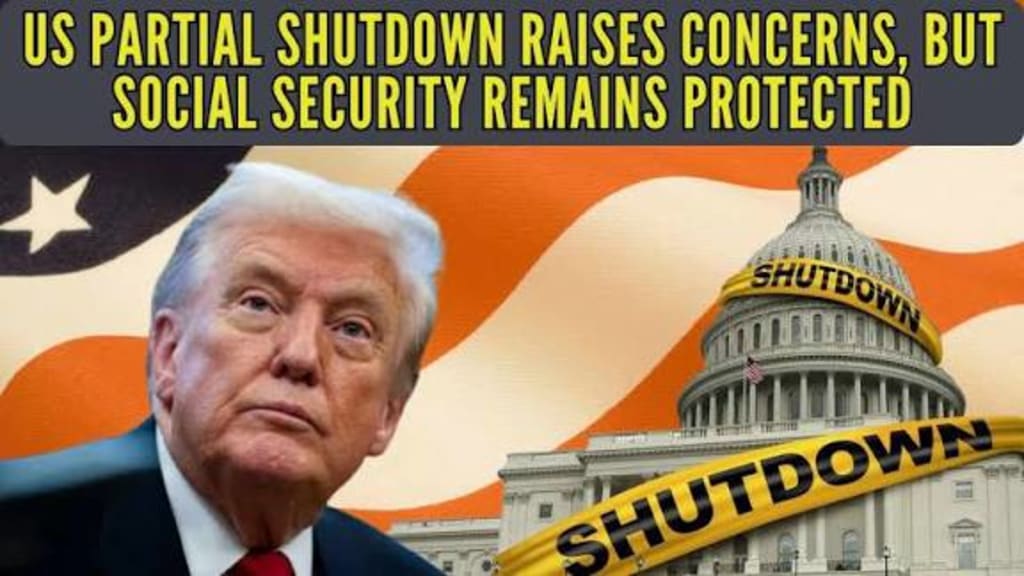
Political divisions deepen as lawmakers fail to reach agreement on federal funding, disrupting key services and raising economic concerns
The United States has entered a partial government shutdown after lawmakers failed to pass a federal budget agreement, marking another chapter in the nation’s long-running struggle over spending priorities and political divisions. The shutdown follows weeks of intense negotiations in Congress that ended without a compromise, leaving several federal agencies without approved funding.
As a result, hundreds of thousands of government employees face furloughs or are required to work without pay, while essential services continue under limited operations. The situation has created uncertainty for workers, businesses, and citizens who rely on government programs and services.
What Led to the Shutdown
The shutdown was triggered by a stalemate between political parties over budget allocations, particularly regarding homeland security, immigration enforcement, and social programs. Lawmakers could not agree on how to distribute federal funds before the deadline, causing automatic spending restrictions to take effect.
Both sides blame each other for the failure. Supporters of tighter spending controls argue that the government must reduce deficits and prioritize national security. Opponents say the proposed cuts would harm vulnerable communities and disrupt vital public services.
“This shutdown is the result of political games instead of responsible leadership,” said one senior lawmaker during a heated congressional session. Meanwhile, the White House called on Congress to act quickly and pass a temporary funding bill to reopen the government.
Impact on Federal Workers and Services
The shutdown has immediate consequences for federal employees. Non-essential workers in agencies such as housing, environmental protection, and education have been furloughed. Essential employees, including border security officers, air traffic controllers, and emergency responders, are still working but without pay until funding is restored.
National parks and museums in some states have closed their doors, while others remain open with reduced staff. Processing of passports, visas, and small business loans has slowed significantly.
For many families, the uncertainty is stressful. “I don’t know how long we can manage without a paycheck,” said a federal worker in Washington, D.C. “Bills don’t stop just because the government shuts down.”
Economic Concerns Grow
Economists warn that prolonged shutdowns can weaken economic growth. While short shutdowns have limited impact, extended disruptions can reduce consumer confidence and delay government contracts and payments.
Small businesses that rely on federal grants or contracts may face cash flow problems. Tourism could also be affected, especially in areas dependent on national parks and federal attractions.
Financial markets reacted cautiously, with investors watching closely to see how long the shutdown will last. Analysts fear that if the crisis continues, it could affect government credit ratings and raise borrowing costs.
Political Reactions and Public Response
Public frustration is rising as politicians exchange blame. Protesters gathered outside government buildings in several cities, demanding action and accusing lawmakers of putting politics ahead of people.
Advocacy groups argue that shutdowns disproportionately harm low-income families and communities that depend on public services. Food assistance programs, housing support, and healthcare administration may experience delays if the shutdown continues.
“This is not just a political fight—it affects real lives,” said a spokesperson for a national social services organization.
Meanwhile, party leaders have signaled willingness to resume negotiations, though no immediate breakthrough has been announced.
History of Government Shutdowns
The United States has experienced several shutdowns in recent decades, most notably in 2013 and again in 2018–2019, which became the longest shutdown in U.S. history. Each incident highlighted deep divisions in Congress and the difficulty of reaching bipartisan agreements on spending and policy.
Experts note that repeated shutdowns damage public trust in government institutions. “Every shutdown erodes confidence and shows how fragile the budget process has become,” said a political analyst.
National Security and Border Operations
One of the most controversial issues in the current deadlock involves homeland security funding. Disagreements over immigration enforcement and border management remain central to the dispute.
Although border patrol agents and security staff are still working, uncertainty over funding has raised concerns about long-term operational readiness. Defense officials have urged Congress to resolve the issue quickly to avoid compromising national security.
International Implications
The shutdown also sends a signal abroad about political instability in the world’s largest economy. Allies and global markets are watching closely, as prolonged dysfunction could weaken America’s leadership role in international affairs.
Foreign diplomats expressed concern that domestic political battles might distract from global challenges such as trade negotiations, security partnerships, and humanitarian aid programs.
What Happens Next
Congress is expected to continue negotiations in the coming days. Lawmakers may attempt to pass a temporary funding measure, known as a continuing resolution, to reopen the government while talks continue on a full budget agreement.
However, deep ideological differences make a quick solution uncertain. Some lawmakers are using the shutdown as leverage to push their policy demands, while others urge compromise to prevent further damage.
President and congressional leaders have called for renewed dialogue, but so far, no final deal has been announced.
A Nation Waiting for Resolution
For millions of Americans, the shutdown represents more than a political dispute—it is a disruption of daily life and financial stability. Federal workers worry about their next paycheck, businesses face delays, and citizens experience reduced services.
As the shutdown enters its first phase, pressure is mounting on Congress to act. Whether leaders can put aside partisan differences and reach an agreement remains the key question.
Until then, the nation waits in uncertainty, hoping that political compromise will restore normal government operations and prevent further harm to the economy and public trust.
About the Creator
Fiaz Ahmed
I am Fiaz Ahmed. I am a passionate writer. I love covering trending topics and breaking news. With a sharp eye for what’s happening around the world, and crafts timely and engaging stories that keep readers informed and updated.
Keep reading
More stories from Fiaz Ahmed and writers in The Swamp and other communities.
Drone Strike in Ethiopia’s Tigray Raises Fears of Renewed Conflict
One killed as fresh attack sparks concern over fragile peace in the war-scarred region A deadly drone strike in Ethiopia’s northern Tigray region has reignited fears of renewed conflict, raising alarms among civilians and international observers who worry that the fragile peace achieved after years of brutal war may now be under serious threat.
By Fiaz Ahmed a day ago in The Swamp
Dad Works One Job, Five Days a Week, While Mom Is Home Every Day: Exploring Modern Family Dynamics
In today’s world, family structures and routines can vary widely. One example that resonates with many is when Dad works a standard job five days a week, while Mom stays at home every day to manage household responsibilities and care for children. This arrangement is common, but it often sparks discussion about gender roles, financial priorities, personal fulfillment, and the balance between work and home life. By examining this dynamic, we can better understand the challenges, benefits, and societal perceptions that come with it—and why families choose arrangements that work best for them. The Traditional Family Model Historically, the “breadwinner and homemaker” model was the norm in many cultures: the father worked outside the home, while the mother managed the household and children. This setup was often driven by societal expectations, limited career opportunities for women, and the economic structure of the time. While society has evolved, this model still exists today for practical, cultural, or personal reasons. Some families find that having one parent focus on home responsibilities allows for greater flexibility in childcare, schooling, and household management. Advantages of This Arrangement Consistency and Stability for Children Having one parent at home every day provides children with a familiar, consistent presence. They benefit from immediate support for homework, emotional needs, and day-to-day care, which can reduce stress and foster a strong parent-child bond. Focused Household Management Daily household responsibilities—from cooking and cleaning to scheduling appointments—require time and organization. A parent at home can ensure that routines run smoothly without the pressure of juggling a full-time job outside the house. Flexibility for Family Emergencies When unexpected issues arise, such as illness, school events, or urgent home repairs, having a parent at home offers flexibility and quick response, which can prevent disruption to the family’s routine. Potential Financial Benefits Although it may seem counterintuitive, in some situations, this arrangement can save money. Avoiding daycare costs, after-school programs, or hiring additional help can make one-parent-at-home scenarios more affordable than dual-income households with external childcare expenses. Challenges and Considerations While there are clear benefits, this arrangement also comes with challenges: Economic Dependence Relying on a single income can create financial vulnerability. If the working parent loses their job or faces unexpected expenses, the family may struggle without additional income or emergency savings. Social Expectations and Gender Roles Some parents feel pressure or judgment from society. Fathers may face criticism for not being the sole focus of home life, while mothers at home may be undervalued for their unpaid labor. This societal scrutiny can impact self-esteem and create tension. Limited Personal Fulfillment A parent who stays at home might miss opportunities for career growth, social engagement, or personal development. Maintaining identity beyond family roles can be a challenge and may require intentional effort to balance personal goals with household responsibilities. Pressure on the Working Parent The parent working outside the home may experience pressure to provide financially, potentially leading to stress or burnout. Balancing the demands of a full-time job with family expectations requires clear communication and mutual support. Communication and Partnership Are Key Experts emphasize that any family arrangement—whether traditional, dual-income, or unconventional—requires communication and partnership. Families must discuss: Financial goals and budgeting Household responsibilities and expectations Career plans and personal development Childcare and educational priorities Open dialogue ensures that both parents feel valued, respected, and supported, regardless of who is working outside the home. Society’s Evolving Perspective Modern perspectives on parenting and work have shifted. There is greater recognition that the value of home labor is significant, even though it may not generate income directly. Parents who dedicate themselves to managing the household and caring for children are contributing to both family well-being and the economy in indirect ways. Additionally, remote work, flexible schedules, and part-time employment options are changing how families structure their lives. The traditional arrangement of one parent working and one parent staying home is now one of many viable choices, not the only standard. Children’s Perspective Children often benefit from a parent at home for emotional support and guidance. However, parents must balance attention with independence to ensure children develop self-reliance and problem-solving skills. Experts suggest that children thrive in homes where: Both parents are engaged and supportive Responsibilities are modeled fairly Communication is open and respectful When children observe mutual respect between parents, it positively shapes their understanding of relationships and family roles. Making It Work in the Modern Era For families considering or living this arrangement, several strategies can help maintain balance and satisfaction: Financial Planning: Establish budgets, savings plans, and emergency funds to ensure stability. Shared Decision-Making: Include both parents in household and parenting decisions, even if one is not working outside the home. Personal Time: Encourage the stay-at-home parent to pursue hobbies, education, or social engagement to maintain personal fulfillment. Support Networks: Engage extended family, friends, or community resources for support and social interaction. By approaching the arrangement thoughtfully, families can maximize benefits and minimize stress. Final Thoughts The arrangement where Dad works one job, five days a week, and Mom is home every day is a personal choice that can offer stability, flexibility, and strong family bonds. Like any family structure, it has advantages and challenges, and success depends on communication, respect, and planning. Rather than viewing it through the lens of tradition or judgment, families should focus on what works best for them. Each household is unique, and what matters most is creating an environment where children thrive, parents feel valued, and daily life functions smoothly. By understanding both the benefits and potential pitfalls, families can navigate this dynamic with confidence, ensuring that work, home, and personal fulfillment coexist harmoniously.
By Muhammad Hassan6 days ago in The Swamp
One Unchecked Box
"Republished" because it was the only way to add the embed for the newly recorded audio version of this story due to the Top Story badge. Plus it serves as a nice, informal announcement of the podcast's revival for another season (go subscribe!):
By Stephen A. Roddewig5 days ago in Fiction




Comments
There are no comments for this story
Be the first to respond and start the conversation.