


Inequality refers to variations in the well-being and standard of living between individuals or groups of individuals within a population. Inequality is visible at different levels, within and between countries and between all individuals at the global level, and manifests itself through different economic, social, and political dimensions such as income, education, health, and nutrition. Inequality within and between countries is often considered in terms of income, wealth, or consumption. A commonly used measure of inequality in a country is the Gini coefficient, which measures the dispersion of income and other attributes on a scale of 0 (signaling complete equality) to 1 (indicating total inequality).
Patterns of inequality are based on circumstances beyond the individual’s control, such as ethnicity, gender, location of birth, household wealth, and social class. Inequality can be viewed from two perspectives: the unequal distribution of outcomes, as measured by the level of income, health status, and educational attainment, and the unequal distribution of opportunities such as access to education and health care. Inequality restrains the growth and development of individuals, leading to divergent destinies and pathways throughout the life course. This entry provides an overview of inequality and human development across the lifespan.
Inequality in the Early Years
Inequality begins before birth. It begins in the womb, with mothers’ social and economic backgrounds setting the course of their children’s lives. Mothers who are disadvantaged are more likely to have poor nutrition, limited access to health care, and more exposure to toxins, violence, and stress. These circumstances increase the risks for poor birth outcomes, such as low birth weight and premature birth, and poor health at birth is linked to developmental delays. Hence, sizable disparities between individuals emerge at birth and continue throughout childhood. These disparities are related to factors such as income, ethnicity, and maternal education.
Inequalities in the opportunities and experiences of individuals are apparent in the early years. Children from more advantaged backgrounds, on average, are more likely to be enrolled in early childhood education and care services and to be placed in high-quality schools, putting children from disadvantaged backgrounds at a double disadvantage—by the disparities in outcomes based on their circumstances and unequal access to quality education. Large gaps also exist in the amount of cognitive stimulation and quality of caregiver–child interactions in the home environments.
Economically advantaged parents generally spend more time with their children, invest their time in educational activities (e.g., reading to their children, counting, and singing songs and rhymes), spend more on child-enrichment goods and services, and enable greater language stimulation with the amount and types of words used in their speech to children. The differences in the early experiences of individuals contribute to the inequalities of outcomes in both the short term and the long term.
Intergenerational Effects
Early disparities in development persist throughout childhood and into adulthood and have long-term consequences on later outcomes and well-being, such as achievement, lifetime income, employment, and productivity. This situation leads to a vicious cycle of inequality from generation to generation, in which children born into disadvantaged families often grow into disadvantaged adults. Inequality that persists throughout the life course and into the next generation has significant implications on the economic growth and social mobility of a society.
Manifestations of Inequalities
Inequality manifests itself in different ways within and between countries. The sociocultural, economic, and political contexts of each country shape the experiences and trajectories of individuals and determine the extent to which inequalities are addressed in society. Public policy and programming, such as income support, health insurance, child care, and parental leave, can modify the inequalities of outcomes and opportunities and can influence the impact of risks on the lives of children and families.
The type and prevalence of risk factors associated with poor child development—such as stunting and other forms of malnutrition, maternal depression, inadequate cognitive stimulation, and exposure to violence—differ across countries. Low- and middle-income countries account for almost all stunted children worldwide, for example. Individuals who are disadvantaged in one country may experience inequality very differently from those in another country.Significant socioeconomic gradients across a range of cognitive, social, emotional, behavioral, and health outcomes are evident among individuals within and across countries. Children from more economically advantaged backgrounds generally exhibit better school readiness skills, higher cognitive and academic competencies, fewer behavioral problems, and better health outcomes than their less advantaged counterparts. Children at risk face multiple disadvantages: poor family backgrounds, ethnic minority status, low parental education levels, single-parent families, and living in rural location, all of which combine to further widen the disparities in outcomes.
A number of factors in the lives of individuals, however, may contribute to widening or narrowing gaps throughout the life course. The conditions around individuals, such as the support found in families, schools, neighborhoods, peers, and the community, can build the resilience of individuals in buffering against adverse events and circumstances. The characteristics of individuals may also determine the extent of the impact of risks on development.
Dealing With Inequality
Inequality emerges early and has the potential to have long-lasting implications for individual well-being. Early childhood is a critical period of human development. Investment in the early years is effective and cost-efficient, yielding high rates of return with reduced costs on later remediation classes, special education, and incarceration. Early child development interventions, such as parenting support programs, nutrition programs, high-quality preschool access, and family income and support programs, are effective in improving outcomes for children and families. Programs and interventions that target young and disadvantaged children and their families; integrate services such as education, health, and parenting; and promote the cognitive and non-cognitive skills of individuals may help to reduce inequalities and improve developmental outcomes. The multidimensional nature of inequality requires a holistic approach to policy and services to enable all individuals to reach their developmental potential and to become productive citizens in the society.
About the Creator
Keep reading
More stories from Corinne Delgado and writers in The Swamp and other communities.
Poetry to you.
What poetry is to me is art. Poetry speaks a language so pleasant you have to come to like the arts and words of being a poet or understanding it. How I came to like it was years ago in my middle school class reading a poem or a story by the author John Donne. As I read more of his books and poems the more I like the arts of a poet. One of his books had something in there I adored about it and made me come to like him and how he performs in and through his work. As you come to read my story I'll be talking about why it is important to me, how I came to like it, and lastly why I write poetry. Also, think of an author of any kind and think about why you came to be inspired by it.
By Corinne Delgado4 years ago in Poets
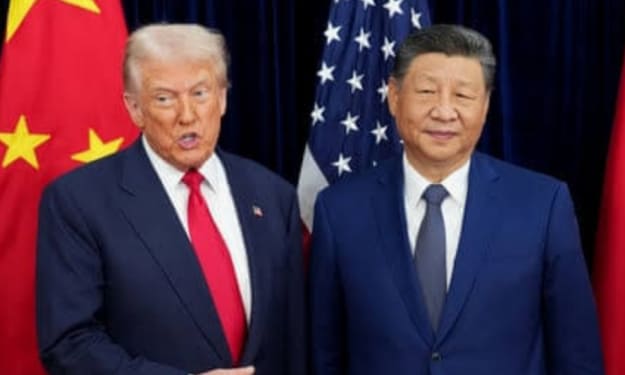
Trump Is Making China – Not America – “Great Again,” Global Survey Suggests
A recent international survey indicates that former President Donald Trump’s policies and rhetoric may have inadvertently strengthened China’s global standing, even as he aimed to bolster America. The survey, conducted across multiple continents, suggests that foreign public opinion increasingly views China as a rising power, while perceptions of U.S. leadership have seen a decline during Trump’s influence.
By Aarif Lashari6 days ago in The Swamp
Why Are UK Prices Still Rising?
Despite a year of government interventions, interest rate adjustments, and promises of economic stability, prices in the UK continue to climb. From groceries to energy bills, everyday expenses are leaving households feeling squeezed. Understanding why inflation remains high requires examining a mix of global, domestic, and structural factors shaping the UK economy today.
By Aarif Lashariabout 21 hours ago in The Swamp



Comments
There are no comments for this story
Be the first to respond and start the conversation.