
India and Pakistan Face Off Over Kashmir Terror Attack: Is South Asia Headed for a Major Conflict?
India and Pakistan on the Brink: The Pahalgam Attack Stirs Historical Conflicts

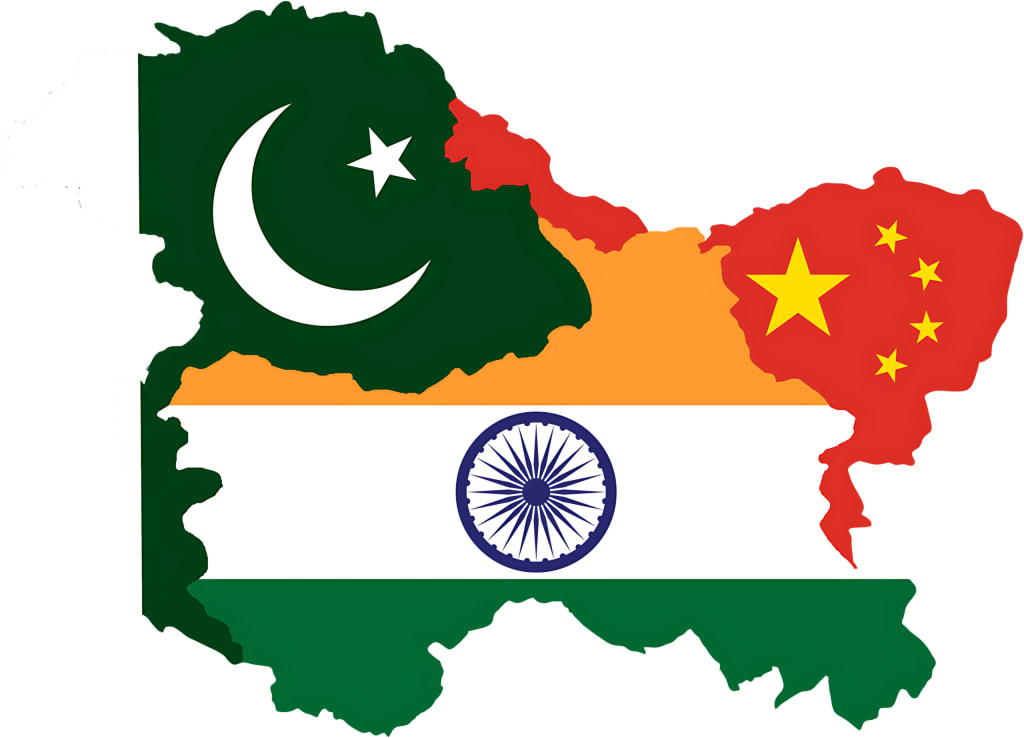
rorist attack in Indian-administered Kashmir. The April 22 attack in the scenic town of Pahalgam, a popular destination for Hindu pilgrims, killed at least 26 people and injured dozens more. Claimed by a militant group called *The Resistance Front*, the incident has triggered a wave of retaliation from the Indian government and a strong counter-response from Pakistan, bringing the nuclear-armed neighbors to the brink of confrontation once again.
As of late April 2025, both countries have taken dramatic diplomatic, military, and strategic measures that signal a sharp deterioration in relations. This sudden breakdown comes amid an already tense regional atmosphere and raises fears of yet another armed conflict over the disputed territory of Kashmir.
The Kashmir Flashpoint: A History of Violence and Dispute
The Kashmir region has long been a hotbed of conflict between India and Pakistan, dating back to the partition of British India in 1947. Both nations claim the region in full, but each controls a portion—India administers Jammu and Kashmir, while Pakistan governs what it calls Azad Kashmir. Over the decades, this unresolved territorial dispute has led to three full-scale wars and countless skirmishes along the Line of Control (LoC), the de facto border dividing the two parts of Kashmir.
What makes this current situation particularly dangerous is the nature of the attack and its aftermath. The targeting of Hindu pilgrims in Pahalgam has not only shocked India but also inflamed religious and nationalistic sentiments. It is being seen not just as an act of terrorism, but a symbolic attack on India’s cultural and religious heritage.
India has accused Pakistan of backing the militant group responsible for the attack, citing long-standing evidence of cross-border terrorism. While Pakistan denies any involvement, the Indian government insists that such organizations operate with impunity in Pakistani territory, using it as a base to strike inside India.
India’s Strong Response: Diplomatic and Military Escalation
In response to the Pahalgam attack, Indian Prime Minister Narendra Modi’s administration moved swiftly. Within hours, high-level security meetings were convened, and within days, India initiated a series of sweeping actions:
Suspension of the Indus Waters Treaty: This landmark water-sharing agreement, brokered in 1960 by the World Bank, has withstood decades of conflict. Its suspension is a rare and bold move that signals how deeply New Delhi views the current crisis.
Cancellation of all Pakistani visas: India has revoked all visas issued to Pakistani nationals, effectively shutting down travel and cultural exchanges between the two countries.
Expulsion of Pakistani diplomats: Several Pakistani officials were ordered to leave India, and New Delhi recalled its own diplomats from Islamabad.
Military freedom of action: The Indian Army has been given “full operational freedom” to respond to provocations along the LoC, indicating the possibility of cross-border operations or retaliatory strikes.
These steps mark one of the most severe diplomatic breakdowns between the two countries in recent memory. They also suggest that India is preparing for a range of responses, including potential military retaliation.
Pakistan's Reaction: Strategic Posturing and International Appeals
Pakistan, in turn, has responded aggressively. Prime Minister Shehbaz Sharif condemned India’s actions and accused New Delhi of using the attack as a pretext to justify harsh measures against Kashmiris and provoke war. Pakistan’s countermeasures include:
Closure of airspace to Indian aircraft, affecting both commercial and military flights.
Suspension of bilateral agreements, including aspects of the 1972 Simla Agreement, which governs peaceful conflict resolution between the two nations.
Mobilization of military forces along the LoC, accompanied by increased patrols and strategic deployments.
Capture of an Indian soldier, who allegedly crossed the border accidentally, adding further strain to military relations.
Pakistan has also appealed to international bodies such as the United Nations and the Organization of Islamic Cooperation (OIC) to intervene diplomatically. Islamabad claims India is inflaming the situation and using the tragedy to distract from alleged human rights abuses in Jammu and Kashmir.
Global Concern: Calls for Restraint Amid Nuclear Risk
Given that both India and Pakistan possess nuclear weapons, the situation has alarmed the international community. The United States, European Union, United Nations, and other key players have issued urgent calls for de-escalation and a return to diplomacy.
U.S. Secretary of State Marco Rubio has announced plans to speak directly with his counterparts in New Delhi and Islamabad. The goal, according to the State Department, is to prevent any further deterioration of the situation and to encourage dialogue.
Meanwhile, China—an ally of Pakistan and a regional power with interests in Kashmir—has issued a cautious statement urging restraint and peace, without clearly siding with either nation. The potential for regional spillover remains high, especially if either country initiates a military strike.
Media and Public Opinion: Nationalism on the Rise
The media on both sides of the border have intensified nationalist rhetoric. In India, television networks are calling for strong retaliatory action, echoing sentiments of revenge and justice for the victims of the Pahalgam massacre. In Pakistan, state media presents India’s actions as unjustified aggression and highlights the humanitarian crisis in Kashmir.
Social media is flooded with polarized hashtags like #StandWithIndia, #StopTerror, #FreeKashmir, and #StopIndianAggression, reflecting deep divisions and the powerful role of digital platforms in shaping public opinion.
What Lies Ahead: Dialogue or Confrontation?
As the crisis unfolds, the coming days will be critical. If India proceeds with military retaliation, the chances of a wider conflict grow significantly. Past confrontations, like the Balakot airstrike in 2019 and the surgical strikes in 2016, suggest that India may consider limited but high-impact operations to punish militant bases in Pakistan.
However, such actions could prompt massive retaliation from Pakistan, potentially leading to a cycle of violence neither side can easily control. The international community will need to act swiftly to mediate, but peace will ultimately depend on whether both governments prioritize stability over political gains.
Conclusion
The recent terror attack in Kashmir has reopened deep wounds between India and Pakistan, putting South Asia on a knife’s edge. With diplomatic ties unraveling and military forces mobilizing, the risk of escalation is real and immediate. Whether cooler heads prevail or the situation devolves into open conflict will depend on the choices made by leaders in New Delhi, Islamabad, and global capitals in the days to come.
India-Pakistan Conflict
Kashmir Tensions
Pahalgam Attack
Kashmir News
India-Pakistan Border
Pakistan Military Response
About the Creator
NextGen Mobile Tech
- I review the latest smartphones, mobile accessories, and tech essentials to help you make smart buying decisions. Explore my curated kits for phones and gear here: [Kit.co link].
Keep reading
More stories from NextGen Mobile Tech and writers in The Swamp and other communities.
Iran and Israel on the Brink of All-Out War: Global Tensions Escalate Amid Missile Strikes and Civilian Tragedy
The Conflict Erupts Into a New Phase On June 13, 2025, what had been a long-simmering tension between Israel and Iran exploded into a full-scale military confrontation. Israel launched a wave of coordinated airstrikes, targeting more than 100 key military and nuclear locations across Iran, marking the start of what is now being called Operation Rising Lion.
By NextGen Mobile Tech7 months ago in The Swamp
Which Are Iran’s Main Opposition Groups?
Iran has one of the most complex political landscapes in the Middle East. Since the 1979 Islamic Revolution, the country has been ruled by the Islamic Republic — a system that tightly controls political activity, media, and civil freedoms. Despite this, opposition to the regime has never disappeared. Instead, it has taken many forms, ranging from organized political groups to grassroots protest movements.
By Aqib Hussain7 days ago in The Swamp



Comments
There are no comments for this story
Be the first to respond and start the conversation.