
“I Don’t Let Bullies Win”: Congresswoman Ilhan Omar Stands Defiant After Attack
An incident of harassment reignites debate over political violence, intimidation, and resilience in American democracy

U.S. Congresswoman Ilhan Omar has once again found herself at the center of national attention after an incident in which a substance was thrown at her during a public appearance. Rather than retreating, Omar responded with defiance, declaring, “I don’t let bullies win.” Her statement quickly spread across social media and news platforms, becoming both a personal assertion of strength and a broader commentary on the state of political discourse in the United States.
The incident, while not resulting in serious physical harm, struck a deeper nerve. It highlighted the increasingly hostile environment faced by public officials—particularly women, minorities, and outspoken political figures. For Omar, a Somali American Muslim woman who has been a frequent target of criticism and threats, the act was not an isolated moment but part of a longer pattern of intimidation.
Political violence and harassment have become disturbingly common in recent years. From verbal abuse to physical threats, elected officials across the political spectrum have reported heightened security concerns. However, critics argue that figures like Omar face a disproportionate share of hostility due to their identity, visibility, and willingness to challenge entrenched power structures.
Omar’s response to the attack was measured yet resolute. Instead of focusing on the aggressor, she emphasized resilience and accountability. Her refusal to be silenced reflects a broader stance she has maintained throughout her political career: that intimidation should never dictate who gets to participate in democracy.
Supporters praised her reaction as courageous, noting that public officials should not be expected to endure abuse as a condition of service. Many pointed out that normalizing such incidents risks discouraging diverse voices from entering politics. If harassment goes unchecked, democracy itself becomes narrower and less representative.
Critics, however, attempted to downplay the incident or redirect the conversation toward Omar’s controversial statements and policy positions. This reaction underscores a recurring issue in political culture: the tendency to justify or minimize harassment when the target is a polarizing figure. Yet doing so shifts focus away from the core issue—no elected official should be subjected to physical intimidation.
The symbolism of the act is as important as the act itself. Throwing a substance at a lawmaker is not merely a prank or protest; it is a message intended to humiliate, threaten, or provoke fear. When such behavior becomes part of political expression, it erodes the norms that allow democratic disagreement to function peacefully.
Omar’s career has been marked by both influence and controversy. Since entering Congress, she has been a vocal advocate for immigrant rights, racial justice, and foreign policy reform. Her willingness to confront powerful interests has earned her admiration from progressives and criticism from conservatives. That visibility, however, has also made her a target.
What makes Omar’s response particularly significant is her refusal to frame herself solely as a victim. By stating that she does not let bullies win, she reclaims agency and challenges the narrative that intimidation is effective. This framing resonates beyond her individual experience, speaking to anyone who has faced harassment for speaking out.
The incident has renewed calls for stronger protections for public officials and clearer consequences for harassment. Lawmakers from various backgrounds have expressed concern that escalating hostility could lead to more serious acts of violence. The question is no longer whether political intimidation exists, but how institutions and society choose to respond.
Social media has played a complex role in this dynamic. While platforms allow supporters to rally around figures like Omar, they also amplify hate and misinformation. Online rhetoric can quickly translate into real-world actions, blurring the line between speech and violence. Addressing this challenge requires not only policy changes but cultural shifts in how disagreement is expressed.
Omar’s defiance also raises a deeper question about leadership. In an era of outrage and polarization, what does strength look like? For some, it is aggression and dominance. For others, it is resilience, clarity, and refusal to be intimidated. Omar’s response suggests the latter—that standing firm without escalating hostility can be its own form of power.
The broader implications extend beyond one congresswoman. If political participation becomes synonymous with personal risk, fewer people—especially those from marginalized communities—will step forward. Democracy depends on the idea that disagreement can coexist with safety. When that balance breaks, everyone loses.
Ultimately, the incident and Omar’s response serve as a mirror reflecting the current state of American politics. It is a landscape marked by passion, division, and increasingly blurred boundaries. Yet it is also a space where individuals can still assert dignity in the face of hostility.
By refusing to let bullies win, Ilhan Omar sends a message that intimidation will not dictate the terms of political engagement. Whether one agrees with her politics or not, that stance reinforces a principle essential to democracy: no voice should be silenced through fear.
About the Creator
Keep reading
More stories from Ayesha Lashari and writers in The Swamp and other communities.
U.S. Removes Tanker Captain From UK Waters as Crew Prepares to Leave Scotland
The United States has removed the captain of a tanker from UK waters as the vessel’s crew prepares to leave Scotland, a move that has drawn attention from maritime authorities, political observers, and the shipping industry alike. While officials have offered limited public detail, the decision has sparked debate about maritime responsibility, international jurisdiction, and how nations respond when safety concerns arise in shared waters.
By Ayesha Lashariabout 19 hours ago in The Swamp
Brooklyn Beckham’s Wedding DJ Speaks About the ‘Awkward’ Dance
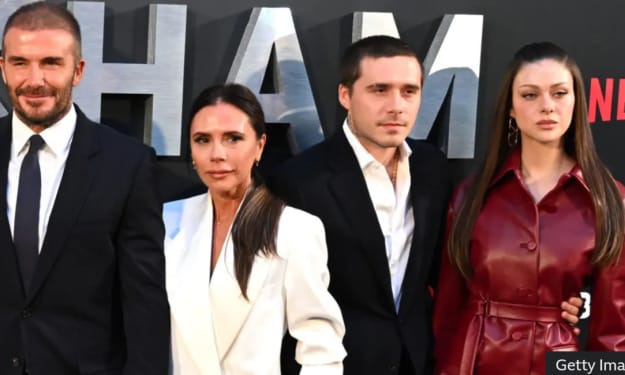
Celebrity weddings are often portrayed as flawless fairy tales — perfectly choreographed dances, glamorous guests, and unforgettable celebrations. But according to the DJ who performed at Brooklyn Beckham and Nicola Peltz’s lavish wedding, not every moment went exactly as planned. In a recent interview, the wedding DJ opened up about an “awkward” dance moment that surprised guests and quickly became a talking point behind the scenes. While the Beckham–Peltz wedding was one of the most high-profile events of the year, this revelation reminds us that even celebrity celebrations can have uncomfortable or unexpected moments. A Star-Studded Wedding Under the Spotlight Brooklyn Beckham, son of football icon David Beckham and fashion designer Victoria Beckham, married actress and heiress Nicola Peltz in an extravagant ceremony attended by celebrities, family, and close friends. The wedding, held at the Peltz family estate, was widely covered by the media, praised for its luxury, elegance, and star power. From designer outfits to carefully curated music, every detail appeared meticulously planned. However, as the DJ later revealed, not everything unfolded as smoothly as it looked on social media. The DJ’s Perspective: What Went Wrong? Speaking candidly, the wedding DJ described one particular dance moment as “awkward”, explaining that it felt uncomfortable not just for the couple, but also for guests watching. While the DJ avoided naming specific individuals involved in the dance, the moment reportedly stood out because it didn’t match the emotional tone or expectations of the event. According to the DJ, wedding dances are often deeply personal and emotionally charged, especially at high-profile ceremonies where family dynamics are closely observed. When expectations clash with reality, even a carefully planned moment can feel off. Why Wedding Dances Can Be Tricky Wedding dances — whether between newlyweds, parents and children, or other family members — carry symbolic meaning. They are meant to represent love, unity, and celebration. However, they can also expose unspoken tensions, nerves, or emotional discomfort. In celebrity families like the Beckhams, where public scrutiny is constant, even small missteps are magnified. The DJ explained that pressure can make people overthink or feel self-conscious, especially when surrounded by cameras and famous guests. Social Media vs. Reality One reason this moment drew attention is the contrast between the perfect images shared online and the reality described by someone working behind the scenes. On social media, Brooklyn and Nicola’s wedding appeared flawless — elegant dances, smiling guests, and romantic moments frozen in time. The DJ’s comments offer a reminder that social media rarely shows the full picture. Even the most glamorous events can include uncomfortable pauses, emotional tension, or moments that don’t land as intended. Public Fascination With Celebrity Weddings Celebrity weddings captivate audiences because they blend fantasy with familiarity. People enjoy seeing famous figures experience the same emotions as anyone else — excitement, nerves, joy, and occasional awkwardness. This behind-the-scenes story resonated with fans because it humanizes a highly publicized couple. It shows that even when wealth, planning, and professional teams are involved, weddings remain deeply emotional and unpredictable. The DJ’s Role at High-Profile Events For wedding DJs, especially at celebrity events, the role goes beyond playing music. They must read the room, manage transitions, and sometimes navigate emotionally sensitive situations. The DJ noted that moments like the “awkward” dance are part of the job, especially when dealing with families under intense public attention. Despite the discomfort, the DJ emphasized that the overall wedding was beautiful and memorable. One awkward moment, they said, doesn’t define the entire celebration. Reactions From Fans and Media Since the DJ’s comments surfaced, fans have been divided. Some sympathized with the couple, pointing out that weddings are stressful enough without public judgment. Others expressed curiosity, speculating about what exactly happened and why it felt awkward. Media outlets quickly picked up the story, not because it was scandalous, but because it offered a rare, honest glimpse into a private moment at a very public event. What This Says About Modern Celebrity Culture This story highlights how minor moments can become major headlines in today’s celebrity culture. A brief awkward interaction — something that would be forgotten at a private wedding — becomes newsworthy when famous names are involved. It also reflects society’s growing interest in authenticity. Audiences increasingly appreciate stories that reveal imperfection behind polished public images, making celebrities feel more relatable. Final Thoughts Brooklyn Beckham and Nicola Peltz’s wedding will likely be remembered for its elegance, star-studded guest list, and fairytale setting. Yet the DJ’s candid comments about an “awkward” dance moment add a human layer to the narrative. In the end, this story serves as a reminder that no celebration is perfect, no matter how glamorous it appears. Weddings are emotional, unpredictable, and deeply personal — whether you’re a global celebrity or an everyday couple. Sometimes, it’s the imperfect moments that make an event truly memorable.
By Muhammad Hassan6 days ago in The Swamp
Dollar Falls After Trump Comments
Introduction: A Sudden Shift in Currency Markets The U.S. dollar slid sharply this week after President Donald Trump’s public comments about the currency’s decline, sending ripples through global financial markets. Traders interpreted his remarks as a sign that the administration may be comfortable with a weaker dollar, prompting a fresh wave of dollar selling and boosting other major currencies such as the euro, yen and British pound. The currency move has underscored growing concerns over U.S. economic policy and investor confidence.
By Salaar Jamalia day ago in The Swamp
Instructions Included Challenge Winners
For the Instructions Included challenge, we asked writers to tell a story through instructions and to trust the form to carry what could not be said outright. Across the top entries, that trust paid off in many different ways.
By Vocal Curation Teamabout 12 hours ago in Resources



Comments
There are no comments for this story
Be the first to respond and start the conversation.