
Dollar Falls After Trump Comments
Market Confidence Shaken as President’s Remarks Spark Currency Sell‑Off


Introduction: A Sudden Shift in Currency Markets
The U.S. dollar slid sharply this week after President Donald Trump’s public comments about the currency’s decline, sending ripples through global financial markets. Traders interpreted his remarks as a sign that the administration may be comfortable with a weaker dollar, prompting a fresh wave of dollar selling and boosting other major currencies such as the euro, yen and British pound. The currency move has underscored growing concerns over U.S. economic policy and investor confidence.
---
What Trump Said and Why It Mattered
President Trump’s comments came during a speech in Iowa when he was asked whether he was worried about the recent drop in the value of the U.S. dollar. His response — that he thinks the dollar is “great” and that he wasn’t particularly concerned about its decline — was interpreted by markets as a green light to intensify selling of the dollar.
Traditionally, presidents have publicly supported a strong dollar, which is seen as a symbol of economic strength. Trump’s more relaxed stance on the currency’s drop deviated from this norm and added to market uncertainty about future fiscal and trade policies.
---
Dollar Performance: Near Four‑Year Lows
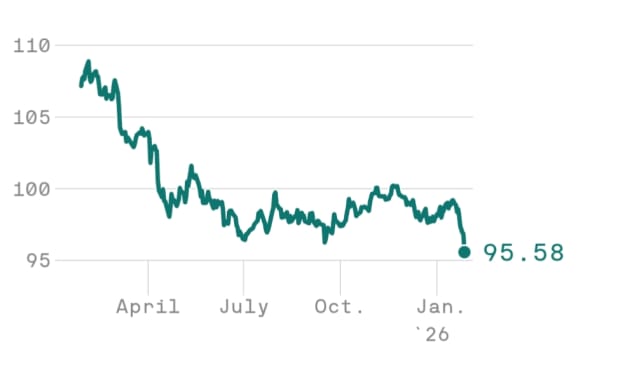
The U.S. Dollar Index (DXY), which measures the greenback against a basket of six major currencies, hovered near levels not seen for nearly four years. During the recent session, the index briefly touched a four‑year low of around 95.56, before bouncing slightly after the initial plunge.
This decline reflects a broader trend of weakening investor confidence in the dollar that has been developing over several months, driven by factors including inconsistent trade strategies, concerns over the independence of the Federal Reserve, and mounting fiscal deficits.
---
Major Currencies Gain Ground
As the dollar weakened, several major currencies strengthened:
Euro (EUR) climbed past the $1.20 level against the dollar for the first time since 2021, indicating robust gains for European currencies.
British Pound (GBP) also surged, reaching multi‑year highs as traders priced in renewed confidence in the UK currency relative to the dollar.
Japanese Yen (JPY) saw significant appreciation amid speculation that U.S. and Japanese officials might coordinate to stabilise the yen, adding another layer of complexity to currency markets.
These moves reflect broader market reactions to the dollar’s weakness and investors reallocating capital into other major currencies.
---
Investor Sentiment: Confidence or Crisis?
Market analysts have framed the drop in the dollar as more than just a technical correction. Some see it as evidence of a “crisis of confidence” in the United States’ economic leadership and fiscal policy direction.
Kyle Rodda, a senior market analyst, noted that while Trump’s comments weren’t necessarily new in substance, their timing amid existing weakness intensified selling pressure. Rodda and others have highlighted Trump’s unpredictable trade policy, diplomatic tensions, and concern over the Federal Reserve’s independence as weighing heavily on investor sentiment.
---
The Role of Policy and Fed Expectations
Part of the dollar’s slide has also been tied to expectations around interest rates and monetary policy. With traders anticipating a pause or even easing of U.S. interest rates, the dollar’s status as a premium‑yielding currency has been challenged, making it less attractive relative to other assets.
At the same time, ongoing political debates about the future leadership of the Federal Reserve — including speculation about changes to top central bank officials — have contributed to market unease. A less predictable or less independent Fed in the eyes of investors often reduces demand for dollar‑denominated assets.
---
Broader Economic Impacts
The dollar’s decline carries implications for international trade, inflation, and investment flows:
Exports and Trade Balance
A weaker dollar can make U.S. exports more competitive globally since American goods become cheaper for foreign buyers. Trump and some economists have argued this could help boost manufacturing and reduce trade deficits.
Imports and Consumer Costs
Conversely, a weaker dollar makes imports more expensive. This could contribute to inflationary pressures on consumer goods — a challenging scenario amid already elevated prices for many households.
Foreign Investment
Foreign investors may reassess their holdings of dollar‑denominated assets, such as U.S. Treasury bonds. Significant shifts away from these assets could lead to higher yields and borrowing costs for the U.S. government.
---
Market Reactions and Investor Strategies
The ripple effects of Trump’s comments extended into forex, equities, and commodities markets. With the dollar losing ground, some investors have rotated funds into precious metals, foreign equities, and alternative currencies as hedges against further dollar depreciation.
Currencies like the Swiss franc, often seen as safe havens in times of volatility, also gained relative to the dollar as traders sought stability.
---
Outlook: What Comes Next?
Going forward, market participants will be closely watching several key elements:
Federal Reserve policy guidance: Clarity on rate decisions and central bank leadership will be central to dollar direction.
U.S. fiscal policy and deficit trends: Investors will monitor fiscal discipline and government spending levels, which influence long‑term currency strength.
Global geopolitical developments: Trade relations, diplomatic actions, and coordinated interventions could shift capital flows and currency valuations.
---
Conclusion: Confidence on the Line
The recent fall of the U.S. dollar following President Trump’s comments highlights a critical juncture for global financial markets. While some see opportunities in increased export competitiveness, others view the weakening dollar as a symptom of deeper uncertainties about economic leadership and policy direction in the United States. As markets continue to digest political signals and macroeconomic data, the dollar’s future trajectory remains a central focus for investors worldwide.
About the Creator
Keep reading
More stories from Salaar Jamali and writers in The Swamp and other communities.
Dollar Falls After Trump Comments
Introduction: A Sudden Shift in Currency Markets The U.S. dollar slid sharply this week after President Donald Trump’s public comments about the currency’s decline, sending ripples through global financial markets. Traders interpreted his remarks as a sign that the administration may be comfortable with a weaker dollar, prompting a fresh wave of dollar selling and boosting other major currencies such as the euro, yen and British pound. The currency move has underscored growing concerns over U.S. economic policy and investor confidence.
By Salaar Jamaliabout 23 hours ago in The Swamp
Lifeline for Struggling Grassroots Music Venues
Grassroots music venues have always been the heart of local music scenes. They are the spaces where budding artists take their first steps on stage, where communities gather for nights filled with creativity, and where cultural movements often begin. Yet, in recent years, many of these venues have faced unprecedented challenges. From rising rents to global pandemics, the survival of small-scale music spaces has become increasingly precarious. Amid this struggle, the phrase “lifeline for struggling grassroots music venues” has emerged as more than a metaphor. It represents real initiatives, policies, and community-driven efforts designed to preserve the lifeblood of local music culture. The Importance of Grassroots Venues Grassroots music venues play a crucial role in the music ecosystem. Unlike large concert arenas, these spaces provide opportunities for emerging talent to perform in front of live audiences without the backing of major labels. Many famous artists—from Adele to Ed Sheeran—started in small clubs, bars, or community centers. Beyond artist development, these venues foster a sense of community. They bring people together across ages, backgrounds, and interests. They also drive local economies, from bar sales to merchandise, and even tourism, as music lovers often travel for unique live experiences. However, these benefits are often invisible to policymakers and investors, leaving small venues vulnerable when financial pressures mount. Why Grassroots Venues Are Struggling Several factors have contributed to the vulnerability of grassroots music spaces: Rising Costs: Urban gentrification and increasing property rents have forced many venues to close, unable to keep up with soaring overheads. Pandemic Impact: COVID-19 shuttered live music for months, causing many venues to operate at a loss. Recovery has been slow, with some never reopening. Regulatory Pressures: Noise restrictions, licensing fees, and other bureaucratic hurdles often disproportionately affect smaller venues, limiting their operational flexibility. Competition from Digital Platforms: While live music remains vital, streaming and online content have shifted revenue streams, leaving small venues dependent on ticket sales and local attendance. The combination of these pressures has created a survival crisis for grassroots venues, threatening both the music industry’s future and local cultural life. Lifelines: Initiatives Supporting Grassroots Music Recognizing the urgent need, several governments, nonprofits, and community groups have launched initiatives that serve as a lifeline for struggling grassroots music venues. These efforts are designed to provide financial relief, advocacy, and structural support to keep venues alive. Financial Support Programs One of the most immediate forms of assistance is financial aid. Grant programs, emergency funds, and subsidies help venues cover rent, utilities, and essential staff wages. Examples include: Emergency Music Venue Funds launched in various cities post-pandemic Grants from arts councils and cultural ministries Private sponsorships from corporations and music industry organizations These funds provide the breathing room venues need to survive short-term crises and invest in their infrastructure. Advocacy and Policy Change Beyond financial relief, advocacy is crucial. Groups lobbying for the preservation of grassroots venues focus on: Protecting venues from unfair rent hikes Reducing bureaucratic hurdles like licensing and noise restrictions Recognizing venues as essential cultural institutions, eligible for long-term funding Such policy interventions not only help venues survive but also acknowledge their cultural importance. Community Engagement Local communities have also played a key role. Crowdfunding campaigns, “adopt-a-venue” initiatives, and volunteer programs help grassroots spaces stay operational while strengthening local engagement. In some cases, residents have formed co-ops to manage venues collectively, ensuring that the spaces remain accessible to artists and audiences alike. Success Stories Across the globe, numerous success stories highlight the effectiveness of lifelines for grassroots music venues. In the UK, initiatives like the Music Venue Trust have supported hundreds of venues, helping them reopen after lockdowns and secure long-term leases. In the United States, cities like Austin and Nashville have implemented relief funds specifically for small live music venues, recognizing their economic and cultural impact. Community-driven efforts in Australia and Canada have preserved historic music spaces, combining crowdfunding, volunteer management, and local advocacy to ensure venues remain active. These examples show that with the right support, grassroots venues can not only survive but thrive. The Broader Impact on the Music Ecosystem Saving grassroots venues has ripple effects across the music industry. For artists, these spaces are invaluable for testing new material, building fan bases, and developing stagecraft. For communities, they foster cultural exchange, creativity, and social cohesion. Economically, vibrant local music scenes stimulate surrounding businesses—from cafes to transport services. In other words, when grassroots venues flourish, the entire music ecosystem benefits. Preserving them is not just an act of charity—it is an investment in cultural sustainability. Challenges Ahead Despite these lifelines, challenges remain. Many initiatives are temporary, relying on government funding or short-term donations. Rising costs and competition from digital entertainment persist. Advocates stress that long-term strategies are needed, including: Permanent recognition of music venues as cultural landmarks Continued financial and regulatory support Community education to highlight the value of live music spaces Without sustained efforts, even well-intentioned programs risk being insufficient in the face of ongoing economic pressures. Conclusion: Why Grassroots Venues Matter The phrase “lifeline for struggling grassroots music venues” represents more than financial support—it symbolizes the preservation of culture, creativity, and community. Grassroots venues are where future stars are born, communities connect, and music remains authentic and accessible. As governments, nonprofits, and local communities continue to invest in these spaces, there is hope that the next generation of artists and audiences will have places to gather, perform, and experience music live. Supporting these venues is not optional—it is essential for the survival and growth of global music culture. For anyone who loves music, taking an active role—whether attending shows, advocating, or donating—helps ensure that grassroots venues continue to thrive. After all, the songs of tomorrow start in the small, vibrant spaces of today.
By Aarif Lasharia day ago in The Swamp
“I Don’t Let Bullies Win”: Congresswoman Ilhan Omar Stands Defiant After Attack
U.S. Congresswoman Ilhan Omar has once again found herself at the center of national attention after an incident in which a substance was thrown at her during a public appearance. Rather than retreating, Omar responded with defiance, declaring, “I don’t let bullies win.” Her statement quickly spread across social media and news platforms, becoming both a personal assertion of strength and a broader commentary on the state of political discourse in the United States.
By Ayesha Lashariabout 18 hours ago in The Swamp


Comments
There are no comments for this story
Be the first to respond and start the conversation.