
Hunger, Death, Devastation: No Respite in Tigray a Year After US Aid Cuts
How Aid Cuts Deepened Suffering in a Region Still Recovering from War

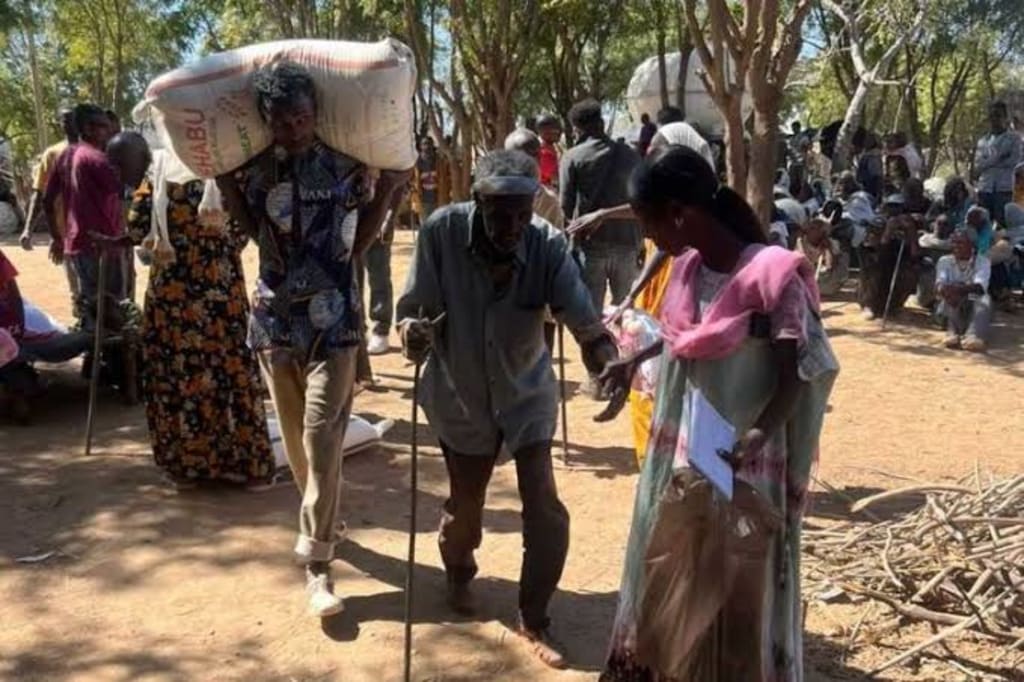
One year after the United States suspended most humanitarian aid to Ethiopia’s Tigray region, hunger, disease, and despair continue to define daily life for millions. Despite the end of large-scale fighting, the humanitarian crisis has not eased. For many families in Tigray, survival remains a daily struggle marked by empty food stores, limited healthcare, and fading hope.
Aid workers and local residents say the region has seen little recovery, highlighting how deeply the suspension of assistance has affected an already fragile population.
A Region Still Reeling from War
Tigray endured one of the most devastating conflicts in recent African history. Years of fighting destroyed farms, clinics, schools, and basic infrastructure. Although a ceasefire brought an end to major combat, it did not bring immediate relief.
Entire communities were left without reliable access to food, clean water, or medical services. When U.S. aid was cut due to concerns over misuse and diversion, the impact was swift and severe.
Humanitarian agencies warn that the war may have ended, but its consequences are far from over.
Why US Aid Was Cut
In early 2024, the United States announced a suspension of most food aid to Ethiopia, including Tigray. Officials cited credible reports of aid theft and diversion, stating that assistance was not always reaching those most in need.
While the decision was intended to protect accountability, humanitarian groups cautioned that ordinary civilians would bear the cost. One year later, those warnings appear to have become reality.
Local aid workers say the suspension created a gap that no other donor has been able to fully fill.
Hunger as a Daily Reality
Across Tigray, hunger is no longer seasonal—it is constant. Families report eating one small meal a day or less, often made from wild plants or borrowed grain.
Markets remain largely empty, and food prices have soared beyond what most households can afford. Farmers, once the backbone of the region, lack seeds, tools, and livestock to restart production.
Children are among the hardest hit. Health workers report rising cases of severe malnutrition, stunted growth, and weakened immune systems.
A Healthcare System on the Brink
Tigray’s healthcare system, already damaged by war, has struggled to function without adequate funding and supplies. Many clinics operate with minimal staff, limited medicines, and unreliable electricity.
Doctors report seeing preventable deaths from treatable illnesses, including infections, complications during childbirth, and chronic conditions like diabetes.
Without consistent aid, hospitals face impossible choices about who receives care and who does not.
Death Beyond the Battlefield
While large-scale fighting has stopped, death remains a constant presence in the region. People are dying not from bullets or bombs, but from hunger, disease, and exhaustion.
Aid groups stress that these deaths are just as tragic—and just as preventable. They warn that prolonged deprivation could erase an entire generation’s future.
For many families, grief has become a routine part of life.
Aid Workers Struggling to Cope
Humanitarian workers on the ground describe a sense of moral exhaustion. With limited resources, they must decide which communities receive assistance and which are left waiting.
Some organizations have scaled back operations or withdrawn entirely due to funding shortages. Others continue at reduced capacity, relying on local volunteers and donations.
Aid workers say the situation has created deep frustration and despair, as they witness suffering they cannot fully address.
Political and Humanitarian Tensions
The aid suspension has also fueled political tension. Ethiopian authorities argue that they are working to prevent diversion and restore trust with donors. Critics, however, say the slow pace of reform has cost lives.
International observers stress that accountability and humanitarian access must go hand in hand. Without a solution, civilians remain trapped between political decisions and survival needs.
Calls for Renewed Engagement
Human rights organizations and aid agencies are urging the U.S. and other donors to reassess their approach. They argue that stronger monitoring systems can address concerns about diversion while allowing life-saving assistance to resume.
Suggested measures include:
Improved tracking of food distribution
Greater involvement of local communities
Independent oversight mechanisms
Gradual restoration of aid with safeguards
Experts warn that continued inaction could push the region toward irreversible damage.
The Human Cost of Delay
For residents of Tigray, international debates feel distant and abstract. What matters is whether there will be food tomorrow, medicine next week, or a future next year.
Parents speak of watching their children grow weaker. Elderly residents fear they will not survive another hungry season. Young people, once hopeful, now see limited prospects ahead.
The absence of aid has turned recovery into a slow, painful process with no clear end in sight.
Conclusion
A year after U.S. aid cuts, Tigray remains locked in a humanitarian crisis defined by hunger, death, and devastation. The end of fighting did not bring peace to daily life, and the absence of sustained international support has deepened suffering across the region.
As global attention shifts elsewhere, Tigray’s crisis risks becoming a forgotten tragedy. Yet aid workers and residents insist it does not have to be this way. With renewed commitment, accountability, and compassion, lives can still be saved.
Until then, for millions in Tigray, respite remains painfully out of reach.
About the Creator
Fiaz Ahmed
I am Fiaz Ahmed. I am a passionate writer. I love covering trending topics and breaking news. With a sharp eye for what’s happening around the world, and crafts timely and engaging stories that keep readers informed and updated.
Keep reading
More stories from Fiaz Ahmed and writers in The Swamp and other communities.
Dozens of Sanctioned Russian Tankers Navigate Channel Despite UK Vow of 'Assertive' Action
The United Kingdom, along with its allies, has imposed strict sanctions on Russian oil and gas exports following Russia’s invasion of Ukraine. These measures aim to limit revenue flowing to Moscow and pressure Russia to reconsider its military actions. Sanctions include: Freezing assets of Russian companies Restricting shipping and insurance for Russian vessels Prohibiting UK ports from serving sanctioned ships Despite these efforts, reports indicate that dozens of Russian tankers continue to move through the Channel, carrying oil and other resources, sometimes under complex ownership structures or with third-party intermediaries. UK Response and 'Assertive Action' UK officials have pledged “assertive action” against sanctioned vessels, signaling that ships violating regulations could face: Fines or detention Blocking access to UK ports Legal action against owners or operators However, enforcing these measures in international waters like the Channel is challenging. Ships can exploit loopholes, including flagging under different nations or using proxy companies, to bypass restrictions. A spokesperson from the UK government stated that authorities are closely monitoring all traffic and coordinating with maritime agencies to ensure compliance, but admitted the process is “logistically complex.” Maritime Monitoring and Enforcement The English Channel is one of the busiest shipping lanes in the world, with hundreds of vessels passing through daily. Monitoring sanctioned ships requires advanced tracking systems, patrols, and legal coordination with other countries. Experts note that some tankers appear to obscure their ownership or destination to avoid detection, a tactic often referred to as “sanctions evasion.” This makes enforcement difficult and raises concerns about whether sanctions are achieving their intended effect. Economic and Geopolitical Implications The continued movement of sanctioned Russian tankers has multiple consequences: Economic: Oil shipments to global markets may continue to fund Russian industries despite sanctions, weakening the intended economic pressure. Geopolitical: The UK risks appearing ineffective in enforcing its sanctions, potentially undermining its credibility among allies. Security: The presence of sanctioned tankers in busy international waters raises questions about maritime safety, insurance liabilities, and potential conflict escalation. Some analysts argue that coordinated international enforcement is crucial to make sanctions meaningful. Shipping Companies and Loopholes Shipping companies often exploit legal and logistical loopholes to continue operations. This includes: Changing ship names or flags Using intermediaries to register ownership Delaying reporting or falsifying documentation Authorities are exploring ways to tighten regulations, but experts say the current system is highly fragmented and difficult to monitor. Public and Political Reaction The issue has sparked debate in the UK Parliament and among the public. Critics question why sanctioned vessels can still operate despite government promises, while others emphasize the complexity of maritime law and international shipping. Protest groups and campaigners have called for stronger enforcement, better coordination with EU partners, and real-time tracking of sanctioned vessels. Meanwhile, shipping industry representatives warn that overly aggressive enforcement could disrupt global trade, illustrating the delicate balance policymakers must strike. International Cooperation Experts agree that unilateral measures are often insufficient to enforce sanctions effectively. Cooperation with: The European Union NATO allies International maritime organizations is essential to monitor, intercept, and sanction non-compliant vessels. Analysts also highlight the importance of intelligence sharing and joint patrols, especially in high-traffic areas like the English Channel. Looking Ahead UK authorities have pledged to strengthen their monitoring and enforcement mechanisms. Proposed measures include: Enhanced satellite and AIS tracking of vessels Tighter port access regulations Increased fines and prosecution of companies aiding sanctions evasion Cooperation with EU neighbors to close loopholes While these steps may improve enforcement, experts warn that some level of evasion may always exist due to the complexity of international shipping networks. Conclusion The continued passage of sanctioned Russian tankers through the English Channel highlights the challenges of enforcing international sanctions in busy maritime regions. Despite the UK’s vow of “assertive action,” legal, logistical, and geopolitical complexities allow many ships to operate with limited disruption. The situation underscores the need for international coordination, technological monitoring, and strong legal frameworks to make sanctions effective. As the UK and its allies navigate these challenges, the world is watching to see whether sanctions will truly limit Russia’s ability to benefit from its energy exports or remain largely symbolic.
By Fiaz Ahmed about 12 hours ago in The Swamp
Wall Street Rises as Trump Pauses Greenland Tariffs
Wall Street rallied after former US president Donald Trump announced a pause on proposed tariffs linked to Greenland, easing investor concerns and injecting renewed optimism into financial markets. The decision, though limited in scope, had an outsized psychological impact, highlighting how geopolitical signals continue to influence global markets even outside formal policy channels.
By Aarif Lashari2 days ago in The Swamp



Comments
There are no comments for this story
Be the first to respond and start the conversation.