
How advocacy groups work to defend press freedom and constitutional rights in the United States
How advocacy groups work to defend press freedom and constitutional rights in the United States

Introduction
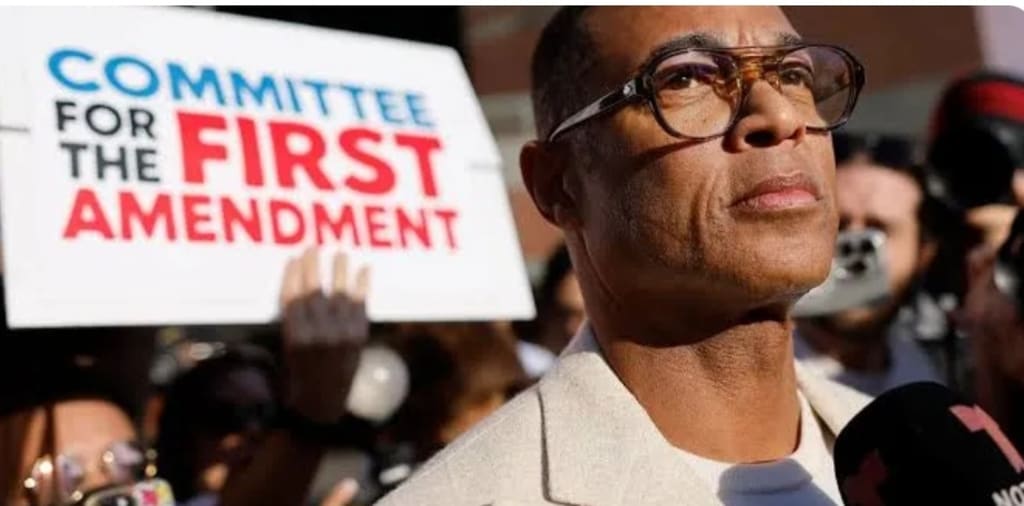
The First Amendment to the United States Constitution protects several core freedoms, including speech, religion, press, assembly, and petition. Over the years, various advocacy groups have formed to defend these rights when they believe they are under threat. One such effort has often been described as a “Committee for the First Amendment,” a term used historically and in modern contexts to refer to organized efforts supporting free expression and press freedom.
Although the specific name has been used by different groups at different times, the central mission remains consistent: to protect and promote the freedoms guaranteed by the First Amendment. Understanding how such committees operate helps explain how civil liberties are defended in practice.
What the First Amendment Protects
The First Amendment states that Congress shall make no law abridging freedom of speech or of the press, or interfering with the free exercise of religion, the right to assemble peacefully, or the right to petition the government. These protections form the foundation of open public debate in the United States.
In daily life, this means individuals have broad rights to express opinions, criticize government officials, publish information, practice religion, and gather for peaceful demonstrations. However, these freedoms are not unlimited. Courts have recognized certain restrictions, such as limits on incitement to violence or defamation.
Committees dedicated to the First Amendment often focus on ensuring that restrictions remain narrow and consistent with constitutional standards.
Historical Background
Throughout American history, free speech has faced periods of challenge. During times of war or political tension, laws have sometimes been passed that restrict expression in the name of security. Courts have played a central role in determining whether those laws comply with constitutional principles.
Advocacy committees have often emerged in response to these moments. For example, during the mid-20th century, groups formed to defend writers, journalists, and artists who faced investigation or blacklisting because of their political views. In other periods, committees have advocated for the rights of reporters to protect confidential sources.
These efforts have shaped legal precedents that continue to influence public debate today.
The Role of Advocacy Committees
A Committee for the First Amendment typically serves as an organized voice for individuals and institutions concerned about free expression. Its work can include legal action, public education, research, and policy analysis.
Legal action may involve filing lawsuits or submitting briefs in court cases that raise constitutional questions. Public education often includes publishing reports, hosting events, and explaining how proposed laws might affect speech or press rights.
Policy analysis can involve reviewing legislation and offering recommendations to lawmakers. By participating in public discussions, committees help inform both decision-makers and the broader community.
Protecting Press Freedom
Press freedom is a central focus for many First Amendment committees. Journalists rely on constitutional protections to investigate and report on matters of public interest.
Legal disputes sometimes arise when reporters seek access to government records or court proceedings. In other cases, authorities may attempt to compel journalists to reveal confidential sources. Advocacy groups often step in to argue that protecting source confidentiality is essential for investigative reporting.
Without strong press protections, watchdog journalism could be weakened. Committees argue that public accountability depends on a free and independent press.
Balancing Free Speech and Public Safety
Debates about free speech often involve balancing expression with other societal interests. For example, governments may regulate speech that incites violence or spreads false information that causes harm.
Committees for the First Amendment typically examine whether proposed restrictions are narrowly tailored and consistent with constitutional standards. Courts apply tests developed over decades of legal precedent to determine whether a restriction is justified.
This balancing process can be complex. Advocacy groups often emphasize that limiting speech should be a last resort and must meet strict constitutional requirements.
The Role of the Courts
The United States Supreme Court and lower federal courts have issued numerous decisions interpreting the First Amendment. These rulings clarify what types of speech are protected and under what circumstances the government may impose limits.
Advocacy committees frequently monitor cases that could set new precedents. By submitting amicus briefs, they provide legal arguments intended to inform judicial decisions.
Court rulings on issues such as political speech, campaign finance, and digital expression continue to shape how the First Amendment applies in modern contexts.
Digital Age Challenges
The rise of digital platforms has introduced new questions about free speech. Social media companies are private entities, yet they host large portions of public debate. This raises discussions about how constitutional protections apply online.
Committees concerned with the First Amendment often explore how traditional legal principles interact with evolving technology. They may address issues such as online content moderation, access to public officials’ digital accounts, and government regulation of internet platforms.
While the First Amendment limits government action, it does not require private companies to host all speech. Understanding this distinction is important when evaluating current debates.
Government Transparency and Accountability
Another area of focus for First Amendment advocacy is access to public records and government meetings. Laws such as the Freedom of Information Act allow citizens to request government documents.
Committees often support transparency measures that enable the public to understand how decisions are made. They argue that open government strengthens democracy and builds trust.
When agencies deny access to records or close meetings without clear justification, advocacy groups may challenge those decisions in court.
Community Engagement and Education
Beyond legal advocacy, committees often engage with communities to explain constitutional rights in clear terms. Workshops, public discussions, and educational materials help individuals understand their protections and responsibilities.
Clear information is essential because misunderstandings about free speech are common. Some people assume all speech is protected in every context, while others underestimate the strength of constitutional safeguards.
Educational efforts help bridge these gaps and promote informed civic participation.
Criticism and Debate
Like many advocacy organizations, committees for the First Amendment sometimes face criticism. Some observers argue that free speech protections can conflict with efforts to address harmful or misleading content.
Others believe that courts have interpreted the First Amendment too broadly in certain areas, such as campaign finance. These debates reflect broader discussions about the role of constitutional rights in modern society.
Advocacy committees respond by emphasizing that open debate itself is protected by the First Amendment. They argue that addressing controversial ideas through dialogue, rather than suppression, aligns with constitutional values.
Why It Matters
The First Amendment plays a central role in American civic life. It enables individuals to question authority, share ideas, practice religion, and gather peacefully.
Committees dedicated to defending these freedoms contribute to maintaining a system where diverse viewpoints can be heard. Their work often operates behind the scenes, but it can influence significant legal outcomes.
For citizens, understanding the role of such committees encourages greater awareness of how rights are preserved and challenged.
Conclusion
The concept of a Committee for the First Amendment reflects a broader commitment to protecting free speech and press freedom in the United States. Whether through legal advocacy, policy analysis, or public education, such committees aim to ensure that constitutional protections remain strong.
As society evolves and new technologies reshape communication, debates about the limits and responsibilities of free expression will continue. Advocacy groups play a role in guiding these discussions within the framework of constitutional law.
By staying informed about the First Amendment and the organizations that defend it, individuals can better understand their rights and participate in public life with confidence.
About the Creator
Saad
I’m Saad. I’m a passionate writer who loves exploring trending news topics, sharing insights, and keeping readers updated on what’s happening around the world.
The Saddest Thing - The Billionaires Who Rule America Aren't Even Enjoying Themselves
This single post says more about our ruling class than a thousand policy papers. The saddest thing about today's system is that the men robbing the rest of us - sabotaging our economic prospects, our pensions, our access to affordable healthcare - are not even happy.
By Scott Christenson🌴8 days ago in The Swamp
One Last Chat With David Brooks
In a quiet corner of a Washington café, the conversation with David Brooks felt less like an interview and more like a reflection on a lifetime spent observing American society. Known for his measured voice and thoughtful analysis, Brooks spoke candidly about politics, culture, and the deeper moral questions he believes now define the nation’s future. Brooks, a longtime columnist and author, has built his career on exploring not only what people think, but why they think it. In what he described as a “moment of pause,” he said the country is undergoing a profound identity shift. “We are not just divided politically,” he noted. “We are divided emotionally and spiritually. People don’t feel seen or heard, and that creates anger.” When asked about the current political climate, Brooks avoided the language of crisis and instead framed it as a test of character. He argued that institutions are weaker not because of ideology, but because of declining trust. “Democracy runs on habits—listening, compromise, humility,” he said. “When those habits erode, the system struggles.” Brooks has often positioned himself as a bridge between conservative and liberal audiences, emphasizing civic responsibility over partisan loyalty. He said this role has become harder in an era of social media outrage. “There’s a reward system for cruelty now,” he explained. “The loudest voices get the most attention, and nuance gets buried.” Yet Brooks remains cautiously optimistic. He pointed to younger generations who, he believes, are redefining leadership in quieter ways. “I see students who care deeply about mental health, community service, and fairness,” he said. “They may not trust institutions, but they trust relationships. That matters.” The discussion turned personal when Brooks reflected on his own evolution as a writer. Early in his career, he focused on policy and political strategy. Over time, he became more interested in character, purpose, and meaning. “I realized people don’t just want answers,” he said. “They want to know how to live well in a confusing world.” He spoke about loneliness as one of the greatest challenges facing modern society. Despite unprecedented connectivity, Brooks believes many Americans feel isolated. “We’ve built a culture of achievement but not a culture of belonging,” he said. “Success without connection is empty.” Brooks also addressed criticism that commentators like himself are out of touch with everyday struggles. He acknowledged the gap. “Writers like me live in a bubble,” he admitted. “The danger is thinking your bubble is the whole country. That’s why listening is more important than talking.” When asked what advice he would give young journalists, Brooks emphasized curiosity and moral seriousness. “Don’t just report what happened,” he said. “Ask what it means. Ask who was hurt. Ask what responsibility looks like.” He warned against chasing attention at the expense of truth. “Fame is a terrible editor,” he added with a smile. The conversation inevitably returned to the future of American discourse. Brooks said the nation must relearn the art of disagreement without dehumanization. “We don’t need less conflict,” he said. “We need better conflict—conflict that leads somewhere constructive.” As the interview drew to a close, Brooks reflected on legacy. He dismissed the idea of being remembered for political opinions. Instead, he hoped his work would encourage empathy. “If people say I helped them understand someone different from themselves, that’s enough,” he said. Outside, the afternoon traffic hummed past, indifferent to the weight of the discussion inside. Brooks gathered his notes and prepared to leave for another speaking engagement. Before parting, he offered one final thought: “The story of America is not just about power. It’s about character. And that story is still being written.” In an age of instant reactions and endless commentary, Brooks’s calm, reflective tone felt almost out of place—and yet deeply necessary. The conversation did not provide simple answers, but it offered something rarer: a reminder that public life is ultimately about human life, with all its contradictions and hopes. “One last chat” may be an overstatement, Brooks said with a quiet laugh. “There’s always more to talk about.” But for a moment, the exchange captured the essence of his career: thoughtful, restrained, and rooted in the belief that understanding is still possible, even in divided times.
By Fiaz Ahmed a day ago in The Swamp
The Salt in her Voice
The myth says mermaids sing to lure sailors to their death. But why? The ocean is huge. Only 5 percent has been discovered by man. Why would a creature of the sea with that much space to roam ever care about the fate of men on ships? The answer, as it turns out, is not a simple one at all. The truth about the myth is older than the tides. Long ago before the first ship ever cut across the surface, the sea made a pact with the sky. The sky would take the souls of the drowned. Anyone who died in storms or any quiet accidents of the deep would have their soul lifted upward to the Heavens while the bodies would remain below, feeding the oceans endless hunger. The greedy sea however wanted more souls than the sky would claim. So it created mermaids. It gave them beautiful voices woven from currents and moonlight. It commanded them to sing. "Bring forth the ones who float where they should sink." it instructed them. So they did. They never killed out of malice but out of obligation. They sung to summon, not to seduce. A mermaid's voice could loosen the tether between the body and soul, making any man step willingly into the water. The sea would take the body and the sky would take the soul. Balance maintained.
By Sara Wilson4 days ago in Fiction




Comments
There are no comments for this story
Be the first to respond and start the conversation.