
Historic Meeting in Caracas: CIA Director and Venezuela’s New Leader Discuss Future Cooperation
A Landmark U.S.–Venezuela Encounter
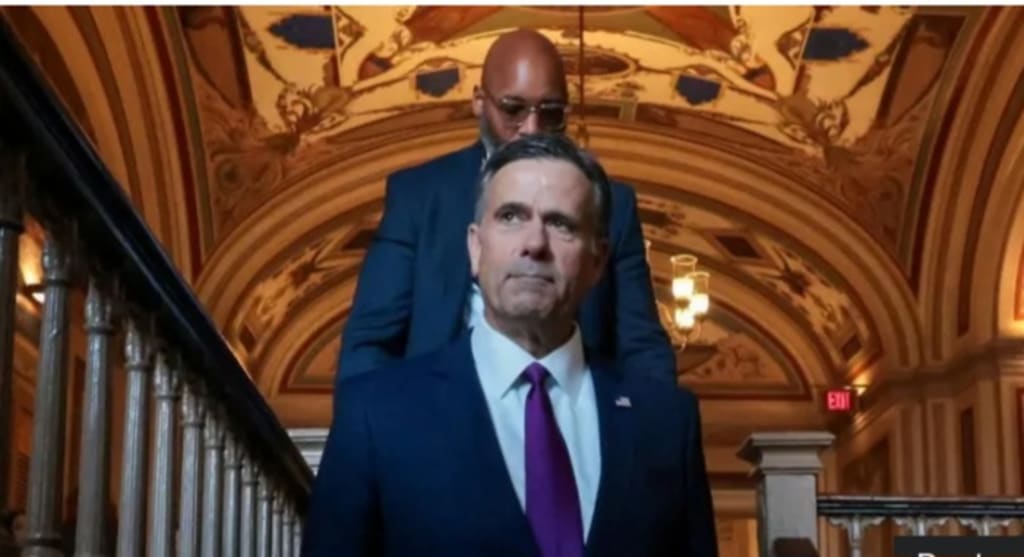
In a rare and highly significant diplomatic engagement, CIA Director John Ratcliffe traveled to Caracas, Venezuela, for a two-hour meeting with the country’s interim president, Delcy Rodríguez. The encounter — held on Thursday and confirmed by multiple international media outlets — marks the highest-level dialogue between the United States and Venezuelan leadership since the recent political upheaval in the country. �
CBS News +1
The meeting, ordered and supported by U.S. President Donald Trump, took place against a backdrop of intense geopolitical change in Venezuela and reflects Washington’s evolving strategy toward the oil-rich South American nation. �
Daily Sabah
Context: Political Upheaval in Venezuela
The dramatic developments in Venezuela began earlier this month when U.S. military forces conducted an operation that led to the capture of former President Nicolás Maduro and his wife, Cilia Flores. They were taken to the United States to face charges including drug trafficking and narco-terrorism, according to reports. �
CBS News
Following Maduro’s removal from power, Delcy Rodríguez — who previously served as Maduro’s vice president — assumed the interim presidency. Her leadership has been a point of intense debate domestically and internationally, given her history as a close Maduro ally. Nonetheless, the United States has thus far signaled a willingness to engage with her government to ensure stability and pursue mutual interests. �
Reuters +1
The Two-Hour Meeting: Goals and Messages
The two-hour session in Caracas was more than ceremonial. According to official U.S. sources, Director Ratcliffe’s visit was designed to open and deepen communication between Washington and Caracas — a significant shift from years of strained relations under previous administrations. �
AP News
Primary Discussion Points
Improving Bilateral Cooperation
Ratcliffe conveyed the message — at the direction of President Trump — that the United States hopes for an improved working relationship with Venezuela’s interim government. The goal is to move beyond past hostilities and build stability through dialogue and collaboration. �
MercoPress
Economic Collaboration
One of the key subjects was economic cooperation. Venezuela’s vast oil reserves make it a country of strategic interest for global energy markets. In recent days, Rodríguez has voiced support for opening Venezuela’s state-run oil industry to foreign investment — particularly from U.S. firms — a policy that aligns with U.S. interests and could lead to economic revitalization. �
latimes.com
Security and Criminal Networks
A central concern for the U.S. was Venezuela’s history as a safe haven for criminal organizations and drug traffickers. Ratcliffe reportedly stressed that Venezuela can no longer provide sanctuary for America’s adversaries, including notorious drug networks like the Tren de Aragua gang. �
MercoPress
Political Significance and Reactions
The meeting’s significance lies not only in what was discussed but in who was present and the broader implications for U.S.–Latin America policy. John Ratcliffe, as the Director of the Central Intelligence Agency and a Cabinet-level official, holds a unique position of influence. His visit to Caracas is the highest-level engagement since the United States’ controversial operation that resulted in Maduro’s capture. �
CBS News
U.S. Strategy and Venezuelan Leadership
President Trump’s decision to send a senior intelligence official rather than a traditional diplomat suggests that security and intelligence cooperation will be pillars of the renewed relationship. It also highlights a shift from purely political approaches toward a more pragmatic emphasis on stabilizing Venezuela and combating transnational criminal activity. �
Daily Sabah
In Washington, the meeting coincided with another significant event: Venezuela’s opposition leader, María Corina Machado, visited the White House and presented President Trump with her Nobel Peace Prize medal. Machado, who is widely believed to have won Venezuela’s 2024 presidential election, has been sidelined by the U.S. administration in favor of Rodríguez as a more stable interim leader. �
MercoPress
Challenges and Future Prospects
Despite the diplomatic breakthrough, the path ahead remains complex. The interim government in Venezuela faces internal pressures, including resistance from hardliners and factions loyal to Maduro’s political legacy. Meanwhile, critics argue that close cooperation with Rodríguez — a longtime Maduro ally — risks undermining democratic reforms. �
Financial Times
Economically, Venezuela is desperate for investment. Years of sanctions, mismanagement, and declining oil production have severely weakened its economy. U.S. engagement through the CIA director’s visit may signal potential easing of sanctions or increased foreign direct investment, especially in the oil sector. �
MercoPress
Security concerns also remain. The fight against drug trafficking networks and criminal gangs will require sustained collaboration and resources. Both the U.S. and Venezuelan interim government appear committed to addressing these threats, but success depends on long-term strategic cooperation. �
MercoPress
Conclusion: A New Chapter in U.S.–Venezuela Relations
The two-hour meeting between CIA Director John Ratcliffe and Interim President Delcy Rodríguez in Caracas represents a turning point in relations between the United States and Venezuela. It reflects a pragmatic shift toward cooperation on economic, intelligence, and security matters after years of severe diplomatic tension. �
AP News
As both nations navigate this new phase, the world will be watching closely to see whether this high-level engagement leads to concrete improvements in regional stability, economic recovery for Venezuela, and a reduction in criminal activities that have long fueled insecurity across the hemisphere. �
About the Creator
Keep reading
More stories from Ayesha Lashari and writers in The Swamp and other communities.
Japan Nuclear Agency Worker Loses Phone with Confidential Data in China
In a surprising international security incident, an employee of Japan’s Nuclear Regulation Authority (NRA) lost a work-issued smartphone containing confidential information while in China last year. The loss has triggered concerns over information security practices within Japan’s nuclear watchdog and prompted official reports to domestic privacy authorities. �
By Ayesha Lashari2 days ago in The Swamp
These Prophets of Economic Doom Are Worried About Another Collapse
Every economic cycle has its optimists — and its doomsayers. But when warnings about another possible financial collapse come not from fringe voices, but from respected economists, veteran investors, and former policymakers, markets tend to listen more closely. In recent months, a familiar group of economic pessimists — often labeled “prophets of doom” — have resurfaced with renewed urgency. Their message is unsettlingly consistent: the global economy may be heading toward another major shock, one that could rival or even surpass past crises. While critics accuse them of crying wolf, supporters argue that many of these figures have been right before — sometimes painfully so. So why are these economic skeptics sounding the alarm again, and what exactly are they worried about? Who Are the ‘Prophets of Economic Doom’? The term “prophets of economic doom” is often used dismissively, but it typically refers to economists, hedge fund managers, and analysts known for consistently warning about systemic risks. These include figures who foresaw: The 2008 global financial crisis The dot-com bubble burst Sovereign debt crises in Europe Inflation surges following prolonged stimulus Their credibility doesn’t come from optimism, but from an ability to identify imbalances and excesses before they unravel. Today, many of these same voices are once again warning that the foundations of the global economy look disturbingly fragile. Debt: The Biggest Red Flag One of the loudest concerns centers on record-breaking global debt. Governments, corporations, and households have borrowed aggressively over the past decade, especially after the pandemic. Ultra-low interest rates made debt cheap, encouraging spending and investment — but also creating massive vulnerabilities. Now, as interest rates remain higher for longer, servicing that debt is becoming increasingly expensive. Some economists warn that: Governments may face fiscal stress Companies could struggle to refinance loans Households may reduce spending sharply The fear is not just high debt, but how interconnected it is. A shock in one sector or country could ripple across financial systems faster than regulators can respond. Asset Bubbles and Overvalued Markets Another major warning sign is what skeptics see as dangerously inflated asset prices. Stock markets, housing, and even alternative assets have surged in recent years, often disconnected from underlying economic fundamentals. Critics argue that markets have been propped up by: Central bank liquidity Speculative trading Excessive optimism around technology and AI Some analysts point to similarities with previous bubbles, where prices kept rising until confidence suddenly collapsed. When valuations are stretched, even a small trigger — geopolitical tension, a banking failure, or unexpected policy shift — can spark a rapid sell-off. The Interest Rate Dilemma Central banks now find themselves trapped between two bad options. On one hand, cutting interest rates too quickly could reignite inflation. On the other, keeping rates high risks slowing growth, weakening banks, and triggering defaults. Economic pessimists argue that policymakers have already delayed tough decisions for too long. By flooding economies with stimulus during crises, they may have postponed — rather than prevented — a deeper reckoning. The result is what some call a “policy exhaustion” problem: central banks have fewer effective tools left if another major downturn hits. Geopolitics and Global Fragmentation Unlike past financial crises, today’s risks are amplified by geopolitical instability. Trade tensions, regional conflicts, and political polarization are disrupting supply chains and undermining global cooperation. Economic doom-watchers warn that the world is becoming: More fragmented Less predictable More vulnerable to shocks Globalization once acted as a stabilizing force. Now, economic nationalism and strategic competition are making coordination harder — precisely when it is needed most. Banking System Stress Beneath the Surface While headline banking crises have been avoided so far, skeptics argue that stress remains hidden within financial institutions. Rapid interest rate hikes have reduced the value of long-term bonds held by banks. At the same time, tighter credit conditions are increasing default risks among borrowers. Some analysts fear that problems are being masked by accounting rules and emergency support measures. If confidence falters, they warn, the system could face sudden pressure — just as it has in past crises. Why Many People Still Dismiss These Warnings Despite these concerns, many investors and policymakers remain confident. They point to: Resilient job markets Continued consumer spending Strong corporate profits Critics of the “doom prophets” argue that pessimists underestimate innovation, adaptability, and the ability of governments to intervene when needed. Yet even optimists admit that the margin for error is shrinking. The debate is no longer about whether risks exist — but about how severe the consequences could be if something goes wrong. Are These Warnings Just Fear — or a Necessary Wake-Up Call? History suggests that economic collapses rarely happen because of one single event. Instead, they occur when multiple vulnerabilities collide — excessive debt, policy mistakes, asset bubbles, and loss of confidence. The prophets of economic doom are not predicting an exact date or trigger. Rather, they argue that the system has become increasingly unstable, and that complacency itself may be the greatest risk. Even if a full-scale collapse never materializes, their warnings serve a purpose: forcing policymakers, investors, and ordinary citizens to confront uncomfortable realities. What This Means for the Future Whether or not another economic collapse occurs soon, the concerns raised by these pessimists highlight a deeper issue: the global economy is operating with less room for mistakes than ever before. For governments, this means careful policy choices. For investors, it calls for realism rather than blind optimism. And for everyday people, it underscores the importance of financial resilience in an uncertain world. The prophets of economic doom may not be right about everything — but history shows that ignoring systemic warnings entirely can be far more dangerous than listening too closely.
By Muhammad Hassan2 days ago in The Swamp
Silver Screen Magic with Mae West
American actress and singer Mae West became a popular film actress during the Great Depression. She started entertaining in vaudeville, then performed on Broadway, and finally went to Hollywood. She signed up with Paramount Pictures and made her debut in the 1932 film “Night After Night.” She also starred in musicals, comedies, and crime dramas. The American Film Institute named her one of the best classic Hollywood actresses.
By Rasma Raisters6 days ago in Geeks



Comments
There are no comments for this story
Be the first to respond and start the conversation.