
Ghislaine Maxwell Signals Willingness to Speak as Clemency Talk Re-enters Public Debate
Lawyer says Maxwell would share her account of the Epstein case if granted clemency, raising legal and political questions

Introduction
The case surrounding Jeffrey Epstein continues to cast a long shadow over politics, law, and public trust. A new development has brought renewed attention to the matter after Ghislaine Maxwell’s lawyer stated that she is prepared to speak openly about her role and knowledge of Epstein’s activities if former U.S. President Donald Trump were to grant her clemency. The statement, made during a live media appearance, has reignited debate over accountability, transparency, and the use of executive power.
Background of the Epstein Case
Jeffrey Epstein, a financier with extensive social and political connections, died in federal custody in 2019 while awaiting trial on sex trafficking charges. His death left many questions unanswered, fueling public suspicion and ongoing investigations.
Ghislaine Maxwell, a longtime associate of Epstein, was later convicted for her role in recruiting and grooming minors for abuse. She is currently serving a lengthy prison sentence.
Maxwell’s Legal Status
Maxwell was convicted in U.S. federal court and sentenced after a high-profile trial that included testimony from multiple victims. The court found her guilty of facilitating abuse and enabling Epstein’s crimes.
Her conviction marked a rare moment of legal closure in a case where many believe powerful figures escaped scrutiny.
The Clemency Statement
Maxwell’s lawyer recently stated that she would be willing to share what he described as the “unfiltered truth” about Epstein and his network if clemency were granted. The comment did not include specific details about what new information might be disclosed.
The statement has been widely reported but remains a claim rather than a formal legal filing.
Understanding Clemency
Clemency is an executive power that allows a president to reduce or forgive a sentence. It can take the form of a pardon or commutation.
In the United States, clemency decisions are discretionary and often controversial, particularly in high-profile criminal cases.
Why the Claim Matters
The suggestion that Maxwell holds additional information has significant public interest implications. Many victims and observers believe that the Epstein case involved broader networks that were never fully exposed.
Any claim of new information raises expectations for accountability.
Problems With Conditional Testimony
One major concern is the idea of tying testimony to clemency. Critics argue that this approach risks turning justice into negotiation rather than accountability.
There is also the question of credibility when statements are offered under the promise of personal benefit.
Legal Experts Weigh In
Legal analysts note that even if clemency were granted, Maxwell’s statements would need verification. Courts rely on evidence, not claims made outside formal proceedings.
Some experts caution that such offers may be strategic rather than substantive.
Political Implications
The reference to Trump adds a political dimension to the story. Clemency decisions by presidents often attract scrutiny, particularly when involving controversial figures.
Any move related to Maxwell would likely provoke strong reactions across the political spectrum.
Trump’s Position So Far
There has been no public indication that Trump plans to consider clemency for Maxwell. The statement from her lawyer does not reflect an official discussion or request acknowledged by Trump or his representatives.
At present, the claim remains hypothetical.
Victims’ Perspectives
Survivors of Epstein’s abuse have repeatedly emphasized the need for justice rather than deals. Some victim advocates have expressed concern that conditional disclosures could undermine trust in the legal system.
Their focus remains on accountability and acknowledgment of harm.
Public Reaction and Media Coverage
Public response to the statement has been mixed. Some see potential value in further disclosures, while others question the timing and motivation behind the claim.
Media outlets have approached the story cautiously, often emphasizing that no clemency decision is underway.
The Role of Live Media Statements
Live interviews can shape narratives quickly, sometimes without full context. Statements made in such settings may influence public opinion even when they lack legal substance.
This raises questions about responsible reporting and interpretation.
Accountability Versus Disclosure
A key tension in this case is whether disclosure should come at the cost of reduced punishment. Legal systems generally prioritize accountability through sentencing rather than negotiated truth-telling.
Balancing these goals remains challenging in high-profile cases.
Transparency and Trust
The Epstein case has already damaged public trust in institutions. Claims of hidden truths can deepen skepticism if not followed by verifiable action.
Transparency, many argue, must be grounded in formal legal processes.
Could New Information Still Emerge?
It is possible that additional evidence could surface through civil litigation, investigative journalism, or further legal action. However, such outcomes do not depend on clemency alone.
Systems for disclosure already exist within the law.
Why the Story Persists
The enduring interest in the Epstein case reflects broader concerns about power, privilege, and justice. The perception that some individuals remain unaccountable continues to drive attention.
Maxwell’s statement taps into these unresolved issues.
Risks of Speculation
Speculation can harm ongoing legal processes and individuals not charged with crimes. Responsible discussion requires separating confirmed facts from claims and suggestions.
This distinction is critical for public understanding.
The Justice System’s Role
Ultimately, courts, not media statements, determine truth through evidence and procedure. Clemency is an exceptional power, not a substitute for judicial accountability.
Any future developments will likely unfold slowly and under scrutiny.
Looking Ahead
Unless formal action is taken, Maxwell’s statement remains a legal and political talking point rather than a turning point. Whether it leads to renewed investigations or fades from headlines depends on decisions beyond her control.
For now, the case remains legally settled but socially unresolved.
Bottom Line
Ghislaine Maxwell’s claim that she would speak openly if granted clemency has reopened debate around justice, power, and accountability in the Epstein case. While the statement has drawn attention, it raises serious questions about credibility, motivation, and the proper role of executive clemency.
Without concrete legal action or verified evidence, the focus remains on the existing conviction and the broader lessons the case offers about transparency and trust in public institutions.
About the Creator
Saad
I’m Saad. I’m a passionate writer who loves exploring trending news topics, sharing insights, and keeping readers updated on what’s happening around the world.
Why Black History Matters in America?
The United States of America is celebrating their 250th anniversary in 2026. I'm proud to be an American and as someone who was born here, I wouldn't imagine myself living anywhere else. This is a country where opportunities are possible. Where anyone can be successful in anything they desire to do. Equality, community, and togetherness are the backbones of what America is and should be about. However, we have an administration who wants to erase and disregard those who have made positive, meaningful impacts in our country, specifically Black figures, such as Martin Luther King, Jr., Rosa Parks, and Maya Angelou. President Trump and his administration have been constantly complaining and fighting against what they call the "Woke agenda". They use this excuse as a distraction from other issues they refuse to address, such as the high cost of living, climate change, and inflation. That equality is dividing America, when in reality, it's bringing us together. Being woke is not tied to a specific political party. No matter where you stand on the political spectrum, you can still care about other people and their plights. Compassion and empathy for others isn't tied to a political party, either. We were taught as children to treat others the way we want to be treated and not judge others because they're different from us. Caring about others isn't a personal attack on your beliefs. It doesn't make you any less of a person. People who are easily offended over African American figures, past or present, or anything related to it, are grasping at straws. Current and future generations need to know who people like Harriet Tubman and Shirley Chisholm were, especially in the classroom. Black History is part of American History. It should be recognized, not hidden or forgotten. Besides, you can't shield children from everything, just because your feelings are easily hurt.
By Mark Wesley Pritchard 13 days ago in The Swamp
Iran ready to discuss compromises to reach nuclear deal, minister tells BBC in Tehran
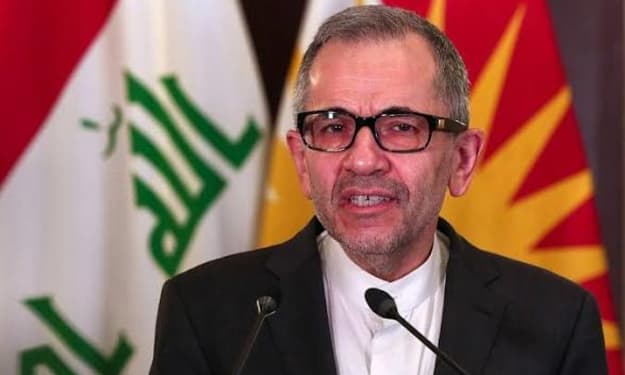
Iran signalled on Sunday that it is prepared to consider “compromises” in long‑running nuclear negotiations with the United States — but only on the condition that Washington engages seriously on the issue of sanctions relief, a senior Iranian official told the BBC in Tehran. The comments, made by Deputy Foreign Minister Majid Takht‑Ravanchi, come as indirect talks between Tehran and Washington are set to resume this week in Geneva, raising cautious hopes of progress after years of stalemate. “We are ready to discuss this and other issues related to our programme if they are ready to talk about sanctions,” Takht‑Ravanchi said in the BBC interview, stressing that Tehran’s willingness to compromise hinges on reciprocal engagement by the United States. “The ball is in America’s court to prove that they want to do a deal,” he added, underscoring his government’s emphasis on U.S. concessions as part of any negotiated settlement. The Business Standard Context of the Talks The comments follow a first round of indirect negotiations between U.S. and Iranian officials that took place earlier this month in Oman, under the auspices of several regional mediators. With the next round scheduled to begin in Geneva, both sides are under pressure to find common ground after years of complex diplomacy. The Business Standard Iran’s position, as outlined by Takht‑Ravanchi and other officials, combines a readiness to discuss curbs on its nuclear programme with firm insistence that sanctions relief must be part of the equation. Tehran has also reiterated that core elements of its programme, including uranium enrichment, remain non‑negotiable — although it has offered potential adjustments, such as diluting highly enriched material, if sanctions are lifted. The Business Standard That position reflects a longstanding sticking point in negotiations: the United States and its allies want strict limits on Iran’s nuclear activities to ensure the programme remains peaceful, while Tehran seeks economic relief and political leverage in return for any constraints. The negotiators hope to revive aspects of the 2015 Joint Comprehensive Plan of Action (JCPOA), which eased Western sanctions in exchange for nuclear limits, though both sides have diverged sharply over how to reconstruct a mutually acceptable framework. The Sanctions Issue at the Forefront Sanctions remain the central issue for Iranian negotiators. Decades of punitive measures — reimposed on Tehran after the United States withdrew from the JCPOA in 2018 — have crippled Iran’s economy, and officials in Tehran have insisted that any credible deal must meaningfully ease those restrictions. Takht‑Ravanchi’s comments make clear that Iran is not prepared to concede nuclear limitations in isolation from broader economic relief. For Iran, sanctions touch ordinary citizens as well as government revenue streams, and easing them could help stabilize its currency and oil exports. But U.S. policymakers — mindful of domestic political dynamics and strategic concerns — have been cautious about how much relief to offer, especially without verifiable limits on Tehran’s nuclear programme. Iran’s readiness to discuss compromises also indicates a nuanced diplomatic posture. While its leaders repeatedly deny seeking nuclear weapons, Western capitals remain sceptical about Tehran’s intentions, given its enrichment of uranium to 60 percent purity — a level close to weapons‑grade — in recent years. Tehran argues such enrichment is for peaceful purposes, but the capability has been a core concern for U.S. negotiators. The Business Standard Scope and Limitations of Negotiations Takht‑Ravanchi made clear that Iran does not intend to link nuclear discussions to other contentious issues, such as its ballistic missile programme or regional activities — areas Washington and some U.S. allies, particularly Israel, want included in broader negotiations. By limiting the talks strictly to the nuclear file and sanctions, Tehran aims to focus diplomacy on achievable goals while deflecting demands it views as outside the scope of the nuclear agreement. The scheduled Geneva talks will bring together Iranian negotiators and U.S. envoys, including special representatives from Washington, with Oman playing a continuing mediating role. Officials in both capitals have described the process as cautious but constructive, though neither side has guaranteed a breakthrough. Broader Implications The renewed talks come at a time of heightened regional tensions. Iran has faced pressure over its nuclear programme from several angles, including regional adversaries and international sanctions, while domestic political considerations shape Tehran’s negotiating strategy. For U.S. and allied policymakers, the risk of an unconstrained nuclear programme remains a top security concern. If successful, renewed diplomacy could ease one of the most persistent flashpoints in U.S.–Iran relations. But as Takht‑Ravanchi’s remarks suggest, significant gaps remain over sanctions and nuclear limits, and both sides will need to demonstrate political will and flexibility in the coming talks.
By Fiaz Ahmed about 4 hours ago in The Swamp
Nancy Guthrie: Is a miracle still possible after close to two weeks?
Close to two weeks since Nancy Guthrie's abduction As of February 12, 2026, Nancy Guthrie remains classified as missing for 12 days, but there is no official confirmation that she is deceased. Blood matching Guthrie’s DNA was found on her front porch, indicating she likely suffered an injury during the abduction.
By Cheryl E Preston3 days ago in Geeks



Comments
There are no comments for this story
Be the first to respond and start the conversation.