
Iran ready to discuss compromises to reach nuclear deal, minister tells BBC in Tehran
Iran signals willingness to negotiate nuclear limits, but officials stress that meaningful U.S. sanctions relief is essential for any compromise, according to Deputy Foreign Minister Majid Takht-Ravanchi.

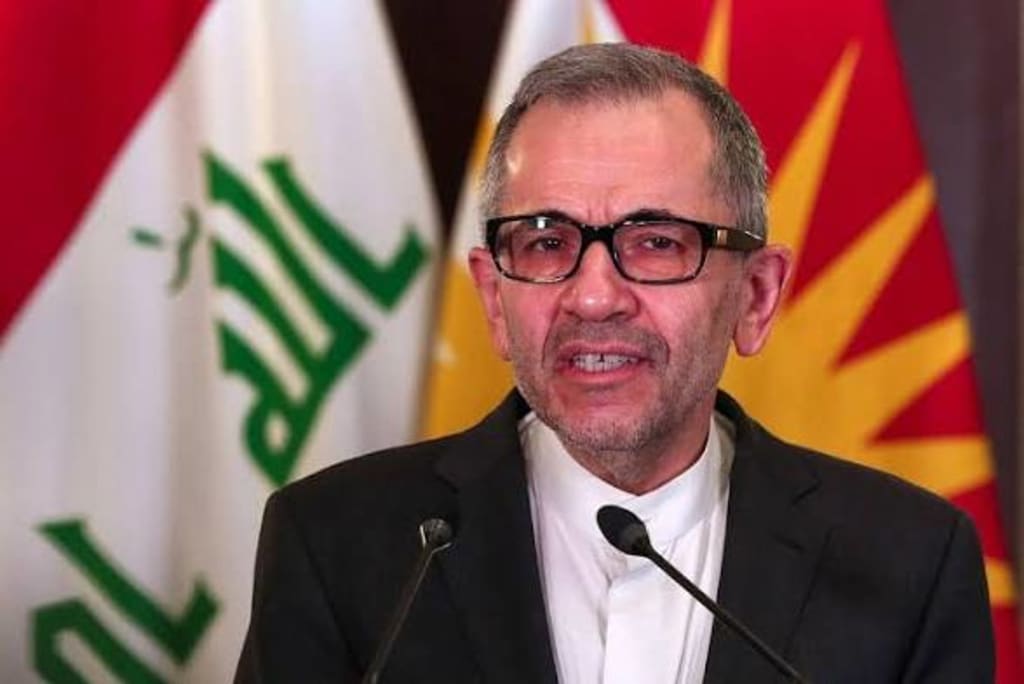
Iran signalled on Sunday that it is prepared to consider “compromises” in long‑running nuclear negotiations with the United States — but only on the condition that Washington engages seriously on the issue of sanctions relief, a senior Iranian official told the BBC in Tehran. The comments, made by Deputy Foreign Minister Majid Takht‑Ravanchi, come as indirect talks between Tehran and Washington are set to resume this week in Geneva, raising cautious hopes of progress after years of stalemate.
“We are ready to discuss this and other issues related to our programme if they are ready to talk about sanctions,” Takht‑Ravanchi said in the BBC interview, stressing that Tehran’s willingness to compromise hinges on reciprocal engagement by the United States. “The ball is in America’s court to prove that they want to do a deal,” he added, underscoring his government’s emphasis on U.S. concessions as part of any negotiated settlement.
The Business Standard
Context of the Talks
The comments follow a first round of indirect negotiations between U.S. and Iranian officials that took place earlier this month in Oman, under the auspices of several regional mediators. With the next round scheduled to begin in Geneva, both sides are under pressure to find common ground after years of complex diplomacy.
The Business Standard
Iran’s position, as outlined by Takht‑Ravanchi and other officials, combines a readiness to discuss curbs on its nuclear programme with firm insistence that sanctions relief must be part of the equation. Tehran has also reiterated that core elements of its programme, including uranium enrichment, remain non‑negotiable — although it has offered potential adjustments, such as diluting highly enriched material, if sanctions are lifted.
The Business Standard
That position reflects a longstanding sticking point in negotiations: the United States and its allies want strict limits on Iran’s nuclear activities to ensure the programme remains peaceful, while Tehran seeks economic relief and political leverage in return for any constraints. The negotiators hope to revive aspects of the 2015 Joint Comprehensive Plan of Action (JCPOA), which eased Western sanctions in exchange for nuclear limits, though both sides have diverged sharply over how to reconstruct a mutually acceptable framework.
The Sanctions Issue at the Forefront
Sanctions remain the central issue for Iranian negotiators. Decades of punitive measures — reimposed on Tehran after the United States withdrew from the JCPOA in 2018 — have crippled Iran’s economy, and officials in Tehran have insisted that any credible deal must meaningfully ease those restrictions. Takht‑Ravanchi’s comments make clear that Iran is not prepared to concede nuclear limitations in isolation from broader economic relief.
For Iran, sanctions touch ordinary citizens as well as government revenue streams, and easing them could help stabilize its currency and oil exports. But U.S. policymakers — mindful of domestic political dynamics and strategic concerns — have been cautious about how much relief to offer, especially without verifiable limits on Tehran’s nuclear programme.
Iran’s readiness to discuss compromises also indicates a nuanced diplomatic posture. While its leaders repeatedly deny seeking nuclear weapons, Western capitals remain sceptical about Tehran’s intentions, given its enrichment of uranium to 60 percent purity — a level close to weapons‑grade — in recent years. Tehran argues such enrichment is for peaceful purposes, but the capability has been a core concern for U.S. negotiators.
The Business Standard
Scope and Limitations of Negotiations
Takht‑Ravanchi made clear that Iran does not intend to link nuclear discussions to other contentious issues, such as its ballistic missile programme or regional activities — areas Washington and some U.S. allies, particularly Israel, want included in broader negotiations. By limiting the talks strictly to the nuclear file and sanctions, Tehran aims to focus diplomacy on achievable goals while deflecting demands it views as outside the scope of the nuclear agreement.
The scheduled Geneva talks will bring together Iranian negotiators and U.S. envoys, including special representatives from Washington, with Oman playing a continuing mediating role. Officials in both capitals have described the process as cautious but constructive, though neither side has guaranteed a breakthrough.
Broader Implications
The renewed talks come at a time of heightened regional tensions. Iran has faced pressure over its nuclear programme from several angles, including regional adversaries and international sanctions, while domestic political considerations shape Tehran’s negotiating strategy. For U.S. and allied policymakers, the risk of an unconstrained nuclear programme remains a top security concern.
If successful, renewed diplomacy could ease one of the most persistent flashpoints in U.S.–Iran relations. But as Takht‑Ravanchi’s remarks suggest, significant gaps remain over sanctions and nuclear limits, and both sides will need to demonstrate political will and flexibility in the coming talks.
About the Creator
Fiaz Ahmed
I am Fiaz Ahmed. I am a passionate writer. I love covering trending topics and breaking news. With a sharp eye for what’s happening around the world, and crafts timely and engaging stories that keep readers informed and updated.
Keep reading
More stories from Fiaz Ahmed and writers in The Swamp and other communities.
We Are Europeans’: Fans Fly Greenland Flag During Olympic US–Denmark Ice Hockey Game”
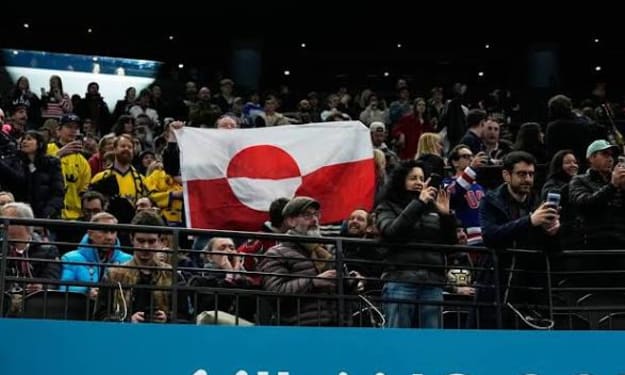
MILAN — At the 2026 Winter Olympics in Milan‑Cortina, a pair of European hockey fans briefly stole the spotlight from the on‑ice action by hoisting the red‑and‑white flag of Greenland during the men’s preliminary round game between the United States and Denmark. What might have seemed at first glance a simple gesture of hockey fandom has sparked conversation about regional identity, political symbolism and European unity amid broader geopolitical tensions. The match, played at the Milano Santagiulia Ice Hockey Arena and eventually won by the United States 6–3, drew typical Olympic fervor from both Danish and American supporters. But standing out among the sea of national colors were two spectators waving Greenland’s flag — a banner not officially recognized by the International Olympic Committee because Greenland competes under Denmark’s flag in Olympic competition. The fans, Vita Kalniņa and her husband Alexander Kalniņš, are originally from Latvia and now live in Germany. They say the display was meant as a statement of European solidarity — not simply a quirky spectacle — reflecting a shared cultural and political stance. “We are Europeans and I think as Europeans we must hold together,” Kalniņš told The Associated Press. He said they wanted to visibly support both Denmark and Greenland at a moment when discussions about Greenland’s future have drawn international attention. Greenland, a self‑governing territory within the Kingdom of Denmark, does not field its own Olympic team and thus is represented internationally through Danish athletes. Nonetheless, the island’s distinctive flag — known locally as Erfalasorput — has emerged at Olympics and other events as a symbol of identity distinct from Denmark, particularly in contexts where Greenlandic autonomy and cultural recognition are at issue. The choice to fly the Greenland flag at the Serie “Greenland Derby” game — a rare match‑up where the Danish team faced off against a powerful U.S. squad — came against a backdrop of renewed debate over the territory’s geopolitical significance. That discussion intensified after recent public comments by U.S. political figures about Greenland’s strategic value, including controversial suggestions about increased U.S. influence or acquisition of the island. Those remarks helped fuel a surge of Danish national pride and broader European interest in the island’s future. However, what the Kalniņas intended as a gesture of support was met with some resistance inside the arena. Venue staff reportedly asked the couple to lower the Greenland flag, citing safety concerns. Despite the request — which the fans complied with — they said their point had already been made among the thousands of spectators and millions watching on television. Elsewhere in the stands, reactions to the flag were mixed but largely centered on the idea that sports should transcend politics. Danish fans painted in red and white expressed that the Olympic hockey match was “about competition, not geopolitics,” emphasizing respect for the athletes regardless of external controversies. An American supporter in stars and stripes echoed that sentiment, saying fans wanted to “compete country versus country and enjoy” the game without letting political issues overshadow the Olympic experience. On the ice, players themselves appeared unaffected by the symbolic display. Denmark’s team captain, Jesper Jensen Aabo, later noted that the flag had not been a point of focus during play, and the teams remained focused on their performance. The game proceeded with high intensity, and the United States secured a key win that kept them on pace for advancement in the tournament. For Kalniņa and Kalniņš, the moment was about more than hockey. It was a reminder that cultural and political identity sometimes finds expression in unexpected places — even in a sport known more for goals and saves than geopolitical discourse. As global attention remains fixed on the Winter Games, the flag of Greenland flying amid a sea of national banners became a quiet but potent symbol of unity for some Europeans watching.
By Fiaz Ahmed about 3 hours ago in The Swamp
Why Black History Matters in America?
The United States of America is celebrating their 250th anniversary in 2026. I'm proud to be an American and as someone who was born here, I wouldn't imagine myself living anywhere else. This is a country where opportunities are possible. Where anyone can be successful in anything they desire to do. Equality, community, and togetherness are the backbones of what America is and should be about. However, we have an administration who wants to erase and disregard those who have made positive, meaningful impacts in our country, specifically Black figures, such as Martin Luther King, Jr., Rosa Parks, and Maya Angelou. President Trump and his administration have been constantly complaining and fighting against what they call the "Woke agenda". They use this excuse as a distraction from other issues they refuse to address, such as the high cost of living, climate change, and inflation. That equality is dividing America, when in reality, it's bringing us together. Being woke is not tied to a specific political party. No matter where you stand on the political spectrum, you can still care about other people and their plights. Compassion and empathy for others isn't tied to a political party, either. We were taught as children to treat others the way we want to be treated and not judge others because they're different from us. Caring about others isn't a personal attack on your beliefs. It doesn't make you any less of a person. People who are easily offended over African American figures, past or present, or anything related to it, are grasping at straws. Current and future generations need to know who people like Harriet Tubman and Shirley Chisholm were, especially in the classroom. Black History is part of American History. It should be recognized, not hidden or forgotten. Besides, you can't shield children from everything, just because your feelings are easily hurt.
By Mark Wesley Pritchard 13 days ago in The Swamp
When True Love Never Questions Your Soul
“And she’s going to learn that this life will hit you, hard, in the face, wait for you to get back up, just so it can kick you in the stomach but getting the wind knocked out of you is the only way to remind your lungs how much they like the taste of air.” — Sarah Kay’s Poem — If I Should Have a Daughter
By Chantal Christie Weiss7 days ago in Humans



Comments
There are no comments for this story
Be the first to respond and start the conversation.