
France Steps Back as G7 Summit Is Rescheduled to Avoid Clash With White House UFC Event
An unusual calendar conflict exposes shifting political optics, diplomacy challenges, and the growing influence of spectacle in global leadership.

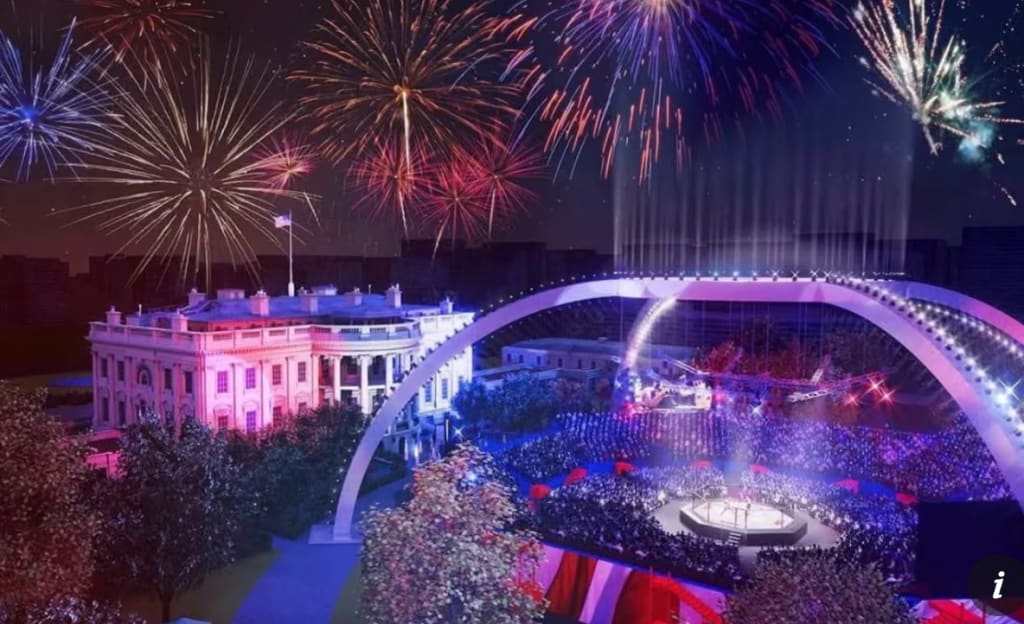
In an unexpected twist that has raised eyebrows across diplomatic circles, France has agreed to step back from its preferred scheduling as the G7 summit was moved to avoid a direct clash with a White House–hosted UFC event. The decision, while seemingly procedural, has sparked wider debate about political priorities, international symbolism, and how global diplomacy increasingly competes with high-profile domestic events for attention.
The Group of Seven (G7) — comprising the United States, France, Germany, the United Kingdom, Italy, Canada, and Japan — is traditionally a stage for coordinated responses to the world’s most pressing challenges. From wars and climate change to economic instability and technological regulation, the summit is meant to project unity and seriousness. That is why the rescheduling, reportedly prompted by a clash with a major UFC event linked to the White House calendar, has drawn both criticism and bemusement.
How a Scheduling Conflict Became a Diplomatic Issue
According to diplomatic sources, France had initially proposed dates for the upcoming G7 meeting that aligned with its broader foreign policy agenda. However, those dates conflicted with a high-profile UFC event scheduled to take place with strong White House backing. Rather than competing for political attention — particularly from U.S. leadership — negotiations led to a decision to move the summit.
France, as a key diplomatic player within the G7, ultimately agreed to “tap out,” a phrase borrowed from mixed martial arts that has been widely used by commentators to describe the outcome. While the term adds humor to the situation, the underlying implications are far more serious.
At its core, the episode highlights how domestic political events in powerful countries can influence international diplomacy, sometimes in unexpected ways.
The White House, Spectacle, and Soft Power
The involvement of a UFC event — a sporting spectacle with massive popular appeal — points to a broader trend in modern politics: the blending of entertainment, image-making, and governance. Sporting events have long been used as tools of soft power, from Olympic Games to World Cups. However, the idea that a global diplomatic summit would be rescheduled to avoid clashing with a combat sports event hosted around the White House is a striking illustration of changing priorities.
For U.S. officials, the UFC event reportedly carried significant domestic political value, attracting media attention, high-profile guests, and a large public audience. In an era where optics and engagement matter as much as policy substance, the White House appeared unwilling to divide focus.
This placed allies like France in a difficult position. Insisting on original dates risked reduced U.S. engagement at the summit — something no G7 country wants, given Washington’s central role in global decision-making.
France’s Calculated Compromise
France’s decision to accept the rescheduling reflects diplomatic pragmatism rather than weakness. French officials are well aware that the effectiveness of a G7 summit depends heavily on full participation and attention from all members, particularly the United States.
By stepping aside on scheduling, France avoided a potential scenario where the summit would be overshadowed, poorly attended, or perceived as secondary. Still, critics argue that the move sets an uncomfortable precedent, suggesting that entertainment-driven political events can take priority over multilateral diplomacy.
Supporters of France’s decision counter that diplomacy is about choosing battles wisely. Preserving unity and ensuring productive discussions, they argue, matters more than symbolic rigidity over dates.
Reactions From Other G7 Members
Other G7 nations have reacted cautiously, with most avoiding public criticism. Privately, however, diplomats have expressed concern that the episode reflects a deeper imbalance in how global governance is conducted.
Some European officials worry that repeated concessions could weaken the perceived seriousness of forums like the G7. If summits are seen as flexible around domestic political calendars — particularly those tied to spectacle — their authority may gradually erode.
At the same time, countries such as Japan and Canada are said to have supported the compromise, emphasizing the importance of maintaining smooth relations and ensuring the summit remains effective rather than symbolic.
What This Says About Global Leadership Today
Beyond the immediate scheduling issue, the incident offers insight into the evolving nature of global leadership. Politics today operates in a crowded attention economy, where leaders juggle international crises, domestic pressures, and media-driven events simultaneously.
The clash between a G7 summit and a UFC event may seem trivial on the surface, but it reflects how political capital is increasingly tied to visibility and public engagement. Leaders must balance governing with maintaining relevance in a fast-moving media landscape.
For traditional diplomatic powers like France, this shift can be frustrating. European diplomacy often emphasizes process, continuity, and institutional strength — values that can clash with more performative political styles.
Critics Warn of Slippery Slope
Critics argue that accommodating such conflicts risks normalizing the sidelining of diplomacy. Today it may be a UFC event; tomorrow it could be an election rally, a media appearance, or another high-profile spectacle.
They warn that global challenges — from ongoing conflicts to climate emergencies — demand sustained, focused leadership. Anything that dilutes the importance of forums designed to address these issues could have long-term consequences.
Some commentators have also pointed out the irony of world leaders struggling to align schedules at a time when global cooperation is more urgently needed than ever.
Conclusion: Symbolism Matters
France’s decision to step back as the G7 summit was moved to avoid clashing with a White House UFC event is more than a quirky headline. It is a reflection of the changing dynamics of power, attention, and symbolism in international politics.
While the rescheduling may ensure better participation and smoother logistics, it also raises uncomfortable questions about what global leaders prioritize — and how diplomacy competes with spectacle in the modern age.
As the G7 eventually convenes, the real test will not be the date on the calendar, but whether leaders can rise above distractions and deliver meaningful action. Still, the episode will linger as a reminder that in today’s world, even the most serious global gatherings are not immune to the pull of entertainment and domestic politics.
About the Creator
Muhammad Hassan
Muhammad Hassan | Content writer with 2 years of experience crafting engaging articles on world news, current affairs, and trending topics. I simplify complex stories to keep readers informed and connected.
Keep reading
More stories from Muhammad Hassan and writers in The Swamp and other communities.
Rubio Voices U.S. Support for Iran’s Protesters Amid Rising Unrest
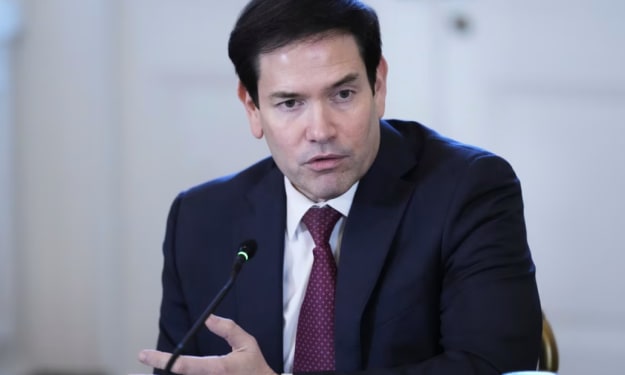
In a renewed wave of political unrest across Iran, U.S. Senator Marco Rubio has publicly expressed American support for what he called the “brave people of Iran,” as protests continue to challenge the country’s ruling establishment. His statement, shared amid reports of demonstrations and crackdowns, reflects a familiar yet complex position in U.S. foreign policy: vocal backing for popular movements demanding rights and accountability, paired with caution about direct intervention. Rubio’s remarks come at a time when Iran is once again facing internal pressure from citizens frustrated by economic hardship, political repression, and restrictions on personal freedoms. While protests in Iran are not new, each resurgence draws intense international attention, particularly from Washington, where Iran remains a central concern in debates over security, nuclear policy, and human rights. A Statement That Resonates Beyond Washington In his message, Rubio praised the courage of Iranians who continue to demonstrate despite the risks, emphasizing that their actions represent a broader desire for dignity and self-determination. By framing protesters as “brave,” Rubio aligned himself with a long-standing U.S. narrative that positions popular movements as legitimate expressions of democratic will, especially in authoritarian contexts. Such statements are often welcomed by activists and members of the Iranian diaspora, many of whom argue that international recognition helps keep global attention focused on abuses inside the country. For them, moral support from influential foreign leaders can be a source of encouragement, even if it does not translate into immediate policy change. However, within Iran, reactions to U.S. comments are often mixed. While some protesters appreciate external solidarity, others worry that overt American support can be used by Iranian authorities to discredit demonstrations as foreign-backed or manipulated, a charge frequently leveled by state media. The Protests: Roots and Realities The current unrest reflects deep-seated grievances rather than a single triggering event. Years of economic strain, exacerbated by sanctions, inflation, and unemployment, have taken a heavy toll on everyday life. At the same time, political restrictions and limits on social freedoms have fueled anger among younger generations, who are increasingly connected to the outside world through social media. Protests in Iran often begin with specific demands—lower prices, better wages, or justice in individual cases—but quickly expand into broader calls for reform. This pattern underscores how interconnected economic and political issues have become in the country. When Rubio speaks of “brave people,” he is referencing citizens who protest despite the risk of arrest, violence, or worse. U.S. Policy and the Iran Dilemma Rubio’s comments also highlight the broader challenge facing U.S. policymakers: how to support human rights in Iran without escalating tensions or undermining diplomatic efforts. The United States has long criticized Iran’s government for its treatment of protesters, journalists, and activists, while simultaneously pursuing strategic objectives related to nuclear non-proliferation and regional stability. Critics of the U.S. approach argue that statements of support, while symbolically powerful, do little to change realities on the ground. Others counter that silence would be interpreted as indifference and would betray those risking their lives to demand change. Rubio, known for his hawkish stance on Iran, has consistently argued that moral clarity is essential, even if policy options are limited. Tehran’s Likely Response Iranian authorities typically reject U.S. statements as interference in domestic affairs. Officials often accuse Washington of hypocrisy, pointing to America’s own social and political divisions. In state-controlled media, comments like Rubio’s are framed as evidence of foreign plots aimed at destabilizing the country. This reaction is part of a broader strategy to maintain control by delegitimizing protests. By portraying demonstrators as tools of external enemies, the government seeks to rally nationalist sentiment and justify harsh security measures. As a result, international expressions of support, however well-intentioned, can sometimes complicate the situation for protesters inside Iran. The Role of International Solidarity Despite these risks, many human rights advocates argue that global attention remains crucial. Statements from figures like Rubio can amplify reports from activists, encourage documentation of abuses, and pressure international organizations to respond. In some cases, sustained attention has led to targeted sanctions against individuals accused of overseeing repression. For the Iranian diaspora, especially in the United States and Europe, such remarks also serve as validation of long-standing advocacy efforts. They reinforce the idea that the struggle of Iranians is not forgotten, even when global news cycles move on. A Balancing Act Going Forward Rubio’s expression of support underscores a recurring theme in U.S.–Iran relations: the tension between ideals and pragmatism. While Washington voices solidarity with protesters, it remains constrained by geopolitical realities. Direct intervention is widely seen as unrealistic and potentially disastrous, given the region’s volatility and the legacy of past conflicts. As protests continue, the effectiveness of international statements will depend on consistency and coordination. Sporadic remarks may raise awareness temporarily, but sustained engagement—through diplomacy, multilateral pressure, and support for independent media—has a greater chance of making an impact. Conclusion Senator Marco Rubio’s support for the “brave people of Iran” amid ongoing protests reflects both a moral stance and a strategic message. It signals that the United States is watching and that demands for rights and accountability resonate beyond Iran’s borders. Yet it also highlights the limits of words in the face of entrenched power structures. For the protesters themselves, courage remains the defining feature of their struggle. Whether international voices can meaningfully contribute to change is an open question, but for now, Rubio’s remarks add to a global chorus affirming that the aspirations of ordinary Iranians deserve recognition—and that their fight for a better future is being seen.
By Muhammad Hassan7 days ago in The Swamp
Ceremony to Accredit Iran’s Irish Ambassador Postponed Amid Violent Crackdown in Tehran
In a rare diplomatic move, Ireland has postponed the official accreditation ceremony for Iran’s new ambassador amid growing international concern over the violent crackdown on protests in Iran that has resulted in widespread casualties and a communications blackout. The decision reflects rising global pressure on Tehran over its handling of dissent and highlights how national human rights issues can affect international diplomatic engagement. �
By Fiaz Ahmed Brohi4 days ago in The Swamp


Comments
There are no comments for this story
Be the first to respond and start the conversation.