
Rubio Voices U.S. Support for Iran’s Protesters Amid Rising Unrest
As demonstrations spread across Iran, Senator Marco Rubio’s remarks spotlight Washington’s stance on human rights, sovereignty, and the limits of foreign influence.


In a renewed wave of political unrest across Iran, U.S. Senator Marco Rubio has publicly expressed American support for what he called the “brave people of Iran,” as protests continue to challenge the country’s ruling establishment. His statement, shared amid reports of demonstrations and crackdowns, reflects a familiar yet complex position in U.S. foreign policy: vocal backing for popular movements demanding rights and accountability, paired with caution about direct intervention.
Rubio’s remarks come at a time when Iran is once again facing internal pressure from citizens frustrated by economic hardship, political repression, and restrictions on personal freedoms. While protests in Iran are not new, each resurgence draws intense international attention, particularly from Washington, where Iran remains a central concern in debates over security, nuclear policy, and human rights.
A Statement That Resonates Beyond Washington
In his message, Rubio praised the courage of Iranians who continue to demonstrate despite the risks, emphasizing that their actions represent a broader desire for dignity and self-determination. By framing protesters as “brave,” Rubio aligned himself with a long-standing U.S. narrative that positions popular movements as legitimate expressions of democratic will, especially in authoritarian contexts.
Such statements are often welcomed by activists and members of the Iranian diaspora, many of whom argue that international recognition helps keep global attention focused on abuses inside the country. For them, moral support from influential foreign leaders can be a source of encouragement, even if it does not translate into immediate policy change.
However, within Iran, reactions to U.S. comments are often mixed. While some protesters appreciate external solidarity, others worry that overt American support can be used by Iranian authorities to discredit demonstrations as foreign-backed or manipulated, a charge frequently leveled by state media.
The Protests: Roots and Realities
The current unrest reflects deep-seated grievances rather than a single triggering event. Years of economic strain, exacerbated by sanctions, inflation, and unemployment, have taken a heavy toll on everyday life. At the same time, political restrictions and limits on social freedoms have fueled anger among younger generations, who are increasingly connected to the outside world through social media.
Protests in Iran often begin with specific demands—lower prices, better wages, or justice in individual cases—but quickly expand into broader calls for reform. This pattern underscores how interconnected economic and political issues have become in the country. When Rubio speaks of “brave people,” he is referencing citizens who protest despite the risk of arrest, violence, or worse.
U.S. Policy and the Iran Dilemma
Rubio’s comments also highlight the broader challenge facing U.S. policymakers: how to support human rights in Iran without escalating tensions or undermining diplomatic efforts. The United States has long criticized Iran’s government for its treatment of protesters, journalists, and activists, while simultaneously pursuing strategic objectives related to nuclear non-proliferation and regional stability.
Critics of the U.S. approach argue that statements of support, while symbolically powerful, do little to change realities on the ground. Others counter that silence would be interpreted as indifference and would betray those risking their lives to demand change. Rubio, known for his hawkish stance on Iran, has consistently argued that moral clarity is essential, even if policy options are limited.
Tehran’s Likely Response
Iranian authorities typically reject U.S. statements as interference in domestic affairs. Officials often accuse Washington of hypocrisy, pointing to America’s own social and political divisions. In state-controlled media, comments like Rubio’s are framed as evidence of foreign plots aimed at destabilizing the country.
This reaction is part of a broader strategy to maintain control by delegitimizing protests. By portraying demonstrators as tools of external enemies, the government seeks to rally nationalist sentiment and justify harsh security measures. As a result, international expressions of support, however well-intentioned, can sometimes complicate the situation for protesters inside Iran.
The Role of International Solidarity
Despite these risks, many human rights advocates argue that global attention remains crucial. Statements from figures like Rubio can amplify reports from activists, encourage documentation of abuses, and pressure international organizations to respond. In some cases, sustained attention has led to targeted sanctions against individuals accused of overseeing repression.
For the Iranian diaspora, especially in the United States and Europe, such remarks also serve as validation of long-standing advocacy efforts. They reinforce the idea that the struggle of Iranians is not forgotten, even when global news cycles move on.
A Balancing Act Going Forward
Rubio’s expression of support underscores a recurring theme in U.S.–Iran relations: the tension between ideals and pragmatism. While Washington voices solidarity with protesters, it remains constrained by geopolitical realities. Direct intervention is widely seen as unrealistic and potentially disastrous, given the region’s volatility and the legacy of past conflicts.
As protests continue, the effectiveness of international statements will depend on consistency and coordination. Sporadic remarks may raise awareness temporarily, but sustained engagement—through diplomacy, multilateral pressure, and support for independent media—has a greater chance of making an impact.
Conclusion
Senator Marco Rubio’s support for the “brave people of Iran” amid ongoing protests reflects both a moral stance and a strategic message. It signals that the United States is watching and that demands for rights and accountability resonate beyond Iran’s borders. Yet it also highlights the limits of words in the face of entrenched power structures.
For the protesters themselves, courage remains the defining feature of their struggle. Whether international voices can meaningfully contribute to change is an open question, but for now, Rubio’s remarks add to a global chorus affirming that the aspirations of ordinary Iranians deserve recognition—and that their fight for a better future is being seen.
About the Creator
Muhammad Hassan
Muhammad Hassan | Content writer with 2 years of experience crafting engaging articles on world news, current affairs, and trending topics. I simplify complex stories to keep readers informed and connected.
Keep reading
More stories from Muhammad Hassan and writers in The Swamp and other communities.
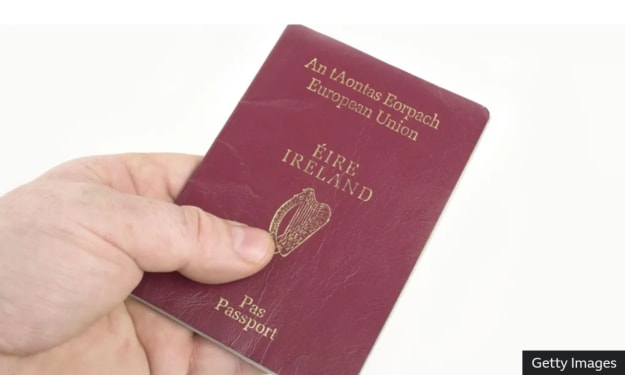
Almost 13,000 Irish Passports to Be Re-Issued: What Went Wrong and What It Means for Citizens
Ireland’s passport system, long regarded as one of the most efficient in Europe, has come under renewed scrutiny after authorities confirmed that almost 13,000 Irish passports will need to be re-issued. The announcement has sparked concern among citizens, particularly those planning international travel, while also highlighting the complex challenges modern governments face in maintaining secure and reliable identity documents. For many Irish citizens, a passport is more than just a travel document. It represents mobility, opportunity, and in the case of Ireland, access to the European Union and its freedoms. The need to re-issue such a large number of passports is therefore not just a bureaucratic issue — it is a matter of public confidence and national credibility. Why Are Irish Passports Being Re-Issued? The re-issuance of nearly 13,000 passports stems from the discovery of an administrative and technical issue during the production process. Irish authorities identified an error that could affect the integrity or accuracy of certain passport books issued within a specific time frame. While officials have emphasized that the problem does not involve fraud or criminal misuse, the decision was taken as a precautionary measure to ensure that all Irish passports meet the highest international standards. In an era where border security relies heavily on biometric data, machine-readable zones, and international verification systems, even minor technical flaws can cause major complications. A passport that fails automated checks at airports or border crossings can result in delays, denied entry, or questioning — outcomes that authorities are keen to avoid for Irish travelers. What Does This Mean for Affected Passport Holders? For those holding passports identified as part of the re-issuance programme, the Irish government has stated that replacements will be provided free of charge. Affected individuals are being contacted directly and guided through the process of receiving a new passport. Officials have reassured the public that there is no immediate risk to personal data and that the issue is not linked to identity theft or security breaches. However, travelers have been advised to check their correspondence carefully and follow official instructions, particularly if they have upcoming travel plans. While the inconvenience may be frustrating, authorities stress that early action is far preferable to Irish citizens encountering problems abroad — especially in countries with strict entry requirements or limited flexibility at border controls. Pressure on Ireland’s Passport System The timing of this issue is notable. Ireland’s passport service has experienced unprecedented demand in recent years. Factors such as Brexit, increased global mobility, and a growing Irish diaspora have driven record numbers of applications. Following the United Kingdom’s exit from the European Union, Irish passports became even more valuable. Many people in Northern Ireland and Britain with Irish heritage applied for Irish citizenship to retain EU travel rights. As a result, the Passport Service has been under sustained pressure to process applications quickly while maintaining accuracy and security. This re-issuance highlights the strain placed on public systems when volume increases rapidly. Even well-managed services can encounter problems when operating at scale, particularly when advanced printing technologies and international compliance standards are involved. Security, Trust, and International Standards Passports are among the most secure documents a state produces. They must comply with strict international rules set by the International Civil Aviation Organization (ICAO), ensuring consistency across borders. Any deviation — even something as small as formatting, print alignment, or embedded chip data — can compromise usability. By choosing to re-issue the affected passports, Irish authorities are signaling a commitment to maintaining global trust in Irish travel documents. While the decision may be costly and logistically demanding, it reinforces Ireland’s reputation as a country that takes document security seriously. For citizens, this transparency is crucial. Acknowledging errors and correcting them openly helps preserve confidence in public institutions. In contrast, ignoring potential flaws could lead to far greater disruption if foreign governments or airlines were to reject Irish passports later. Impact on Travel and Public Confidence Although officials have played down the likelihood of travel disruption, some passport holders remain anxious. Travel plans often involve significant financial and emotional investment, and uncertainty over documentation can be stressful. Airlines and border agencies rely on automated systems that are unforgiving of errors. Even a small inconsistency can result in additional screening or refusal to board. This is why authorities are urging affected citizens not to delay the replacement process. At a broader level, the situation has sparked discussion about how governments communicate with the public during administrative crises. Clear messaging, timely updates, and practical guidance will be essential in ensuring that the re-issuance process runs smoothly. A Wider Lesson for Modern Governments The Irish passport re-issuance issue is not unique. Around the world, governments are grappling with the challenges of digitization, cybersecurity, and rising demand for identity documents. As systems become more complex, the margin for error narrows. This incident serves as a reminder that investment in public infrastructure must keep pace with demand. Staff training, quality control, and contingency planning are just as important as speed and efficiency. Citizens expect fast service, but they also expect reliability — especially when it comes to documents that determine their ability to travel, work, and live abroad. What Happens Next? In the coming months, Ireland’s Passport Service is expected to complete the re-issuance process while conducting internal reviews to prevent similar issues in the future. Lawmakers may also seek further clarification on how the error occurred and whether additional safeguards are needed. For now, affected citizens are encouraged to remain calm, follow official guidance, and ensure their contact details are up to date. While the situation is inconvenient, it is being handled as a preventative measure rather than a response to a serious breach. Conclusion The decision to re-issue almost 13,000 Irish passports underscores the importance of accuracy, security, and accountability in modern governance. While the situation has caused concern, it also demonstrates a proactive approach to protecting citizens and maintaining international trust. In a world where freedom of movement is increasingly valuable, a passport is more than a booklet — it is a lifeline. By addressing the issue early and transparently, Ireland aims to ensure that its passport remains one of the most respected and reliable travel documents in the world.Start writing...
By Muhammad Hassan7 days ago in The Swamp



Comments
There are no comments for this story
Be the first to respond and start the conversation.