
For a Month and a Half, I Was Just in My Room: When Sania Mirza Opened Up About Depression After a Career-Changing Injury
Behind the trophies: Sania Mirza’s honest account of mental health struggles after injury


Sania Mirza has long been celebrated as one of India’s most influential sporting icons. With multiple Grand Slam titles, global recognition, and a career that broke cultural and gender barriers, her public image has often been one of strength, resilience, and relentless confidence. Yet behind the trophies and headlines lies a deeply human story—one that Sania herself chose to share when she reflected on a difficult chapter marked not by victory, but by vulnerability.
In a candid reflection, Sania once revealed that after suffering a career-altering injury, she spent nearly a month and a half confined to her room, struggling with depression. The statement surprised many fans who associated her with energy and mental toughness. But it also resonated deeply, especially with athletes and non-athletes alike who understand how quickly life can change when health, identity, and purpose are suddenly shaken.
When Injury Becomes More Than Physical
For professional athletes, the body is not just a tool—it is their livelihood, their identity, and often their sense of self-worth. Sania’s injury didn’t just interrupt her training schedule; it disrupted her entire worldview. Competitive athletes live by routine, discipline, and forward momentum. When that rhythm is abruptly halted, the silence can be overwhelming.
Sania described how the injury forced her into isolation. Days blended into nights, motivation evaporated, and the mental toll became heavier than the physical pain. What made it worse was the uncertainty. Would she return to the same level? Would she ever feel like herself on the court again? These unanswered questions can quietly fuel anxiety and depression, especially when the world expects strength but offers little space for emotional struggle.
The Pressure of Being “Strong”
Public figures often feel compelled to hide their pain. For Sania, being a role model meant constantly projecting resilience. Admitting weakness felt almost like failure. This is a burden many high-achievers carry—the belief that struggling mentally somehow diminishes their achievements.
Her openness about depression challenges this harmful narrative. By acknowledging that even a champion can feel lost, Sania helped normalize conversations around mental health in sports. She highlighted an often-overlooked truth: strength is not the absence of struggle, but the courage to confront it.
Isolation and the Silent Spiral
Sania’s words—“for a month and a half, I was just in my room”—paint a stark picture of emotional withdrawal. Isolation is a common symptom of depression. When physical pain limits movement and emotional pain drains hope, retreat can feel like the only option.
During this period, she reportedly questioned not just her career, but her sense of purpose. Tennis had been central to her life since childhood. Without it, she was forced to confront an unfamiliar emptiness. This identity crisis is common among athletes facing long-term injuries, yet it is rarely discussed openly.
Finding a Way Back
Recovery, for Sania, was not immediate. Healing involved both physical rehabilitation and emotional rebuilding. Slowly, she began to accept that setbacks are not endpoints. Support from family, professionals, and inner reflection played a crucial role in helping her regain balance.
What stands out in her journey is not a dramatic comeback moment, but the gradual reclaiming of control—learning to be patient with herself, acknowledging her emotions, and allowing time to heal. Her story reminds us that mental recovery is rarely linear. Progress often comes in small, quiet steps rather than bold leaps.
Why Her Story Matters
Sania Mirza’s reflection matters far beyond the world of tennis. In societies where mental health is still stigmatized, especially among successful individuals, her honesty sends a powerful message: depression does not discriminate. It can affect champions, celebrities, and everyday people alike.
By speaking openly, Sania helped create space for others to recognize their own struggles without shame. Her experience underscores the importance of mental health support in professional sports and beyond. Injuries heal, careers evolve, but untreated mental health challenges can leave lasting scars.
A Legacy Beyond Titles
Sania Mirza’s legacy is not defined solely by her medals or rankings. It is also shaped by moments like these—when she chose authenticity over image. In sharing her darkest period, she offered light to countless others navigating similar paths.
Her story is a reminder that behind every public success lies a private battle, and acknowledging that battle is not weakness—it is humanity. For many Vocal Media readers, this honesty is what makes her journey truly inspirational.
About the Creator
Fiaz Ahmed Brohi
I am a passionate writer with a love for exploring and creating content on trending topics. Always curious, always sharing stories that engage and inspire.
Keep reading
More stories from Fiaz Ahmed Brohi and writers in The Swamp and other communities.
Trump Says UK Handing Over Chagos Islands Sovereignty Is an Act of “Great Stupidity”
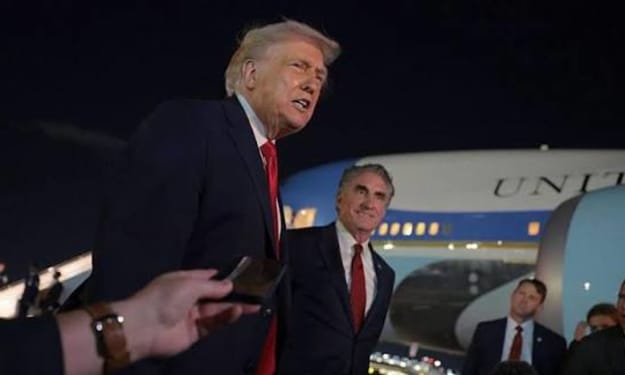
The debate over the future of the Chagos Islands has reignited global political discussion after former U.S. President Donald Trump sharply criticized the United Kingdom’s decision to hand over sovereignty of the archipelago. Calling the move an act of “great stupidity,” Trump’s remarks have once again placed the strategically important islands at the center of international geopolitics, colonial legacy debates, and security concerns in the Indian Ocean. A Brief History of the Chagos Islands The Chagos Archipelago, located in the central Indian Ocean, has long been a point of contention. Administered by Britain since the 19th century, the islands were separated from Mauritius in 1965, just before Mauritius gained independence. This separation laid the groundwork for decades of legal and political disputes. The most prominent island, Diego Garcia, hosts a major U.S.-UK military base that plays a critical role in regional security operations. Over the years, international pressure has mounted on the UK to resolve the sovereignty issue. In 2019, the International Court of Justice issued an advisory opinion stating that Britain’s continued administration of the islands was unlawful and that the territory should be returned to Mauritius. Although the ruling was non-binding, it significantly shifted global opinion against London’s position. Trump’s Strong Reaction Donald Trump’s condemnation of the UK’s decision reflects his long-standing emphasis on hard power, military strategy, and national interest. From Trump’s perspective, relinquishing control of the Chagos Islands risks undermining Western security interests, particularly those of the United States. Diego Garcia has been vital for military logistics, intelligence gathering, and operations in the Middle East and Asia. Trump’s statement suggests that he views the handover as a concession that weakens strategic dominance rather than a step toward correcting historical injustice. His use of blunt language aligns with his broader political style—direct, confrontational, and dismissive of international institutions that prioritize legal or moral arguments over strategic considerations. Britain’s Rationale for the Decision The UK government, however, sees the issue through a different lens. Handing over sovereignty is framed as an effort to comply with international law, repair diplomatic relations, and finally address a colonial-era dispute that has lingered for decades. British officials have emphasized that any transfer would include guarantees ensuring continued military access to Diego Garcia, preserving its role as a defense hub. This approach reflects a shift in British foreign policy toward rule-based international cooperation and post-colonial reconciliation. For London, the decision is not about abandoning security interests but modernizing diplomacy in a changing global order. Strategic and Global Implications The controversy highlights the tension between geopolitics and international law. Supporters of the handover argue that respecting court rulings strengthens global norms and enhances the UK’s moral credibility. Critics, including Trump, warn that such moves may embolden rival powers by signaling weakness or indecision. The Indian Ocean is increasingly important as global trade routes expand and strategic competition intensifies. Any change in control over key locations like the Chagos Islands inevitably draws scrutiny from major powers. While Mauritius has pledged to maintain security cooperation with the UK and the U.S., skeptics remain unconvinced that long-term strategic interests can be fully safeguarded. The Human Dimension Often overlooked in the geopolitical debate is the fate of the Chagossian people, who were forcibly displaced from the islands in the 1960s and 1970s to make way for the military base. For many, the sovereignty transfer represents a long-awaited acknowledgment of historical injustice. Trump’s remarks, focused solely on strategic calculations, contrast sharply with this humanitarian perspective. The situation underscores a broader global reckoning with colonial legacies, where nations are increasingly challenged to balance strategic priorities with ethical responsibility. A Debate Far from Over Trump’s criticism ensures that the Chagos Islands will remain a contentious issue, particularly in transatlantic political discourse. His comments resonate with those who prioritize military strength and geopolitical realism, while others see the UK’s move as a necessary step toward justice and international legitimacy. As the handover process unfolds, the world will be watching closely to see whether security assurances hold and whether this decision becomes a model for resolving other colonial-era disputes—or a cautionary tale, as Trump suggests. One thing is certain: the Chagos Islands are no longer a quiet corner of the map. They have become a symbol of the complex choices modern nations face when history, law, and power collide.
By Fiaz Ahmed Brohiabout 7 hours ago in The Swamp
Jake Lang and the Silence Between Protest, Power, and Pain
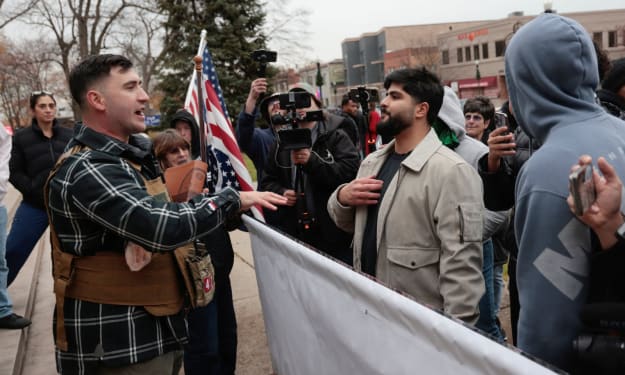
Some names arrive quietly and leave little trace. Others settle into public life like a bruise, tender long after the moment that caused it. Jake Lang is one of those names. You may hear it in political debates, tense community meetings, or whispered conversations where people lower their voices without realizing it. His story sits at the edge of protest and consequence, belief and fear. It is not just about what he did, or where he stood, but about how society reacts when lines are crossed and meanings collide. To understand Jake Lang is to step into discomfort, where emotions matter as much as facts, and where silence often speaks louder than shouting.
By Muqadas khan2 days ago in The Swamp


Comments
There are no comments for this story
Be the first to respond and start the conversation.