
Trump Says UK Handing Over Chagos Islands Sovereignty Is an Act of “Great Stupidity”
Why Trump’s harsh words highlight deeper tensions between geopolitics and post-colonial justice

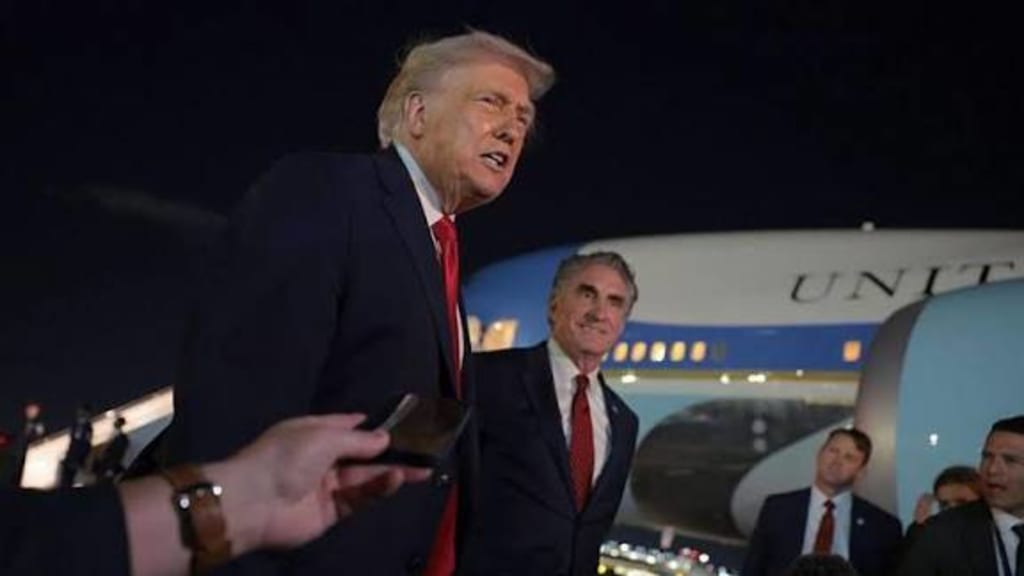
The debate over the future of the Chagos Islands has reignited global political discussion after former U.S. President Donald Trump sharply criticized the United Kingdom’s decision to hand over sovereignty of the archipelago. Calling the move an act of “great stupidity,” Trump’s remarks have once again placed the strategically important islands at the center of international geopolitics, colonial legacy debates, and security concerns in the Indian Ocean.
A Brief History of the Chagos Islands
The Chagos Archipelago, located in the central Indian Ocean, has long been a point of contention. Administered by Britain since the 19th century, the islands were separated from Mauritius in 1965, just before Mauritius gained independence. This separation laid the groundwork for decades of legal and political disputes. The most prominent island, Diego Garcia, hosts a major U.S.-UK military base that plays a critical role in regional security operations.
Over the years, international pressure has mounted on the UK to resolve the sovereignty issue. In 2019, the International Court of Justice issued an advisory opinion stating that Britain’s continued administration of the islands was unlawful and that the territory should be returned to Mauritius. Although the ruling was non-binding, it significantly shifted global opinion against London’s position.
Trump’s Strong Reaction
Donald Trump’s condemnation of the UK’s decision reflects his long-standing emphasis on hard power, military strategy, and national interest. From Trump’s perspective, relinquishing control of the Chagos Islands risks undermining Western security interests, particularly those of the United States. Diego Garcia has been vital for military logistics, intelligence gathering, and operations in the Middle East and Asia.
Trump’s statement suggests that he views the handover as a concession that weakens strategic dominance rather than a step toward correcting historical injustice. His use of blunt language aligns with his broader political style—direct, confrontational, and dismissive of international institutions that prioritize legal or moral arguments over strategic considerations.
Britain’s Rationale for the Decision
The UK government, however, sees the issue through a different lens. Handing over sovereignty is framed as an effort to comply with international law, repair diplomatic relations, and finally address a colonial-era dispute that has lingered for decades. British officials have emphasized that any transfer would include guarantees ensuring continued military access to Diego Garcia, preserving its role as a defense hub.
This approach reflects a shift in British foreign policy toward rule-based international cooperation and post-colonial reconciliation. For London, the decision is not about abandoning security interests but modernizing diplomacy in a changing global order.
Strategic and Global Implications
The controversy highlights the tension between geopolitics and international law. Supporters of the handover argue that respecting court rulings strengthens global norms and enhances the UK’s moral credibility. Critics, including Trump, warn that such moves may embolden rival powers by signaling weakness or indecision.
The Indian Ocean is increasingly important as global trade routes expand and strategic competition intensifies. Any change in control over key locations like the Chagos Islands inevitably draws scrutiny from major powers. While Mauritius has pledged to maintain security cooperation with the UK and the U.S., skeptics remain unconvinced that long-term strategic interests can be fully safeguarded.
The Human Dimension
Often overlooked in the geopolitical debate is the fate of the Chagossian people, who were forcibly displaced from the islands in the 1960s and 1970s to make way for the military base. For many, the sovereignty transfer represents a long-awaited acknowledgment of historical injustice. Trump’s remarks, focused solely on strategic calculations, contrast sharply with this humanitarian perspective.
The situation underscores a broader global reckoning with colonial legacies, where nations are increasingly challenged to balance strategic priorities with ethical responsibility.
A Debate Far from Over
Trump’s criticism ensures that the Chagos Islands will remain a contentious issue, particularly in transatlantic political discourse. His comments resonate with those who prioritize military strength and geopolitical realism, while others see the UK’s move as a necessary step toward justice and international legitimacy.
As the handover process unfolds, the world will be watching closely to see whether security assurances hold and whether this decision becomes a model for resolving other colonial-era disputes—or a cautionary tale, as Trump suggests.
One thing is certain: the Chagos Islands are no longer a quiet corner of the map. They have become a symbol of the complex choices modern nations face when history, law, and power collide.
About the Creator
Fiaz Ahmed Brohi
I am a passionate writer with a love for exploring and creating content on trending topics. Always curious, always sharing stories that engage and inspire.
Keep reading
More stories from Fiaz Ahmed Brohi and writers in The Swamp and other communities.
Japan 40-Year Bond Yield Hits 4% for First Time Since 2007 Debut
Japan’s financial markets are witnessing a historic moment as the yield on the 40-year Japanese government bond (JGB) has surged to 4% for the first time since its debut in 2007. This milestone reflects changing market dynamics, rising global interest rates, and evolving investor sentiment toward Japan’s long-term debt. Economists and market analysts are closely monitoring the implications of this shift, as it could signal broader changes in Japan’s fiscal strategy and economic outlook. Long-term government bonds are crucial indicators of investor confidence and market expectations for future economic conditions. Japan’s 40-year bond was initially introduced in 2007 to provide long-term financing for government projects while giving investors a safe, stable investment option. For years, the yield remained relatively low, reflecting Japan’s long-standing low-interest environment, persistent deflation, and the Bank of Japan’s (BOJ) accommodative monetary policy. However, recent developments in both domestic and global markets have altered the landscape. A combination of rising inflation expectations, global interest rate hikes, and concerns over Japan’s fiscal deficit has driven yields higher. The move to 4% represents a significant increase for a market accustomed to ultra-low borrowing costs and stable yields. The increase in yields has multiple implications. For investors, a 4% return on a 40-year bond is historically attractive and may draw increased attention from pension funds, insurance companies, and long-term savers seeking fixed-income returns. On the other hand, higher yields also indicate higher borrowing costs for the government, which could impact fiscal planning, especially as Japan continues to grapple with a high national debt exceeding 250% of its GDP. Analysts suggest that this yield spike is partially driven by global trends. Central banks around the world, including the U.S. Federal Reserve and the European Central Bank, have been raising interest rates to combat inflation. These actions create upward pressure on long-term yields worldwide. Investors, comparing global options, may demand higher yields from Japanese debt to remain competitive with foreign bonds. Domestically, the Bank of Japan’s long-standing policy of yield curve control has limited the movement of long-term interest rates, including the 40-year bond yield. But subtle shifts in BOJ policy or market expectations of future rate adjustments can have an outsized impact on long-term yields. Investors now appear to be pricing in expectations of tighter monetary policy or reduced BOJ intervention in the long-term bond market. The 4% yield also reflects changing perceptions about Japan’s economy. While Japan has long battled low inflation and slow growth, recent data suggests moderate recovery in certain sectors, coupled with rising energy and commodity prices, is affecting market sentiment. Higher yields may signal that investors expect the BOJ to gradually adjust its ultra-accommodative stance to keep pace with global monetary tightening. For Japanese households and businesses, the rise in long-term yields is a double-edged sword. On one hand, savers may benefit from better returns on long-term government bonds. On the other hand, increased borrowing costs could affect government spending and debt servicing, potentially influencing fiscal policy and taxation. Companies relying on debt financing may also face higher costs in the long term. Financial strategists emphasize that while a 4% yield is significant, it is still manageable compared to other economies with similar long-term debt profiles. Japan’s strong credit rating and status as a safe-haven market continue to attract domestic and international investors. The key question now is whether the yield will stabilize, continue to rise, or trigger a broader reevaluation of Japan’s bond market. Historically, such shifts in long-term yields have served as important economic signals. Investors and policymakers worldwide view them as indicators of inflation expectations, monetary policy credibility, and fiscal sustainability. For Japan, the 4% milestone may mark the beginning of a new era in debt management, investment strategy, and economic planning. In conclusion, Japan’s 40-year government bond reaching a 4% yield for the first time since its 2007 debut is a landmark event in the country’s financial history. The move reflects global and domestic economic trends, shifts in investor expectations, and potential adjustments in monetary policy. While it offers opportunities for long-term investors, it also raises questions about fiscal sustainability and the future trajectory of Japan’s bond market. As policymakers, investors, and economists assess the implications, the milestone will likely remain a focal point for discussions on Japan’s economic strategy and its role in the global financial system.
By Fiaz Ahmed Brohiabout 19 hours ago in The Swamp
China Says It Hopes Iran Will Maintain Stability and Reaffirms Opposition to Foreign Interference
In a time of rising tensions in the Middle East, China has voiced its hope that Iran will maintain stability while also reaffirming its opposition to foreign interference in the country’s internal affairs. Beijing’s statement comes amid widespread protests in Iran and increasing pressure from Western nations, particularly the United States. It underscores China’s consistent stance on sovereignty, non-intervention, and regional peace.
By Aarif Lasharia day ago in The Swamp



Comments
There are no comments for this story
Be the first to respond and start the conversation.