
Jake Lang and the Silence Between Protest, Power, and Pain
Some names arrive quietly and leave little trace. Others settle into public life like a bruise, tender long after the moment that caused it.

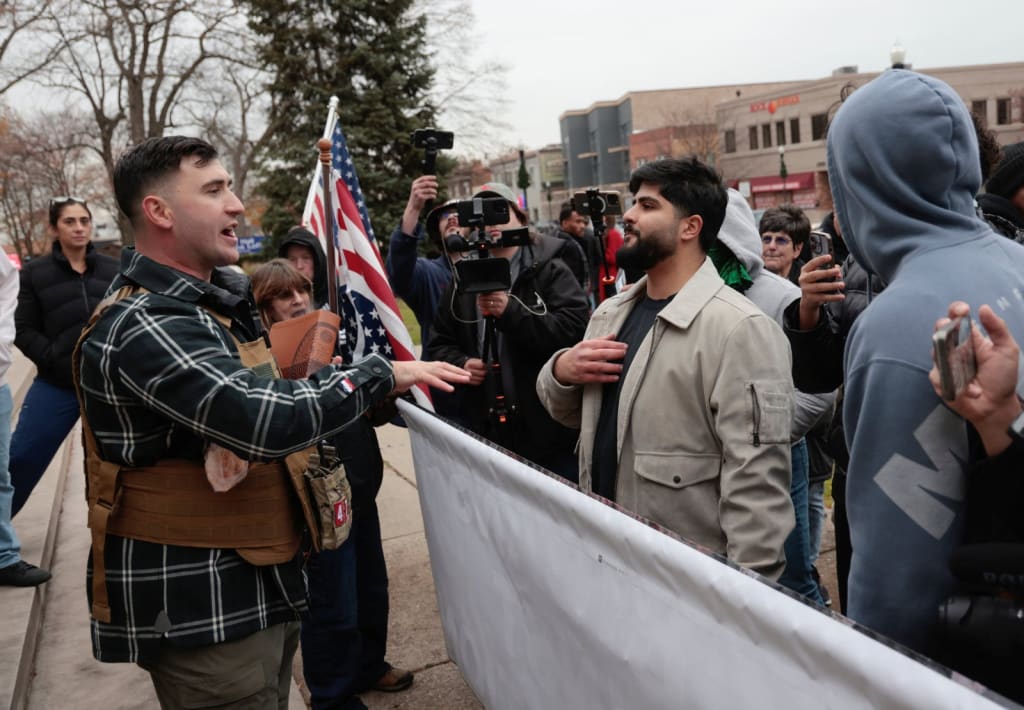
Some names arrive quietly and leave little trace. Others settle into public life like a bruise, tender long after the moment that caused it. Jake Lang is one of those names. You may hear it in political debates, tense community meetings, or whispered conversations where people lower their voices without realizing it. His story sits at the edge of protest and consequence, belief and fear. It is not just about what he did, or where he stood, but about how society reacts when lines are crossed and meanings collide. To understand Jake Lang is to step into discomfort, where emotions matter as much as facts, and where silence often speaks louder than shouting.
Who Jake Lang Is in the Public Eye
Jake Lang is not a celebrity in the traditional sense. He did not rise through art, sports, or entertainment. His visibility came through political conflict. That alone shapes how people see him.
To supporters, Jake Lang is someone who stood firm in his beliefs when institutions felt distant or hostile. To critics, he represents danger, disruption, and disregard for shared rules. Both views exist at the same time, often without overlap.
This split perception shows how public identity works today. A person can become many things at once, depending on who is looking. Jake Lang is less a fixed character and more a mirror, reflecting fears and hopes already present in society.
The Moment That Changed Everything
Every public figure has a turning point. For Jake Lang, that moment was tied to January 6, 2021. That day reshaped political memory in the United States.
Images of chaos, confusion, and fear spread quickly. For many people, the event felt personal even if they were far away. It challenged assumptions about safety and stability.
Jake Lang’s involvement placed him firmly inside that moment. From then on, his name carried weight. Conversations about him were no longer casual. They were charged with grief, anger, and disbelief.
This is important to understand. Once someone is linked to a defining event, they rarely escape its shadow.
Why January 6 Still Hurts
Years have passed, but January 6 has not faded. It lingers because it struck at something symbolic. People did not just see broken windows. They saw broken trust.
For some, it felt like an attack on democracy itself. For others, it was framed as a protest that spiraled out of control. These interpretations are deeply emotional.
Jake Lang exists within this unresolved tension. Any mention of him brings those feelings back to the surface. That is why reactions remain intense, even when new details emerge.
Pain does not follow timelines. It follows memory.
Legal Outcomes and Emotional Aftermath
Legal processes are meant to bring clarity. In cases like this, they often do the opposite.
When charges, detentions, or pardons occur, people interpret them through their own sense of fairness. Some feel relief. Others feel betrayal.
Jake Lang’s legal journey became another layer of division. Instead of closing wounds, it reopened them. Families of law enforcement officers, protest participants, and ordinary citizens all reacted differently.
This shows a hard truth. Law can decide outcomes, but it cannot decide meaning. Meaning is shaped by lived experience.
Life as a Political Symbol
Once someone becomes a symbol, they lose control over their image. Jake Lang’s actions after gaining attention were no longer just personal choices. They were read as statements.
When he appeared at events or rallies, reactions followed quickly. Supporters showed up with loyalty. Opponents showed up with fear or anger.
Local communities often felt caught in the middle. Streets became tense. Conversations grew sharp. Even silence felt loaded.
This is the cost of symbolic identity. It spreads beyond the individual and settles into everyday life.
Community Impact Beyond Headlines
National debates can feel distant until they arrive at your doorstep. When figures like Jake Lang appear in local spaces, the effects are immediate.
Parents worry about safety. Shop owners worry about disruption. Residents worry about being misunderstood or targeted.
Even peaceful gatherings can leave emotional marks. Police presence alone can raise anxiety. Neighbors argue over what the event represents.
For many communities, these moments are not about ideology. They are about feeling secure in your own home.
Online Narratives and Escalation
Social media adds fuel to already tense situations. Short posts and clips strip away context and amplify emotion.
Jake Lang’s online presence, and the content shared about him, often circulates without nuance. People react before they reflect.
Supporters frame him as persecuted. Critics frame him as reckless. Algorithms reward certainty, not thoughtfulness.
This environment makes it hard to slow down. Outrage spreads faster than understanding.
The Psychology of Sides
Why do people react so strongly to Jake Lang? The answer lies in identity.
When people feel their values are threatened, they cling harder to symbols. Jake Lang becomes one of those symbols.
Supporters may see him as proof that dissent still exists. Critics may see him as proof that danger is close.
Both reactions come from fear. Fear of losing voice. Fear of losing safety.
Understanding this does not excuse harm. It explains intensity.
Faith, Ideology, and Interpretation
Belief systems shape perception. Political beliefs often blend with moral or religious views.
For some, Jake Lang’s actions align with a worldview that values resistance against authority. For others, those same actions violate moral boundaries.
These interpretations are deeply personal. They are shaped by upbringing, community, and experience.
This is why debates feel so emotional. People are not just defending opinions. They are defending identities.
Media Framing and Simplification
Media plays a powerful role in shaping public understanding. Complex stories are often reduced to clear villains and heroes.
Jake Lang’s story has been framed in many ways. Each framing highlights certain facts and ignores others.
This simplification makes it harder to hold nuanced conversations. When people consume different versions of the same story, conflict becomes inevitable.
Readers deserve more than fragments. But attention spans are short, and emotion fills the gaps.
The Human Being Behind the Name
It is easy to forget that Jake Lang is a person, not just a headline. He has a family, memories, and consequences that do not disappear when the news cycle moves on.
This does not mean his actions should be ignored or excused. It means remembering that public figures still experience fear, stress, and isolation.
At the same time, people affected by his actions also carry lasting emotional weight. Both realities exist together.
Holding that tension is uncomfortable, but necessary.
Accountability Versus Erasure
A difficult question arises in stories like this. How do we hold someone accountable without erasing their humanity?
Some believe accountability means permanent exclusion. Others believe it allows for change.
Jake Lang’s story sits at this crossroads. Different people answer this question differently, based on their own wounds.
There is no single correct response. But avoiding the question entirely leads to deeper division.
Memory, Forgiveness, and Time
Forgiveness is often misunderstood. It does not mean forgetting or excusing harm.
For some, forgiveness requires acknowledgment and change. For others, it may never feel possible.
Time can soften some edges, but it does not heal everything. Memories tied to fear or loss remain sharp.
Jake Lang’s presence in public discourse keeps those memories active. That is why reactions remain strong.
Comparing Jake Lang to Other Controversial Figures
History is full of figures who divided opinion during their lifetime. Some were later re-evaluated. Others remained controversial.
Jake Lang may follow a similar path. How he is remembered will depend on future actions, societal shifts, and willingness to reflect.
This perspective reminds us that current judgment is not final. It is part of an ongoing conversation.
What Jake Lang Represents Now
Today, Jake Lang represents more than himself. He represents unresolved questions about protest, authority, and belonging.
He represents how quickly society can fracture when trust breaks down. He represents how symbols replace dialogue.
Whether people speak his name with anger or support, the emotion is real.
Ignoring that emotion does not make it disappear.
Lessons for a Divided Society
Jake Lang’s story offers lessons beyond politics.
It shows how quickly fear spreads. How easily people stop listening. How symbols replace stories.
It also shows the cost of constant conflict. Exhaustion. Cynicism. Emotional distance.
Learning from this does not require agreement. It requires awareness.
Choosing How We Engage
Every person chooses how to engage with stories like this. Some choose outrage. Some choose withdrawal.
Another option exists. Reflection.
Reflection does not mean silence. It means asking harder questions. It means resisting easy labels.
When we choose reflection, we make space for humanity without ignoring harm.
The Role of Listening
Listening is not agreement. It is an act of attention.
In conversations about Jake Lang, listening often disappears. People prepare responses instead of hearing words.
Restoring listening does not solve conflict overnight. But it changes its tone.
It allows space for grief, fear, and accountability to exist together.
The Future of the Conversation
Jake Lang’s story is still unfolding. New events may reshape how he is seen.
What matters is not predicting that future, but deciding how we respond now.
Do we repeat patterns of outrage and dismissal? Or do we slow down and engage more carefully?
The answer shapes more than one story.
Final Reflection
Jake Lang is a name that carries weight because it touches something deeper than politics. It touches fear, memory, and belonging.
His story forces uncomfortable questions about justice, responsibility, and compassion.
We may not agree on answers. But we share responsibility for how the conversation unfolds.
In divided times, choosing understanding is not weakness. It is a way to stay human while facing conflict honestly.
About the Creator
Muqadas khan
Hi! Welcome to my Vocal page. I’ll be sharing fresh articles every day covering stories, ideas, and a bit of inspiration to brighten your feed. Thanks for reading and supporting daily writing! 📖💫
Keep reading
More stories from Muqadas khan and writers in The Swamp and other communities.
Doug LaMalfa and the Quiet Power of Rural California Politics
Politics often feels loud, crowded, and distant from everyday life. Yet far from major cities and cable news studios, a different kind of political story unfolds. It happens in farming towns, water districts, and county meetings where decisions shape daily survival. Doug LaMalfa has spent years operating in that quieter space. His name rarely trends, but his influence reaches deep into rural California. To understand his role is to understand a part of America that often feels unseen. This article looks beyond headlines to explore how Doug LaMalfa built his political identity, what he represents to his supporters, and why his work continues to stir strong feelings across California’s agricultural heartland.
By Muqadas khan2 months ago in The Swamp
A Gathering of Evil Bosses
“I’m the queen of chin jutting while I smooth my hair, attacking, insulting, and deflecting to protect my appointer.” “Oh, please, Blondi, my hair is curled, highlighted, and longer than yours. I feature television commercials telling immigrants that we will give them a free plane ride home, and if they voluntarily turn themselves in, they will be allowed to legally apply for re-entry. It runs everywhere, and I look good in it! You can’t compete because of your blond hair. Mine is nicer, and my lips are prettier than yours.”
By Andrea Corwin 23 days ago in The Swamp
CDF Munir discusses Iranian attacks in meeting with Saudi defence minister
Chief of the Defence Staff (CDF) Asim Munir visited Saudi Arabia on Thursday for high-level talks with Saudi Defence Minister Prince Khalid bin Salman, focusing on recent Iranian missile and drone attacks and their potential impact on regional security. The meeting, held at the Ministry of Defence headquarters in Riyadh, comes amid heightened tensions across the Gulf, as attacks on civilian and strategic infrastructure have intensified over the past months. During the discussion, both officials examined intelligence reports detailing cross-border strikes linked to Iran, including drone operations targeting critical energy and transport installations. These attacks have raised alarms for Gulf countries, prompting renewed assessments of their defensive capabilities and emergency response mechanisms. CDF Munir emphasized the importance of preparedness, warning that even minor miscalculations in such a volatile environment could escalate into broader conflicts. “Regional security is a shared responsibility. Collaboration and coordination among like-minded nations are essential to prevent further escalation,” Munir said, underscoring Pakistan’s commitment to peace and stability while maintaining a neutral diplomatic stance. Prince Khalid reaffirmed Saudi Arabia’s dedication to strengthening defence cooperation, particularly in air defence, intelligence sharing, and rapid response operations. The officials discussed joint measures to enhance early warning systems along key borders, improve surveillance technologies, and coordinate air and naval patrols. They also explored the possibility of conducting joint military exercises, personnel exchanges, and training programs to ensure both countries are fully prepared to respond to emerging threats. According to sources familiar with the meeting, discussions included sharing advanced radar and drone detection systems, as well as cyber-defence initiatives to protect critical infrastructure from digital attacks. Security analysts have noted that this meeting reflects an increasing trend of closer alignment between Gulf states and neighbouring countries like Pakistan in addressing Iranian-backed proxy attacks. By engaging in strategic dialogue, both nations aim to mitigate risks posed by regional instability while safeguarding energy routes, shipping lanes, and civilian populations. Historically, Pakistan has maintained a careful balance in Middle Eastern conflicts, striving to preserve neutrality and maintain strong ties with multiple actors. However, meetings such as this suggest a pragmatic shift, with Islamabad demonstrating a willingness to cooperate more closely with Gulf nations on security matters while continuing to advocate for peaceful resolution of conflicts. During the meeting, both sides acknowledged that regional stability cannot be achieved through military preparedness alone. They emphasized the importance of ongoing diplomacy, conflict de-escalation, and intelligence cooperation to anticipate potential threats. Experts say that this dual approach—combining defensive readiness with active diplomatic engagement—is essential in preventing incidents from spiraling into larger confrontations. The dialogue also touched on protecting maritime routes in the Gulf, which are vital to the global oil supply. Attacks on tankers and shipping lanes in recent months have underscored the fragility of commercial traffic in the region. By coordinating patrols and sharing real-time intelligence, both countries hope to deter hostile actors and maintain uninterrupted trade. CDF Munir and Prince Khalid concluded the meeting with a joint commitment to continue strategic consultations, strengthen bilateral defence ties, and enhance intelligence-sharing protocols. Officials highlighted that sustained collaboration will not only safeguard national interests but also contribute to wider regional stability. Observers say this engagement signals a proactive stance by both Pakistan and Saudi Arabia, demonstrating that military dialogue, combined with strong diplomatic channels, can play a crucial role in deterring aggression and ensuring security in the Gulf. As tensions persist, such high-level meetings underscore the importance of multinational cooperation, with Pakistan positioning itself as a responsible partner in maintaining peace and stability across a region increasingly vulnerable to conflict escalation.As tensions persist, such high-level engagement underscores the importance of proactive diplomacy alongside military preparedness. Officials from both Pakistan and Saudi Arabia stressed that continued dialogue, joint exercises, and intelligence sharing are essential to prevent miscalculations that could escalate into wider conflicts. Regional analysts say that by working together, the countries aim not only to protect their own populations and assets but also to stabilize key maritime routes, energy supply lines, and trade networks critical to the global economy. The meeting ultimately reflects a strategic effort to combine defence readiness with multilateral cooperation in an increasingly volatile Gulf region.
By Fiaz Ahmed 6 days ago in The Swamp




Comments
There are no comments for this story
Be the first to respond and start the conversation.