
Finnish Police Seize Ship Suspected of Sabotaging Undersea Cable: A Growing Threat Beneath the Seas
How a Suspicious Vessel in the Baltic Sea Exposed the Fragile Security of Global Underwater Infrastructure

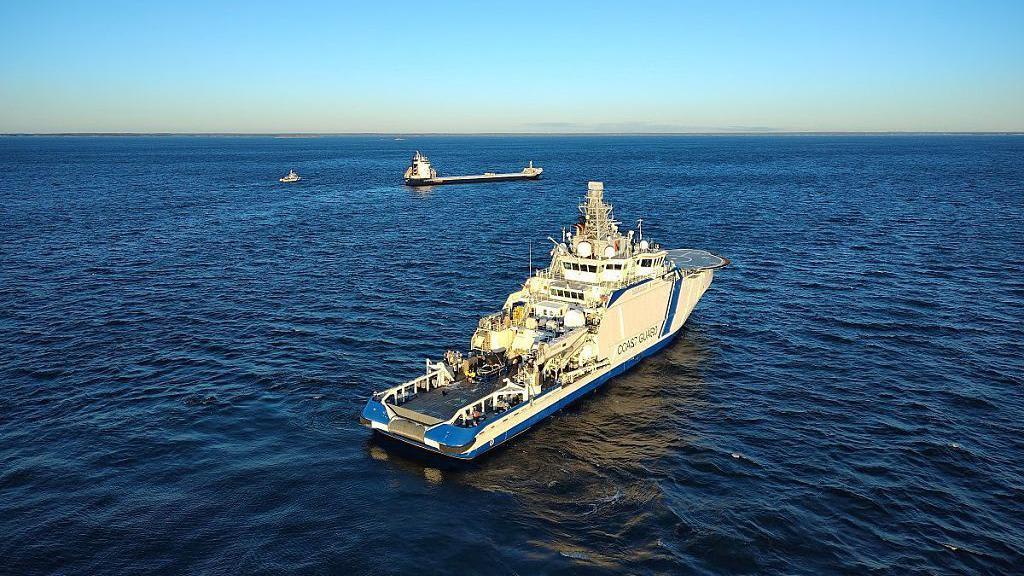
Finnish police have seized a ship suspected of sabotaging an undersea cable, raising fresh alarms across Europe about the vulnerability of critical underwater infrastructure. The incident, unfolding in the strategically sensitive Baltic Sea region, has once again highlighted how modern conflicts are increasingly moving beyond land, air, and cyberspace—into the depths of the ocean.
Undersea cables are essential to global connectivity. They carry internet traffic, financial transactions, military communications, and energy flows between nations. Despite their enormous importance, these cables remain largely invisible and difficult to monitor, making them an attractive target for covert operations. The Finnish case underscores just how exposed these systems are in an era of rising geopolitical tension.
What Happened?
According to Finnish authorities, the vessel was operating near a vital undersea cable when damage was detected. While officials have stopped short of publicly confirming deliberate sabotage, the ship’s movements reportedly raised serious suspicions. As a result, Finnish police seized the vessel to secure evidence and question the crew as part of an ongoing criminal investigation.
Maritime and technical experts are now examining whether the damage was caused accidentally—such as by an anchor or fishing equipment—or whether it was intentional. Investigators are focusing on navigation data, onboard equipment, and the timeline of the ship’s presence in the area to determine responsibility.
Why Undersea Cables Matter
More than 95 percent of the world’s data travels through undersea cables. These cables form the backbone of modern economies, enabling everything from online banking and emergency services to cloud computing and international trade. A single damaged cable can disrupt communications across multiple countries, causing financial losses and public inconvenience within hours.
In regions like the Baltic Sea, the stakes are even higher. The area contains a dense network of data cables, power links, and energy pipelines connecting Northern and Eastern Europe. Any interference with this infrastructure can have cascading effects far beyond national borders.
A Security Issue, Not Just an Accident
Finnish officials have emphasized that potential sabotage of undersea infrastructure is treated as a national security issue. Finland, which recently joined NATO, has taken a particularly firm stance on protecting its territorial waters and strategic assets. The seizure of the ship signals that authorities are willing to act decisively when suspicious activity is detected.
Security analysts note that undersea cable sabotage fits into a broader pattern of “hybrid warfare,” where states or non-state actors use covert, deniable actions to pressure rivals without triggering open conflict. Because cable damage can often be blamed on accidents, attribution becomes difficult, allowing perpetrators to operate in a legal and diplomatic gray zone.
Rising Tensions in the Baltic Sea
The Baltic Sea has become a hotspot for security concerns since the Russia-Ukraine war began. Several unexplained incidents involving pipelines and cables in recent years have increased anxiety among European governments. While no direct link has been established between this case and any specific country, the timing has heightened regional alertness.
NATO and European Union members are closely watching Finland’s investigation. Any evidence suggesting deliberate sabotage could have far-reaching diplomatic consequences and prompt stronger collective security measures.
Calls for Better Protection
The incident has renewed calls for enhanced monitoring of undersea infrastructure. Experts argue that governments have long underestimated the risks because these assets are hidden from public view and costly to patrol. Proposed solutions include increased naval surveillance, underwater drones, satellite tracking of vessel movements, and closer intelligence sharing among allied nations.
There is also growing debate about international law. Existing maritime conventions provide limited protection for undersea cables, but enforcement remains weak—especially in international waters. Cases like this may push policymakers to strengthen legal frameworks and penalties for interference with critical seabed infrastructure.
A Wake-Up Call for the Digital Age
For most people, undersea cables are out of sight and out of mind—until something goes wrong. Internet outages, disrupted payments, or communication failures quickly reveal how dependent modern life is on fragile systems lying on the ocean floor.
Whether the Finnish investigation ultimately confirms sabotage or not, the message is clear: undersea infrastructure can no longer be treated as a low-risk asset. As geopolitical rivalries intensify, the battle for security is increasingly being fought in places the public rarely sees.
The seizure of the suspected ship marks more than just a police action—it is a warning that the next front line of global security may lie deep beneath the waves.
About the Creator
Fiaz Ahmed Brohi
I am a passionate writer with a love for exploring and creating content on trending topics. Always curious, always sharing stories that engage and inspire.
Keep reading
More stories from Fiaz Ahmed Brohi and writers in The Swamp and other communities.
Iran Protesters Try to Break Into Government Building as Demonstrations Continue
Iran has once again become the center of global attention as protesters reportedly attempted to break into a government building amid continuing nationwide demonstrations. The incident highlights the growing tension between Iranian authorities and citizens who are increasingly vocal about political, economic, and social grievances. While protests are not new to Iran, the latest developments suggest a deeper level of frustration and a willingness among demonstrators to directly challenge state institutions. A Nation Under Pressure The current wave of protests in Iran is unfolding against a backdrop of severe economic strain, political discontent, and social restrictions. Years of international sanctions, high inflation, unemployment, and currency devaluation have eroded living standards for millions of Iranians. For many, daily survival has become a struggle, fueling anger toward government leadership and institutions seen as unresponsive to public needs. In recent weeks, demonstrations have spread across multiple cities, with crowds gathering in public squares, streets, and near official buildings. Slogans reportedly chanted by protesters reflect demands for accountability, economic relief, and greater personal freedoms. What makes the latest incident significant is the reported attempt by demonstrators to force their way into a government facility—an act that symbolizes a shift from protest to direct confrontation. The Incident at the Government Building According to reports circulating on social media and regional outlets, a group of protesters gathered outside a government building, pushing past security barriers and clashing with law enforcement. While it remains unclear how close they came to entering the facility, the attempt itself marks an escalation in protest tactics. Security forces reportedly responded swiftly, dispersing crowds using force and making arrests. Iranian authorities have not released detailed official statements, but state-linked media have characterized the protesters as instigators or foreign-influenced agitators—a narrative frequently used during periods of unrest. For protesters, however, the act appears to be driven by desperation rather than coordination. Many participants are said to be ordinary citizens—workers, students, and retirees—who feel excluded from political decision-making and unheard by those in power. Why Protests Keep Resurfacing Iran’s protest movements tend to emerge in cycles, often triggered by specific events such as fuel price hikes, controversial policies, or high-profile deaths. Yet beneath each trigger lies a consistent pattern: deep-rooted dissatisfaction with governance, economic management, and civil liberties. Young people play a particularly prominent role in these demonstrations. With a large youth population facing limited job prospects and strict social controls, frustration has been steadily building. Social media has amplified these voices, allowing protesters to organize quickly and share images that counter official narratives. Women have also been at the forefront, challenging laws and norms they view as restrictive and discriminatory. Their visible participation has added symbolic weight to the protests and drawn international attention. Government Response and Risks Ahead The Iranian government has historically relied on a combination of security crackdowns, arrests, and information control to contain protests. Internet restrictions, surveillance, and warnings against participation are commonly deployed tools. While such measures may suppress demonstrations in the short term, analysts argue they do little to address the underlying causes. The attempt to breach a government building raises concerns about what comes next. If protesters increasingly target symbols of state power, the risk of violent escalation grows. This could lead to harsher crackdowns, more casualties, and deeper polarization between the state and society. At the same time, continued unrest poses challenges for Iran’s leadership on the international stage. Ongoing protests complicate diplomatic efforts, economic planning, and regional strategy, especially as Iran navigates strained relations with Western countries and ongoing regional tensions. The Human Cost of Prolonged Unrest Beyond politics, the protests carry a heavy human toll. Families face uncertainty as loved ones are detained, injured, or disappear from public view. Businesses suffer disruptions, and ordinary life becomes unstable. Yet despite these risks, many Iranians continue to protest, signaling how strongly they feel about the issues at stake. For some, the demonstrations are not just about immediate grievances but about dignity, voice, and the future of the country. The willingness to confront authority—even symbolically—reflects a belief that silence is no longer an option. A Turning Point or Another Cycle? Whether the latest protests mark a turning point or another chapter in Iran’s recurring unrest remains uncertain. Much will depend on how authorities respond in the coming weeks and whether any meaningful reforms or concessions are offered. What is clear is that the attempt to storm a government building underscores the depth of public anger and the fragile relationship between the state and its citizens. As demonstrations continue, Iran stands at a critical moment—caught between maintaining control and addressing the demands of a population that is increasingly unwilling to back down.
By Fiaz Ahmed Brohi21 days ago in The Swamp
IHC Questions Fairness as Imran Khan’s X Account Case Proceeds Without Lawyer Access
The Islamabad High Court’s (IHC) recent query over how proceedings related to former Prime Minister Imran Khan’s X (formerly Twitter) account can continue without granting him access to legal counsel has reignited a national debate on due process, digital rights, and the rule of law in Pakistan. The case, centered on the alleged misuse of a social media account attributed to Imran Khan, goes beyond one individual and touches the core of constitutional guarantees in the digital age.
By Fiaz Ahmed about 5 hours ago in The Swamp
Trump Threatens Tariffs on Nations That ‘Don’t Go Along’ With Greenland Plans
When former President Donald Trump speaks about global politics, controversy often follows. His latest remarks are no exception. Trump has once again reignited international debate by threatening economic tariffs against countries that refuse to support his plans involving Greenland, a territory that has unexpectedly become a focal point in global geopolitics.
By Aqib Hussain5 days ago in The Swamp



Comments
There are no comments for this story
Be the first to respond and start the conversation.