
Iran Protesters Try to Break Into Government Building as Demonstrations Continue
Iranian citizens intensify protests, storm government buildings as nationwide unrest spreads.

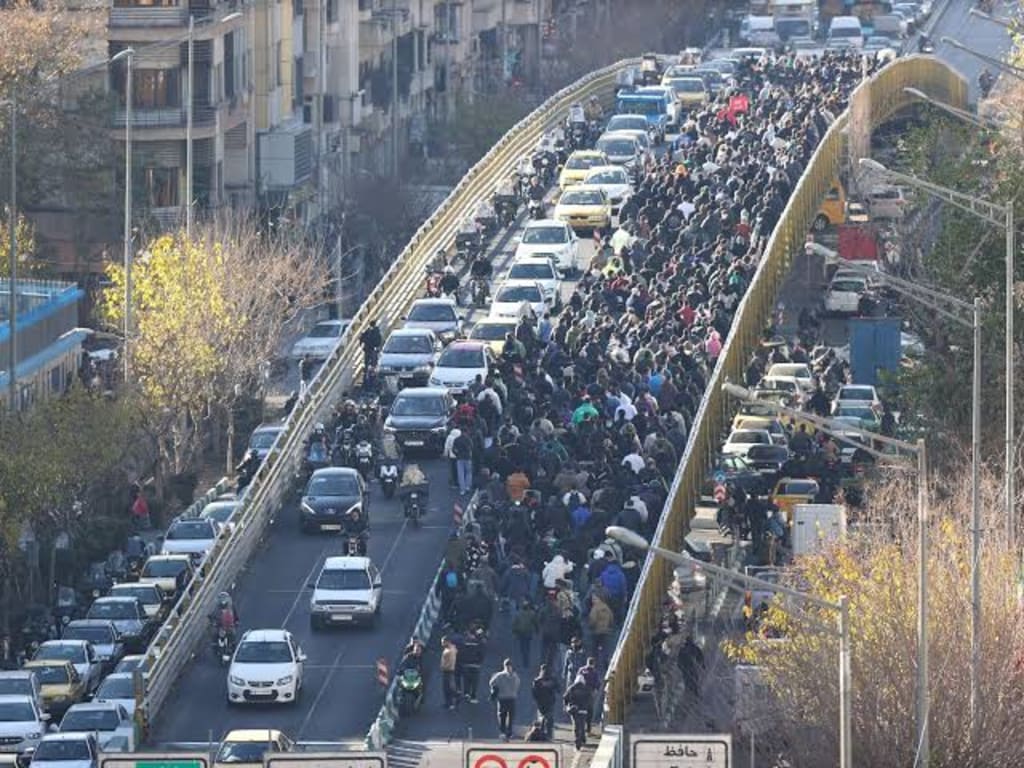
Iran has once again become the center of global attention as protesters reportedly attempted to break into a government building amid continuing nationwide demonstrations. The incident highlights the growing tension between Iranian authorities and citizens who are increasingly vocal about political, economic, and social grievances. While protests are not new to Iran, the latest developments suggest a deeper level of frustration and a willingness among demonstrators to directly challenge state institutions.
A Nation Under Pressure
The current wave of protests in Iran is unfolding against a backdrop of severe economic strain, political discontent, and social restrictions. Years of international sanctions, high inflation, unemployment, and currency devaluation have eroded living standards for millions of Iranians. For many, daily survival has become a struggle, fueling anger toward government leadership and institutions seen as unresponsive to public needs.
In recent weeks, demonstrations have spread across multiple cities, with crowds gathering in public squares, streets, and near official buildings. Slogans reportedly chanted by protesters reflect demands for accountability, economic relief, and greater personal freedoms. What makes the latest incident significant is the reported attempt by demonstrators to force their way into a government facility—an act that symbolizes a shift from protest to direct confrontation.
The Incident at the Government Building
According to reports circulating on social media and regional outlets, a group of protesters gathered outside a government building, pushing past security barriers and clashing with law enforcement. While it remains unclear how close they came to entering the facility, the attempt itself marks an escalation in protest tactics.
Security forces reportedly responded swiftly, dispersing crowds using force and making arrests. Iranian authorities have not released detailed official statements, but state-linked media have characterized the protesters as instigators or foreign-influenced agitators—a narrative frequently used during periods of unrest.
For protesters, however, the act appears to be driven by desperation rather than coordination. Many participants are said to be ordinary citizens—workers, students, and retirees—who feel excluded from political decision-making and unheard by those in power.
Why Protests Keep Resurfacing
Iran’s protest movements tend to emerge in cycles, often triggered by specific events such as fuel price hikes, controversial policies, or high-profile deaths. Yet beneath each trigger lies a consistent pattern: deep-rooted dissatisfaction with governance, economic management, and civil liberties.
Young people play a particularly prominent role in these demonstrations. With a large youth population facing limited job prospects and strict social controls, frustration has been steadily building. Social media has amplified these voices, allowing protesters to organize quickly and share images that counter official narratives.
Women have also been at the forefront, challenging laws and norms they view as restrictive and discriminatory. Their visible participation has added symbolic weight to the protests and drawn international attention.
Government Response and Risks Ahead
The Iranian government has historically relied on a combination of security crackdowns, arrests, and information control to contain protests. Internet restrictions, surveillance, and warnings against participation are commonly deployed tools. While such measures may suppress demonstrations in the short term, analysts argue they do little to address the underlying causes.
The attempt to breach a government building raises concerns about what comes next. If protesters increasingly target symbols of state power, the risk of violent escalation grows. This could lead to harsher crackdowns, more casualties, and deeper polarization between the state and society.
At the same time, continued unrest poses challenges for Iran’s leadership on the international stage. Ongoing protests complicate diplomatic efforts, economic planning, and regional strategy, especially as Iran navigates strained relations with Western countries and ongoing regional tensions.
The Human Cost of Prolonged Unrest
Beyond politics, the protests carry a heavy human toll. Families face uncertainty as loved ones are detained, injured, or disappear from public view. Businesses suffer disruptions, and ordinary life becomes unstable. Yet despite these risks, many Iranians continue to protest, signaling how strongly they feel about the issues at stake.
For some, the demonstrations are not just about immediate grievances but about dignity, voice, and the future of the country. The willingness to confront authority—even symbolically—reflects a belief that silence is no longer an option.
A Turning Point or Another Cycle?
Whether the latest protests mark a turning point or another chapter in Iran’s recurring unrest remains uncertain. Much will depend on how authorities respond in the coming weeks and whether any meaningful reforms or concessions are offered.
What is clear is that the attempt to storm a government building underscores the depth of public anger and the fragile relationship between the state and its citizens. As demonstrations continue, Iran stands at a critical moment—caught between maintaining control and addressing the demands of a population that is increasingly unwilling to back down.
About the Creator
Fiaz Ahmed Brohi
I am a passionate writer with a love for exploring and creating content on trending topics. Always curious, always sharing stories that engage and inspire.
Keep reading
More stories from Fiaz Ahmed Brohi and writers in The Swamp and other communities.
EU’s Top Diplomat Rejects Russian Claims of Ukrainian Attack on Government Sites
In the latest chapter of the ongoing Russia-Ukraine conflict, the European Union’s top diplomat has publicly rejected Russian claims that Ukrainian forces carried out attacks on government sites in Russian-controlled regions. The statement, coming from Josep Borrell, the EU’s High Representative for Foreign Affairs and Security Policy, underscores the growing tensions between Brussels and Moscow and highlights the broader battle over truth, propaganda, and international perception in the conflict. Russia has repeatedly accused Ukraine of targeting government infrastructure in areas under its control, presenting these allegations as evidence of Kyiv’s “aggression.” These claims were prominently circulated through Russian state media, including RT and TASS, often accompanied by images and footage purportedly showing damage to administrative buildings. However, Borrell and EU officials argue that these reports are unsubstantiated and likely part of a coordinated campaign to shape public perception both domestically and internationally. Speaking at a press briefing in Brussels, Borrell stated, “We have no independent verification that Ukraine has carried out attacks on the government facilities in these areas. The evidence presented by Russian authorities is not credible and appears to be aimed at justifying further military escalation.” This rejection marks a firm stance by the EU, reinforcing its support for Ukraine while also emphasizing the importance of accurate information amid wartime propaganda. The diplomatic tension comes at a critical moment as the conflict enters its third year, with both sides heavily engaged in military and informational warfare. Russia’s attempts to portray Ukraine as the aggressor in occupied territories are part of a broader strategy to legitimize its own military presence and to rally domestic support amid mounting economic sanctions and international criticism. Meanwhile, the EU continues to serve as a key mediator and supporter of Ukraine, providing military aid, economic assistance, and political backing to counterbalance Moscow’s influence. Analysts note that the rejection of Russian claims by the EU also reflects a strategic effort to maintain the credibility of international institutions. By challenging unverified narratives, the EU aims to prevent the normalization of misinformation as a tool of modern warfare. “In conflicts like this, information can be as potent as weapons,” says Dr. Elena Markov, a European security analyst. “Disinformation campaigns shape public opinion, influence policy decisions, and can even affect military strategy. The EU’s public dismissal of these Russian claims is a critical move to protect the integrity of information.” The situation on the ground remains volatile. Ukrainian forces continue to defend strategic regions, while Russia has intensified its military operations in contested areas. Civilian populations in conflict zones face immense challenges, including disruptions to essential services, the threat of bombardment, and limited access to humanitarian aid. Against this backdrop, the battle over narratives becomes particularly significant, influencing international support, the framing of peace negotiations, and public sentiment in Europe and beyond. Beyond the immediate conflict, the episode raises questions about the role of diplomacy and international oversight in wartime reporting. With both sides using media to further strategic goals, third-party verification becomes essential. Organizations like the United Nations, the Organization for Security and Co-operation in Europe (OSCE), and independent journalists play a crucial role in confirming events and providing neutral assessments. Borrell’s comments implicitly highlight the need for such oversight, emphasizing that unilateral claims, especially from parties engaged in conflict, cannot be accepted at face value. The EU’s firm response also sends a clear message to Moscow: attempts to manipulate the narrative will not go unchallenged. By publicly rejecting Russian claims, the bloc reinforces its position as a defender of international norms, including sovereignty, accountability, and the rule of law. This stance resonates strongly with member states, many of which have been directly impacted by the geopolitical and economic repercussions of the Russia-Ukraine war. As the conflict continues, the interplay between military operations and information campaigns is likely to intensify. For the EU and its allies, the challenge will be to balance the need for timely interventions with careful scrutiny of the facts, ensuring that diplomatic efforts are grounded in verified evidence rather than manipulated narratives. The rejection of Russian claims over Ukrainian attacks is not just a diplomatic statement—it is part of a broader strategy to maintain clarity, support Ukraine, and resist the spread of disinformation that could destabilize Europe and the wider international community. In summary, the EU’s top diplomat’s dismissal of Moscow’s allegations reflects both a commitment to Ukraine and a broader recognition of the dangers posed by misinformation in modern conflict. As the war continues to unfold, the battle over truth, perception, and credibility remains as critical as any military engagement, shaping the course of international policy and the future of European security.
By Fiaz Ahmed Brohi2 months ago in The Swamp
The Forsyth House Fire
Since 1851, Forsyth House has stood on the corner of Union Street and Gordon Street in the heart of Glasgow. Its iconic, or was... because on Sunday 8th of March, 2026, a fire broke out in a small, seemingly un-named shop in the building and tore all that history down. As I write, the rubble is still unsettled and the street is still blocked off. Central Station is quiet on the upper level, and around 30 small businesses have quite literally gone up in smoke.
By S. A. Crawforda day ago in The Swamp
Record 52 Israeli billionaires make Forbes list with $308B combined wealth
A record‑breaking number of Israeli billionaires have appeared on Forbes magazine’s 2026 annual World’s Billionaires list, underscoring the country’s growing economic muscle on the global stage. This year, a total of 52 individuals with Israeli citizenship made the list, with their combined net worth reaching about $308 billion — a historic high and a significant increase compared to previous years. The combined wealth figure represents roughly a 24% increase from the previous year and about a 50% jump since 2024, reflecting strong performance in global markets and particularly robust gains in technology, investment, and startup sectors. Technology and Markets Fueling Wealth Growth Israel has long been nicknamed the “startup nation” thanks to its vibrant high‑tech ecosystem. Local companies specializing in artificial intelligence, semiconductors, cybersecurity, cloud computing, and other advanced technologies have seen explosive growth in recent years, attracting significant venture capital and spurring lucrative acquisitions. These gains have helped boost the fortunes of entrepreneurs, founders, and investors who are now among the country’s wealthiest. Despite ongoing geopolitical tensions in the region, including recent conflicts that rattled global markets, Israeli stock exchanges showed resilience. Investors responded positively after brief periods of volatility, helping to elevate asset values — an outcome that benefited billionaire portfolios tied to publicly traded firms and private equity stakes alike. Top Israeli Wealth Holders on the Global Stage Leading the pack of Israeli billionaires is Miriam Adelson, who is ranked as the richest Israeli on the list with an estimated net worth of roughly $37.5 billion. Her fortune is closely linked to holdings in the Las Vegas Sands casino conglomerate and media assets, and she ranks among the top 60 richest individuals worldwide. Following Adelson are brothers Idan Ofer and Eyal Ofer, two generations‑spanning tycoons whose diversified investments span shipping, real estate, energy, banking, and technology. Both have built empires that position them well within the global billionaire rankings, with net worth estimates in the mid‑$30 billion range. Another notable success story comes from mobile gaming: Dmitry Bukhman and his brother Igor Bukhman, co‑founders of the gaming company Playrix, are also among Israel’s wealthiest. Each brother is estimated to be worth around $13.6 billion, thanks to the global popularity of titles like Township, Homescapes, and Fishdom. What This Means for Israel’s Economy The surge in billionaire wealth from Israel highlights several broader economic trends. First, it underscores the importance of the technology and innovation sector in the country’s economic strategy. Israeli startups and scale‑ups routinely attract global capital and are fertile ground for high‑value exits, whether through acquisitions by larger firms or successful public market debuts. Second, the record number of billionaires despite regional instability suggests a degree of economic resilience and investor confidence. Even as geopolitical tensions influence markets, sectors such as cybersecurity, AI, and biotech continue to draw strong interest. Long‑term investors view Israel as a hub of ingenuity with sustainable growth potential. Third, the diversification of wealth sources — from gaming to real estate to international investments — protects Israel’s billionaire class from downturns in any single industry. This diversification, amplified by global reach, means these wealthy individuals and families can balance risks associated with regional uncertainty. Global Wealth Context The surge in Israeli billionaire fortunes parallels broader global insights from Forbes’ 2026 list, which shows wealth expanding across continents. A record 3,428 individuals made the full billionaire ranking this year — an all‑time high — and their combined global wealth reached more than $20 trillion. Much of this growth has been driven by gains in technology and market valuations. Still, while countries like the United States, China, and India host far more billionaires, Israel’s per‑capita concentration of ultra‑wealthy citizens remains notable. It continues to rank among the top nations in terms of billionaire count relative to population size. Looking Ahead Economists and industry analysts say the upward trajectory in billionaire wealth likely reflects a combination of technological innovation, resilient capital markets, and favorable economic policies. If Israel can sustain investments in key sectors such as cybersecurity, AI, and life sciences, the nation could continue to produce influential business leaders whose impact stretches well beyond its borders. As wealth continues to concentrate among the global elite, the presence of 52 Israeli billionaires on Forbes’ 2026 list sends a powerful message about the country’s economic maturity and global relevance — even in times of regional uncertainty.
By Fiaz Ahmed 3 days ago in The Swamp
Author’s Advice
If you would’ve asked me 20 years ago did I know I’d become a writer and an author, I would’ve said “nope, ain’t happening”. As fate would have it I did become an author and I can honestly say I’m loving it so far. It really does feel good to be a writer. I’ve learned a lot on this journey and I feel like with even me being as new to this world as I am, there’s some wisdom I need to share with every other aspiring author.
By Joe Patterson3 days ago in Journal




Comments
There are no comments for this story
Be the first to respond and start the conversation.