
IHC Questions Fairness as Imran Khan’s X Account Case Proceeds Without Lawyer Access
Judicial scrutiny highlights the importance of legal access, free expression, and constitutional protections

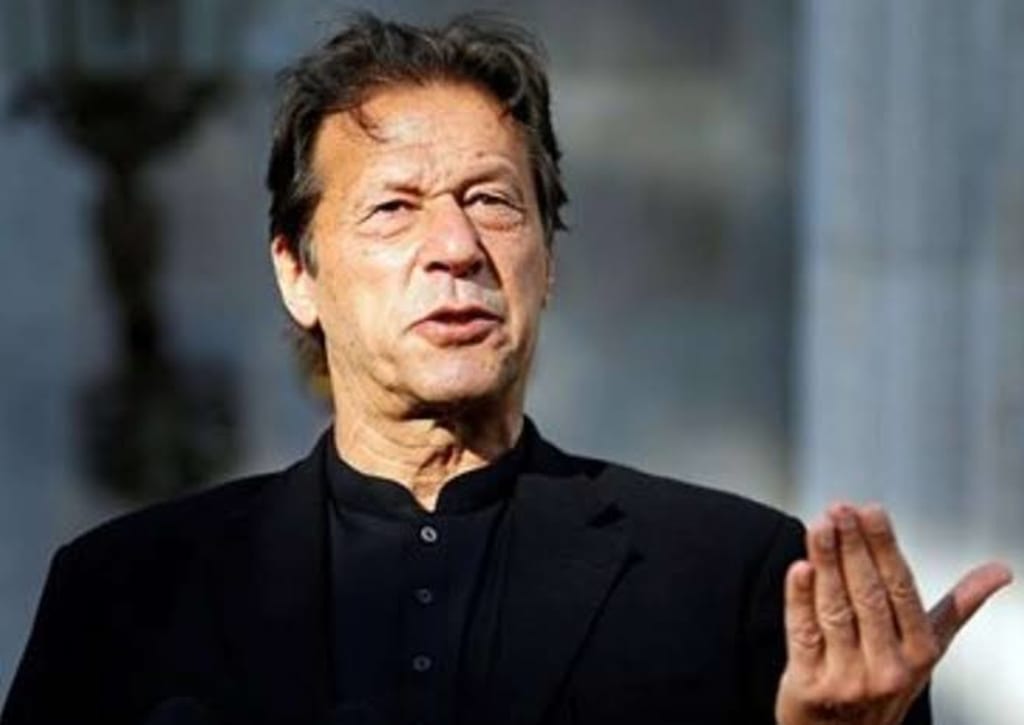
The Islamabad High Court’s (IHC) recent query over how proceedings related to former Prime Minister Imran Khan’s X (formerly Twitter) account can continue without granting him access to legal counsel has reignited a national debate on due process, digital rights, and the rule of law in Pakistan. The case, centered on the alleged misuse of a social media account attributed to Imran Khan, goes beyond one individual and touches the core of constitutional guarantees in the digital age.
A Case at the Intersection of Law and Digital Expression
At the heart of the matter is the question of fairness. The IHC reportedly asked how a case involving serious legal and constitutional implications can move forward when the accused party is unable to consult or be represented by a lawyer of his choice. This concern is particularly significant because the case involves online speech—an area where intent, authorship, and digital evidence require careful legal scrutiny.
Imran Khan’s X account, which has been a primary channel for political messaging and mobilization, has previously been at the center of controversy. Authorities have raised concerns about posts allegedly inciting unrest or spreading misinformation. However, critics argue that any legal process examining such claims must strictly adhere to constitutional protections, especially the right to legal representation.
The Constitutional Right to Counsel
Pakistan’s Constitution clearly guarantees the right to a fair trial and due process. Legal experts emphasize that access to a lawyer is not a privilege but a fundamental right. The IHC’s query reflects a broader judicial concern: without legal counsel, how can an accused person effectively defend themselves, challenge evidence, or ensure that proceedings remain impartial?
This issue becomes even more complex when the accused is a former prime minister and a major political figure. Any perception of procedural unfairness risks undermining public confidence in the judiciary and the legal system as a whole. The court’s remarks suggest an awareness of these sensitivities and a willingness to scrutinize whether established legal norms are being followed.
Digital Evidence and Legal Complexity
Cases involving social media accounts are inherently complex. Determining who controls an account, who authored specific posts, and whether content violates the law requires technical expertise and robust legal argumentation. Without access to a lawyer, an accused individual is effectively denied the ability to question digital evidence, request forensic verification, or present alternative explanations.
The IHC’s concern highlights a critical reality of modern law: digital expression cannot be adjudicated with shortcuts. As social media increasingly shapes political discourse, courts must balance state interests—such as public order and national security—with individual rights to free expression and fair legal treatment.
Political Context and Public Perception
The timing and nature of the case have fueled political debate. Supporters of Imran Khan view the proceedings as part of a broader pattern of political pressure, while critics argue that no individual should be above the law. Regardless of political affiliation, many legal analysts agree that denying lawyer access sets a troubling precedent.
Public perception matters deeply in such high-profile cases. If the legal process is seen as opaque or restrictive, it risks being interpreted as politically motivated rather than justice-driven. The IHC’s questioning can therefore be seen as an attempt to reaffirm judicial independence and ensure that legal standards are not compromised.
Implications for Freedom of Expression
Beyond Imran Khan, the case has wider implications for journalists, activists, and ordinary citizens who use social media platforms to express opinions. If cases related to online speech proceed without full legal safeguards, it could create a chilling effect on free expression. People may fear that their digital voices could be scrutinized or penalized without adequate legal recourse.
The IHC’s stance signals that courts recognize these broader stakes. Ensuring lawyer access is not just about one defendant; it is about protecting the integrity of legal processes in an era where tweets, posts, and videos can have legal consequences.
What Comes Next?
While the IHC has raised critical questions, the path forward will depend on how authorities respond. Granting access to legal counsel would align the proceedings with constitutional requirements and international legal norms. Failure to do so could invite further judicial intervention and intensify public scrutiny.
Ultimately, this case may become a landmark moment in Pakistan’s legal handling of digital speech and political expression. It underscores the need for clear legal frameworks that respect rights while addressing legitimate concerns about online conduct.
Conclusion
The Islamabad High Court’s query—asking how Imran Khan’s X account case can proceed without lawyer access—is more than a procedural concern. It is a reminder that justice must not only be done but must be seen to be done. In a digital era where words travel faster than ever, safeguarding due process and legal representation remains essential to preserving democracy, constitutionalism, and public trust.
About the Creator
Fiaz Ahmed
I am Fiaz Ahmed. I am a passionate writer. I love covering trending topics and breaking news. With a sharp eye for what’s happening around the world, and crafts timely and engaging stories that keep readers informed and updated.
Keep reading
More stories from Fiaz Ahmed and writers in The Swamp and other communities.
Why Greenland Matters Even If Its Resources Don’t Pay
Greenland is often discussed through the lens of untapped wealth. Headlines highlight rare earth minerals, oil prospects, and melting ice opening new shipping routes. Yet focusing only on whether Greenland’s resources can “pay off” financially misses the deeper truth. Even if mining projects stall, oil remains unprofitable, or climate conditions limit extraction, Greenland still matters enormously—strategically, politically, environmentally, and symbolically. Its value goes far beyond balance sheets. A Strategic Anchor in a Changing Arctic Greenland’s most immediate importance lies in its location. Sitting between North America and Europe, it occupies a central position in the Arctic—a region that is rapidly transforming due to climate change. As ice retreats, the Arctic is becoming more accessible, drawing the attention of global powers such as the United States, Russia, and China. For the US and NATO, Greenland is a critical security asset. The island hosts key military and early-warning infrastructure that helps monitor missile activity and airspace across the North Atlantic and Arctic. Control and stability in Greenland are therefore not about profit, but about deterrence, surveillance, and maintaining a strategic edge in a region where geopolitical competition is intensifying. Even if Greenland never becomes a mining powerhouse, its geography alone ensures it will remain central to global security calculations. Climate Change’s Front Line Greenland also matters because it is one of the most visible front lines of climate change. Its vast ice sheet plays a crucial role in regulating global sea levels. What happens in Greenland does not stay in Greenland—accelerated ice melt directly affects coastal cities around the world. Scientists closely study Greenland to understand future climate scenarios. Data collected there informs global climate models, disaster planning, and international environmental policy. In this sense, Greenland is not a resource to be exploited but a warning system for the planet. Even if extracting minerals proves uneconomical, the island’s role as a climate indicator and research hub makes it invaluable to humanity’s understanding of its own future. Political Symbolism and Self-Determination Greenland’s importance is also deeply political. As an autonomous territory within the Kingdom of Denmark, Greenland represents one of the most prominent modern cases of gradual self-determination. Many Greenlanders view economic independence—often linked to resources—as a pathway to full sovereignty. However, even if resources fail to deliver financial independence, Greenland’s political journey still matters. It raises global questions about Indigenous rights, governance, and how small populations navigate pressure from powerful external actors. International interest—sometimes bordering on overt pressure—has reinforced Greenland’s symbolic role as a place where local aspirations collide with global ambitions. The island matters because it tests how the world treats smaller societies in an era of great-power rivalry. Not Everything Valuable Is Profitable There is also a growing recognition that not all value should be measured in immediate economic returns. Greenland’s ecosystems are fragile and unique. Mining, oil drilling, and large-scale infrastructure projects carry significant environmental risks that could permanently damage landscapes and traditional ways of life. For many Greenlanders, preserving fishing grounds, wildlife, and cultural heritage is more important than chasing uncertain profits. This challenges a global mindset that assumes natural resources must be monetized to justify a region’s importance. Greenland matters precisely because it forces a conversation about sustainable development—about when not to extract, and about valuing long-term stability over short-term gains. A Testing Ground for Global Cooperation Greenland is also becoming a testing ground for international cooperation. Scientific research, climate monitoring, Arctic governance, and Indigenous engagement all require collaboration across borders. How major powers behave around Greenland may set precedents for the wider Arctic. Will competition dominate, or can cooperation prevail? The answer will shape not just Greenland’s future, but the governance of one of the world’s last relatively untouched regions.
By Fiaz Ahmed 2 months ago in The Swamp
The Forsyth House Fire
Since 1851, Forsyth House has stood on the corner of Union Street and Gordon Street in the heart of Glasgow. Its iconic, or was... because on Sunday 8th of March, 2026, a fire broke out in a small, seemingly un-named shop in the building and tore all that history down. As I write, the rubble is still unsettled and the street is still blocked off. Central Station is quiet on the upper level, and around 30 small businesses have quite literally gone up in smoke.
By S. A. Crawford3 days ago in The Swamp


Comments
There are no comments for this story
Be the first to respond and start the conversation.