
Euston HS2 Back on Track, Say Ministers as Final Tunnelling Begins
Major Milestone Reached as Government Signals Renewed Commitment to Britain’s High-Speed Rail Project
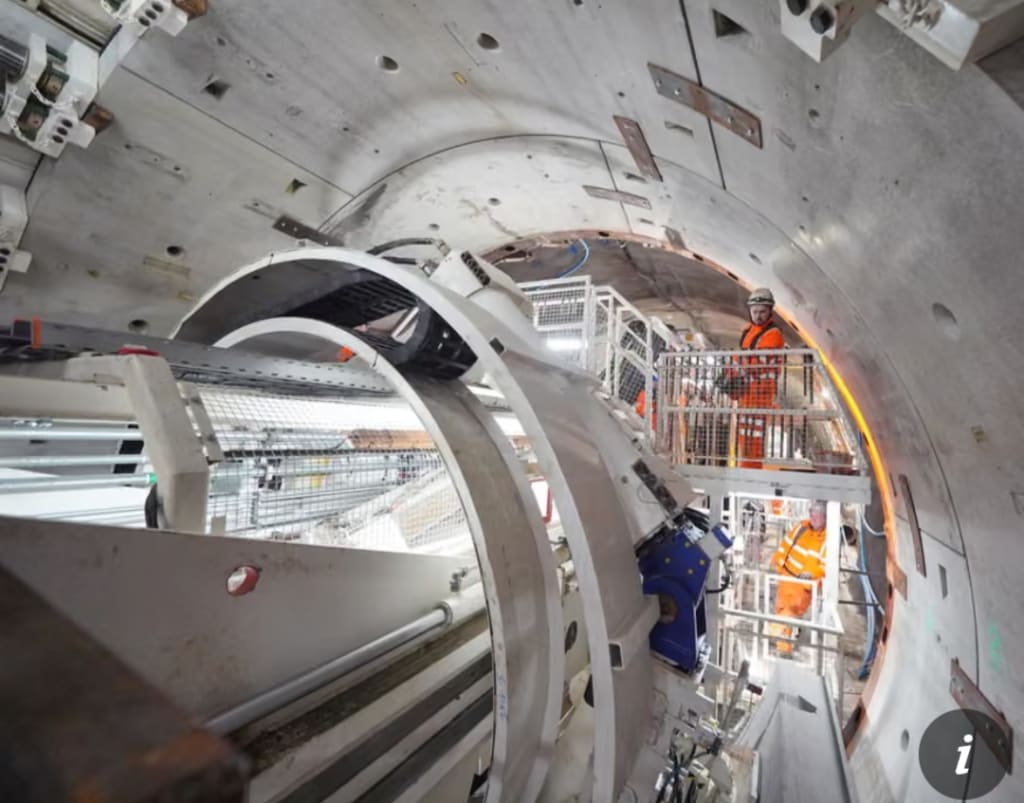
The long-delayed HS2 rail project at London’s Euston station has reached a critical turning point, according to UK ministers, as final tunnelling work officially begins. After years of political debate, cost overruns, and public skepticism, the announcement marks a significant milestone in one of Britain’s most ambitious infrastructure projects.
Government officials say the start of final tunnelling demonstrates that HS2’s Euston terminus is now “back on track,” restoring momentum to a project that has faced repeated uncertainty and criticism.
What the Final Tunnelling Phase Means
The commencement of final tunnelling represents the last major underground construction stage connecting HS2’s high-speed line to central London. This phase will see tunnel boring machines complete the subterranean route that allows high-speed trains to enter and exit Euston safely and efficiently.
Ministers describe this step as a point of no return, signaling that the most complex and risky engineering challenges are being overcome. Once tunnelling is complete, attention will shift to track installation, systems testing, and station development.
Infrastructure experts note that tunnelling under London is among the most technically demanding aspects of HS2, given the city’s dense urban landscape, existing transport networks, and historic buildings.
Ministers Defend HS2 Amid Ongoing Criticism
Senior government figures have used the milestone to reaffirm their commitment to HS2, framing the project as essential for the UK’s long-term economic future. They argue that HS2 will:
Increase rail capacity
Reduce journey times between major cities
Support regional economic growth
Create thousands of skilled jobs
Ministers have also emphasized that abandoning or scaling back Euston would have resulted in wasted investment and reduced benefits nationwide.
Despite these claims, critics remain unconvinced, pointing to ballooning costs and delayed timelines as evidence of poor project management.
A Project Marked by Delays and Cost Overruns
HS2 has become one of the most controversial infrastructure projects in modern British history. Originally promoted as a transformational rail link between London, Birmingham, Manchester, and Leeds, the project has seen its scope reduced and costs rise sharply.
Euston, in particular, has been a focal point of concern. Plans for the station have been revised multiple times, funding arrangements have been questioned, and construction pauses fueled speculation that the London terminus could be downgraded or abandoned altogether.
The start of final tunnelling is therefore being viewed as a confidence signal from the government, aimed at reassuring investors, contractors, and the public.
Impact on Local Communities and Businesses
Residents and businesses around Euston have lived with disruption for more than a decade. Road closures, noise, dust, and reduced foot traffic have taken a toll on the local area, leading to frustration and protest.
Community groups have welcomed clarity on the project’s direction but remain cautious. Many argue that while progress is necessary, mitigation measures must improve to support those most affected by construction.
The government has pledged continued compensation schemes and community engagement, though critics say delivery has often fallen short of promises.
Economic and Transport Benefits at Stake
Supporters of HS2 argue that completing Euston as originally planned is crucial to unlocking the project’s full benefits. A high-speed terminus in central London would:
Free up space on existing rail lines
Improve reliability across the network
Strengthen links between northern cities and the capital
Transport economists note that major rail projects deliver their greatest value when they are completed as integrated systems rather than fragmented sections.
Failure to complete Euston, they argue, would have undermined HS2’s capacity benefits and limited its long-term impact.
Environmental and Sustainability Concerns
HS2 has also faced criticism over its environmental impact, particularly during early construction phases involving land clearance and habitat disruption. However, proponents argue that high-speed rail is a cleaner alternative to domestic air travel and car use.
The government maintains that HS2 will contribute to net-zero goals by:
Encouraging modal shift from road and air
Reducing congestion on existing routes
Supporting greener transport infrastructure
Environmental groups remain divided, acknowledging potential long-term benefits while questioning whether the project’s environmental costs have been adequately managed.
What Happens Next at Euston?
With final tunnelling underway, the next phases will focus on:
Completion of underground works
Station construction and redevelopment
Track laying and systems integration
Testing and safety certification
Ministers have avoided committing to firm completion dates, reflecting lessons learned from earlier optimism. However, they insist that progress is now measurable and irreversible.
Industry insiders suggest that while challenges remain, the project is entering a more predictable phase.
Public Trust and Political Stakes
The success of HS2 at Euston carries significant political implications. For the government, delivering visible progress is essential to restoring public trust in large-scale infrastructure delivery.
For opposition parties, HS2 remains a symbol of mismanagement and misplaced priorities. As tunnelling progresses, scrutiny is expected to intensify, particularly around costs, timelines, and benefits realization.
Conclusion: A Defining Moment for HS2
The start of final tunnelling at Euston marks a defining moment for HS2. After years of uncertainty, the project has reached a stage that suggests forward momentum rather than retreat.
Whether this milestone ultimately reshapes perceptions of HS2 will depend on what comes next—on-time delivery, cost control, and tangible benefits for passengers and communities. For now, ministers are confident that Euston is back on track, but the project’s legacy remains very much under construction.
About the Creator
Keep reading
More stories from Aarif Lashari and writers in The Swamp and other communities.
Gold Extends Rally to Seven Days as Trade War and FX Fears Roil Global Markets
Gold prices have extended their rally for a seventh consecutive day, reflecting growing anxiety across global financial markets. Heightened trade war tensions, combined with foreign exchange (FX) volatility and fears of economic slowdown, have pushed investors toward safe-haven assets, with gold emerging as one of the primary beneficiaries.
By Aarif Lasharia day ago in The Swamp
Trump Steps Back from the Brink on Greenland. But the Damage Has Been Done
In early 2026, a diplomatic firestorm erupted at the World Economic Forum in Davos when U.S. President Donald Trump revived a controversial ambition to extend American influence over Greenland. What began as aggressive rhetoric, including tariff threats and territorial aspirations, quickly derailed into a chaotic diplomatic episode. Though Trump ultimately stepped back from the most dangerous edges of his push — dropping tariff threats and disavowing military force — the fallout has rippled through transatlantic relations, NATO cohesion, and global perceptions of U.S. reliability.
By Salaar Jamali7 days ago in The Swamp
Exclusive: Trump Says Hamas Helped Find Last Hostage, Now Must Disarm
In a statement that has quickly made international headlines, former U.S. President Donald Trump claimed that Hamas helped locate the remains of the final Israeli hostage, calling the moment a turning point in the long-running Gaza conflict. But Trump didn’t stop there. According to him, this cooperation comes with a condition — Hamas must now disarm.
By Aqib Hussain2 days ago in The Swamp




Comments
There are no comments for this story
Be the first to respond and start the conversation.