
Trump Steps Back from the Brink on Greenland. But the Damage Has Been Done
A diplomatic retreat eases immediate tensions, but Trump’s Greenland gambit leaves lasting scars on U.S. alliances and global trust.


In early 2026, a diplomatic firestorm erupted at the World Economic Forum in Davos when U.S. President Donald Trump revived a controversial ambition to extend American influence over Greenland. What began as aggressive rhetoric, including tariff threats and territorial aspirations, quickly derailed into a chaotic diplomatic episode. Though Trump ultimately stepped back from the most dangerous edges of his push — dropping tariff threats and disavowing military force — the fallout has rippled through transatlantic relations, NATO cohesion, and global perceptions of U.S. reliability.
A Controversial Reignition of an Old Idea
Trump’s Greenland gambit reignited a debate first thrust into the spotlight in 2019, when he publicly floated buying the vast Arctic island from Denmark — a notion met with bemusement and outright rejection. Denmark’s leadership called the idea “absurd,” and Greenlandic officials made clear that the island isn’t for sale and belongs to its people, not external powers. The episode at Davos in January 2026 revisited this theme but with higher stakes: Trump linked the future of Greenland to U.S. security interests and pressed European allies on cooperation in the Arctic.
In his Davos remarks, Trump described Greenland as strategically vital for U.S. defense and global stability. He invoked the island’s location and natural wealth, arguing that U.S. stewardship could benefit Europe and deter rivals like Russia and China. But his framing — especially rhetoric about sovereignty and historic entitlement — alarmed many European leaders.
From Tariff Threats to ‘Framework’ Deals
The episode reached a crescendo when Trump threatened hefty tariffs — initially proposed at 10% and rising to 25% — on eight European nations that had deployed troops to Greenland as part of Arctic training and security operations, demanding concessions tied to Greenland’s future. This unprecedented use of tariff threats against NATO partners was widely perceived as coercive and destabilizing.
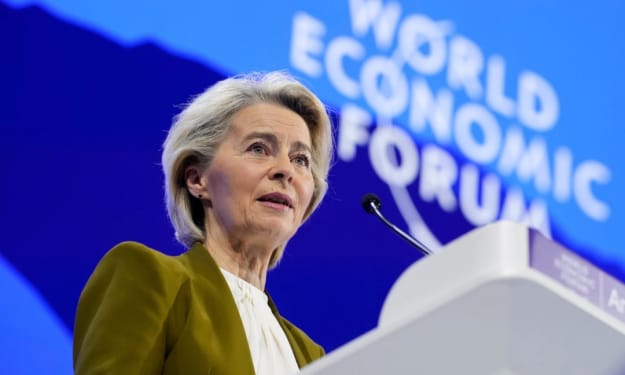
European capitals reacted sharply. European Commission President Ursula von der Leyen called for reducing Europe’s dependency on the United States and even floated massive retaliatory tariffs in response to American pressure. Leaders from Denmark, Germany, France, and other allied capitals expressed concern about the erosion of trust and the potential weakening of NATO unity.
In a dramatic reversal at Davos, Trump announced that he was pulling back on the tariff threats. He described progress on a NATO “framework” for Arctic security cooperation that could involve enhanced missile defense systems and broader military cooperation on Greenland and in the Arctic region. He also explicitly said he would not use force to acquire the island.
But the Damage Has Been Done
Despite this retreat from the brink, the political and diplomatic damage is already evident. Many European and Canadian officials interpreted Trump’s earlier threats as a sign that longstanding assumptions about U.S. leadership and commitment to alliance norms can no longer be taken for granted. A senior European official told observers that while avoiding military force and tariffs was “a relief,” it did little to restore confidence in U.S. commitment or presidential reliability.
The episode also shook financial markets. According to reports, global equities suffered significant losses amid rising geopolitical uncertainty triggered by the Greenland dispute, wiping out more than $1 trillion in market value on major indices before stabilizing once Trump backed off the most extreme measures.
Furthermore, protests against the U.S. approach erupted in Denmark and Greenland, with thousands rallying under slogans like “Greenland is not for sale” and broader opposition to perceived American expansionism. These protests represent some of the largest public demonstrations in recent Greenlandic history, signaling deep local resentment toward external pressure and perceived threats to sovereignty.
Eroding Trust Among Allies
The deep unease among U.S. allies stems from broader concerns about predictability and partnership reliability. NATO has historically been a cornerstone of Euro-American security cooperation, underpinned by mutual defense commitments and shared strategic objectives. Trump’s readiness to use economic coercion and territorial claims to extract concessions — even if ultimately walked back — has left many partners questioning U.S. priorities and long-term predictability.
Denmark’s prime minister reinforced this mood, reiterating that Greenland’s sovereignty could not be negotiated without Greenlandic participation and that any cooperation must respect existing political realities. NATO’s Secretary General also emphasized the need for allied unity in Arctic security but focused on collaborative defense rather than coercive bargaining.
What Comes Next?
Looking forward, the Greenland incident may have lasting implications for Arctic geopolitics. Russia and China are both expanding their presence in the region, seeking to capitalize on melting ice and newly accessible sea lanes and resources. The U.S. clearly values Greenland for strategic and economic reasons, but its approach may have inadvertently pushed European partners to diversify their security and economic relationships, including deeper ties with each other and other global powers.
Critics argue that Europe’s renewed focus on strategic autonomy stems directly from the Greenland episode. Leaders like Canada’s prime minister publicly declared that the post-World War II rules-based order might be “fading,” urging democratic nations to reduce dependency on any single partner to avoid vulnerability to coercive diplomacy.
Conclusion: A Turning Point in Global Alliances
Trump’s decision to step back from the brink on Greenland — withdrawing tariff threats and ruling out military force — may have averted immediate crises. But the political ruptures exposed during this confrontation reveal deeper fractures in international relations. Allies who once counted on U.S. leadership now speak openly about the need for structural changes in how they engage with Washington and with each other.
The Greenland controversy has underscored that reputation and trust are strategic assets in international affairs — assets that, once eroded, cannot easily be regained. Even if the most extreme threats have been shelved, the lingering question remains: how can longstanding alliances withstand the strains of transactional foreign policy without sacrificing core principles of mutual respect, sovereignty, and shared security?
---
If you’d like, I can help tailor this article even more (e.g., more opinionated tone, local analysis, or a version optimized for SEO).
About the Creator
Keep reading
More stories from Salaar Jamali and writers in The Swamp and other communities.
At Davos, a European Backlash to Trump
The annual World Economic Forum in Davos has always been a place for polite disagreements wrapped in diplomatic language. This year, however, the mood has shifted noticeably. As Donald Trump’s presence and rhetoric loom large over the Swiss resort town, Europe’s leaders are no longer just anxious—they are increasingly defiant. What began as quiet concern has evolved into a more visible European backlash, signaling that the transatlantic relationship may be entering a more openly contentious phase.
By Salaar Jamalia day ago in The Swamp
Trump’s Board of Peace: Leaders Convene to Chart Its Future
Former U.S. President Donald Trump has assembled a Board of Peace, drawing together several invited leaders to determine how the organization will operate and what role it will play in international diplomacy. According to sources close to the initiative, the board is designed to advise on global conflict resolution, peace-building strategies, and policy recommendations, though the specifics of its function are still being finalized.
By Muhammad Hassan2 days ago in The Swamp


Comments
There are no comments for this story
Be the first to respond and start the conversation.