
European Stocks Rise After EU Secures ‘Mother of All Deals’ With India; Dr Martens Shares Drop 12%
European markets reacted positively following the EU-India trade agreement, but Dr Martens shares fell sharply, highlighting market volatility and sector-specific pressures.
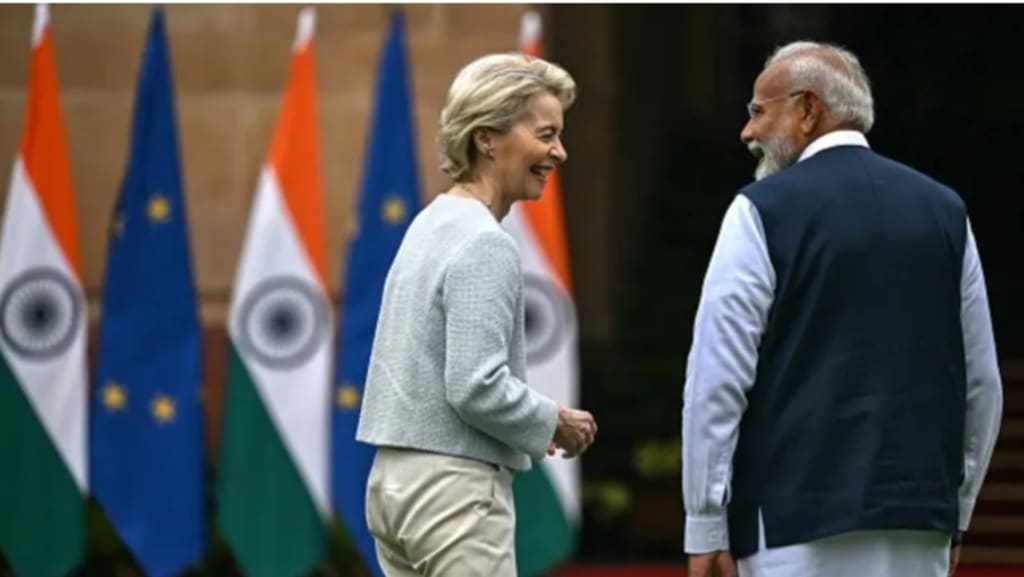
EU-India Trade Deal Sparks Optimism
European stocks surged after news broke of a landmark trade deal between the European Union and India, described by officials as the “mother of all deals.” Investors reacted positively, anticipating stronger economic ties, increased trade flows, and business opportunities across sectors including manufacturing, technology, and services.
The deal aims to lower tariffs, facilitate investment, and strengthen cooperation between the EU’s 27 member states and India’s growing economy. Analysts suggest that such agreements can boost investor confidence in the European markets, contributing to upward trends in stock indices.
Dr Martens Shares Take a Hit
While European indices gained, Dr Martens shares dropped by 12%, signaling sector-specific challenges. The footwear company cited several pressures:
Rising production costs due to inflation and raw material shortages
Slower consumer spending in key European markets
Competitive pressures from fast-fashion and alternative footwear brands
Investors reacted quickly to these concerns, highlighting the contrast between broader market optimism and the challenges faced by individual companies.
Market Movements and Key Indices
Following the announcement:
Stoxx Europe 600 climbed steadily, fueled by gains in industrial, tech, and energy sectors.
FTSE 100 saw moderate gains, particularly among companies with significant trade exposure to India.
European financial analysts emphasized that while the trade deal boosts sentiment, local corporate performance and global economic pressures continue to influence stock movements.
Sector-specific volatility, as seen with Dr Martens, underscores that market-wide optimism does not guarantee uniform gains.
Details of the EU-India Agreement
The trade agreement, years in negotiation, is designed to:
Reduce tariffs on goods ranging from industrial machinery to textiles
Promote investment in sectors including clean energy, infrastructure, and technology
Enhance regulatory cooperation, simplifying cross-border business operations
Facilitate mutual recognition of standards and certifications, easing trade friction
Officials describe the deal as a milestone in EU external trade policy, potentially reshaping economic relations with one of the world’s fastest-growing markets.
Why Investors Are Optimistic
Several factors contributed to the positive market reaction:
Economic growth potential: India’s expanding middle class and industrial base create long-term opportunities for EU businesses.
Strategic diversification: Companies trading with India can reduce dependency on single markets, mitigating risk.
Bilateral cooperation: Enhanced collaboration in sectors like technology, energy, and healthcare opens new revenue streams for European firms.
Financial analysts suggest that trade liberalization tends to boost investor confidence, particularly when it involves major emerging economies.
Challenges for Specific Companies
Despite market-wide gains, companies like Dr Martens face distinct challenges:
Inflationary pressures: Rising costs of leather, materials, and labour impact margins.
Consumer sentiment: Slower retail sales, particularly in discretionary items like footwear, reduce revenue.
Global competition: Other brands offering lower-priced alternatives are eroding market share.
This scenario illustrates that macro-level trade optimism does not always offset company-specific financial stress.
Broader Implications for the European Market
The EU-India deal could have several long-term effects:
Boost to exports: European exporters may see growth in sectors where Indian demand is strong, including luxury goods, machinery, and tech services.
Foreign investment: EU companies may increase investment in India, fostering supply chain integration and partnerships.
Market sentiment: Positive trade developments can stabilize stock indices, encouraging investors to engage in riskier assets.
Economists stress that the overall impact depends on effective implementation and corporate adaptation to new opportunities.
Sectoral Focus: Consumer Goods vs Industrial Stocks
Consumer goods companies: May face slower gains due to high competition and changing consumer patterns.
Industrial and technology sectors: Likely to benefit most from trade liberalization and increased investment opportunities.
Retail brands like Dr Martens: Vulnerable to cost pressures and market saturation, explaining share declines despite broader market gains.
This demonstrates how different sectors respond differently to macroeconomic events.
Investor Advice and Outlook
Experts advise investors to consider both macro-level trade developments and micro-level company performance:
Diversify holdings to balance growth opportunities and sector-specific risks.
Monitor companies with high exposure to India for long-term benefits.
Be cautious with brands facing operational pressures, even in bullish markets.
Financial analysts predict that European markets may remain positive in the short term, but volatility is likely in individual stock performance.
Conclusion
The EU’s “mother of all deals” with India has boosted European stock markets, reflecting optimism about trade and investment opportunities. However, the sharp decline in Dr Martens shares highlights the importance of sector-specific analysis and the challenges companies face amid cost pressures and competitive markets.
For investors, travellers, and the broader business community, the situation illustrates the interplay between macroeconomic policy, international trade, and individual corporate health. While the trade deal promises long-term economic benefits, careful attention to company-level factors remains essential.
This episode underscores the need for balanced investment strategies and informed decisions in a rapidly evolving global economy.
About the Creator
Keep reading
More stories from Aarif Lashari and writers in The Swamp and other communities.
Heathrow Shake-Up Allows Passengers to Keep Liquids in Larger Containers Through Security
Heathrow Security Update Heathrow Airport has announced a significant change in security procedures: passengers can now carry liquids in containers of up to two litres in their hand luggage. This update comes as part of a broader effort to streamline passenger experience and reduce delays at security checkpoints.
By Aarif Lashariabout 12 hours ago in The Swamp
At Davos, a European Backlash to Trump
Start writing...The annual World Economic Forum in Davos is usually a carefully choreographed exercise in diplomacy, optimism, and elite consensus. This year, however, the alpine resort has become the epicenter of a sharp and unusually public transatlantic confrontation. As political leaders, executives, and economists gathered in Switzerland, a clear theme emerged: Europe is no longer willing to quietly absorb pressure from Washington. Instead, a visible backlash against U.S. President Donald Trump is taking shape—one that signals a deeper shift in the global balance of alliances.
By Muhammad Hassan6 days ago in The Swamp
Greenland and Denmark Say Sovereignty ‘Red Line’ After Latest Trump Remarks
- How Arctic geopolitics, NATO and national dignity are shaping transatlantic relations In recent days, a heated geopolitical story has reignited international attention on the Arctic and the rights of small states within larger alliances. Greenland and Denmark have drawn a firm “red line” on sovereignty after U.S. President Donald Trump made remarks suggesting a future deal might give the United States sweeping access to the strategically crucial island. Their response underscores not just political sensitivities but deeper questions about territorial integrity, alliance cooperation and Arctic security in an era of intensifying global power competition.
By Salaar Jamali4 days ago in The Swamp
Affection and Healing for Yourself
During the night of the last quarter moon, I gathered my ritual supplies. I carefully handled the chunk of black tourmaline that would protect me from your overall negative and narcissistic energy. I carefully walked the house with my stick of selenite in hand, asking the universe to cleanse our working space.
By Alisha Wilkins ✒️🦋🖋️8 days ago in Fiction


Comments
There are no comments for this story
Be the first to respond and start the conversation.