
Greenland and Denmark Say Sovereignty ‘Red Line’ After Latest Trump Remarks
“Denmark and Greenland Draw Firm ‘Red Line’ on Sovereignty Following Trump’s Controversial Arctic Remarks”

-
How Arctic geopolitics, NATO and national dignity are shaping transatlantic relations
In recent days, a heated geopolitical story has reignited international attention on the Arctic and the rights of small states within larger alliances. Greenland and Denmark have drawn a firm “red line” on sovereignty after U.S. President Donald Trump made remarks suggesting a future deal might give the United States sweeping access to the strategically crucial island. Their response underscores not just political sensitivities but deeper questions about territorial integrity, alliance cooperation and Arctic security in an era of intensifying global power competition.
Trump’s Comments and the Diplomatic Backlash
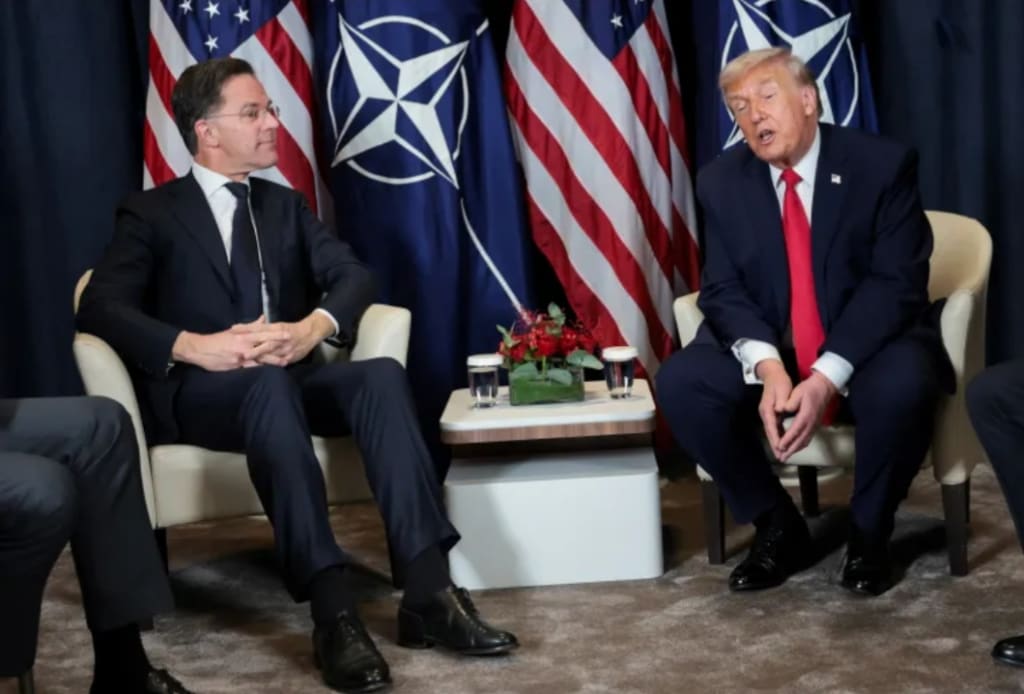
During the World Economic Forum in Davos this week, President Donald Trump announced what he described as a “framework” agreement with NATO leadership that, he claimed, would allow the United States “total access” to Greenland. He framed this within broader discussions of Arctic security and countering influence from China and Russia in the region.
Trump followed up these assertions by cancelling an earlier threat to impose tariffs on several European nations — including Denmark — over their perceived resistance to U.S. ambitions in Greenland.
The president also touted the “amazing” potential of a Greenland-related deal following his speech in Davos, reflecting his long-standing strategic interest in the Arctic island.
However, while Trump portrayed these developments as diplomatic successes, leaders in Copenhagen and Nuuk reacted sharply, rejecting any notion that Denmark’s Arctic territory could be on the negotiating table.
Greenland’s Sovereignty: A Non-Negotiable Red Line
At the heart of the controversy is Greenland’s sovereignty — a principle that both Greenlandic and Danish leaders describe as absolutely non‑negotiable.
Prime Minister Jens‑Frederik Nielsen of Greenland stressed that sovereignty and territorial integrity remain a “red line” that cannot be crossed in any discussion with Washington. He reiterated that Greenland’s fate must be decided by Greenland and Denmark, not by third parties, and insisted that neither NATO nor the United States has the authority to make decisions about the island’s ownership.
Nielsen has said he was unaware of the specifics of any “deal” Trump referenced with NATO leadership — highlighting that neither Greenland nor Denmark participated directly in those discussions. His government is instead advocating for respectful dialogue through proper diplomatic channels.
Echoing this stance, Danish Prime Minister Mette Frederiksen reaffirmed Copenhagen’s insistence that sovereignty is not negotiable. She emphasized that Denmark is open to constructive dialogue on security cooperation in the Arctic — but only with full respect for existing treaties and Greenland’s status as part of the Kingdom of Denmark.
Why Greenland Matters Geopolitically
Greenland is the world’s largest island and occupies a crucial position in the North Atlantic and Arctic Oceans. Its location makes it strategically valuable for military basing, early‑warning defense systems, and new shipping routes emerging as Arctic ice recedes.
Under the 1951 U.S.–Denmark defense treaty, the United States already maintains military facilities in Greenland. But any suggestion that Washington could expand its presence or claim sovereign authority there has provoked alarm in Europe and within Greenland itself.
With increased global competition over Arctic resources, including rare minerals and energy reserves, Greenland’s geopolitical weight has grown. China and Russia have both shown interest in the region, while NATO allies see heightened Arctic defense cooperation as strategically necessary.
Transatlantic Reactions and NATO’s Role
Europe’s response to the evolving situation has been cautious but firm. Many European leaders have characterized any attempt to undermine Greenland’s sovereignty as damaging to transatlantic trust. Some have notified NATO that its mandate does not extend to negotiating territorial ownership on behalf of member states.
A NATO spokesperson clarified that meetings between Trump and the alliance’s secretary‑general did not include any proposal that would compromise Danish or Greenlandic sovereignty. Instead, discussions focused on strengthening collective defense and countering external influence in the Arctic.
This nuanced shift highlights how sensitive alliance politics can be when strategic interests intersect with national dignity. While the United States remains a key security partner, Denmark and Greenland are asserting a firm stance on their territorial prerogatives.
Public Sentiment and Local Identity
News of Trump’s comments has triggered strong public reactions in both Greenland and Denmark, where many view the idea of foreign claims over the island as disrespectful and dismissive of local autonomy. Greenlanders, in particular, have emphasized that they want to determine their own future — and that includes balancing economic development with cultural identity, environmental stewardship, and political self‑determination.
This pushback reflects broader currents in Greenlandic politics, where discussions about independence and enhanced self‑rule have been ongoing. While complete independence remains a complex and long‑term prospect, the present controversy has amplifi ed local voices calling for respect and partnership rather than coercion.
What’s Next? Diplomatic Channels and Arctic Cooperation
The immediate drama over Trump’s remarks may have cooled with the cancellation of tariff threats and clarifications from NATO. But the underlying issues — territorial rights, Arctic security, and the balance of power in the High North — are far from resolved.
Denmark and Greenland have signaled a willingness to explore increased cooperation with the United States and other allies on security matters, provided it respects clear red lines of sovereignty and international law.
At the same time, discussions about Arctic defense — including potential NATO missions or a more permanent allied presence — continue to gain traction, driven by shared concerns about the strategic ambitions of global rivals.
The situation surrounding Greenland serves as a reminder that geopolitics is not just about maps or military strategy, but deeply intertwined with national identity, legal norms, and the principles that govern international cooperation. It also underscores that even trusted allies must navigate these issues with sensitivity and respect — especially when it comes to territory, sovereignty, and the voices of the people who live there.
About the Creator
Keep reading
More stories from Salaar Jamali and writers in The Swamp and other communities.
Silver Dips on Profit-Taking Amid Easing Geopolitical Tensions
Silver prices recently experienced a notable correction as traders and investors engaged in profit-taking, driven largely by signals of reduced geopolitical tension around the world. This movement highlights the sensitive interplay between global political risk and commodity markets—especially precious metals like silver, which have long been viewed as safe-haven assets. In this article, we’ll explore why silver dipped, the role of geopolitical developments, and what this means for both short-term traders and long-term investors.
By Salaar Jamaliabout 24 hours ago in The Swamp
Customers Lose Thousands in Luxury Car Dealer Collapse: A Wake-Up Call for the Industry
The collapse of a well-known luxury car dealership has left hundreds of customers in a state of financial disarray. The once-prominent dealer, known for offering high-end automobiles, suddenly shut its doors, leaving many buyers with unfulfilled orders, deposits lost, and vehicles that were promised but never delivered. As a result, countless customers have lost thousands of dollars, and the incident has triggered a wider conversation about the safety of investing in high-end vehicles and the need for more robust consumer protection in the luxury car market.
By Ayesha Lashariabout 24 hours ago in The Swamp


Comments
There are no comments for this story
Be the first to respond and start the conversation.